
Table of Contents
- Planning Your Roof Replacement Timing in Vancouver
- Vancouver's Seasonal Climate and What It Means for Roofing
- Roof Replacement Availability Across Vancouver's Seasons
- Timing a Replacement Around Rain, Curing, and Urgent Leaks
- How to Book and Prepare for Your Seasonal Roof Replacement
- Scheduling Your Vancouver Roof Replacement with Confidence
Planning Your Roof Replacement Timing in Vancouver
The best time of year for roof replacement in Vancouver is during the dry season, when minimal rainfall allows crews to work safely and materials to set properly. Vancouver’s rainy season peaks in November, averaging 24.25 cm of precipitation with rain on about 70.5% of days, making winter scheduling difficult. By contrast, July is the driest month at 3.82 cm with rain on only 21.5% of days, creating the ideal window for roofing projects. This seasonal contrast stems from the city’s warm-summer Mediterranean climate (Köppen Csb), which features mild summers and wet winters. We’ll guide you through the best months to schedule your project so you can avoid delays and ensure long-lasting results.
Key Takeaways
- The best time of year for roof replacement in Vancouver aligns with the city’s pronounced dry season, when crews can work without rain delays and materials stay protected.
- Timing of roofing replacement projects depends highly on the season and its precipitation in Vancouver.
- Dry weather matters for shingle adhesive sealing and underlayment installation because moisture can disrupt the curing process and compromise long-term performance.
- With Vancouver’s warm-summer Mediterranean climate, the best time of year for a roof replacement in Vancouver is late spring through early fall when rainfall is lowest.
Vancouver’s Seasonal Climate and What It Means for Roofing
The best time of year for roof replacement in Vancouver aligns with the city’s pronounced dry season, when crews can work without rain delays and materials stay protected.
Vancouver has about 144.83cm of precipitation per year. The wettest time of the year for this city is in November, with 24.25 centimeters of precipitation and a 70.5% chance of rain. The driest period occurs in July at only 3.82cm which means there will likely have less than 21.5 chances that anything will fall from sky at all during any given day of those days as well! In general this weather pattern reflects what we see here under ‘Köppen’, which stands for ‘Csb’ Warm Summer Mediterranean Climate Type: it’s marked by mild, dry summers and chilly, wet winters where December nights average around 38°F and July highs reach 73°F.
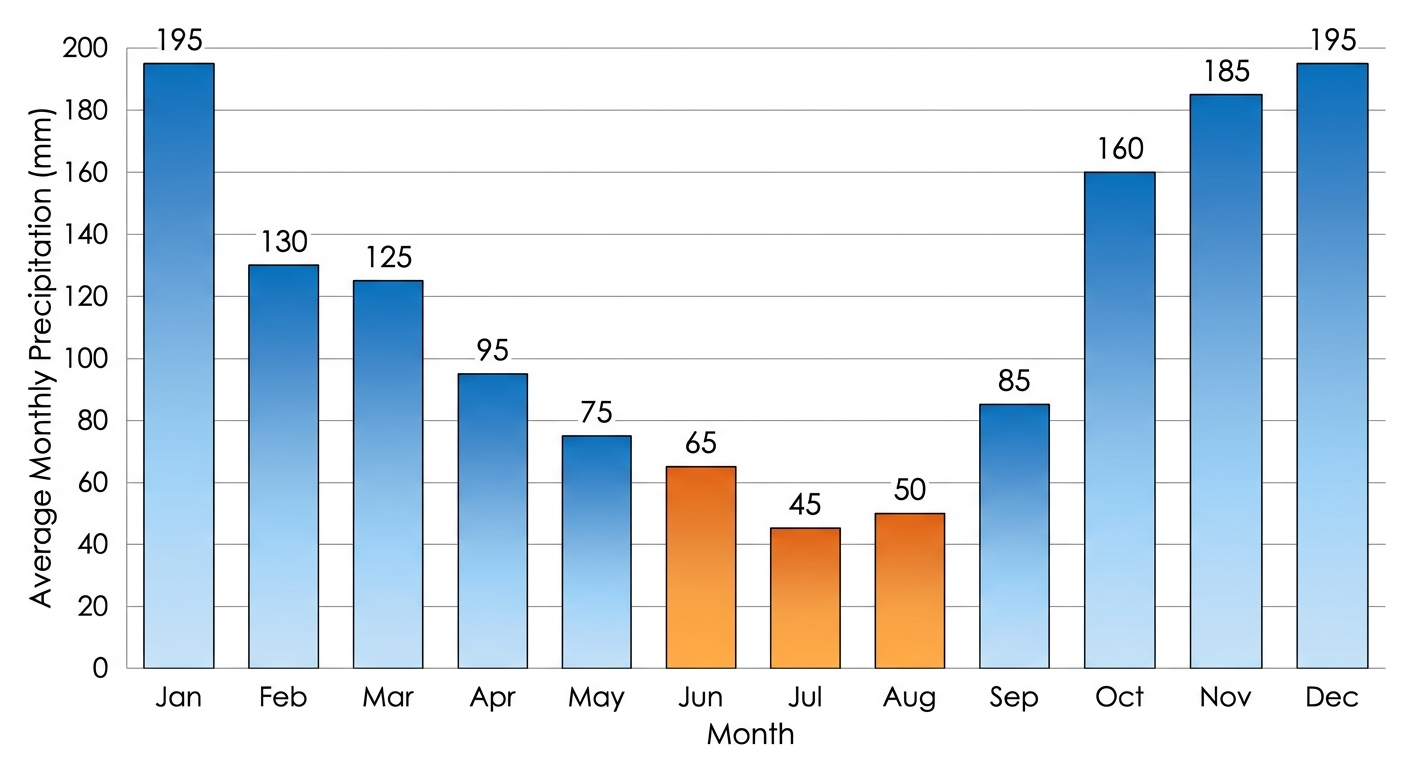
Here is a breakdown of monthly precipitation amounts and rain probability to guide your replacement timeline.
| Month | Average Precipitation (cm) | Chance of Rain (%) | Roof Replacement Suitability |
|---|---|---|---|
| January | 22.14 | 66.0 | Poor |
| February | 11.36 | 57.3 | Poor |
| March | 15.95 | 60.7 | Poor |
| April | 11.35 | 54.1 | Poor |
| May | 7.26 | 38.7 | Fair |
| June | 6.20 | 38.7 | Fair |
| July | 3.82 | 21.5 | Excellent |
| August | 4.34 | 22.4 | Good |
| September | 7.68 | 35.6 | Fair |
| October | 15.49 | 55.0 | Poor |
| November | 24.25 | 70.5 | Poor |
| December | 20.59 | 67.4 | Poor |
Roof Replacement Availability Across Vancouver’s Seasons
Timing of roofing replacement projects depends highly on the season and its precipitation in Vancouver. Summer is when there are more open scheduling opportunities due to lack of rain, but once late fall and winter roll around there is increased precipitation that causes complications and narrows timing options.
Average precipitation in November was 24.25 cm (rain on approximately 70.5% of days), so that late fall isn’t a good time to consider a full roof replacement. Climatological data shows that heavy rainfall limits a crew’s mobility and raises the chances that water will get into newly applied materials prior to curing. By comparison, July was the driest month at 3.82 cm, rain on around 21.5% of days. This provides the most reliable opportunity for replacing your entire roof without delay due to rain. With an overall annual total of precipitation near 144.83 cm per year, rain remains a concern all season long. This means that shoulder seasons like spring and early fall can still work for replacements when homeowners remain flexible with scheduling and prioritize forecast stability over rigid calendar dates.
Timing a Replacement Around Rain, Curing, and Urgent Leaks
Dry weather matters for shingle adhesive sealing and underlayment installation because moisture can disrupt the curing process and compromise long-term performance. In Vancouver, November is the rainiest month, averaging 24.25 cm of precipitation with measurable rain on about 70.5% of days, making late-fall replacement windows unreliable for quality results.
July gets the least amount of precipitation in this area (only 3.82 cm), but it rains during approximately 21.5% of the days that month. The annual total is around 144.83 cm, which underscores why summer offers the most predictable conditions for roof work, though our crews schedule projects whenever conditions allow.
For those leaking roofs that cannot wait for permanent fixes until another day, we repair leaks to avoid any further harm from happening while making sure to make preparations for replacement in due time. We emphasize this because our approach balances immediate protection with long-term durability, ensuring homeowners aren’t left exposed during Vancouver’s wetter seasons. Therefore we recommend addressing leaks promptly to prevent further deterioration.
How to Book and Prepare for Your Seasonal Roof Replacement
Once you’ve chosen the best timing for your replacement, the next step is locking in a contractor who can work within Vancouver’s seasonal rhythms. We recommend booking your project before the wet season arrives, as November brings about 9.6 inches of precipitation while July sees only around 1.53 inches, leaving narrow dry windows for shingle installation and proper curing. Our team handles scheduling around these weather patterns to secure a spot that aligns with your home’s needs.
Before replacement time comes around, you should make sure that the driveway has been cleared so the guys can get in there safely with their equipment. Move fragile items off walls near the roof area. Keep your pets inside, and plan for daytime noise. These small steps help the crew work efficiently and keep your household comfortable throughout the process.
Early booking will help keep you ahead of urgent leaks and seasonal demand, giving you peace of mind before the rain returns.
Frequently Asked Questions
What is the best time of year to schedule a roof replacement in Vancouver?
The best time of year to schedule a roof replacement in Vancouver is late spring through early fall. This period offers the driest weather, with July being the driest month at 3.82 cm of precipitation and only 21.5% chance of rain.
Can you replace a roof during the rainy season in Vancouver?
Replacing a roof during Vancouver’s rainy season is possible but challenging. November, the rainiest month, averages 24.25 cm of precipitation with rain on 70.5% of days, which can delay work and affect material curing.
Is it better to replace a roof in the spring or the fall in Vancouver?
Neither spring nor fall is ideal compared to late spring through early fall. Spring months like April still have 54.1% chance of rain, while fall months like October see 55.0% chance, making scheduling less reliable.
Why is late spring to early fall considered the ideal time for roof replacement in BC?
Late spring to early fall is considered ideal because it aligns with Vancouver’s driest months. July averages only 3.82 cm of precipitation with a 21.5% rain chance, allowing crews to work without rain delays and materials to set properly.
Should I wait until summer to replace my roof if it is currently leaking?
If your roof is leaking, you should address the leak promptly to prevent further damage. However, scheduling the full replacement for late spring through early fall ensures better weather conditions for quality installation.
Scheduling Your Vancouver Roof Replacement with Confidence
With Vancouver’s warm-summer Mediterranean climate, the best time of year for a roof replacement in Vancouver is late spring through early fall when rainfall is lowest. Our team can help you choose a date that fits the season and book early so the project goes smoothly before the wetter months return.
We’ll offer a complimentary inspection as well as giving you a written quote before you make any decision to proceed.
Plan Your Vancouver Roof Replacement
You now have a clear, month-by-month picture of when roof replacement works best in Vancouver, British Columbia, from the dry July window to the challenges of November’s peak rainfall. Timing a project around the wet season protects shingle curing and keeps scheduling predictable. Paragon Roofing BC has served the Lower Mainland for over two decades, with offices in Vancouver and Surrey. You can reach us at 604-358-3436 or visit us at 997 Seymour St Suite 250, Vancouver, BC V6B 3M1, Canada. We’re available seven days a week, from 6:00 AM to 6:00 PM. A free roof inspection is the natural first step, and it leads to a written estimate based on what the inspection finds. Booking ahead of the rainy season means your replacement happens on your schedule, not the weather’s.
Plan Your Vancouver Roof Replacement
