Table of Contents
- Roof Insurance Claims for Storm Damage in Vancouver, British Columbia
- Does Homeowner's Insurance Cover Wind and Hail Roof Damage in Vancouver?
- Documenting Roof Storm Damage for Insurance Claims in Vancouver, British Columbia
- How Quickly to Report Storm Damage to Your Insurer in British Columbia
- Telling Storm Damage Apart from Normal Roof Wear and Tear
- Having a Roofing Contractor Present for the Insurance Adjuster's Inspection
- Your Next Steps for Storm Damage Recovery in Vancouver and Surrey
Roof Insurance Claims for Storm Damage in Vancouver, British Columbia
Metro Vancouver’s fall and winter storms often blow off shingles, pelt roofs with hail, and loosen flashing, causing homeowners to deal with roof insurance claims for storm damage in Vancouver. Standard Canadian home insurance usually covers wind, fire, lightning and hail damage on roofs, but flood-related water damage typically requires optional add-on coverage.
Successful claims require good documentation: Take photos and videos of any damage, keep all receipts from damaged goods and note the date and time of the incident. Homeowners are responsible for choosing their own roofing contractor, but insurance companies can sometimes provide lists of preferred vendors. We offer free, no obligation roof inspections to help you determine the extent of the damage and how to make a claim. Contact us today to schedule your inspection.
Key Takeaways
- Yes, standard home insurance policies in Vancouver typically cover roof damage caused by wind, such as flying debris or fallen trees, as well as sudden hail damage that creates openings in the roof.
- Once the storm has passed, your roof insurance claims for storm damage in Vancouver will be based on the evidence you collect.
- As soon as there’s storm damage on your roof, contact your insurance provider right away.
- If you want to file a claim with your insurance company about storm-damaged roofs in Vancouver, you need to be able to tell the difference between storm damage and age related wear and tear.
- As you prepare your roof insurance claims for storm damage in Vancouver, one key thing to remember is getting a roofing contractor there for the adjuster’s inspection.
Does Homeowner’s Insurance Cover Wind and Hail Roof Damage in Vancouver?
Yes, standard home insurance policies in Vancouver typically cover roof damage caused by wind, such as flying debris or fallen trees, as well as sudden hail damage that creates openings in the roof. These perils are generally included because they result from a specific, unexpected event rather than gradual wear. When a storm tears shingles or allows water to enter, the resulting interior water damage is usually covered even if the roof repair itself depends on the cause. Wind-related damage like uplifted shingles or broken tiles from high-speed gusts is also typically addressed under standard policies.
Coverage depends on the cause test: sudden storm damage is often covered, while long-term wear and tear damage is not. For instance, a roof damaged by windstorm or hail would likely be covered for repairs or replacement by your policy, but age-related or maintenance-lack-related damage to a roof would not. Coverage includes interior damage from a storm-induced leak, but the roof repair might be denied if the insurer believes the roof was already failing before the storm hit. According to the Insurance Bureau of Canada, wind damage caused by flying debris or trees is generally covered in most Vancouver home insurance policies, while interior water damage resulting from a sudden, insured roof leak may also be covered even if the roof itself shows prior wear.
There are certain perils related to storm that require optional endorsements as opposed to being covered by the policy. Sewer backup, overland flooding, and storm surge are generally not covered in a policy and have to be added as a separate endorsement.
Documenting Roof Storm Damage for Insurance Claims in Vancouver, British Columbia
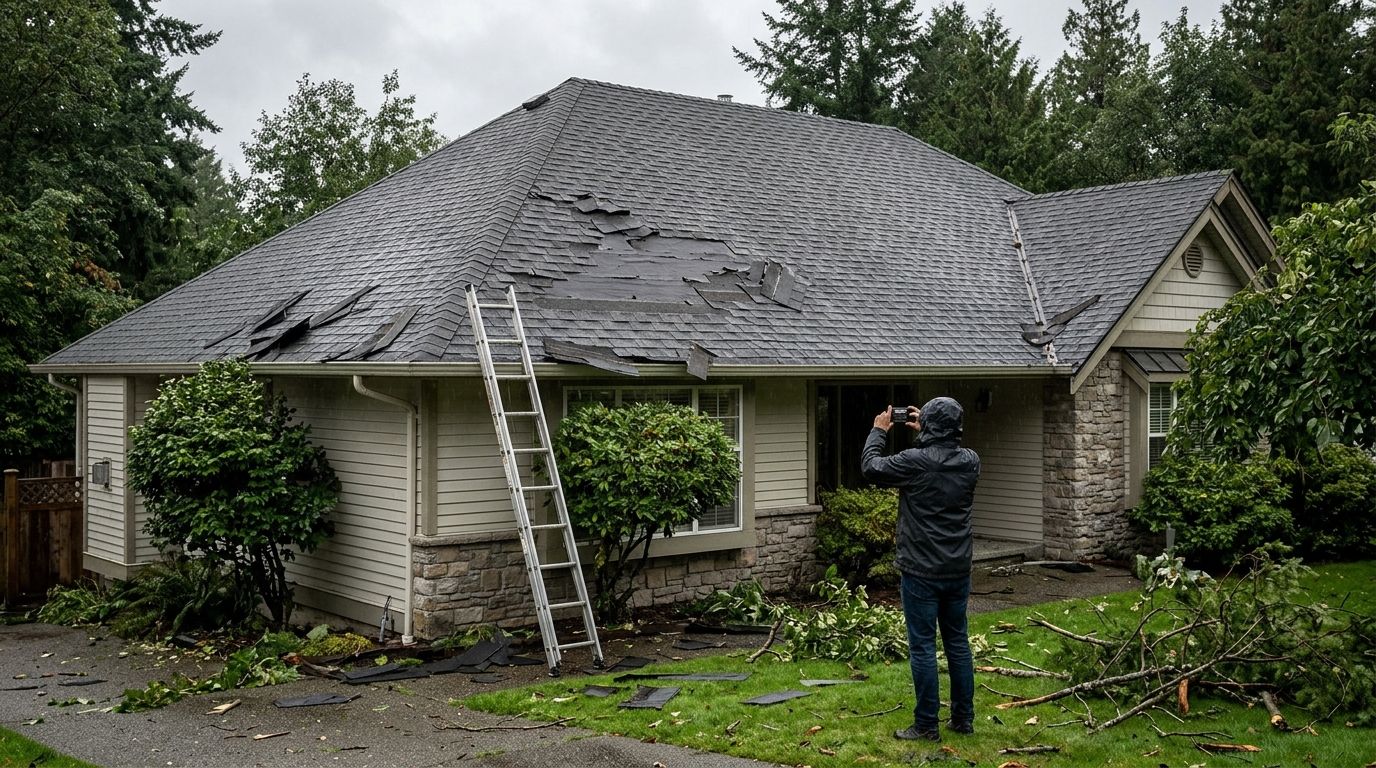
Once the storm has passed, your roof insurance claims for storm damage in Vancouver will be based on the evidence you collect. The difference is that your insurer will differentiate sudden storm damage, covered for repairs, from normal wear and tear, which is typically not covered. This means that having proof is very important for supporting your claim and ensuring that you get the right coverage.
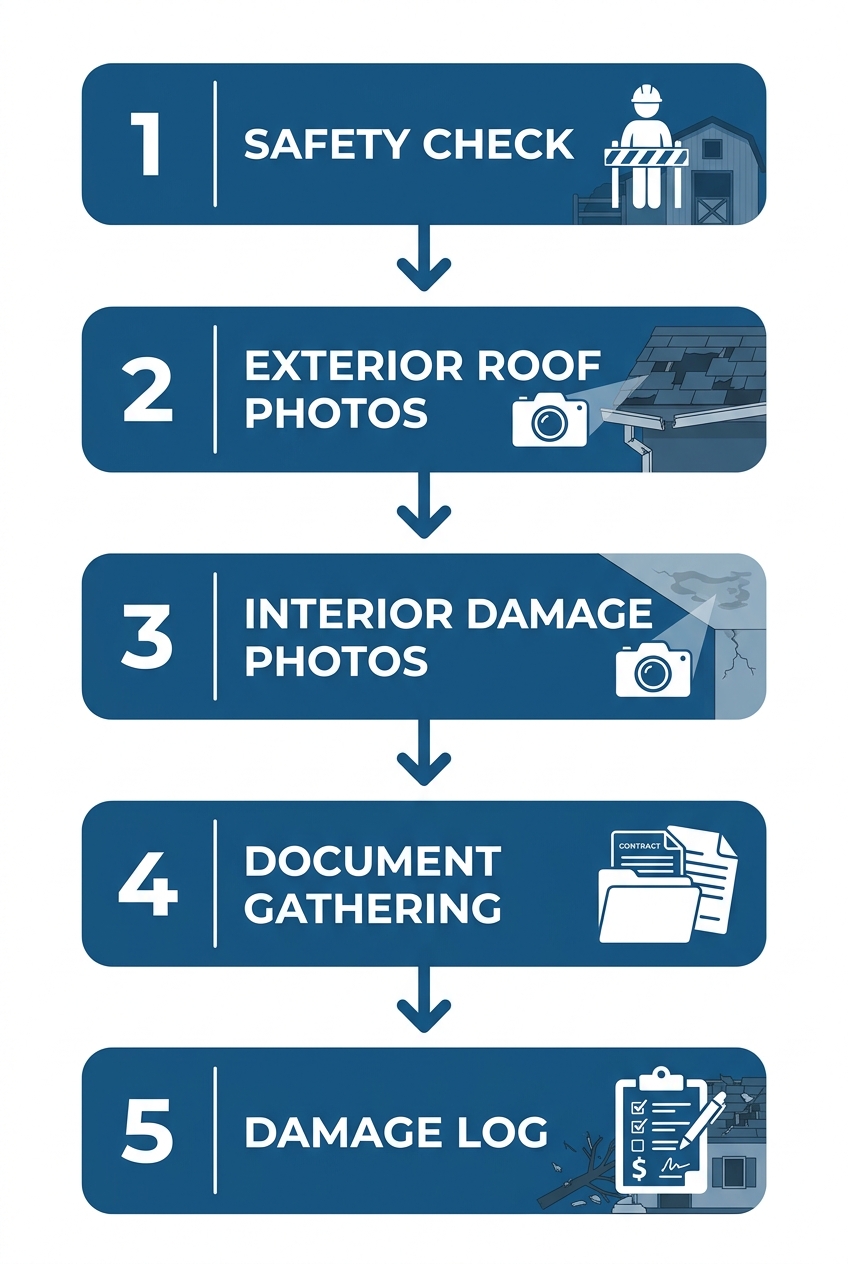
Here is what our team recommends for documenting damage in a way that will protect your home AND your claim:
- Safety first Ensure the area is safe before inspecting. Avoid climbing on a wet or damaged roof; use binoculars or a drone if needed. Document any hazards like downed power lines or unstable structures that may have contributed to the damage.
- Capture the exterior Take wide-angle and close-up photos of the entire roofline, focusing on missing shingles, dented flashing, and debris impact points. Include shots of gutters, downspouts, and vents to show how the storm affected these components.
- Inspect the interior Document water stains on ceilings, walls, and in the attic. Note the location, size, and pattern of stains, as these indicate the source and extent of interior damage caused by a storm-created roof leak.
- Gather supporting documents Collect receipts for any emergency repairs, cleanup costs, or temporary accommodations. Keep purchase records for roofing materials, warranties, and manufacturer specifications.
- Maintain a damage log Record dates, times, and descriptions of all damage observed and actions taken. Note any communications with your insurer or contractors, including claim numbers and adjuster visits.
Interior water damage caused by a roof leak from a storm is usually covered by a standard policy, although the roof repair might depend on whether the damage is sudden or due to wear and tear. Damage from wind driven debris is generally covered too, but insurers examine claims more carefully given the record-breaking insured damages in Canada in 2024.
When your documentation is ready, a professionally written inspection assessment can provide the clarity insurers value.
How Quickly to Report Storm Damage to Your Insurer in British Columbia
As soon as there’s storm damage on your roof, contact your insurance provider right away. This step begins your claim and preserves your ability to claim Additional Living Expenses if your home becomes uninhabitable. If you need to file a roof insurance claim after a storm, take pictures and videos and keep all receipts, warranty papers and purchase records before you call to help speed the process. Contact your insurer without delay.
Your standard Canadian home insurance should cover wind, fire, lightning and hail damage, so wind driven rain or hail dents in your roof are typically reportable. However, flooding will need some form of additional coverage, so check your policy if there was water coming through ground level openings. It is always a good idea to have your policy number and a clear description of the damage at hand when talking to the claims adjuster. Per the Insurance Bureau of Canada (IBC), policyholders should preserve damaged items unless they pose a health hazard, as they may be required for inspection by an insurance adjuster. Preserving damaged items aligns with IBC’s five steps to file a claim and its emphasis on collecting evidence and starting the process fast.
After you file, the IBC offers support through its Consumer Information Centre at 1-844-227-5422 and deploys Community Assistance Mobile Pavilion (CAMP) centres to disaster-stricken areas. You may choose your own roofing contractor for repairs, and a professional roofer’s damage report can strengthen your claim. Insurers sometimes provide lists of preferred vendors who offer guaranteed work, but policyholders retain the right to select their own. The IBC’s guidance underscores the importance of prompt communication with your broker to ensure a smooth claims experience.
When your claim is underway, having a professional inspection done can help to determine if the damage is storm damage, or just general wear and tear, so you can get the insurance coverage you’re entitled to.
Telling Storm Damage Apart from Normal Roof Wear and Tear
If you want to file a claim with your insurance company about storm-damaged roofs in Vancouver, you need to be able to tell the difference between storm damage and age related wear and tear. Insurance companies use this test to determine if they will cover damage or not: repairs for sudden storm damage caused by wind, hail, flying debris, or falling tree limbs are covered by most insurance policies; however, gradual, long term wear and tear is not. If a storm has torn open your roof creating an opening that allows water into your home, interior water damage is usually covered by your insurance policy; however, the roof repair itself is dependent upon whether the damage was sudden or progressive.
In our stormy climate in BC (atmospheric rivers, windstorms), this makes even more sense. Often we see that homeowners benefit from having their roofing professionals document the damage prior to the insurance adjuster coming out to inspect it, because the signs of the storm can go away fairly quickly. This helps you get your claim processed and assures that the adjuster will see how the damage happened when it did.
Signs of sudden storm damage
- Lifted, cracked, or missing shingles concentrated in one area
- Small impact marks from flying debris or hail
- Damaged flashing around vents, chimneys, or skylights
- Localized granule loss, often revealing the shingle’s base material
Signs of normal wear and tear
- Curling or cupping shingles spread evenly across the roof
- Uniform granule loss consistent with age, not concentrated in one spot
- Brittle, dry shingles that lack flexibility and show widespread deterioration
Based on advice from the Insurance Bureau of Canada, wind damage, including damage from flying debris or fallen trees, is typically covered in most home insurance policies. On the other hand, damage to roofs from general wear and tear or poor maintenance isn’t covered. Interior water damage due to an unexpected leak from an insured roof could potentially be covered, despite the fact that the underlying roof repair may hinge on the distinction between a storm and wear and tear. In British Columbia’s storm-prone climate, which frequently sees atmospheric rivers and windstorms, this distinction is particularly relevant for homeowners filing insurance claims.
Having a Roofing Contractor Present for the Insurance Adjuster’s Inspection
As you prepare your roof insurance claims for storm damage in Vancouver, one key thing to remember is getting a roofing contractor there for the adjuster’s inspection. Insurers let homeowners choose their contractor, which gives you the option to pick one who will be on-site for the inspection. Having a roofing contractor present helps spot damage that the adjuster might overlook. This is especially important in Vancouver, which experiences lots of storms. Wind-driven debris and sudden changes in weather may leave minor but expensive damage that would be otherwise missed.
We attend them because we help homeowners by pointing out key evidence. We look for raised or folded shingles, shingles that show the marks of debris hitting them, broken flashing around vents and chimneys, or any trace of a water path which might be an indicator of an indoor leak. That’s important because while interior water damage caused by a storm leaking in through a roof will generally be covered, the repair of the roof itself will not be paid unless the damage was caused suddenly by the storm and not due to years of wear and tear. Damage from wind-debris and tree-throwing would typically be covered in most policies, and the contractor’s trained eye helps the adjuster see these marks.
In addition to the inspection, bring your own paperwork to this meeting if possible. This could include photos of your roof before the storm, receipts from any recent maintenance work you did on the roof and notes taken during our free inspection. The Insurance Bureau of Canada encourages thorough record keeping of photos, videos, and receipts to support your claims. With our information lining up with your documentation, we can help the adjuster see the full scope of the damage, increasing the likelihood your claim reflects the true extent of the storm’s impact.
This can be a major help when explaining the origin of the damage to the insurance company later on. Having professional and personal evidence on hand is always better than not having anything for the adjuster to see when he or she comes to inspect the damages. Considering the crazy weather we get in Vancouver, being prepared with proof will never hurt you.
Frequently Asked Questions
What documentation do I need to support a roof insurance claim for storm damage in Vancouver?
Photographs and videos of the damage, receipts for emergency repairs or damaged items, and a dated log of the incident. Include close-ups of missing shingles, dented flashing, and interior water stains. These records help prove the storm caused the damage rather than wear and tear.
How quickly should I report storm damage to my insurance provider in British Columbia?
Report storm damage to your insurer as soon as possible after the storm passes. Prompt reporting starts your claim and preserves your ability to claim additional living expenses if needed. Keep your policy number and damage details ready when you call.
Does my standard homeowner’s insurance policy in Vancouver cover roof damage caused by wind or hail?
Standard home insurance policies in Vancouver typically cover roof damage caused by wind, such as flying debris or fallen trees, as well as sudden hail damage that creates openings in the roof. Interior water damage from a storm-induced leak is usually covered, though the roof repair depends on whether the damage was sudden or due to wear and tear.
How can I distinguish between storm-related roof damage and normal wear and tear for insurance purposes?
Storm damage often appears as lifted, cracked, or missing shingles concentrated in one area, small impact marks from debris, damaged flashing, or localized granule loss. Normal wear and tear shows curling or cupping shingles spread evenly, uniform granule loss, or brittle, dry shingles across the roof.
Should I have a professional roofing contractor present when the insurance adjuster inspects my roof?
Yes, having a professional roofing contractor present during the adjuster’s inspection helps identify damage that might be overlooked. Contractors can point out raised shingles, debris impact marks, broken flashing, or water paths indicating interior leaks, supporting your claim.
Your Next Steps for Storm Damage Recovery in Vancouver and Surrey
After the adjuster has made his inspection, the next step in recovering from the storm is to turn the approved claim into a completed roof repair. Make sure your policy covers the storm peril, as standard home insurance usually includes coverage for wind and hail damage but flood damage may require an addition to your policy, so you’ll know how much your insurance will cover before you make the repairs.
Time to get moving. Finish your documentation, call your insurance company to finalize the claim and have your roof assessed and repaired by a professional. Our local team serving Vancouver and Surrey has the experience and manufacturer-backed product warranties, along with fully insured crews, to fix your roof and your worries.
Coverage is determined by your policy and the cause of damage, so estimates and prices may vary after the onsite assessment. Warranties differ by manufacturer and installation, so make sure to check the specific terms before you decide.
Call 604-358-3436 or email contact@paragonroofingbc.ca for a free inspection and honest estimate.
Book Your Free Roof Inspection
You now have the full picture of roof insurance claims for storm damage in Vancouver, British Columbia, from documenting evidence and reporting promptly to standing alongside the adjuster’s inspection. Once your claim is underway, the final step is a professional assessment that distinguishes sudden storm damage from ordinary wear and tear. Our team at Paragon Roofing BC is ready to help with a complimentary, no-obligation inspection. We serve Vancouver, Surrey, and the broader Lower Mainland from our offices at 997 Seymour St Suite 250, Vancouver, BC V6B 3M1, Canada and 12233 92 Avenue, Surrey. Homeowners are free to choose their own roofing contractor for repairs, and our written inspection findings can support your claim. Manufacturer-backed product warranties apply to new installations, with terms varying by material. Call us today at 604-358-3436 to arrange your inspection.