
Table of Contents
- Navigating Strata Property Act Roof Maintenance in British Columbia
- Legal Framework Governing Strata Roof Maintenance in BC
- How Section 72 and Building Code Standards Apply to Strata Roofing
- Developing a Proactive Strata Roof Maintenance Plan
- In-Depth Details for Strata Roof Depreciation Reports
- Common Strata Roof Maintenance Questions
- Maintaining Compliance and Protecting Your Strata's Roof
Navigating Strata Property Act Roof Maintenance in British Columbia
Understanding BC Strata Property Act roof maintenance is essential for anyone involved in managing or owning a strata property. The Strata Property Act is the principal provincial legislation that defines how common assets—including roofs—must be maintained, repaired, and replaced. Roofs fall under the strata corporation’s responsibility, but the Act outlines situations where individual owners may share obligations.
Keeping a roof in good condition demands proactive planning, regular professional inspections, and accurate budgeting for both immediate repairs and future replacements. When these steps are neglected, small issues like a minor leak or flashing failure can escalate into serious structural damage and costly disputes between owners and the corporation.
For professional guidance on compliant roof maintenance, strata councils can rely on our comprehensive roofing services in Vancouver, British Columbia. With over two decades of local experience, Paragon Roofing BC provides the full suite of strata roofing solutions—from detailed inspections and preventative maintenance to emergency repairs and complete roof replacements. Our team understands the unique demands placed on multi-family properties across the Lower Mainland, and we help councils navigate both the practical and regulatory sides of roof stewardship. In the following section, we will examine the legal framework governing strata roof maintenance in BC to clarify specific obligations.
Legal Framework Governing Strata Roof Maintenance in BC
Building on the overview presented in “Navigating Strata Property Act Roof Maintenance in British Columbia,” the legal framework for strata roof maintenance in BC is rooted in the Strata Property Act (SPA). The SPA sets out the governance, management, and maintenance duties of all strata corporations in the province. Section 72 of the Act specifically obliges strata corporations to repair and maintain common property and common assets. Roofs, unless a strata plan explicitly designates them as limited common property, fall squarely within the definition of common property. Meeting strata roofing maintenance requirements in BC therefore demands that strata councils understand and fulfil this statutory duty.
The SPA establishes a standard of care that requires strata corporations to keep common property in a condition that is not disproportionate to the age and condition of the building. This means that while roofing materials naturally degrade over time, the strata must still ensure that the roof remains weathertight, secure, and fit for its intended purpose throughout its expected service life. In situations where a roof repair or replacement involves alterations to the building’s structure, a change in materials, or upgrades that affect fire resistance or load-bearing capacity, the BC Building Code comes into play. As outlined in the British Columbia strata roof maintenance regulations, failure to meet these obligations can expose the strata corporation to liability, court-ordered repairs, and regulatory penalties. In our role as a Trusted Roofing Contractor, we see how proactive compliance not only avoids such legal risks but also preserves the long-term asset value of the property. Through regular roof inspections and condition assessments, we assist strata councils in aligning their maintenance plans with the SPA and code standards, ensuring that minor issues are addressed before they escalate into costly systemic failures.
Understanding these legal responsibilities empowers strata councils to make decisions that protect both their property and their financial future. By adhering to the SPA and the BC Building Code, strata corporations reduce the risk of emergency repairs, insurance claim denials, and the hidden costs of deferred maintenance. A well-maintained roof contributes directly to the overall marketability and integrity of the building, reinforcing the collective investment of every unit owner. This legal foundation leads directly into how Section 72 and building codes apply in practice.
How Section 72 and Building Code Standards Apply to Strata Roofing
Building on the general legal framework, this section examines how Section 72 and the upcoming 2026 Building Code standards directly shape strata roof maintenance obligations in BC.
How Section 72 Compels Strata Roof Repairs
Section 72 of the BC Strata Property Act, as administered by the Government of British Columbia, creates a non-delegable, mandatory duty for strata corporations to repair and maintain all common property—including every roof that serves the building envelope. Unlike discretionary upkeep, a roof repair cannot simply be postponed: the law requires proactive intervention.
Regular inspections—we recommend at least biannual walk-throughs—allow councils to spot membrane wear, ponding water, and flashing failures before they escalate. Strata depreciation report roofing assessments supply the long-term condition data that councils need to budget for eventual replacement. Having current strata roof depreciation reports makes repair decisions transparent and defensible. Limited common property roofs, such as rooftop decks, fall under Section 72 when they form part of the building envelope.
| Aspect | Section 72 Requirement | Implications for Strata Councils |
|---|---|---|
| Common property roof repairs | Mandatory repair and maintenance of all common property roofs, including structural components. | Councils must budget for ongoing inspections and reserve funds for replacement; deferral is not an option when safety is at risk. |
| Limited common property roofs | If the roof forms part of the building envelope (e.g., a roof deck over a unit), the strata remains responsible for maintenance. | The corporation must still act, though unit-owner involvement or a separate approval process under strata bylaws may be required. |
| Emergency repairs | Section 72 authorizes immediate action to prevent danger or significant damage without a formal vote. | Councils can mobilize rapid repairs, protecting residents and reducing liability. |
| Deferral of repairs | Repairs cannot be deferred if they affect waterproofing, structural integrity, or occupant safety. | Delaying essential work risks Civil Resolution Tribunal orders, fines, and insurance difficulties. |
2026 Building Code Thermal Standards for Strata Roofs
Beyond Section 72, the 2026 BC Building Code update will introduce higher thermal performance requirements that directly affect roof replacement projects. The Government of British Columbia is raising the minimum R-value for roof assemblies to R-40. For strata complexes, this means a roof replacement is no longer a simple material swap—it often becomes an opportunity to upgrade insulation to meet the new code.
Strata councils planning a full reroof should anticipate a broader scope: adding rigid insulation above the deck or improving ventilation may be necessary to achieve required R-values.
Consequences of Non-Compliance with Provincial Regulations
Ignoring Section 72 obligations exposes a strata corporation to tangible consequences. The BC Civil Resolution Tribunal can order specific performance—in a 2022 case, a tribunal directed a strata to replace a leaking common property roof within 60 days—and may award costs against the corporation. Insurance complications are another risk: gradual roof deterioration is often excluded from coverage, and a denied claim after a major leak can leave the corporation responsible for full repair costs. Strata council members may also face personal liability if they fail to exercise reasonable care; findings of negligence can create personal financial exposure.
Understanding these compliance requirements lays the groundwork for a proactive strata roof maintenance plan that meets both statutory duties and long-term asset protection goals.
Developing a Proactive Strata Roof Maintenance Plan
With the legal framework of the Strata Property Act and Building Code standards established, the next step is developing a proactive maintenance plan that ensures compliance and extends roof life. A well-structured plan integrates routine inspections, depreciation report alignment, qualified contractor engagement, and strict deadline adherence.
The table below outlines recommended inspection and report update frequencies for various multi-family building types, helping strata councils align maintenance cycles with depreciation report timelines.
| Building Type | Recommended Inspection Frequency | Depreciation Report Update Interval |
|---|---|---|
| Low-rise Apartment | Bi-annual (spring and fall) + after major storms | Every 3 years |
| High-rise Condominium | Quarterly inspections | Every 3 years |
| Townhouse Complex | Annual inspection | Every 3 years |
Consistent data collection during inspections feeds depreciation reports and helps strata councils prioritise repairs before issues escalate.
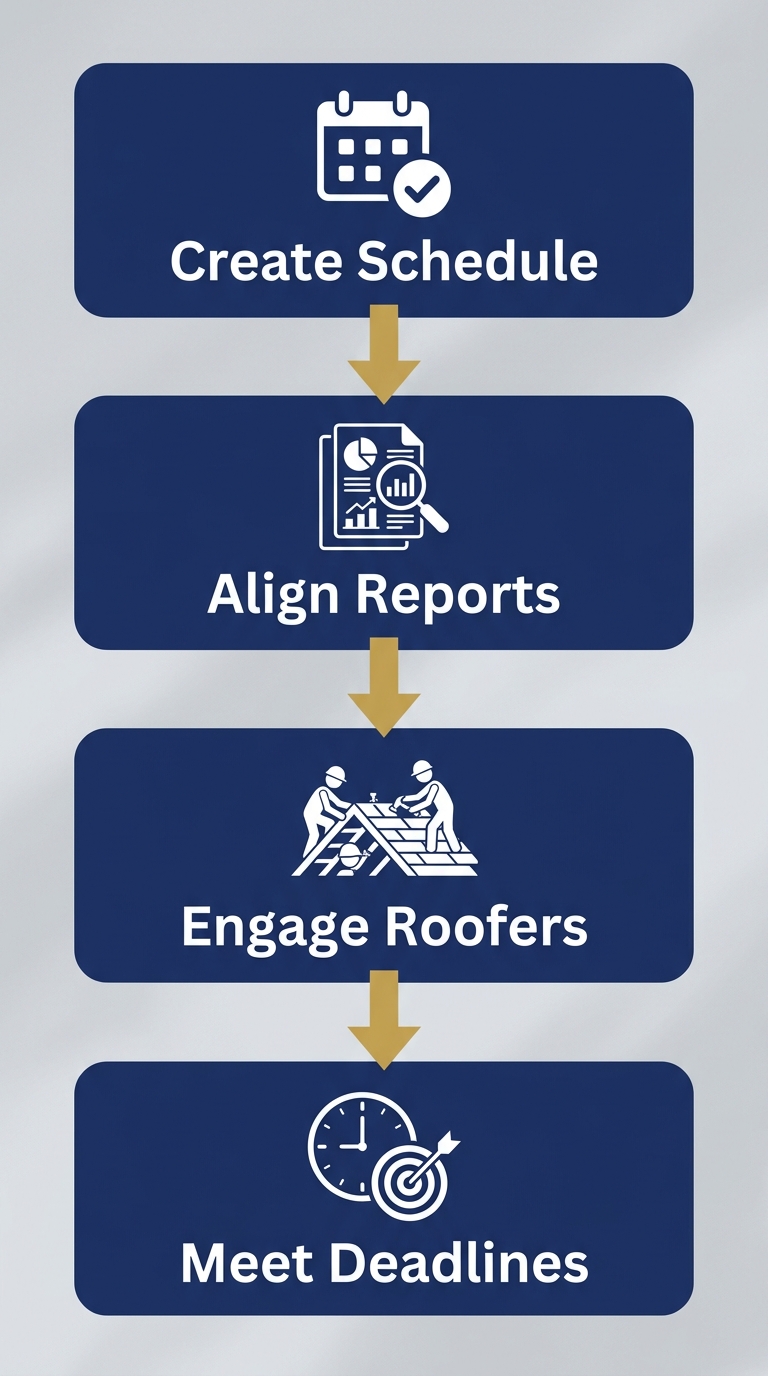
Creating a Roof Inspection Schedule That Satisfies the Act
The Strata Property Act requires regular maintenance to keep common property in good condition. For roofing, Paragon Roofing BC recommends at least two professional inspections per year—once in spring and once in fall—to address seasonal wear from heavy rainfall and windstorms in Vancouver.
A practical schedule might include:
- Early April: assess winter wear, clear drains, and check for moss growth.
- Early October: prepare for winter rains, verify fasteners, and inspect membrane integrity.
- After significant wind or rain events: emergency inspection to record immediate concerns.
Documented inspection reports provide the evidence needed for depreciation report inputs and warranty compliance.
Aligning Maintenance Timing with Depreciation Reports
Depreciation reports forecast remaining service life and replacement needs for roofing assemblies, enabling strata councils to plan capital expenditures. By coordinating maintenance with report timelines, councils can schedule replacements several years in advance and avoid urgent special levies.
Recommended practices:
- Use inspection findings—membrane condition, flashing integrity, drainage performance—to update depreciation projections.
- Schedule major work 3–5 years ahead when reports indicate end-of-life to allow phased budgeting.
- Maintain clear photo documentation and measurements so estimates in the depreciation report reflect observed conditions.
These steps make replacement planning data-driven rather than reactive.
Engaging Professional Roofers for Strata Inspections and Reports
When selecting a contractor, strata councils should verify specific qualifications: a valid BC trade license (Class A or B), RCABC membership, manufacturer certifications (CertainTeed or Malarkey), valid WCB coverage, and substantial strata roofing experience in Greater Vancouver. Paragon Roofing BC meets these criteria and offers complimentary inspections to gather technical data for depreciation reports.
When choosing a roofing contractor in Vancouver, strata councils should confirm licensing, RCABC compliance, and manufacturer certifications.
Meeting Deadlines for Depreciation Report Updates
Under the Strata Property Act, strata corporations must complete their first depreciation report within two years of formation and update it every three years thereafter. Each update should include current roof condition, estimated remaining lifespan, replacement cost estimates, and any deferred maintenance items.
We recommend integrating depreciation report cycles into annual planning calendars so inspection data are collected, analysed, and submitted well before the three-year deadline. These maintenance steps set the stage for a deeper look into the strata roof depreciation report itself, which we examine in the following section.
In-Depth Details for Strata Roof Depreciation Reports
Building on the maintenance planning outlined earlier, a depreciation report serves as the financial and structural foundation. Under BC’s Strata Property Act, stratas with five or more units must hold a current depreciation report, unless owners waive the requirement by a ¾ vote resolution. That waiver must be renewed every three years.
In our work with strata corporations throughout British Columbia, we’ve seen that a well-structured report includes four essential components:
- Physical condition assessment: A thorough examination of roofing materials, flashings, drainage, and membrane integrity, documenting existing defects and wear.
- 30-year maintenance schedule: timeline of recommended inspections, repairs, and preventative actions to maintain performance.
- Reserve fund study: An analysis of reserve fund balances and contribution levels relative to projected roofing expenditures.
- Financial projection: A cash-flow forecast illustrating how annual contributions will fund anticipated replacements, accounting for inflation and escalation.
For the roof section specifically, the report must identify the estimated remaining service life, the replacement cost, and the recommended year for major repairs or full replacement. These metrics allow strata councils to align reserve allocations with actual physical condition, minimizing the chance of surprise special levies.
The Strata Property Act requires that depreciation reports be updated every three years. Out-of-date reports undermine accurate financial planning—an aging roof with updated deterioration data could trigger a shortfall in reserve funds, leaving the corporation exposed when major work becomes necessary.
It is critical to understand that a depreciation report differs from an operational maintenance plan. The report is a statutory document that projects financial needs, while the maintenance plan translates those projections into concrete tasks, schedules, and service provider arrangements. The report informs the strategy; the plan executes it.
As strata councils and property managers digest the report’s findings, practical questions arise about implementation priorities, contractor scopes, and budget timing. Those concerns are the focus of the following section—‘Common Strata Roof Maintenance Questions.’ At Paragon Roofing BC, We’re Ready To Help turn your report’s recommendations into a durable, cost-effective reality.
Common Strata Roof Maintenance Questions
Depreciation reports inform long-term planning, but strata councils face immediate maintenance questions.
What are the strata corporation’s legal obligations? Under the BC Strata Property Act, strata corporations must maintain common roofing and have a current depreciation report—Paragon Roofing BC emphasizes that this ensures proper reserve funding.
How often should a strata roof be inspected? We recommend annual inspections and checks after major storms for strata properties in Vancouver and Surrey. Our certified inspectors evaluate membrane condition, drainage, leaks, and flashings.
Who pays for roof maintenance? Maintenance costs are covered by the strata’s contingency reserve fund or operating budget—never by individual owners. Regular upkeep helps avoid surprise special levies.
What are the risks of deferring maintenance? Deferred maintenance can void warranties and cause emergency repairs, reducing property value. Proactive care protects the building envelope.
Maintaining Compliance and Protecting Your Strata’s Roof
After addressing common strata roof maintenance questions, it’s time to turn to the critical topic of maintaining compliance and protecting your strata’s roof. Proactive roof care is a legal duty under BC Strata Property Act roof maintenance requirements. Regular inspections catch minor issues before they drain reserve funds. We at Paragon Roofing BC provide compliance support, warranty-backed repairs, and maintenance planning. We recommend scheduling annual inspections. Proper documentation aids depreciation reports and insurance claims. Contact us for a complimentary roof assessment to ensure your strata stays compliant and protected.
Get Expert Strata Roofing Support
Now that you’ve explored the key rules and requirements of BC Strata Property Act roof maintenance—from Section 72 obligations to depreciation report deadlines and proactive inspection schedules—you’re well-equipped to protect your strata’s most important asset. Compliance with these regulations is not just a legal duty; it’s a strategic investment in your property’s long-term value and safety. Paragon Roofing BC brings extensive local experience to help strata councils in every stage of the maintenance process, whether you need a thorough roof condition assessment, assistance aligning repairs with depreciation report forecasts, or a comprehensive maintenance plan. Our team serves strata communities throughout Greater Vancouver, Surrey, and across the Lower Mainland with reliable, manufacturer-backed roofing solutions. We understand the specific challenges of coastal BC weather and the importance of meeting both current and upcoming building code standards, including the 2026 energy efficiency requirements. Reach out to discuss your strata’s unique needs and learn how we can support your compliance and asset protection goals. Call 604-358-3436 to schedule a professional roof assessment and take the next step in responsible roof stewardship.
Get Expert Strata Roofing Support
