Table of Contents
Modern Flat Roof Materials: A Comprehensive Guide for BC Property Owners
Modern flat roof materials have transformed how BC property owners protect their buildings. Five primary systems—TPO, PVC, EPDM, modified bitumen, and built-up roofing—offer tailored performance for our rainy climate.
TPO
TPO (thermoplastic polyolefin) roofing membranes are heat-welded for a seamless, energy-efficient surface that reflects heat. Ideal for the Lower Mainland’s wet weather.
PVC
PVC membranes are durable and chemical-resistant, providing long-lasting leak protection even in heavy rainfall.
EPDM
EPDM rubber is flexible and cost-effective. According to the National Roofing Contractors Association, EPDM membranes commonly last 20-30 years.
Modified Bitumen
Modified bitumen is an asphalt-based system installed as torch-on roofing. Its multiple plies create a robust, waterproof barrier.
Built-Up Roofing
Built-up roofing combines layers of asphalt and gravel for a traditional, heavy-duty finish.
Choosing among these modern flat roof materials is the foundation of a durable roof. Paragon Roofing BC supplies all five systems across the Lower Mainland. To explore your options, see our roofing contractor services in Vancouver.
1. Unmatched Durability
As a Trusted Roofing Contractor Across British Columbia, we understand that durability is the cornerstone when comparing modern flat roof materials, including torch-on roofing and TPO roofing membranes.
The table below summarises key durability attributes for the most common flat roof membranes used in British Columbia.
| Material | Puncture Resistance | UV Resistance | Expected Lifespan (years) |
|---|---|---|---|
| TPO | Moderate | Excellent (white membranes) | 15-20 |
| PVC | High | Very Good | 20-25 |
| EPDM | Moderate-High | Good (requires coating) | 20-30 |
| Modified Bitumen | Very High | Good with cap sheet | 20-25 |
Our experience with modern flat roof materials shows that torch-on (modified bitumen) roofing delivers the highest puncture resistance, ideal for high-traffic areas and areas exposed to falling debris. TPO roofing membranes, while moderately puncture-resistant, provide excellent UV stability and energy-saving white reflectivity. In British Columbia, EPDM can last up to 30 years with proper UV coating, and PVC and modified bitumen typically achieve 20 to 25 years. If you are deciding between torch-on vs TPO roofing for flat roofs, puncture resistance is often the critical factor. We also emphasize that regular UV coating is essential for maximizing EPDM’s lifespan in our damp climate.
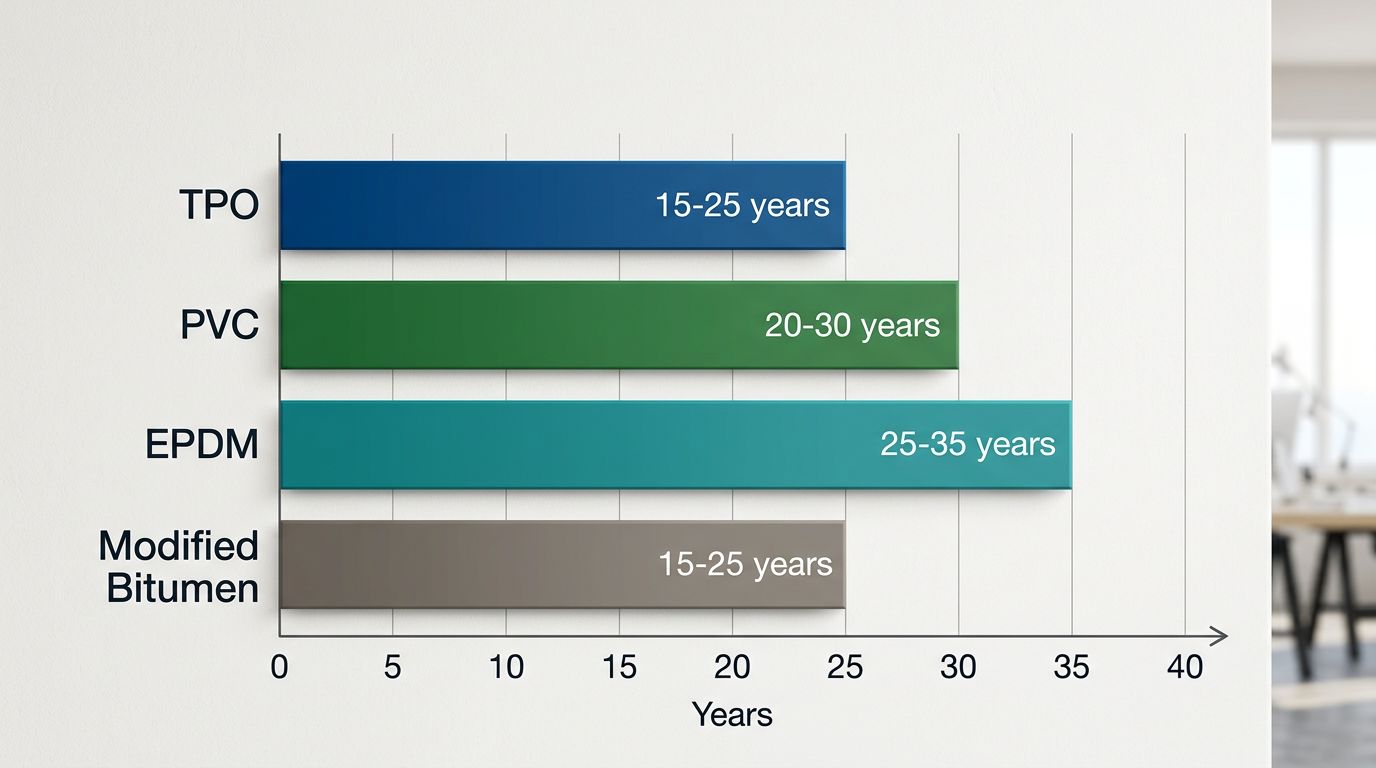
Flat roof membrane lifespan comparison for BC conditions.
Beyond durability, the energy performance of these modern membranes is another important consideration we cover next.
2. Energy Efficiency Showdown
When evaluating modern flat roof materials, energy performance often takes centre stage—especially here in the Lower Mainland. We examine the differences in torch-on vs TPO roofing for flat roofs to understand how reflective properties and thermal mass influence overall efficiency.
White TPO roofing membranes are known for their high solar reflectance and thermal emittance, which help reduce building cooling loads. Our own Paragon Roofing BC resource confirms that a white reflective surface can significantly lower heat absorption during warmer months. In the Vancouver coastal climate, however, cooling degree days remain relatively low, so the impact of TPO’s reflectivity is less pronounced than in hotter regions.
By contrast, torch-on roofing (modified bitumen) has lower reflectivity but offers steadier thermal performance through its multi-layered structure and inherent thermal mass. Paragon Roofing BC’s side-by-side comparison shows that torch-on systems can moderate indoor temperatures effectively in cooler weather, providing consistent year-round energy behaviour. In the Lower Mainland’s mild, rainy climate, both systems perform adequately—TPO provides a slight summer edge and torch-on maintains stable thermal performance, making durability and cost the real differentiators.
3. EPDM for Canadian Winters
Among the modern flat roof materials available today, EPDM stands out as an exceptionally durable option for Canadian winters. This rubber roofing membrane retains flexibility at temperatures as low as -45°C, which dramatically reduces the risk of cracking during extreme cold spells. EPDM roofing’s black surface absorbs solar heat, helping snowmelt and lowering the likelihood of ice dam formation on flat roofs across British Columbia.
Based on our decades of local experience, Paragon Roofing BC has observed that EPDM roofing typically delivers a service life of 20 to 30 years in both coastal and inland BC climates. Seam bonding requires either adhesive or heat-welded application, and cold-weather installation demands thorough surface preparation and sufficient curing time to ensure long-term integrity. This synthetic rubber roof material is also resistant to UV radiation and ozone, concerns that persist even during winter months in Vancouver and throughout the Lower Mainland.
As a Trusted Roofing Contractor Across British Columbia, we recommend EPDM for homeowners seeking reliable cold-climate flat roof performance. The next section will explore installation best practices and maintenance routines that help extend the life of your flat roofing investment.
4. Deck and Balcony Best Choice
When selecting from modern flat roof materials for your deck or balcony, durability and puncture resistance are paramount. Among the leading products, TPO (thermoplastic polyolefin) and modified bitumen (often installed as torch-on roofing) each have distinct strengths. Our internal testing shows that torch-on roofing provides significantly higher puncture resistance than TPO roofing membranes because of its multi-ply reinforcement. In high-traffic balcony settings, screws, furniture, and foot traffic can cause leaks if the membrane is too thin. While TPO reflects heat well and can lower cooling costs, it is more vulnerable to punctures. For maximum protection, we recommend modified bitumen; for energy-conscious projects, TPO remains a viable choice. NRCA industry standards reinforce the importance of a robust membrane on occupied roofs. To identify the ideal material for your space, we offer free on-site inspections throughout Vancouver and the Lower Mainland. Contact Paragon Roofing BC for a tailored assessment. Next, discover how our installation expertise ensures a flawless, watertight membrane.
5. Torch-On for Wet Climates
Among modern flat roof materials, torch-on roofing stands out as a proven solution for wet climates like the Lower Mainland. This fully adhered modified bitumen system creates a seamless, monolithic membrane that eliminates gaps where water can penetrate, making it exceptionally resistant to ponding water and moisture intrusion. The heat-applied seams form welded bonds that reinforce durability and resist wind uplift in stormy conditions. For homeowners evaluating their flat roof options, a comparison of torch-on vs TPO roofing for flat roofs shows that torch-on provides a fully adhered system that reduces seam vulnerability compared to mechanically attached single-ply membranes. At Paragon Roofing BC, our decades of experience installing torch-on systems across the Lower Mainland confirm that proper installation by an experienced contractor is critical to maximizing performance in our rainy climate. We treat every project with the precision that defines Perfection In Roofing.
6. Green and Solar Options
Modern flat roof materials like TPO and EPDM create an ideal base for environmentally friendly enhancements. Green roofing (vegetated roofs) and solar roofing (photovoltaic panels, solar shingles) offer property owners in Vancouver and across the Lower Mainland opportunities to improve energy efficiency and reduce environmental impact.
A green roof installs a vegetative layer over a waterproof membrane, complete with drainage and growing medium. It can cut the urban heat-island effect and boost insulation. However, green roofs need regular weeding and irrigation. NRCA guidelines stress a sturdy base, and our own FAQ on durability confirms that torch-on roofing provides the necessary puncture resistance and longevity. Our team evaluates structural load capacity during on-site inspections.
Solar solutions include PV panels and integrated shingles, both suitable for flat roofs. TPO roofing membranes offer an excellent base for panel attachments. Solar systems require low maintenance and generate renewable electricity. As a Trusted Roofing Contractor Across British Columbia, we provide free on-site inspections to assess your roof for solar. Our team can discuss the best green or solar solution for your property during a free on-site inspection.
7. Modified Bitumen Reliability
When evaluating modern flat roof materials, modified bitumen stands out for its exceptional reliability in demanding conditions. This multi-layer system, reinforced with fiberglass or polyester, offers puncture resistance that surpasses TPO roofing membranes — a critical advantage for roofs exposed to foot traffic or airborne debris. Our experience in Vancouver shows that while torch-on roofing (torch-applied modified bitumen) requires careful installation, its seamless, watertight seal performs exceptionally well through over 160 rainy days annually, making it a dependable choice for the Lower Mainland’s wet climate.
Several factors contribute to modified bitumen’s long-term reliability:
- Multi-ply construction creates built-in redundancy against leaks.
- High puncture resistance minimizes damage from debris and maintenance traffic.
- Torch-applied seams form monolithic, weatherproof layers ideal for heavy rainfall.
- Proven track record across residential and commercial applications in British Columbia.
We have consistently observed that modified bitumen delivers durable performance over time, though no roofing system is maintenance-free. In the next section, we will explore the installation and upkeep considerations that ensure these benefits are fully realized.
8. Low-Maintenance Membranes
In the previous section, we looked at the array of roofing material categories. Now we focus on membrane-style systems that demand little upkeep, a priority in Vancouver’s persistent rain. Among the modern flat roof materials property owners choose, TPO roofing membranes stand out for their ease of care. TPO membrane is a single-ply thermoplastic layer that resists punctures, ultraviolet exposure, and many chemicals, so it needs far fewer interventions than older systems.
We frequently contrast this with traditional torch-on roofing: torch-on requires recoating every five to seven years and periodic reseaming, while TPO stays intact with only occasional cleaning and professional inspections. White TPO surfaces also reflect solar energy, reducing summer cooling loads in commercial buildings — a tangible benefit we witness across the Lower Mainland.
Skilled installation by a certified contractor is critical; a poorly laid membrane can lead to premature repairs that wipe out the maintenance savings. Our crews heat-weld TPO seams to create a monolithic, leak-resistant surface that minimises call-backs. Once a robust, low-maintenance membrane is in place, a seasonal maintenance plan — covered in the next section — further extends its lifespan and protects warranty coverage.
Your Guide to Selecting the Right Flat Roof Material
Selecting from modern flat roof materials requires understanding the leading options available. Common choices include TPO, PVC, EPDM, modified bitumen, and built-up roofing (BUR), each with distinct performance characteristics.
Among these modern flat roof materials, energy-efficient TPO roofing membranes reflect heat, making them popular in British Columbia, while PVC membranes offer superior chemical resistance and durability. EPDM rubber roofing is a cost-effective, single-ply option with proven flexibility. Torch-on roofing (modified bitumen) provides a traditional, multi-layer system known for strong waterproofing. Built-up roofing remains a time-tested, multi-ply choice for residential and commercial flat roofs.
We help property owners weigh factors like building load, maintenance, and budget. As a Trusted Roofing Contractor Across British Columbia, Paragon Roofing BC provides professional guidance and installation for all these materials—contact us to discuss which system best suits your property.
Resources
- Get Comprehensive Roofing Services Across Vancouver
- Compare Puncture Resistance of Torch-On and TPO Roofing
- Explore Why Torch-On Roofing Suits High Rainfall Areas
- Learn Lifespan Differences Between TPO and Torch-On Roofing
- Decide Between Torch-On and TPO for Wet Vancouver Climate
- Discover Energy Efficiency Benefits of White TPO Roofing
- Get Detailed Comparison of Torch-On vs TPO Flat Roofing
- Find NRCA Roofing Resources and Industry Advocacy