
Table of Contents
- Understanding Rotted Roof Decking in Vancouver, British Columbia
- Common Causes of Roof Deck Rot in Vancouver Homes
- Repair or Replace? Addressing Rotted Roof Sheathing in British Columbia
- Is Rotted Roof Decking a Structural Emergency in Vancouver?
- The Roof Deck Repair Process: From Inspection to Completion
- Choosing a Trusted Roofing Contractor for Rotted Decking Repairs in Vancouver
- Secure Your Home with Professional Rotted Decking Repairs in Vancouver
Understanding Rotted Roof Decking in Vancouver, British Columbia
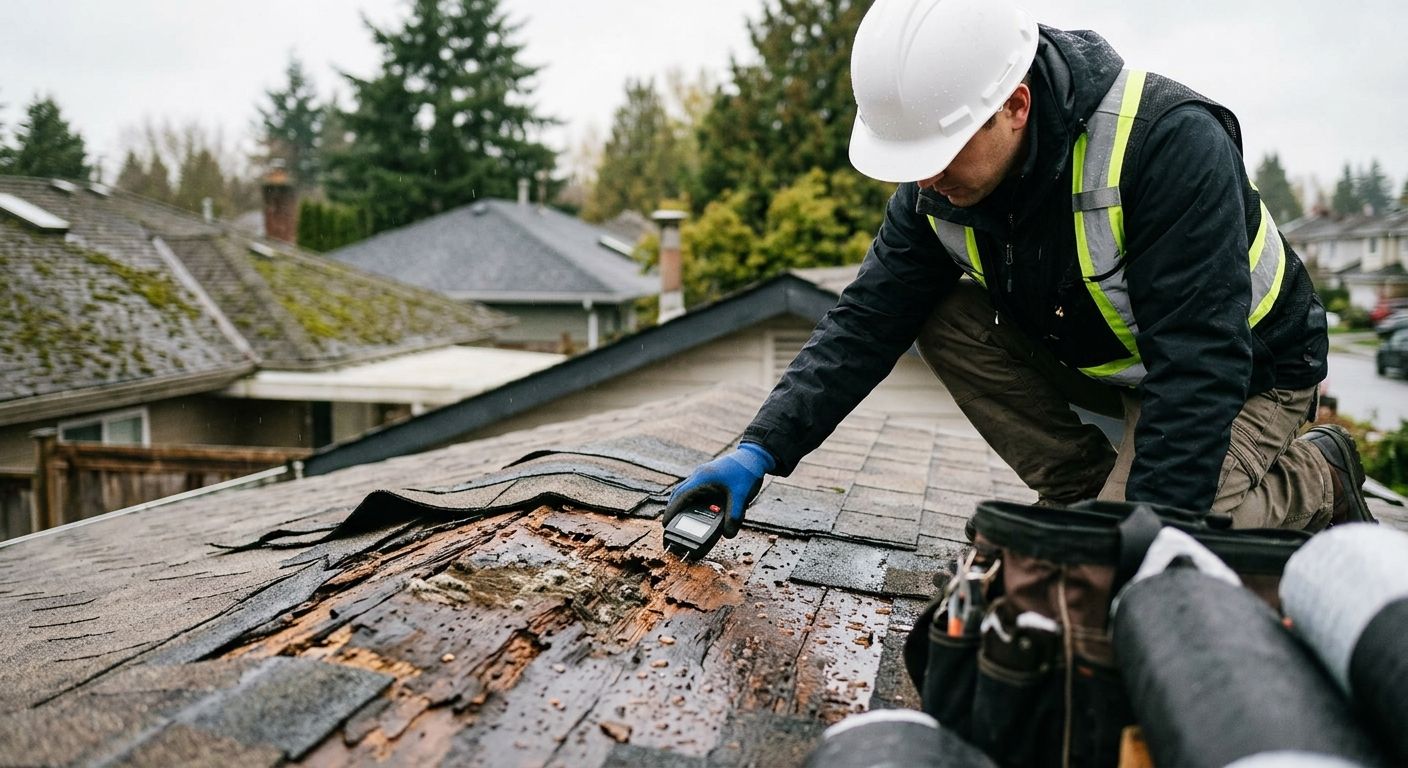
One serious structural issue commercial property owners face is rotted roof decking—the deterioration of plywood or OSB sheathing beneath the roofing material due to prolonged moisture exposure. In Vancouver, heavy rainfall and temperature swings accelerate this damage, particularly in buildings with poor attic ventilation or unresolved leaks. We frequently encounter decking rot during inspections and know how quickly it can compromise a roof’s integrity.
Common signs of roof water damage include sagging or spongy areas on the roof surface, persistent musty odors in upper floors, and dark ceiling water stains—visible indicators that moisture has already saturated the decking. Peeling interior paint and attic mold growth are additional warnings. Ignoring these symptoms can lead to structural failure, escalating repair costs, and serious safety hazards.
Our team at Paragon Roofing BC provides complimentary roof inspections to assess decking condition and identify hidden damage before it worsens. Claim your complimentary roof inspection today, or contact us to arrange professional roof repairs in Delta—prompt action prevents costly structural repairs.
Common Causes of Roof Deck Rot in Vancouver Homes\n\nUnderstanding what leads to rotted roof decking helps you catch problems early. In Vancouver, annual rainfall exceeding 1,200 mm creates persistent moisture exposure that can saturate roof decks and initiate decay. According to field observations from our team at Paragon Roofing BC, several recurring factors drive this deterioration, from climate conditions to material choices and maintenance habits. Recognizing these contributors is the first step toward protecting your home.\n\nPersistent Moisture and Humidity forms the primary threat to roof deck integrity in our coastal climate. Vancouver’s temperate rainforest environment means your roof is almost constantly wet during fall and winter months. When moisture infiltrates through even minor breaches in the roofing surface, the plywood or oriented strand board decking absorbs water like a sponge. Over time, this trapped moisture creates ideal conditions for fungal growth and structural breakdown, turning sound decking into compromised material that can undermine the entire roofing system.\n\nInadequate Ventilation accelerates deck rot dramatically, especially in homes with vaulted ceilings or complex roof geometries. Without proper airflow, warm humid air rising from living spaces becomes trapped against the underside of the roof deck. This condensation saturates the wood from below, and without adequate intake and exhaust vents to remove it, the decking remains perpetually damp. RCABC standards emphasize that proper attic ventilation with a balanced intake and exhaust system is essential to prevent moisture accumulation and extend roof lifespan. Our inspections of older homes across Vancouver and the Lower Mainland frequently reveal undersized or blocked venting as a contributing factor to rotted roof decking.\n\nAging Cedar Shakes and Materials present unique vulnerabilities in Vancouver’s older neighborhoods. Cedar shake roofs, which you will find throughout areas like Kitsilano and Point Grey, are naturally porous and absorb moisture readily. Over years of exposure to our wet climate, these shakes can delaminate, curl, and crack—creating direct pathways for water to reach the deck beneath. Many of these roofs have exceeded their expected service life and lack the modern ice and water shield underlayment that current building codes require. The result is progressive decay that remains hidden until signs of roof water damage appear inside the home, such as peeling paint or musty attic odors.\n\nFlashing and Ice Damming Issues introduce water at the most vulnerable points of any roof. Poorly installed or aging flashing around chimneys, skylights, and vents allows water to seep under shingles and saturate the decking. During winter freeze-thaw cycles, ice damming along eaves compounds the problem—trapped meltwater backs up under shingles and directly contacts the deck structure. Even small breaches can produce the ceiling water stains that homeowners eventually notice on their interior ceilings. The interaction between metal flashing and wood decking is unforgiving; any gap becomes a channel for persistent moisture penetration.\n\nOnce you recognize these causes, it is time to check for the warning signs—and schedule a professional inspection. If you suspect rotted roof decking in your West Vancouver home, our team offers expert roof repair in West Vancouver to restore your roof’s integrity. We encourage you to claim your complimentary roof inspection today so we can assess your roof deck condition before minor concerns become major repairs.\n
Repair or Replace? Addressing Rotted Roof Sheathing in British Columbia
Rotted roof decking is a critical concern for BC homeowners, where prolonged exposure to rain and moisture can silently compromise the structural base beneath your shingles. Deciding whether to repair localized damage or replace entire sections of sheathing requires a clear understanding of the damage’s extent and the long-term implications for your home.
Diagnosing this issue early can prevent more extensive structural problems. Homeowners should be vigilant for key signs of roof water damage, including sagging or soft spots on the roof surface, warped or missing shingles, and dark, damp attic insulation accompanied by a musty odor. Inside your home, ceiling water stains often signal that moisture has already penetrated the sheathing, while visible water stains on walls can indicate a more advanced leak. As a trusted roofing contractor, we find that catching these indicators early is crucial, as the extent of the rotted roof decking ultimately determines the most sensible and cost-effective path forward.
A practical rule of thumb is that localized rot affecting less than 20% of the total roof area can frequently be repaired by cutting out the damaged plywood or OSB and seamlessly replacing those sections. For this type of targeted work, our team provides professional roof repair in Port Coquitlam that effectively preserves the remaining, undamaged roof structure. However, widespread deterioration typically calls for a full sheathing replacement. This scenario is also the ideal opportunity to consider a more durable roof covering; our metal roofing services offer exceptional longevity and resistance to rot recurrence, making it a premium solution when replacing sheathing and the roof system together. Regardless of the path chosen, rotted decking compromises your roof’s ability to bear snow loads and wind, which are critical factors under BC building codes, making a professional assessment essential.
The most reliable way to make this decision is with a thorough, expert evaluation. We’re Ready To Help you understand your roof’s true condition without any obligation. Claim your complimentary roof inspection today, and let our experienced team provide the clarity and transparent, cost-effective options you need. Protecting Your Home. Building Your Family’s Future.
Is Rotted Roof Decking a Structural Emergency in Vancouver?
Rotted roof decking is one of the most serious conditions a homeowner can face, but does it always qualify as a structural emergency? Decayed decking—the plywood or oriented strand board sheathing that sits beneath your shingles—forms the foundation of your entire roofing system. When this layer begins to deteriorate, it compromises the roof’s ability to bear weight and resist moisture intrusion. However, not every instance of rot demands immediate evacuation or emergency shoring. The critical question is the extent and location of the damage.
In Vancouver’s climate, where relentless rainfall and prolonged damp conditions are the norm, rotted roof decking develops faster than in drier regions. Small, unresolved leaks allow moisture to saturate the wood sheathing over months or years, feeding fungal growth that breaks down the structural fibres. Once decking begins to decay, it loses its fastening strength—nails back out, shingles detach, and the roof’s load-bearing capacity diminishes. Seasonal risk factors compound the problem: heavy winter rains accelerate active leaks while freeze-thaw cycles can expand moisture-related fissures. As Paragon Roofing BC has observed through two decades of inspections across Greater Vancouver, what begins as a minor leak often masks advanced decking deterioration by the time signs of roof water damage appear inside the home.
The distinction between a repair scenario and an emergency depends primarily on the spread of the decay. Localized rot confined to one sheet of plywood between two trusses is typically manageable with targeted replacement during a scheduled repair. However, when decay extends across multiple rafters or trusses—particularly in load-bearing sections near the ridge or eaves—the structural integrity of the entire roof plane may be compromised. In advanced stages, ceiling water stains become visible and the ceiling surface may sag or feel spongy, indicating that the roof deck is failing. According to the RCABC roofing association, roof decking that has lost a significant percentage of its structural strength must be treated as an immediate safety risk requiring professional containment before permanent repairs can proceed.
If you suspect your decking is compromised, our certified team will inspect the attic, sheathing, and framing to determine whether emergency measures are necessary. We’re Ready To Help you identify the right course of action, from isolated deck replacement to full structural remediation. Claim your complimentary roof inspection and let our experienced crew assess the condition of your roof with the urgency it deserves.
Please note that insurance coverage for emergency roof repairs depends on your homeowner’s policy and the specific cause of the damage.
The Roof Deck Repair Process: From Inspection to Completion
Once rotted roof decking is identified through visible indicators like interior ceiling water stains or exterior signs of roof water damage, a systematic repair process must begin. We approach every deck repair with the same precision—designed to restore the structural integrity of the roof while preventing future moisture infiltration. Our team brings over two decades of local experience to each project, ensuring that from the initial visit to the final walk-around, every step adheres to the high standards expected from a trusted roofing contractor.
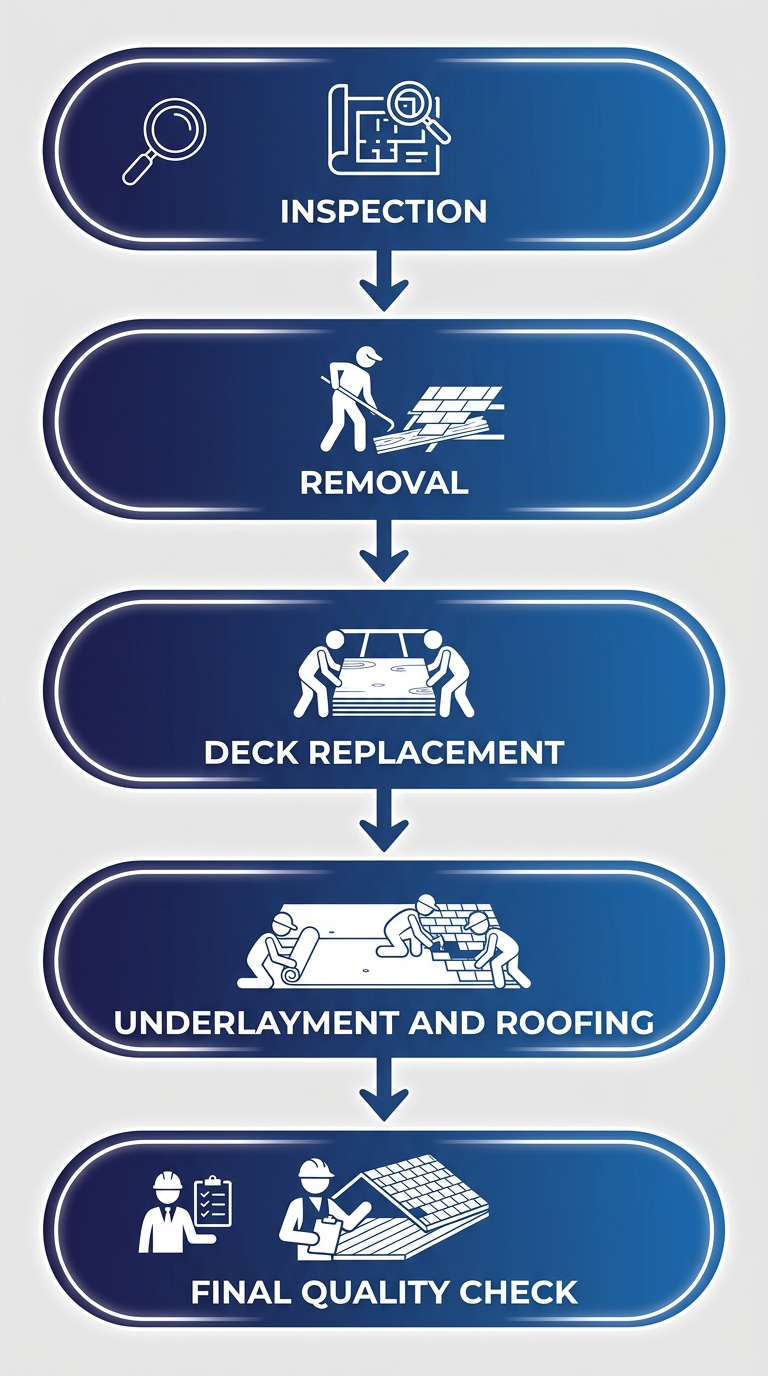
Five-step roof deck repair process from inspection to quality check
Inspection and Damage Assessment
The first step is a comprehensive roof inspection focused on uncovering the full extent of the deterioration. Our certified installers look beyond surface-level damage, probing for spongy decking that indicates advanced rot and tracing water stains on ceiling interiors back to their source in the roof assembly. In many cases, damaged roof deck sections are hidden beneath otherwise sound shingles or metal panels, which is why we rely on both visual assessment and physical testing. We identify moisture-damaged sheathing, assess whether the structural framing has been compromised, and document everything with detailed photos. This evidence-based evaluation allows us to present an accurate scope of repair and a transparent estimate before any work begins.
Removal, Replacement, and Finishing
Once the inspection is complete, we cut out the rotted sections of plywood or OSB and responsibly dispose of the debris. The replacement material is pressure-treated plywood or OSB that matches the original thickness specifications, secured with corrosion-resistant fasteners to meet the demands of the Pacific Northwest’s wet climate. After the new decking is in place, we install a high-quality underlayment—typically an ice and water shield—that serves as a secondary waterproofing barrier. The roofing material is then re-applied using manufacturer-recommended techniques, whether it is asphalt shingles, standing-seam metal, or a flat-roof TPO membrane. For commercial properties, we coordinate closely with property managers to schedule work around business hours, minimizing disruption to daily operations.
Final Quality Check
Before we consider the job complete, we perform a final inspection to confirm the new deck is flush, free of squeaks, and sealed with an intact waterproofing layer. Every repair is backed by our commitment to workmanship, and we offer a warranty on labour subject to standard terms. If you are dealing with persistent water-damaged sheathing or have noticed stains on ceiling surfaces that suggest hidden rot, we are ready to help. Claim your complimentary roof inspection and let us assess the condition of your decking before small problems grow.
Understanding what materials go into that repair is just as important as the process itself, which we explore next.
Choosing a Trusted Roofing Contractor for Rotted Decking Repairs in Vancouver
Once you’ve identified rotted roof decking, the next critical step is choosing the right contractor. A trusted roofing contractor will have no issue providing references, and they should be able to demonstrate a transparent process for assessing and repairing water-damaged roof sheathing. When homeowners notice signs of roof water damage or ceiling water stains, acting quickly with a qualified professional is essential to prevent structural deterioration.
Begin by verifying that any Vancouver roofer holds valid WorkSafeBC coverage and comprehensive liability insurance — this is non-negotiable for your protection. We maintain full WCB compliance and carry the necessary coverage on every project, which gives our clients confidence from the start. Next, check for membership with the Roofing Contractors Association of British Columbia (RCABC), as members adhere to a strict code of ethics and industry standards. Industry data shows that RCABC members install approximately three out of four roofs in the province’s commercial and industrial sectors, reflecting the association’s commitment to quality and accountability. You can confirm a contractor’s active status directly through rcabc.org before scheduling an estimate.
Request a detailed written estimate that outlines the full scope of rotted decking repair, including materials, labor, disposal, and a realistic timeline. We provide transparent pricing on every project, separating confirmed findings from potential unknowns — such as hidden deck rot beneath intact shingles — so there are no surprises. Ask for proof of manufacturer certifications, as this signals installer training and product quality. Paragon Roofing BC holds certified installer status with CertainTeed and Malarkey, which means our crews receive ongoing education on proper installation techniques and warranty compliance.
A reputable contractor should also offer a complimentary roof inspection to accurately assess the extent of damage. Claim your complimentary roof inspection with our team to get a full assessment backed by photo documentation and moisture scan results when needed. Before finalizing any agreement, verify the contractor’s warranty policy on both materials and workmanship — and remember that warranties vary by manufacturer and installation, so check specific warranty terms. Finally, steer clear of out-of-town operators or storm chasers who lack a fixed local address. As a locally established company serving Vancouver, Surrey, Delta, and the broader Lower Mainland for over two decades, we stand behind every project we complete. With a qualified contractor selected, you can move forward confidently with the repair plan, knowing your home is in capable hands. We’re ready to help — Protecting Your Home. Building Your Family’s Future.
Secure Your Home with Professional Rotted Decking Repairs in Vancouver
Rotted roof decking in Vancouver is a serious concern that can undermine your entire roofing system, leading to costly structural damage if left unchecked. Our region’s relentless rain creates ideal conditions for moisture to penetrate vulnerable areas, gradually deteriorating the wooden substrate beneath your shingles. Homeowners who notice signs of roof water damage, such as ceiling water stains or soft spots in the attic, should act quickly to prevent the problem from escalating.
Delaying repairs often results in sagging sections, compromised insulation, and even partial collapse in severe cases. Professional intervention is the only reliable solution. We replace damaged materials with treated plywood and corrosion-resistant fasteners, restoring full integrity and creating a watertight seal that withstands Vancouver’s wet climate. With over two decades of experience serving this community, we understand exactly how local weather attacks roof structures and we bring proven techniques to every job. Our commitment to transparent pricing means you will receive a clear, cost-effective plan without unexpected surprises—Protecting Your Home. Building Your Family’s Future.
If you suspect decayed roof structure issues, do not wait for further deterioration. As a Trusted Roofing Contractor, we are ready to help. Warranty terms vary by manufacturer and installation, so please check the specific terms applicable to your project.
