
Metal Roofing Cost vs Asphalt Shingles BC: Complete Cost Comparison
Table of Contents
- Comparing Metal Roofing and Asphalt Shingles in British Columbia
- Metal Roofing and Asphalt Shingles Across British Columbia
- Roofing Services for Metal and Asphalt Installations
- How BC’s Climate and Building Codes Influence Roofing Choices
- Steps for Choosing Between Metal and Asphalt Roofing
- Making the Right Roofing Investment for Your Home
Comparing Metal Roofing and Asphalt Shingles in British Columbia
Metal Roofing and Asphalt Shingles Across British Columbia
Choosing between metal and asphalt often starts with understanding the true metal roofing cost vs asphalt shingles bc — a comparison shaped by our region’s heavy rain, coastal moisture, and occasional winter storms. Our roofing materials guide in Vancouver covers all the options, and the table below breaks down the key factors side by side.
| Factor | Metal Roofing | Asphalt Shingles |
|---|---|---|
| Upfront Cost | $8–$15 per square foot | $3–$6 per square foot |
| Average Lifespan | 40–70 years | 15–25 years |
| Maintenance Requirements | Low; occasional inspections and cleaning | Moderate; periodic repairs and replacement |
| Snow and Wind Resistance | Excellent; Class 4 impact rating, sheds snow easily | Good; can be prone to wind uplift in severe storms |
| Resale Value Impact | 4–6% increase in home value | Minimal increase; expected by buyers |
| Energy Efficiency | Reflective coatings reduce cooling costs | Standard; limited reflectivity |
Upfront cost is a major consideration, and the residential metal roof cost per square foot bc is undeniably higher. However, that initial investment buys decades of performance — metal roofs typically last twice as long or more, which often balances the long-term ledger for BC homeowners planning to stay in their homes.
Lifespan tells a similar story across our service areas. On the Lower Mainland, consistent moisture and UV exposure shorten asphalt shingle life noticeably, while properly specified metal systems with PVDF coatings routinely reach the upper end of that 40–70 year range.
Maintenance reality in BC favours metal. Our damp climate encourages moss and algae on shingle roofs, driving periodic cleaning and repairs. Metal’s smooth surface resists biological growth naturally, keeping call-back frequency low.
Snow and wind resistance matters from the North Shore to the Fraser Valley. Metal’s Class 4 impact rating and slick profile let snow slide off before ice dams form — a real advantage when heavy, wet snow loads arrive from Pacific systems.
Resale value often surprises homeowners. The metal roof vs asphalt shingles resale value bc data shows a measurable 4–6% lift for metal, which buyers recognize as a long-life upgrade that transfers both durability and curb appeal.
Energy efficiency completes the picture. Reflective metal coatings cut attic heat gain during warmer months, and our coastal summer sun can push indoor temperatures higher than people expect. Pairing that reflectivity with balanced ventilation keeps cooling demand manageable.
Beyond the roof itself, environmental impact deserves attention. Metal roofing is fully recyclable at end of life, while torn-off asphalt shingles add significantly to landfill waste. Rebate programs through CleanBC and other local initiatives may apply to related energy or insulation upgrades that coordinate with a roof replacement — we encourage homeowners to ask about current incentives during their consultation.
If you’re weighing these two materials for your own home, we’ll help you run the numbers with a free on-site inspection. Our team knows Lower Mainland weather patterns firsthand and can point out which system fits your property’s exposure, slope, and budget. Reach out to schedule a visit and get a tailored recommendation you can act on.
Roofing Services for Metal and Asphalt Installations
Protecting Your Home. Building Your Family’s Future.
Paragon Roofing BC is a full-service roofing contractor, and we install both metal and asphalt shingle roofing systems for homeowners across the Lower Mainland. Our team helps you evaluate the trade-offs between these two popular material categories so you can make a confident, informed decision.
Many homeowners ask about metal roofing cost vs asphalt shingles in BC when they begin their research. For those seeking durability and longevity, Paragon offers premium metal roofing in Vancouver with options in standing seam and exposed fastener profiles. In Vancouver’s coastal climate, metal roofs with corrosion-resistant coatings can deliver a lifespan of 40 to 70 years with proper maintenance. Their reflective surfaces also improve energy efficiency, and while the residential metal roof cost per square foot in BC typically sits above asphalt at the outset, the longer replacement cycle often results in a lower lifecycle cost over decades.
Asphalt shingles remain a trusted choice for many neighbourhoods in BC. We install architectural shingles for dimensional appearance and enhanced durability, as well as traditional 3-tab shingles for simpler roof lines. Asphalt systems carry a more affordable upfront material cost and a replacement cycle that usually falls between 15 and 30 years. Both metal and asphalt roofs are available in multiple colours and styles to suit your home’s architectural character. When homeowners weigh metal roof vs asphalt shingles resale value in BC, the decision often comes down to the balance between initial budget and long-term property investment.
Our installers are trained for both material types and use manufacturer-approved techniques. A free on-site inspection is the best way to evaluate your home’s structural capacity, budget, and aesthetic goals. Contact Paragon Roofing BC to schedule yours, and we will guide you to the right roofing system for your home.
Trusted Roofing Contractor Across British Columbia.
How BC’s Climate and Building Codes Influence Roofing Choices
Beyond material performance, British Columbia’s unique climate and strict building codes play a decisive role in which roofing system is truly suitable for a home. When evaluating metal roofing cost vs asphalt shingles in BC, it’s important to consider how climate and building codes affect the overall value. Our province endures relentless rainfall, heavy snow loads in interior and upper elevations, and corrosive coastal winds that relentlessly test roofing assemblies. These conditions demand materials with exceptional moisture resistance, structural strength to handle snow accumulation, and secure fastening to withstand wind uplift, making material selection a matter of performance rather than preference alone.
Roofing choices are not left to chance because the Government of British Columbia mandates minimum standards for roofing materials, including underlayment types, slope ratios, and attachment methods tailored to regional weather zones. According to the British Columbia building code roofing materials, minimum underlayment requirements vary by rainfall intensity zone. Metal roofing, for instance, must meet specific uplift resistance and corrosion-resistance standards. For homes near the coast, this can mean choosing aluminum over steel to prevent corrosion or specifying stainless steel fasteners, which directly influences the residential metal roof cost per square foot in BC.
Compliance with these regulations protects homeowners from premature failure and complex insurance issues, making it a non-negotiable aspect of planning. While code-compliant systems may require a higher initial investment, the metal roof vs asphalt shingles resale value in BC often increases through reduced long-term maintenance and replacement costs. As a trusted roofing contractor across British Columbia, we recommend installations that meet or exceed these regional demands, ensuring lasting protection for your home.
Steps for Choosing Between Metal and Asphalt Roofing
Now that you understand the basics of each material, follow these steps to make the right choice for your BC home. Weighing the metal roofing cost vs asphalt shingles BC residents face involves more than just sticker price.
- Assess local climate: In British Columbia, metal sheds heavy rain and snow loads better, while asphalt withstands hail.
- Compare lifespan and maintenance: Metal roofs last 40–70 years with minimal upkeep, compared to 15–30 years for asphalt, according to the Metal Roofing Alliance.
- Evaluate cost over time: While asphalt has a competitive initial cost, a residential metal roof cost per square foot BC is offset by longevity and energy savings, delivering greater long-term value.
- Consider resale value: The metal roof vs asphalt shingles resale value BC homeowners see often trends higher, as modern metal roofing can boost home value perception.
- Get a professional inspection: We recommend a free on-site inspection from Paragon Roofing BC to assess your roof structure and feasibility.
Our inspections follow strict roof maintenance safety in British Columbia guidelines set by WorkSafeBC. Contact Paragon Roofing BC today for a free inspection and expert advice on your roofing project. As a Trusted Roofing Contractor Across British Columbia, Paragon can help you choose the best material.
Making the Right Roofing Investment for Your Home
When weighing these options, the investment decision often comes down to metal roofing cost vs asphalt shingles BC homeowners need to evaluate. As a Trusted Roofing Contractor Across British Columbia, we see residential metal roof cost per square foot BC run higher initially, but metal roof vs asphalt shingles resale value BC favors the longer-lasting option. Metal roofing’s 40–70 year lifespan compared to asphalt shingles’ 15–25 years often equalizes lifetime costs through fewer replacements. To get a personalized cost comparison for your home, explore our recommended metal roofing resources.
Resources
- Find Premium Metal Roofing Services in Vancouver
- Get Trusted Roofing Services from Vancouver’s Best
- Discover the Best Roofing Materials for Vancouver Climate
- Compare Standing Seam and Metal Shingles in Vancouver
- Get 2025 Metal Roof Cost Guide for Vancouver
- Find the Best Metal Roofing Material for Vancouver Homes
- Discover How to Install Metal Roof Over Shingles in Vancouver
- Explore Metal Roofing Resources from the Metal Roofing Alliance
- Find Workplace Safety and Roofing Resources from WorkSafeBC
- Find British Columbia Government Resources for Roofing and Safety
Table of Contents
- Evaluating Torch-On and TPO Roofing for Flat Roofs in Vancouver
- Flat Roofing Challenges and Solutions in the Lower Mainland
- Torch-On and TPO Roofing Services We Offer
- Key Factors When Choosing Between Torch-On and TPO in BC
- How to Start Your Flat Roof Replacement Project
- Making the Right Choice for Your Vancouver Flat Roof
Evaluating Torch-On and TPO Roofing for Flat Roofs in Vancouver
When commercial property owners weigh torch-on vs TPO roofing for flat roofs, the choice often hinges on durability and long-term maintenance. Both torch-on (modified bitumen) and TPO are proven flat roof membrane systems that serve Vancouver’s rainy coastal environment well, but they differ in installation, care, and how they age.
A flat roof membrane lifespan can vary considerably: torch-on roofs typically perform for 15 to 20 years, while a TPO system, when installed correctly in Vancouver conditions, can often reach 20 to 30 years. Maintenance demands also diverge. According to our internal guidelines, TPO relies on periodic seam inspections to catch any gaps before they become leaks, whereas torch-on applications may need recoating every five to seven years to counter UV degradation. For commercial roofing maintenance Vancouver property managers have learned that TPO’s reflective top layer can also cut summer cooling costs—a practical benefit in the Lower Mainland.
We recommend that building owners consult a professional for an on-site assessment before deciding. For sloped roofs, Paragon also provides asphalt shingle installation in Vancouver, ensuring a full range of roofing solutions. Always remember that warranty terms vary; review your written contract for specific coverage.
Flat Roofing Challenges and Solutions in the Lower Mainland
The Lower Mainland’s persistent rainfall and cool, damp conditions create specific challenges for flat roof systems. Ponding water is a frequent issue when drainage is insufficient, and Vancouver’s wet winters test every seam and penetration point on a membrane. Over time, standing water can accelerate membrane aging and lead to leaks if the roof structure does not maintain positive drainage. We address this through tapered insulation packages and properly sized drains that meet the minimum slope requirements set out in the BC Building Code.
Membrane seam integrity is another critical factor. In consistently moist conditions, seams that rely on adhesives can weaken and separate. That is why heat-welded TPO and torch-applied modified bitumen are two of the most reliable flat roofing systems across the region. When we compare torch-on vs TPO roofing for flat roofs, both materials perform well, but they differ in key areas. The table below outlines the characteristics that matter most in our coastal climate.
Torch-On vs TPO Flat Roofing Comparison for Vancouver
| Feature | Torch-On (Modified Bitumen) | TPO (Thermoplastic Polyolefin) |
|---|---|---|
| Typical Lifespan | 15–20 years with proper maintenance | 20–30 years depending on quality and installation |
| Puncture Resistance | High; reinforced with fiberglass or polyester mat | Moderate; reinforced with scrim for improved tear strength |
| Energy Efficiency (Reflectivity) | Low; dark surfaces absorb heat (can be coated) | High; white membrane reflects sunlight, reduces cooling costs |
| Climate Suitability for Vancouver | Excellent; proven in high-rainfall, cool climates | Good; performs well in wet conditions with proper seams |
| Installation Method | Torch-applied (open flame), requires skilled labour | Heat-welded or adhesive, no open flame |
| Repair & Maintenance | Easy to patch; annual inspection recommended | Moderate; membrane can be repaired with welding tools |
| Environmental Impact | Contains asphalt; can be recycled in some facilities | Fully recyclable; energy-saving white membrane reduces carbon footprint |
These comparisons are based on industry guidelines published by the National Roofing Contractors Association and local code requirements administered by the Government of British Columbia. Actual performance will always vary with installation quality and the level of ongoing maintenance.
Flat roofing material comparison for the Lower Mainland
Regardless of which system you select, commercial roofing maintenance in Vancouver is the single most important factor for extending a flat roof membrane lifespan. Even top-tier membranes can fail prematurely if drains clog, punctures go unrepaired, or flashing details are neglected. We recommend annual inspections ahead of the fall rainy season to catch small issues before they become costly repairs. Our team at Paragon Roofing BC provides free flat roof evaluations and warranty-backed installations, so reach out anytime to discuss the right system for your building. Actual results depend on workmanship and a consistent care schedule, but the right material paired with proactive upkeep will serve you well for decades.
Both torch-on and TPO systems offer proven solutions for the Lower Mainland’s distinct climate. The decision ultimately hinges on your property’s exposure, energy goals, and maintenance expectations, and all those variables inform the broader scope of your upcoming project.
Torch-On and TPO Roofing Services We Offer
Now we explore the specific services we offer for two of the most popular flat roof systems. When considering torch-on vs TPO roofing for flat roofs, property managers and homeowners often weigh durability against energy efficiency—and at Paragon Roofing BC, we provide expert installation, repair, and maintenance for both.
Our torch-on modified bitumen system uses a heat-applied, two-ply construction that delivers proven puncture resistance and a typical lifespan of 15–20 years, according to Paragon Roofing BC’s in-house technical resources. We handle new torch-on installations, complete removal and replacement, targeted leak repairs, and preventive maintenance programs designed to maximize your flat roof membrane lifespan. Whether you own a commercial warehouse or a multi-family strata, our crew brings decades of local experience to every low-slope project.
For clients seeking a torch-on alternative, our TPO single-ply membrane offers heat-welded seams and a reflective white surface that helps lower cooling costs. Paragon Roofing BC’s product knowledge indicates TPO can reliably serve 20–30 years when properly maintained. Our TPO services include full re-roofing, storm-damage repair, seasonal tune-ups, and commercial roofing maintenance in Vancouver tailored to high-traffic roofs, with free on-site inspections and photo reports before any work begins.
Whether you choose torch-on or TPO, every system we install is backed by manufacturer warranties. In addition to our flat-roofing services, we also provide expert asphalt shingle installation in Vancouver and throughout the Lower Mainland—making Paragon Roofing BC your Trusted Roofing Contractor Across British Columbia.
Key Factors When Choosing Between Torch-On and TPO in BC
Once you understand the basic systems, the following factors will help you decide which is right for your BC property. Choosing between torch-on vs TPO roofing for flat roofs in BC involves evaluating local building regulations, climate demands, and installation safety. The BC Building Code roofing defines fire and wind standards that both torch-on and TPO must meet, but verification depends on product certifications. Per the BC Building Code, membrane assemblies are classified by fire resistance and must withstand wind-uplift forces calculated for each building’s height and geographic zone.
WorkSafeBC requires that hot work permits be issued for torch-applied systems due to open-flame hazards, a process TPO’s heat-welded installation avoids, simplifying site safety compliance for many projects. For Vancouver and Lower Mainland properties, TPO’s reflective surface reduces heat absorption on sun-exposed roofs, while torch-on’s seamless application often provides superior waterproofing through our heavy rain and snow seasons. Typical flat roof membrane lifespan benchmarks range from 20 to 30 years for TPO and 15 to 20 years for torch-on with proper maintenance. For commercial roofing maintenance Vancouver strata and building operators count on, Paragon Roofing BC recommends periodic seam inspections for TPO and crack monitoring for torch-on systems, both of which benefit from our seasonal maintenance plans.
These BC-specific considerations set the stage for understanding installation differences and long-term maintenance needs.
How to Start Your Flat Roof Replacement Project
To begin your flat roof replacement project with confidence, contact Paragon Roofing BC for a thorough inspection. The assessment offers an ideal opportunity to resolve the question of torch-on vs TPO roofing for flat roofs—both popular single-ply and modified-bitumen options that our team will evaluate with you on-site.
The first step is scheduling your complimentary on-site inspection. Our professionals will assess your roof structure, identify any underlying issues, and document their findings with a detailed photo report that shows the current condition of your deck and membrane. This transparent record helps you understand exactly what needs attention and why.
After reviewing the report together, we discuss the flat roof materials best suited to your property. Whether single-ply systems such as TPO or robust torch-on modified bitumen, each choice plays a key role in flat roof membrane lifespan. For commercial clients, we also outline what ongoing care looks like in commercial roofing maintenance Vancouver programs, reinforcing long-term durability and code compliance.
Once you have settled on the right approach, Paragon Roofing BC delivers a transparent, competitive quote with no hidden fees. As a roofing contractor association certification holder and a Trusted Roofing Contractor Across British Columbia, we back every installation with warranty-backed workmanship—Protecting Your Home. Building Your Family’s Future.
Making the Right Choice for Your Vancouver Flat Roof
When comparing torch-on vs TPO roofing for flat roofs in our rainy climate, we consider how each system handles persistent moisture. TPO offers high reflectivity and energy efficiency, while modified bitumen provides superior puncture resistance for heavy snow, with a typical flat roof membrane lifespan of 20 to 30 years when professional installation includes regular commercial roofing maintenance in Vancouver. Our recommendation is to prioritize contractors who verify WorkSafeBC roofing compliance—it confirms the team carries proper safety coverage—and who back their work with warranty protection plus a free on-site inspection, giving you confidence in a durable, low-maintenance investment.
Resources
- Get Expert Asphalt Shingle Installation in Vancouver
- Compare Asphalt Shingle Types for Vancouver Roofing
- Find Comprehensive Roofing Services in Vancouver
- Discover Best Practices for Asphalt Shingle Installation in Vancouver
- Find Roof Inspection and Maintenance Services in Vancouver
- Find Torch-On Roofing for Flat Roofs in Vancouver
- Compare TPO Roofing Costs and Installers in Vancouver
- Discover BC Building Codes and Standards for Construction
- Get Roofing Certification and Training from NRCA
- Learn WorkSafeBC Safety Requirements for Roofing Contractors
Table of Contents
- Essential Guide to Roof Replacement in Vancouver
- Roofing Landscape in Metro Vancouver
- Paragon Roofing Services in Lower Mainland
- Local Factors for Roof Replacement in BC
- Steps to Begin Your Roof Replacement Project
- Next Steps for Your Vancouver Roof Replacement
Essential Guide to Roof Replacement in Vancouver
For Vancouver homeowners ready to proceed, timely roof replacement is crucial in our rainy Pacific Northwest climate, where moisture damage risks like leaks and mold can compromise home integrity. The process begins with a thorough assessment to evaluate your roof’s condition, followed by material selection suited to local weather, and professional installation adhering to Vancouver’s building codes. We ensure every step prioritizes durability and compliance.
Vancouver roof replacement costs in 2025 typically range from CAD $12–$22 per square foot for most homes, according to up-to-date local market pricing benchmarks from Paragon Roofing BC, factoring in materials like asphalt shingles ($4–$7 per square foot) and labor, plus 5% GST. The roof replacement timeline in Vancouver usually spans 1–3 days for standard projects, though seasonal delays or inspections may extend this. For reliable results, contact us for residential roofing services in Vancouver. Delve deeper into pricing factors next.
Roofing Landscape in Metro Vancouver
Building on the essentials of roof replacement, Metro Vancouver’s unique geography and regulations shape local projects in profound ways. The region’s rainy climate in the Lower Mainland, combined with diverse building types from high-rises to suburban homes, demands resilient materials like asphalt shingles. Regulatory influences from the Government of British Columbia ensure code-compliant installations, while frequent moisture accelerates wear on roofs. We at Paragon Roofing BC navigate these factors daily to deliver durable solutions for homeowners.
Regional differences significantly impact roof replacement processes across Metro Vancouver. Urban areas face steeper challenges due to density and access, while suburbs benefit from quicker permitting. Asphalt shingle replacements, the standard choice, see costs varying by neighborhood based on size and complexity for average homes of 1,500-2,500 sq ft. Understanding roof replacement cost in Vancouver requires considering local factors like high-rise logistics in dense zones versus easier suburban setups, as practical estimates from Paragon Roofing BC indicate.
Permitting delays often extend timelines in cities, contrasting with faster approvals in outlying areas, per Roofing Contractors Association of BC (RCABC) guidelines. These variations highlight the need for tailored planning to meet 2025 projections under BC Building Code standards.
Comparison of Roof Replacement Costs Across Vancouver Areas
The following table outlines average 2025 costs for asphalt shingle replacements in key neighborhoods, factoring in accessibility and regulations for typical projects.
| Neighborhood | Average Cost (Asphalt Shingles) | Key Factors | Timeline (Days) |
|---|---|---|---|
| Downtown Vancouver | $15,000 – $25,000 | Urban density, permitting delays | 5-7 |
| Surrey | $12,000 – $20,000 | Larger lots, faster permitting | 3-5 |
| Burnaby | $13,000 – $22,000 | Slope variations, weather exposure | 4-6 |
Data sourced from Paragon Roofing BC 2025 estimates and RCABC guidelines.
At Paragon Roofing BC, we customize quotes following on-site assessments to account for unique elements like slope and client needs, ensuring efficient roof replacement timelines in Vancouver. Our approach aligns with provincial regulations, providing transparent estimates subject to final inspection—warranties vary by manufacturer terms.
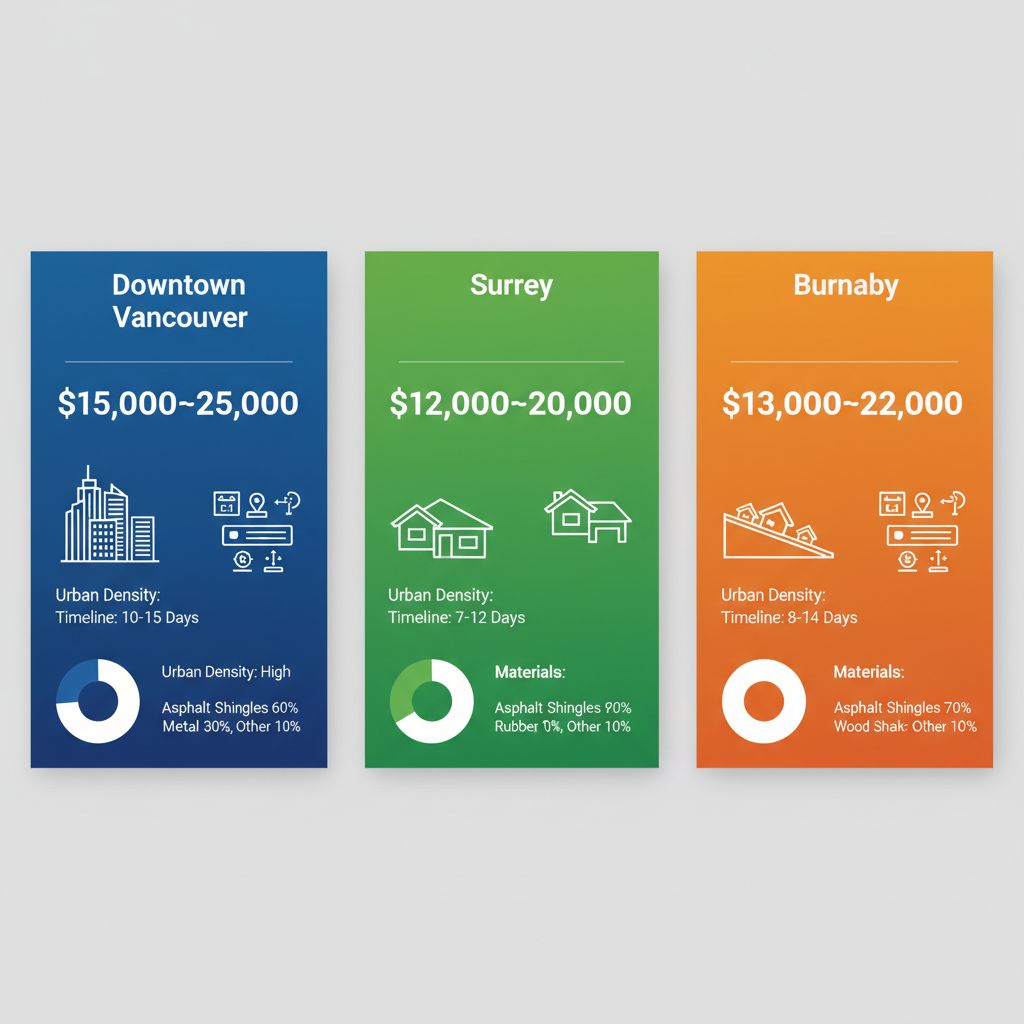
2025 roof replacement cost comparisons across Metro Vancouver areas
These insights emphasize local expertise for code-compliant projects. Free inspections from experienced providers like us help budget effectively amid regional nuances.
Paragon Roofing Services in Lower Mainland
Building on foundational roofing needs in British Columbia, we at Paragon Roofing BC bring decades of local expertise to the Lower Mainland, delivering durable, weather-resistant solutions tailored to coastal climates. From roof replacement projects to comprehensive maintenance, our services protect homes and businesses in Vancouver and surrounding areas against heavy rains and temperature shifts. We prioritize quality materials like asphalt shingles and metal roofing to ensure long-term performance.
Our roof installation and replacement processes follow expert guidelines from Paragon Roofing BC. We begin with thorough site preparation, removing old materials and conducting structural assessments to identify any underlying issues. Next, we apply underlayment for added protection, followed by precise layering of new shingles or membranes suited to Vancouver’s rainy conditions. For multi-family properties, we specialize in strata inspections, employing leak detection methods like infrared scanning to pinpoint problems early. Our maintenance plans include scheduled checks to prevent disruptions in shared buildings, minimizing costly future repairs.
Multi-Family Roofing Services
We inspect roofs using detailed checklists tailored for multi-unit structures, focusing on common areas prone to wear. Repair techniques address leaks promptly, while preventive schedules keep properties secure year-round.
Commercial Roofing Repair and Maintenance
For businesses, we offer emergency fixes for flat roofs, including patching membrane tears and cleaning drainage systems. Regular inspections comply with Vancouver building codes, extending roof lifespan and ensuring operational safety, as outlined in our professional protocols.
Clients benefit from free consultations, robust workmanship warranties, and flexible financing for roof replacement in the Lower Mainland. Factors like material choices and labor influence Vancouver roof replacement cost, typically ranging from assessments to final installations. Projects follow a reliable roof replacement timeline Vancouver, spanning one to two weeks from initial evaluation to completion.
For personalized advice on your project, contact us today for a customized quote. Explore our roofing FAQ in Vancouver for more details on common concerns before scheduling.
Local Factors for Roof Replacement in BC
While roof replacement fundamentals apply universally, British Columbia’s unique environment introduces specific considerations that homeowners must address. From stringent regulations to challenging weather, these local factors influence material choices, timing, and costs for replacing a roof in BC. At Paragon Roofing BC, we guide clients through these elements to ensure durable, compliant results.
The BC Building Code mandates seismic reinforcements and energy-efficient designs for roof replacements, prioritizing safety in earthquake-prone areas. For rental properties, official provincial regulations outline landlord responsibilities for major structural repairs, including roofs, under the Residential Tenancy Act. Landlords must maintain these features, with tenants reporting issues promptly to avoid disputes. Consult rental repairs maintenance in British Columbia for detailed obligations.
BC’s wet coastal climate and heavy interior snowfall demand durable materials like metal or composite shingles, which offer lifespans of 50 years or more per National Roofing Contractors Association benchmarks. These resist premature wear from moisture and ice dams, extending roof replacement timelines. In Vancouver, the roof replacement timeline Vancouver projects often face delays during rainy seasons, so we recommend spring or summer scheduling to minimize disruptions.
Environmental rules restrict asphalt shingle disposal, promoting recycling to reduce landfill impact. Urban areas like Vancouver see higher labor and permit costs, with fees averaging $200 to $500 adding to the Vancouver roof replacement cost. These factors, including eco-friendly options, raise overall expenses but ensure sustainable outcomes.
Understanding these local factors sets the stage for evaluating your project’s budget and timeline. Contact Paragon Roofing BC for a free inspection and personalized quote tailored to your needs.
Steps to Begin Your Roof Replacement Project
Once you’ve identified the need for replacement, starting your roof replacement project correctly sets the foundation for success in British Columbia. Proper assessment and planning minimize disruptions and ensure quality results tailored to your home’s needs.
- Schedule a Professional Inspection: Begin with a thorough roof inspection by certified experts to assess damage like missing shingles or leaks. Document findings with photos for reference. As local contractors, we at Paragon Roofing BC provide free on-site inspections to guide your decisions accurately.
- Establish Your Budget: Set a realistic budget considering materials and labor. In Vancouver, roof replacement costs typically range from $10,000 to $20,000 for asphalt shingles, according to Consumer Reports’ industry guidelines adjusted for local factors. Factor in a contingency for unexpected issues to avoid surprises.
- Research Certified Contractors: Select reliable roofers in South Surrey or Vancouver by verifying licenses through the Roofing Contractors Association of BC. Stay informed on roofing technical updates in British Columbia to ensure compliance with current regulations and best practices.
- Arrange Consultations: Meet with at least three local professionals to discuss your project. Inquire about the roof replacement timeline in Vancouver, usually 1-3 days for standard jobs, helping you plan around weather and daily life.
- Secure Permits and Insurance: Obtain required permits from British Columbia municipal authorities and review your homeowner’s insurance for coverage. This step protects you legally and financially before work begins.
Contact Paragon Roofing BC today for expert guidance on your project. After planning, evaluate your roofing material options carefully.
Next Steps for Your Vancouver Roof Replacement
Now that you’ve identified the need for roof replacement in Vancouver, act promptly to prevent further damage from BC’s wet climate.
- Schedule a free inspection with a licensed local roofer like us at Paragon Roofing BC to assess damage and material suitability for Vancouver’s weather.
- Gather at least three quotes from reputable Vancouver contractors, considering the Vancouver roof replacement cost averages of $8,000-$20,000 for asphalt shingles on a standard home.
- Discuss the roof replacement timeline in Vancouver, typically 1-3 days for installation but allowing 2-4 weeks for permitting and prep during rainy seasons.
- Consult a roofing buying guide from Consumer Reports for durable materials like metal or composite shingles resistant to moss and wind.
Contact Paragon Roofing BC today for a personalized quote tailored to your Vancouver property.
This article was researched and written with the assistance of AI tools.
Resources
- Discover 2025 Roof Replacement Costs in Vancouver Guide
- Explore Expert Residential Roofing Services in Greater Vancouver
- Learn Essential Vancouver Roofing FAQ for Wet Climates
- Get Reliable Multifamily Roofing Services for BC Strata
- Access Trusted South Surrey Roofing Services and Inspections
- Secure Commercial Roof Repair and Maintenance in Vancouver
- Master Roof Installation and Replacement Guide in Vancouver
- Understand Rental Repairs and Maintenance Rules in BC
- Review Latest Roofing Technical Updates for BC Standards
- Find Top Roofing Materials Buying Guide and Tips
- Evaluate Roofing Materials for Durability Performance and Cost
- Explore BC Building Code 2024 Regulations and Adaptations
Table of Contents
- Exploring Cedar Shake Roofing in Vancouver
- Understanding Cedar Shake Roofing
- Benefits of Cedar Shake Roofing
- How Cedar Shake Roofing Works
- Best Practices for Cedar Shake Roofing
- Choosing Cedar Shake Roofing Solutions
Exploring Cedar Shake Roofing in Vancouver
In Vancouver’s rich architectural heritage, where natural beauty meets modern living, cedar shake roofing in Vancouver, British Columbia, stands out as a timeless choice. Homeowners and property managers appreciate these hand-split western red cedar shingles for their rustic charm and seamless integration with the coastal landscape. We at Paragon Roofing BC understand the unique needs of Vancouver properties, drawing on decades of local experience to deliver durable natural wood roofing solutions.
Cedar shake roofing thrives in British Columbia’s wet climate, offering superior weather resistance and natural insulation that enhances energy efficiency. Its popularity stems from the visual appeal that complements West Coast aesthetics, with many local homes featuring this material for its longevity when properly cared for. Key decision factors include cedar shake maintenance to prevent moss growth and ensure fire safety in urban settings, alongside initial costs balanced against long-term property value enhancement. According to industry insights, cedar roofs are prevalent in over 20% of BC’s traditional architecture, providing a premium option for both residential and commercial applications.
This guide explores the benefits, cedar shake installation processes, and best practices tailored to the Lower Mainland. From strata evaluations to multi-family projects, we preview how to assess suitability for your needs.
As trusted experts, we offer free on-site inspections and comprehensive roofing materials services in Vancouver to guide your decisions with warranty-backed assurance.
Understanding Cedar Shake Roofing
Cedar shake roofing in Vancouver, British Columbia, offers a timeless option for properties seeking natural durability and aesthetic appeal. As a trusted roofing contractor across British Columbia, we at Paragon Roofing BC specialize in cedar shake and wood roofing solutions, drawing on decades of local experience to guide property managers and homeowners through selection and implementation. This section explores the core elements of cedar shake systems, from their composition to their performance in our region’s demanding climate, helping you evaluate their value for residential, strata, and commercial applications.
Material Composition and Sourcing
Cedar shakes are hand-split from western red cedar heartwood, prized for its natural oils that provide resistance to decay and insects, ensuring a textured surface that enhances visual depth compared to machine-sawn shingles. This composition results in lightweight yet robust red cedar shingle systems, with thicknesses varying from 18 to 24 inches for optimal overlap and water shedding. The material’s low thermal conductivity also contributes to energy efficiency in building envelopes.
In British Columbia, sustainable sourcing practices dominate, with suppliers like those in Surrey adhering to Forest Practices Code standards to harvest from certified forests, minimizing environmental impact while supporting local economies. According to The Ultimate Guide to Roofing Materials in Vancouver, cedar remains a top choice for its regional availability, with trends showing increased demand for eco-friendly wood roofing amid growing sustainability mandates.
For practical implications, we recommend cedar shake installation from vetted British Columbia suppliers to ensure compliance with local building codes. Our free on-site inspections can assess sourcing feasibility, protecting your investment in authentic, renewably sourced materials for long-term property value.
Suitability for Vancouver Climate
Cedar shake excels in Vancouver’s wet, coastal environment due to its inherent moisture resistance, where tight-grained western red cedar expands minimally in humid conditions, preventing warping or cupping under prolonged rain exposure. The material’s natural tannins act as a preservative, offering better performance than many alternatives in areas with annual precipitation exceeding 1,200 mm, while its breathability allows vapor escape to reduce mold risks. Temperature fluctuations from mild winters to occasional freezes are mitigated by cedar’s flexibility, maintaining integrity without cracking.
Local relevance is evident in how cedar withstands coastal winds up to 100 km/h, as supported by Roofing Materials Guidelines from the National Roofing Contractors Association, which endorse treated wood shakes meeting ASTM standards for Class A fire resistance in humid zones like the Lower Mainland. This aligns with Vancouver’s climate, where synthetic options often falter in extreme wet-dry cycles.
Practically, cedar shake maintenance involves periodic treatments to preserve these traits, ensuring 30-50 years of service. We at Paragon Roofing BC integrate these considerations into our seasonal maintenance plans, safeguarding strata properties against leaks and extending roof lifespan in our variable weather.
Comparison to Synthetic Options
When evaluating cedar shake against synthetic alternatives, key criteria include aesthetics for curb appeal, durability under environmental stress, and overall cost for lifecycle value, particularly for heritage or commercial properties in Vancouver where authenticity drives ROI. Natural cedar provides an organic patina that evolves beautifully, contrasting with synthetics’ uniform appearance that can appear artificial over time. Environmental impact favors cedar’s renewability, reducing carbon footprints compared to petroleum-based composites.
The table below summarizes these aspects based on industry benchmarks:
| Feature | Natural Cedar Shake | Synthetic Composite |
|---|---|---|
| Aesthetic Appeal | Authentic, organic patina | Uniform, mimic appearance |
| Lifespan | 30-50 years (maintained) | 40-50 years |
| Sustainability | High (Renewable resource) | Lower (Petroleum-based) |
Interpreting these differences, cedar shake stands out for heritage properties seeking timeless appeal and sustainability, though it demands proactive upkeep. Synthetics suit budget-conscious projects but may not match cedar’s environmental credentials. For alternatives like asphalt shingle services in Vancouver, we offer consultations to balance cost with performance, emphasizing warranties that align with manufacturer terms after on-site evaluation.
Benefits of Cedar Shake Roofing
Cedar shake roofing offers enduring appeal and practical advantages for properties across Vancouver, British Columbia. We frequently recommend it to commercial managers seeking a blend of tradition and performance in strata and multi-family buildings. These benefits extend from visual charm to enhanced safety and efficiency, supporting long-term investment decisions.
Aesthetic and Value Enhancement
Cedar shake roofing in Vancouver, British Columbia, captures the natural elegance that complements the region’s architectural heritage, from heritage homes to modern commercial structures. Its textured, hand-split appearance adds warmth and character, elevating curb appeal in neighborhoods like Kitsilano or Gastown. We see cedar shake adding value to properties by creating a distinctive look that stands out against more uniform options.
Real estate data indicates that homes with premium wood roofs can see resale values increase by up to 5-7%, as buyers appreciate the rustic yet sophisticated finish. In our experience serving Lower Mainland properties, this enhancement translates to higher rental yields for multi-family units, where aesthetic differentiation attracts tenants. For commercial applications, the timeless style boosts brand image without the uniformity of standard materials.
Property managers benefit from this upgrade, as it justifies premium pricing in competitive markets. Our BBB-accredited team ensures installations that maximize these visual and financial gains, protecting your investment in Vancouver’s dynamic real estate landscape.
Fire Resistance and Safety Features
Addressing fire concerns is crucial in urban Vancouver settings, where dense commercial and residential zones demand compliant materials. Cedar shakes, when properly treated, meet British Columbia Building Code standards, providing reliable safety for strata and multi-family buildings. We prioritize fire-retardant cedar shingles to mitigate risks from wildfires or urban sparks, ensuring peace of mind for property operators.
Vancouver regulations, aligned with BCAB #1123, require 100% edge grain for premium grades, enhancing durability against ignition. Treatments like fire-retardant impregnation achieve Class B or C ratings, far surpassing untreated wood. The following table outlines key treatment options and their implications:
| Treatment Grade | Safety Rating | Cost Impact |
|---|---|---|
| Pressure-Treated Fire Retardant | Class B / Class C | +10-15% |
| Untreated Premium Grade | Standard Decay Resistance | Baseline |
While untreated options keep costs down, they pose higher risks in fire-prone areas, potentially increasing insurance premiums. Fire-retardant treatments offer optimal balance, reducing spread rates by up to 50% per code tests, though they add 10-15% to installation expenses. For commercial managers, selecting treated cedar aligns safety with budget, minimizing liability in high-occupancy buildings. Our warranty-backed services include these enhancements, ensuring code compliance without compromise.
Longevity and Insulation Advantages
Durable wood roof benefits shine through cedar shake’s impressive 30-50 year lifespan, especially with dedicated cedar shake maintenance. In Vancouver’s wet climate, regular care prevents moss buildup and rot, extending performance far beyond basic coverings. We advocate biannual inspections—spring and fall—to clear debris and apply sealants, as outlined in our maintenance programs.
Proper ventilation and edge-grain quality, per BC standards, resist moisture damage, while natural oils provide inherent rot resistance. Energy-wise, cedar’s thermal properties insulate effectively, cutting heating costs by 10-15% in multi-family setups compared to asphalt alternatives like asphalt shingle roofing services. This efficiency lowers utility bills and supports eco-friendly operations with minimal environmental impact from renewable sourcing.
For commercial properties, these advantages yield strong ROI through reduced repairs and energy savings. Strata councils appreciate the low-maintenance profile post-installation, backed by our seasonal plans. Investing in cedar shake delivers sustained value, safeguarding assets in British Columbia’s variable weather.
How Cedar Shake Roofing Works
Cedar shake roofing offers a timeless aesthetic and natural insulation properties that suit the Pacific Northwest climate. At Paragon Roofing BC, we specialize in delivering high-quality installations tailored to commercial and multi-family properties across the Lower Mainland. This section delves into the practical aspects of how cedar shake roofing functions, from initial setup to long-term care, ensuring durability and compliance with local building standards.
Installation Process Overview
Cedar shake roofing in Vancouver, British Columbia, begins with meticulous site preparation to guarantee a stable foundation. We start by inspecting the existing roof structure for any damage and removing old materials if necessary. Next, we apply an underlayment, such as asphalt-saturated felt, following roofing materials guidelines that recommend ASTM-compliant products for water resistance in humid conditions.
- Eave Starter Course: Lay the first row of shakes along the eaves, using corrosion-resistant nails spaced 1-2 inches from the edge to prevent splitting.
- Progressive Courses: Work upward in offset patterns, staggering joints by at least 1.5 inches to avoid leaks, typically covering 10 inches of exposure per row.
- Ridge and Hip Capping: Install pre-cut ridge shakes or caps, securing them with two nails each to seal the roof peak against wind-driven rain.
- Flashing Integration: Add metal flashing around penetrations like vents and chimneys, ensuring proper overlap for ventilation and drainage.
- Finishing Touches: Trim edges and inspect for uniformity, applying initial sealant if required.
These shake application techniques typically span 1-2 weeks for a standard commercial project, depending on roof size. For safety, we always use harnesses and scaffoldings during elevated work, prioritizing team and site protection. In commercial settings, we coordinate with property managers to minimize disruptions, often completing phases over weekends.
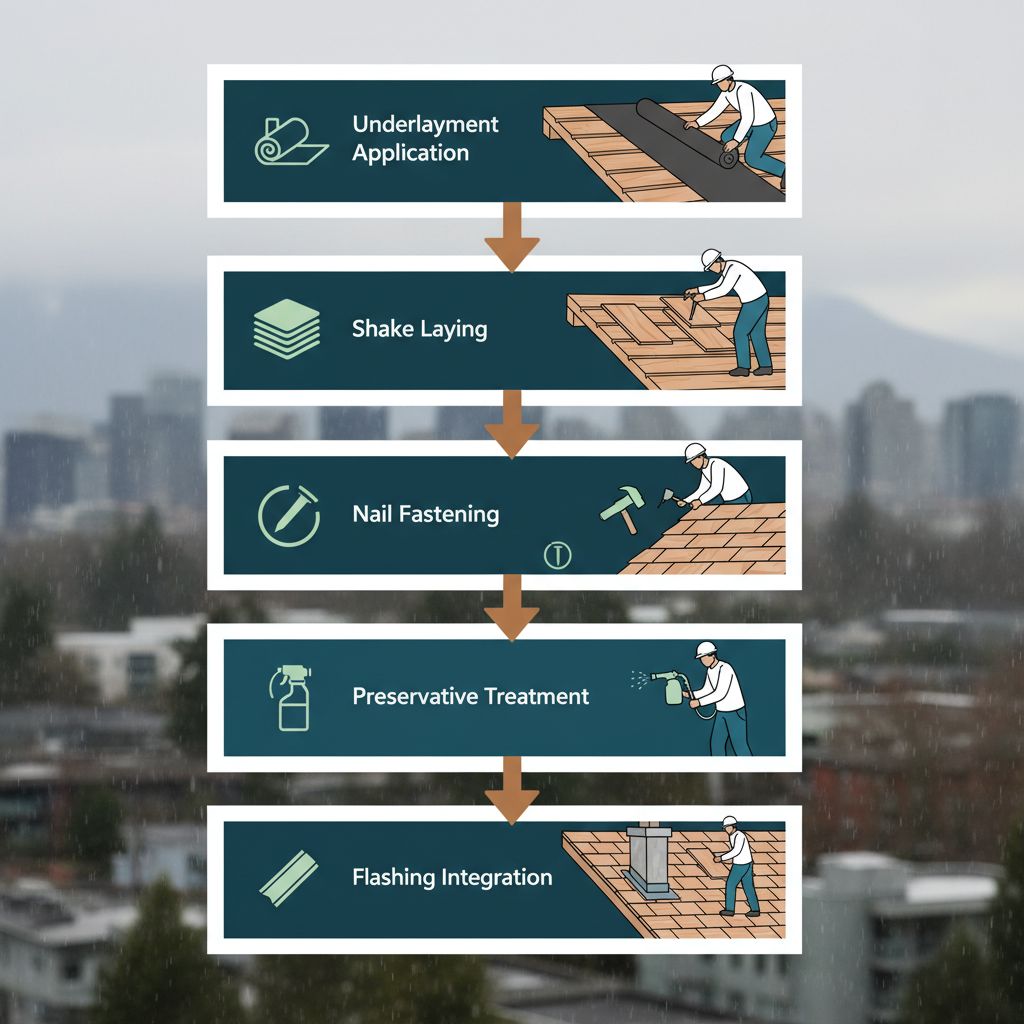
Step-by-step guide to cedar shake roofing installation process
This visual aids in understanding the layered approach that enhances airflow and weatherproofing, crucial for Vancouver’s frequent rains.
Treatment Methods for Durability
To combat British Columbia’s humid climate, cedar shakes require robust preservative treatments for wood roofs that prevent rot and fungal growth. We apply oil-based preservatives like copper naphthenate immediately after installation, penetrating the wood fibers to inhibit decay organisms. This treatment, often followed by semi-transparent stains, not only boosts UV resistance but also maintains the natural grain appearance.
Ongoing cedar shake maintenance involves biannual inspections to reapply coatings, especially after heavy winter exposure. For instance, penetrating sealants are brushed on every 3-5 years, extending lifespan to 30+ years when combined with proper ventilation. Unlike synthetic slate options from our services, which offer inherent weatherproofing without frequent upkeep, cedar demands these proactive steps but rewards with eco-friendly appeal.
In commercial applications, we schedule treatments during low-occupancy periods, ensuring minimal impact on operations. Safety considerations include using low-VOC products to protect workers and building occupants from fumes during application.
Integration with Existing Structures
Retrofitting cedar shakes onto various building types requires assessing structural load and aesthetic harmony. We evaluate roof pitch, ensuring slopes above 4:12 to facilitate drainage and prevent moisture accumulation. For multi-family units, common in Surrey and Burnaby, integration involves upgrading trusses if needed to support the material’s weight, around 3-4 pounds per square foot.
The following table outlines compatibility and challenges for different structures:
| Structure Type | Compatibility Level | Primary Integration Challenge |
|---|---|---|
| Residential Heritage | High | Ornate flashing matching |
| Multi-Family / Strata | High | Truss load reinforcement |
| Commercial Complex | Moderate | Large area ventilation |
Residential projects often proceed smoothly due to simpler access, while multi-family and commercial integrations benefit from our coordinated expertise, including temporary weather barriers. We address challenges through custom flashing and underlayment enhancements, drawing from NRCA standards for secure fastening—nailing into solid wood at least 1 inch above the butt line.
By leveraging decades of local experience, we ensure seamless adaptations that enhance property value without compromising existing infrastructure. This approach aligns with our commitment to protecting structures across the Lower Mainland.
As Trusted Roofing Contractor Across British Columbia, we handle these integrations with precision, focusing on long-term performance and client satisfaction.
Best Practices for Cedar Shake Roofing
Implementing cedar shake roofing in Vancouver, British Columbia, requires careful attention to sourcing, maintenance, and compliance to ensure longevity and performance in the region’s damp climate. We at Paragon Roofing BC draw on decades of local experience to guide property managers and homeowners toward durable solutions that align with commercial needs.
Sourcing and Supplier Selection
Sourcing high-quality materials forms the foundation of successful cedar shake roofing in Vancouver, British Columbia. Opt for certified suppliers in British Columbia that provide sustainably harvested western red cedar, known for its natural resistance to decay and insects. Local cedar suppliers in the Lower Mainland, such as those partnered with established roofing firms, ensure timely delivery and compliance with regional standards.
To select the right supplier, begin by verifying certifications from the Forest Stewardship Council and adherence to BC sourcing guidelines. Request samples to assess grain quality and thickness, typically 18-22 inches for premium shakes. We recommend reaching out to suppliers with proven track records in Metro Vancouver, where proximity reduces shipping costs and supports eco-friendly practices.
Benefits include enhanced durability against coastal moisture and potential cost savings through bulk purchasing from trusted local cedar suppliers. This approach minimizes risks of substandard materials that could lead to premature wear, ultimately protecting your investment in the Fraser Valley area.
Ongoing Maintenance Strategies
Effective cedar shake maintenance is essential for extending the lifespan of your roof amid British Columbia’s wet weather. Routine roof care protocols prevent issues like moss growth and rot, which are common in Vancouver’s humid environment. We offer seasonal maintenance plans tailored for strata properties, including free on-site inspections and detailed photo reports to track condition over time.
Key practices include annual visual checks for loose shakes or debris accumulation, followed by gentle cleaning to remove moss without damaging the wood. Apply preservative treatments every five years, focusing on oil-based stains that penetrate deeply for protection. For cleaning, use low-pressure washing biannually, avoiding harsh chemicals that strip natural oils.
The return on investment from proactive cedar shake maintenance is significant, often reducing repair costs by up to 30% over a decade. The following table outlines core practices:
| Task | Frequency | Key Objective |
|---|---|---|
| Visual Inspection | Annual | ID loose shakes/leaks |
| Moss Removal | Biannual | Prevent moisture trap |
| Stain/Sealer Reapplication | 3-5 Years | UV/Water barrier |
Implementing these steps ensures compliance with best practices while optimizing performance. Schedule professional assessments through our BBB A+ accredited services to maintain ventilation and avoid common pitfalls in cedar shake maintenance.
Compliance and Contractor Tips
Adhering to local regulations during cedar shake installation safeguards your property and ensures safety. In British Columbia, focus on fire-resistant treatments and proper underlayment as per the cedar shake building code, which requires offset joints of at least 40 mm between courses to prevent water infiltration. Ventilation standards mandate adequate airflow to combat moisture buildup in Vancouver’s climate.
Choose contractors with strata experience by reviewing portfolios and confirming WorkSafeBC coverage. We prioritize clear communication and manufacturer-compliant installations, providing proposals that detail scope and exclusions. Verify A+ BBB accreditation and request references from similar Lower Mainland projects.
Selecting experienced pros minimizes risks and supports long-term value. Our full-service capabilities, from inspections to warranty-backed work, help navigate codes efficiently, ensuring your cedar shake installation meets all requirements while aligning with budget goals.
Choosing Cedar Shake Roofing Solutions
Cedar shake roofing in Vancouver, British Columbia, stands out for its timeless appeal and natural resilience, offering property owners a blend of durability and aesthetic charm that enhances any structure in the Lower Mainland. At Paragon Roofing BC, we specialize in sustainable cedar solutions that withstand the region’s wet climate while elevating property values. Our expertise ensures that every project aligns with local building standards, providing long-lasting protection for residential and commercial buildings alike.
Key takeaways include the superior durability and beauty of cedar shakes, which require dedicated cedar shake maintenance to promote longevity and fire safety through regular treatments and inspections. Proper cedar shake installation, guided by the cedar shake installation code, guarantees optimal performance and compliance. For commercial properties, these features boost curb appeal and operational efficiency, making expert wood roofing care an investment in enduring quality.
We invite you to contact Paragon Roofing BC, your trusted roofing contractor across British Columbia, for a free on-site inspection and personalized quote. Our full-service commitment covers everything from sourcing to installation and ongoing maintenance plans, helping you protect your investment. Schedule today and discover how we can tailor cedar solutions to your needs.
Resources
- Get Comprehensive Roofing Materials and Services in Vancouver
- Discover Asphalt Shingle Installation and Repair Services Vancouver
- Explore Affordable Durable Asphalt Shingle Roofing for Vancouver
- Install Synthetic Slate Roofing for Weather-Resistant Vancouver Properties
- Schedule Tailored Roof Maintenance Plans for Vancouver Homes
- Choose Trusted Best Roofing Company in Vancouver
- Learn Optimal Roofing Materials Guide for Vancouver Climate
- Explore NRCA Guidelines on Steep-Slope Roofing Materials
- Understand BC Building Code for Cedar Shake Installation
- Learn Joint Offset Rules for Cedar Roof Shakes Code
