
Standing Seam Metal Roofing Costs: Vancouver Comparison Guide
Table of Contents
- Standing Seam Metal Roofing Costs in Vancouver, British Columbia
- Metal Roofing Options in Greater Vancouver
- Paragon Roofing BC: Standing Seam Installation and Service
- Coastal Climate and Durability for Standing Seam Roofs
- Your Guide to Getting a Standing Seam Metal Roof in Vancouver
- Long-Term Value of Standing Seam Metal Roofing
Standing Seam Metal Roofing Costs in Vancouver, British Columbia
When evaluating standing seam metal roofing costs in Vancouver, several factors come into play. As of 2025, our installed pricing typically ranges from $14 to $22 per square foot for steel standing seam systems, while aluminum options fall between $18 and $28 per square foot. These figures reflect our decades of local experience and include materials, labor, site protection, and logistics.
The standing seam roof cost varies based on roof complexity, material gauge, panel width, and site accessibility. Steep slopes, multiple penetrations, and challenging access can increase the final investment. While exposed fastener panels offer lower upfront costs, standing seam systems deliver superior longevity, weathertightness, and a cleaner aesthetic that enhances curb appeal. For a detailed breakdown, download our metal roof cost guide in Vancouver.
Beyond the initial expense, metal roofing can improve resale value, with market trends suggesting strong buyer appeal for durable, low-maintenance materials. We encourage homeowners to schedule a free on-site inspection—we provide accurate, transparent quotes tailored to your specific roof and budget.
Metal Roofing Options in Greater Vancouver
When considering metal roofing options in Greater Vancouver, homeowners will encounter two primary systems: standing seam metal roofing and exposed fastener metal roofing. Each offers distinct advantages in durability, aesthetics and cost, and the best choice depends on your home’s architecture, roof slope and long-term priorities.
As a Trusted Roofing Contractor Across British Columbia, we recommend evaluating these systems carefully. The following table breaks down their key differences.
| Feature | Standing Seam Metal Roofing | Exposed Fastener Metal Roofing |
|---|---|---|
| Longevity | 40-60 years | 20-30 years |
| Maintenance | Minimal; hidden fasteners reduce leaks | Periodic tightening and gasket replacement needed |
| Aesthetic | Sleek, modern vertical lines | Visible screw heads; more utilitarian look |
| Cost (per sq.ft.) | $10-$16 | $5-$9 |
| Energy Efficiency | High; reflective coatings lower cooling costs | Moderate; less reflective options available |
Standing seam systems command a higher upfront investment but deliver superior longevity and near-zero fastener maintenance, which often offsets the initial cost difference over the roof’s lifespan. Exposed fastener systems provide a budget-friendly entry point into metal roofing with acceptable performance for many homes.
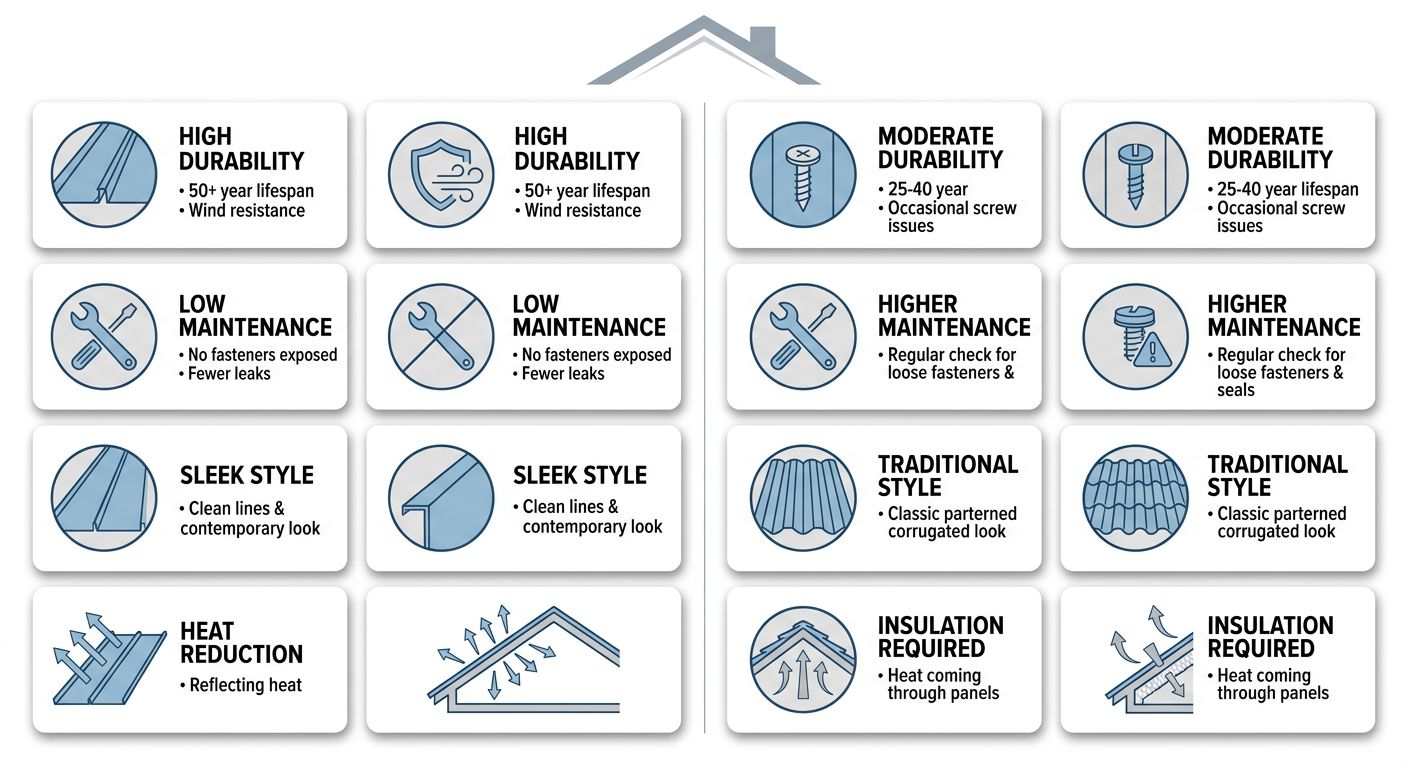
Quick comparison of standing seam vs exposed fastener metal roofing for Vancouver homeowners.
In Vancouver’s wet coastal climate, the concealed fastener design of a standing seam system offers enhanced weathertightness by reducing potential entry points for moisture. Exposed fastener systems, while economical, require diligent maintenance to keep gaskets and screws secure against our region’s heavy rainfall.
For a deeper look at how standing seam compares to metal shingles in Vancouver, see our blog on standing seam vs metal shingles in Vancouver. Beyond these two systems, other metal styles and alternative materials such as asphalt or tile will be explored in the following sections.
Paragon Roofing BC: Standing Seam Installation and Service
When you choose standing seam metal roofing, you are investing in a premium, long-lasting system, and our team at Paragon Roofing BC delivers expert installation across the Lower Mainland. We specialize in residential, commercial, and multi-family projects, ensuring you get a precise fit and a clean, modern look. While we offer competitive rates, we understand that standing seam metal roofing costs are a key consideration, and we help you navigate options that align with your budget and long-term goals.
As a metal roofing services in Vancouver provider with decades of local experience, our BBB A+ accreditation reflects our commitment to quality. We back our work with manufacturer-backed warranties, giving you confidence that your new roof is built to endure coastal humidity, high winds, and heavy rainfall.
Our standing seam services cover everything from new installations and full roof replacements to repairs and proactive maintenance. Standing seam vs exposed fastener systems is a common discussion, and we guide you toward the hidden-fastener option for superior weather resistance and a sleek appearance that eliminates exposed screws. Over time, the enhanced durability of a standing seam roof can contribute to strong metal roofing resale value, a point many homeowners appreciate when planning for the future.
We proudly serve as a Trusted Roofing Contractor Across British Columbia, from Vancouver and Surrey to Richmond, Burnaby, Coquitlam, and Whistler. Every project begins with a free on-site inspection and photo report, giving you a clear picture of your roof’s condition before we recommend a path forward.
Protecting Your Home. Building Your Family’s Future. We invite you to book your free inspection today, and let us show you why Paragon Roofing BC is the name homeowners, strata councils, and commercial property managers rely on. Warranties vary by manufacturer, and our team will review all details with you before work begins.
Coastal Climate and Durability for Standing Seam Roofs
For property owners evaluating standing seam metal roofing costs, the initial investment is best understood through the lens of durability, particularly in the challenging coastal environments of British Columbia. In regions like Metro Vancouver and the Lower Mainland, roofing systems face a relentless combination of salt-laden air, persistent moisture, strong wind uplift, and high UV exposure. These elements accelerate the degradation of traditional materials, but a properly specified standing seam metal roof offers proven resilience. The concealed fastener design is central to this longevity, eliminating the thousands of exposed penetration points found in standard panel systems. When assessing standing seam vs exposed fastener, the difference is critical for coastal installations, where each exposed screw represents a potential entry point for moisture and a site for corrosive wear.
At Paragon Roofing BC, we have seen how high-quality metal roofing systems withstand our local climate. Modern standing seam profiles feature Galvalume or advanced aluminum-zinc alloy coatings, factory-applied to the steel substrate for exceptional cut-edge protection. This is then fortified with highly durable Kynar 500 or Hylar 5000 paint systems, forming a barrier against salt spray oxidation. The metal roofing alliance guide details these material advancements, confirming why properly coated systems are so effective in seaside applications. Beyond weather barriers, the cool-roof properties of these finishes can significantly reduce cooling costs by reflecting solar radiant heat, a welcome benefit during the increasingly warm summers on Vancouver Island. With a typical service life of 40 to 70 years, the reduced frequency of replacement cycles compared to asphalt directly contributes to strong metal roofing resale value and long-term peace of mind.
Warranties vary by manufacturer and product — check manufacturer terms and written contract. In the next section, we break down the cost factors that make standing seam a smart long-term investment.
Your Guide to Getting a Standing Seam Metal Roof in Vancouver
Understanding standing seam metal roofing costs begins with recognizing the system’s unique design. These roofs feature vertical interlocking panels with hidden fasteners, a sleek modern look that has become popular for Vancouver homeowners. According to the metal architecture publication, industry standards for these panels prioritize weathertight performance, a critical factor in our rainy coastal climate. The final cost depends on several variables including material gauge, roof complexity, labour and local climate considerations.
One major decision you will face is standing seam vs exposed fastener roofing. Exposed fastener systems are initially more affordable, but they rely on thousands of screws with rubber gaskets that can degrade over time. Standing seam panels conceal all fasteners beneath the raised seam, virtually eliminating the risk of leaks from fastener failure and delivering superior long-term durability. This makes them a sound investment for your home.
Metal roofing resale value is another important benefit to weigh. A professionally installed standing seam roof can increase your property’s appeal thanks to its exceptional longevity and potential for energy savings. As your trusted roofing contractor across British Columbia, we draw on decades of local Lower Mainland experience to guide your decision. We offer free on-site inspections and a detailed quote tailored to your home. Warranties vary by manufacturer and product, so we encourage you to check the written contract for full terms and conditions.
Long-Term Value of Standing Seam Metal Roofing
Standing seam metal roofing is a lasting investment, with proper installation by our team, these roofs typically last 40 to 70 years thanks to their concealed fastener system that resists leaks and demands minimal upkeep. Reflective coatings help reduce summer cooling costs, and the material’s 100% recyclability adds environmental value. According to national roofing contractors association resources, standing seam systems outlast exposed-fastener alternatives by eliminating fastener failure points. Industry studies also link metal roofing to a 1% to 6% boost in resale value. We see hidden-fastener metal roofs thriving in BC’s coastal climate, rewarding homeowners with decades of peace of mind.
Resources
- Discover Metal Roof Costs and Energy Rebates in Vancouver
- Get Expert Metal Roofing Installation and Repair in Vancouver
- Compare Standing Seam vs Metal Shingles in Vancouver
- Discover New Roofing Materials for Pacific Northwest
- Explore 2026 Roofing Material Trends for BC Homeowners
- Learn About TPO and Torch-On Roofing for BC Climate
- Compare Metal, TPO, Shingle, and Slate Roofing in Vancouver
- Explore Metal Roofing Alliance Resources for Homeowners
- Discover Metal Architecture Industry Guides and Awards
- Get NRCA Roofing Certifications and Business Resources
Table of Contents
- Rotted Roof Decking in Vancouver: Identifying Damage Before It Spreads
- Recognizing Rotted Roof Decking: Key Signs and Inspection Tips
- Why Roof Decking Rots in Vancouver’s Climate – Common Causes
- Repair vs Replacement: Making the Right Choice for Your Roof Deck
- Reading the Internal Signs: Water Stains, Mold, and Attic Moisture
- When to Call a Professional – Structural Risks and Expert Inspections
- Taking Action on Rotted Roof Decking in Vancouver
Rotted Roof Decking in Vancouver: Identifying Damage Before It Spreads
Rotted roof decking—the plywood or oriented strand board (OSB) sheathing that supports shingles and underlayment—can silently threaten homes in our wet climate. In Vancouver, persistent rain creates ideal conditions for decking rot to develop rapidly after even minor leaks. We recommend watching for key indicators: water stains on ceilings, visible mold in attic spaces, curled or missing shingles, and springy or soft spots on the roof surface. Ceiling water damage—often appearing as brown rings or peeling paint—frequently points to compromised sheathing above. Left unaddressed, decayed sheathing can spread, risking structural failure and costly interior repairs.
Deciding whether to proceed with roof repair replacement in Vancouver requires professional assessment. At Paragon Roofing BC, our complimentary on-site inspections include photo reports that clearly document any damage, helping you understand your roof’s condition. We recommend scheduling an evaluation at the first sign of trouble—early detection can prevent further damage and protect your home for years to come.
As we explore the next section, we’ll examine how to weigh the benefits of targeted repairs against a full replacement for rotted decking, drawing on our guidance from the Should I Repair or Replace My Roof blog.
Recognizing Rotted Roof Decking: Key Signs and Inspection Tips
Rotted roof decking is one of the most serious structural issues a homeowner can face, and catching it early makes all the difference. The roof deck — the layer of sheathing beneath your shingles or membrane — provides the essential base that holds your entire roofing system together. When moisture penetrates this layer and becomes trapped, the wood begins to decay, compromising the integrity of your roof and potentially leading to extensive leaks. At Paragon Roofing BC, we help homeowners throughout the Lower Mainland identify these problems before they escalate.
Identifying rotted roof decking early can save thousands in repairs and prevent cascading damage to your home’s interior. The first clues often appear inside your living spaces long before you notice anything wrong from the outside. Recognizing these warning signs gives you the opportunity to act before minor rot becomes a full decking replacement.
Interior Signs of Roof Water Damage
Your ceilings and walls often tell the story of what is happening above them. Common signs of roof water damage visible from inside your home include:
- Water stains on ceilings, especially brown or copper-coloured rings that expand after heavy rain
- Ceiling water damage showing as peeling paint, bubbling plaster, or sagging drywall
- Musty odours in upper-floor rooms or the attic, indicating trapped moisture and possible mould growth
- Dark streaks running down walls from the ceiling line, suggesting water is travelling along framing members
When you notice any of these indicators, the decking above has likely already absorbed significant moisture. The sooner you investigate, the less extensive the damage tends to be.
Exterior and Attic Inspection Clues
From outside the home, several visible conditions point to potential decking rot beneath the surface. Curling or missing shingles create entry points where water can reach the wood sheathing. At the eaves, visibly rotting wood or soft fascia boards suggest moisture has been present for some time. If you walk on the roof and feel spongy areas or notice visible dips in the roofline, the decking underneath has almost certainly begun to decay.
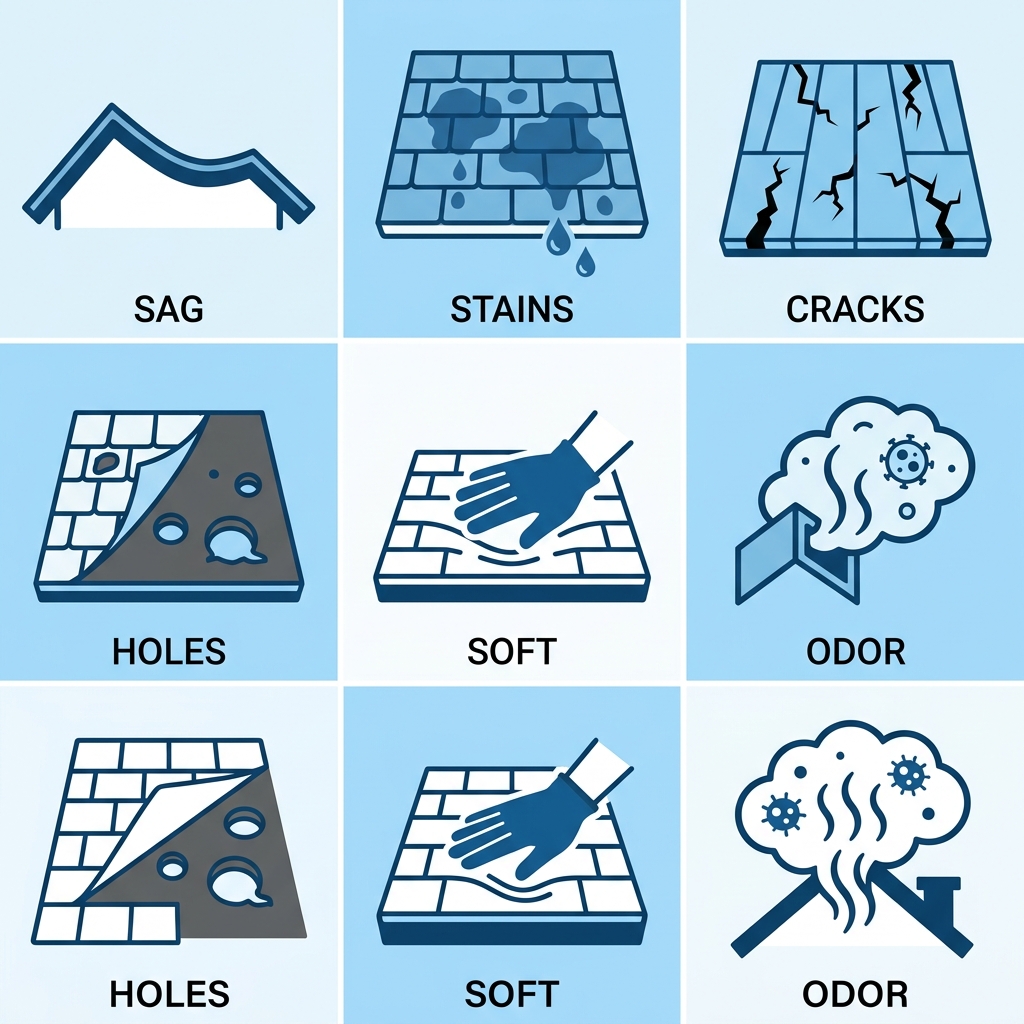
Essential signs of rotted roof decking for inspection
Inside the attic, our inspectors look for dark streaks on rafters, damp or clumped insulation, and rusty nail tips poking through the sheathing — all telltale signs that moisture has been present. In severe cases, you may even see daylight shining through gaps in the decking boards. These observations help us determine whether the rot is localized and repairable or whether full decking replacement is necessary.
For homebuyers, we strongly recommend including a professional inspection as part of the purchase process. A homebuyer roof inspection in Delta provides a detailed assessment of the roof’s condition, uncovering hidden issues that general home inspectors may miss. Our checklist covers everything from shingle condition and flashing integrity to attic moisture levels and ventilation performance.
Why Roof Decking Rots in Vancouver’s Climate – Common Causes
Rotted roof decking is a persistent and costly problem for homeowners across the Lower Mainland, and the unique climate of Metro Vancouver is almost perfectly engineered to create it. At Paragon Roofing BC, we have seen firsthand how the region’s relentless moisture systematically attacks the wooden structure that supports your shingles. The process is often silent, progressing for years before you notice the telltale signs inside your home, such as discolored patches on your ceilings. Understanding the root causes is the first step in protecting your property from this hidden decay.
Vancouver’s weather is the primary driver of roof board rot. The region receives over 1,300 mm of rain annually, spread across more than 150 rainy days, ensuring that roofing materials are subjected to near-constant moisture. This unrelenting dampness means that even a small breach in your roof’s waterproof barrier—a cracked shingle or a gap in the flashing—can allow enough water to soak the decking beneath. Because the air is already so humid, this trapped moisture evaporates very slowly, creating ideal conditions for fungi and wood rot to thrive for extended periods.
- Poor attic ventilation that traps warm, damp air against the underside of the decking.
- Aging asphalt shingles that lose their protective granules, allowing moisture penetration.
- Ice dams that form during rare but damaging cold snaps, forcing water to back up under the shingles.
- Inadequate or compressed insulation that causes warm indoor air to condense on the cold decking.
Repair vs Replacement: Making the Right Choice for Your Roof Deck
While surface damage like missing shingles is often visible from the ground, the true condition of your roof deck—the structural sheathing beneath the outer roofing material—tells a more critical story. In Vancouver, prolonged exposure to rain and dampness frequently leads to rotted roof decking, compromising the very foundation your shingles rely on. As we explained in the previous section, spotting signs of roof water damage early is vital, but determining whether a repair can suffice or a full replacement is necessary requires a closer look at what’s happening underneath.
Localized rot—confined to a small area with sound sheathing surrounding it—can frequently be repaired by cutting out the decayed section and installing new, code-compliant material. This approach is viable when the rot hasn’t spread and the adjacent roof deck still offers reliable structural support. The decision hinges on a professional evaluation following nrca roofing resources and industry best practices. Only a thorough on-site inspection can confirm the true condition of your roof deck.
Reading the Internal Signs: Water Stains, Mold, and Attic Moisture
While the exterior of your roof may be the first place you notice missing shingles or debris, the most telling signs of roof water damage often appear inside your home. At Paragon Roofing BC, we have learned that a careful interior inspection can reveal hidden leaks before they escalate into major structural issues.
Water stains on your ceiling are one of the most common interior indicators. Recognition of these differences helps determine whether you need immediate emergency repair or a more routine evaluation. Persistent moisture can also fuel mold growth, which may appear as dark spots on ceilings, walls, or attic sheathing. If you notice soft or crumbling wood in your attic, rotted roof decking may already be compromising your roof’s structural integrity. Spotting any of these signs early allows for less invasive and more cost-effective repairs. If you have observed any of these internal damage signals, the next step is a comprehensive roof certification inspection.
When to Call a Professional – Structural Risks and Expert Inspections
While some roof damage is visible from the ground, structural issues like rotted roof decking demand an expert eye. Structural wood rot often develops silently. DIY inspections are insufficient for structural assessment. A certified professional is necessary because the most telling damage often hides beneath the surface. In British Columbia, requirements outlined by BC government services emphasize structural integrity and roof loading, reinforcing why expert inspections are critical.
Taking Action on Rotted Roof Decking in Vancouver
When rotted roof decking is discovered in a Vancouver home, immediate action is critical. Moisture can rapidly spread to joists and interior framing, turning a localized problem into a structural emergency. Do not attempt self-repair—scheduling a professional roof inspection is the first step.
- Stop active leaks safely if possible.
- Take photographs of all visible damage.
- Contact a licensed roofing contractor, like Paragon Roofing BC, for an inspection.
Resources
- Get Comprehensive Roof Inspection Checklist for Delta Homebuyers
- Get Bi-Annual Roof Inspection Schedule for Burnaby Homes
- Roof Repair or Replacement Guide for Vancouver’s Rainy Climate
- Get Superior Torch-On Roofing for Flat Roofs in BC
- Get Torch-On Roof Repair with Free Inspection in Vancouver
- Bi-Annual Roof Inspection to Extend Roof Life in Vancouver
- Get Torch-On Roofing Cost Guide for Vancouver Areas
- Get NRCA Roofing Resources and Training
- Get LeakFREE Roof Certification for Home Inspections
- Access BC Government Services and Job Listings
Table of Contents
Comparing TPO and EPDM Flat Roofing in Vancouver, British Columbia
When considering a flat roof TPO vs EPDM, these two single-ply membranes dominate the lower mainland market. As a Trusted Roofing Contractor Across British Columbia, we often guide property owners through this choice. Our experience with TPO roofing and rubber systems helps clarify the TPO vs EPDM comparison for Vancouver’s unique climate.
Regarding TPO vs EPDM lifespan, the National Roofing Contractors Association benchmarks TPO at 20–30 years, whereas EPDM typically reaches 25–30 years. The TPO vs EPDM cost per square foot is competitive for both, though TPO often has a lower upfront investment. Unlike EPDM’s flexible rubber, TPO’s heat-welded seams and reflective surface deliver energy savings during warmer months.
For a building owner deciding on TPO or EPDM for flat roofs, Vancouver’s wet conditions and UV exposure are key factors. EPDM resists ponding water exceptionally well, while TPO’s reflectivity reduces the heat island effect. We recommend a free inspection to assess your specific roof and provide warranty-backed guidance.
1. Climate Resilience for Vancouver Winters
When evaluating a flat roof TPO vs EPDM, Vancouver’s unique winter climate becomes a critical factor. Our region endures relentless heavy rainfall, sharp freeze-thaw cycles, and surprising UV exposure that can compromise lesser roofing systems. According to the National Roofing Contractors Association standards, selecting the right single-ply membrane is a foundational decision for long-term performance. We see TPO as a compelling option with its reflective surface that actively combats UV degradation and helps mitigate urban heat island effects. In contrast, EPDM is a rubber membrane prized for its exceptional elasticity, remaining flexible even during deep freezes that would embrittle other materials. Both membranes, when installed and maintained correctly, can provide robust weather resistance, but the ideal comparison of TPO and EPDM membranes hinges on your specific roof’s architecture and exposure. Understanding their general characteristics here sets the stage for a deeper look into TPO vs EPDM lifespan and cost.
2. Energy Efficiency and Reflective Performance
Choosing between a flat roof TPO vs EPDM system often begins with understanding how each membrane handles energy. Cool roofing is a design strategy that uses reflective surfaces to reduce heat absorption, which is particularly valuable for low-slope applications where the sun beats down directly throughout the day. In Vancouver’s variable climate, selecting the right material can help lower indoor temperatures during warmer months and reduce strain on cooling equipment.
TPO membranes are typically bright white and carry high Solar Reflectance Index (SRI) values, with many products earning ENERGY STAR qualification for their ability to reflect a significant portion of solar radiation. This reflective property means the building retains less heat, which directly translates into lower peak cooling demand. EPDM, by contrast, is a dark rubber membrane that historically absorbs more heat, though newer formulations now include reflective coatings that improve performance and narrow the efficiency gap between the two materials.
The real-world benefit of a reflective flat roof system is consistent: when the sun hits a membrane that bounces rather than absorbs energy, utility bills trend downward. Paragon Roofing BC has observed that clients who opt for high-reflectance membranes frequently report more stable upper-floor temperatures and less reliance on air conditioning during British Columbia’s summer stretches. This is not just about immediate comfort—it’s about long-term operational savings for any building type.
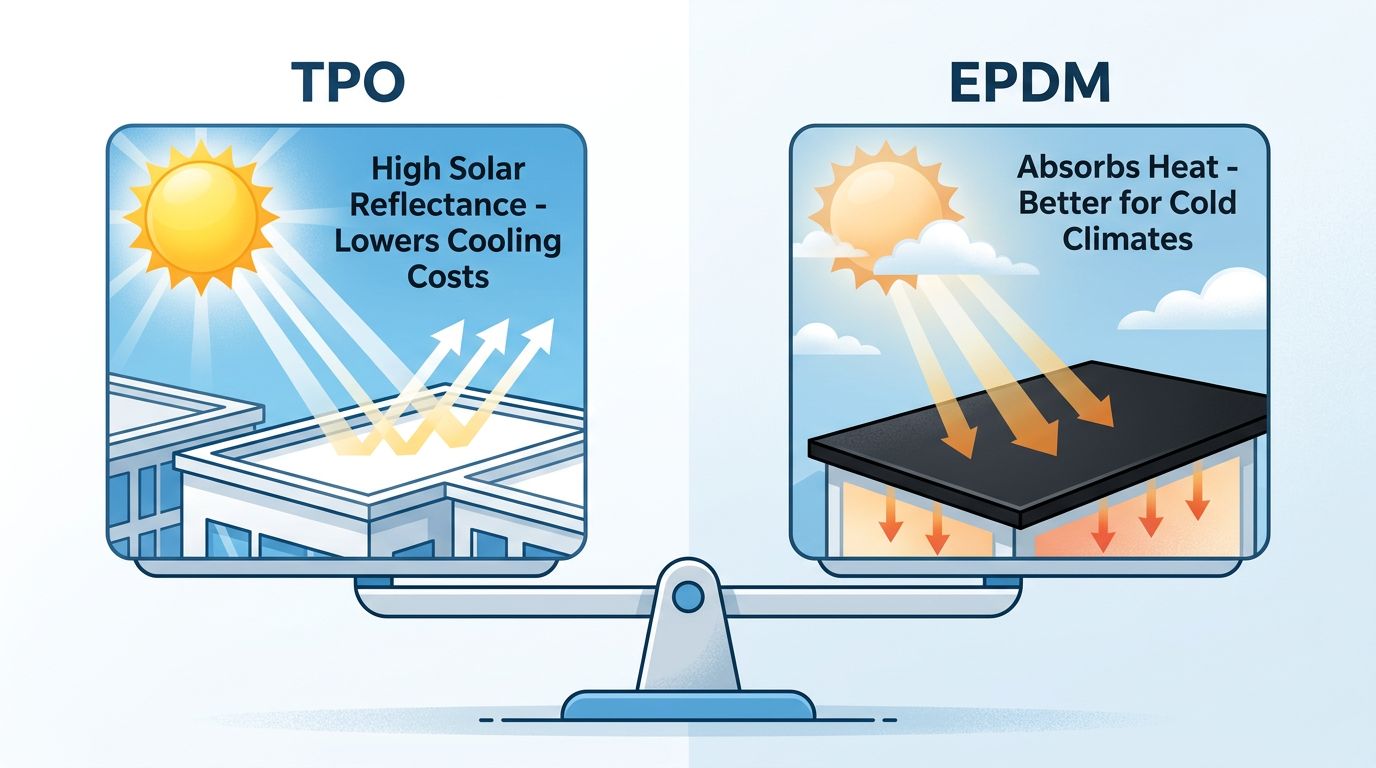
Beyond the membrane colour and reflectivity, building use and climate zone heavily influence the right choice. Reflective roofing delivers the most dramatic savings in warm climates, yet even in the Lower Mainland, a high-SRI TPO surface can reduce rooftop temperatures enough to extend the life of underlying components. Unlike dark asphalt shingles, which absorb heat and transfer it into the structure, reflective TPO membranes help keep buildings cooler—an advantage that matters whether you manage a commercial property or a multi-family strata. Roofing. It’s what we do.
While energy efficiency heavily influences material choice, upfront costs also play a key role, which we explore next.
3. Long-Term Lifespan and Durability
When evaluating flat roof TPO vs EPDM, lifespan often drives the decision. Both materials typically last 20 to 30 years with proper installation. TPO membranes use heat-welded seams, while EPDM employs adhesive-bonded seams — a detail that affects long-term reliability.
Durability factors include UV resistance, puncture resistance, and thermal expansion. TPO’s reflective surface handles UV exposure well, whereas EPDM’s dark color can absorb heat but demands careful seam maintenance in temperature swings. While these membranes serve flat roofs, asphalt shingles — which also last 20 to 30 years — are designed for sloped roofs, underscoring that material selection must match roof design.
In the TPO vs EPDM lifespan comparison, both perform comparably when installed and maintained correctly. With extensive experience installing TPO and EPDM systems throughout the Lower Mainland, we know that professional workmanship and annual inspections heavily influence how long a flat roof membrane will serve your home.
4. Installation Process and Complexity
When evaluating flat roof tpo vs epdm, installation complexity often becomes a deciding factor. At Paragon Roofing BC, we draw on decades of general roofing experience—including principles of proper underlayment and deck preparation—to ensure every low-slope system in Vancouver is installed to last.
A typical flat roofing membrane installation follows a clear sequence: deck preparation and cleaning, rigid insulation placement, membrane layout with adequate overlaps, seaming, and finally flashing penetrations and edges. Both systems demand correct roof slope and drainage to prevent ponding water.
TPO vs EPDM installation differs significantly at the seaming stage. TPO requires hot-air welding using specialized equipment and trained operators. The melted seams create a monolithic, watertight bond. EPDM relies on adhesive seaming where liquid adhesive or tape is applied, followed by seam-priming and rolling in careful curing conditions. EPDM can be ballasted, mechanically attached or fully adhered, while TPO is usually mechanically attached or fully adhered.
| Feature | TPO Membrane | EPDM Membrane |
|---|---|---|
| Seaming Method | Hot-Air Heat Welding | Adhesive Tape/Liquid Bond |
| Primary Colour | White (High Reflectivity) | Black (Heat Absorbent) |
| Chemical Resistance | High Resilience | Moderate |
Regardless of the membrane chosen, installing flat roofs in BC’s climate demands attention to weather windows and safety protocols—lessons we carry forward from every project. By weighing the hot-air welding demands of TPO against the careful adhesive-cure schedule of EPDM, building owners can align complexity with their contractor’s expertise.
5. Repair and Maintenance Simplicity
When comparing flat roof TPO vs EPDM, repair and ongoing maintenance simplicity weighs heavily in the total cost of ownership. We find that the heat-welded seams of TPO require professional hot-air tools for repairs, yet they create a monolithic, seamless patch that is highly durable. In contrast, EPDM repairs often rely on liquid adhesives or peel-and-stick patches, which may be more DIY-friendly but can leave seams that are less resistant to the Lower Mainland’s wet, windy conditions.
Both systems benefit from regular inspections, particularly around flashings, drains, and gutters. Drawing on our internal expertise, we recommend that homeowners schedule a professional roof check at least twice a year and after major storms. Simple tasks like clearing leaves from drains and preventing snow buildup apply equally to TPO and EPDM, and they significantly extend TPO vs EPDM lifespan in British Columbia.
When we discuss TPO compared to EPDM with our clients, we note that TPO typically comes with longer manufacturer warranties, though we always remind homeowners that warranties vary by manufacturer and product — check manufacturer terms and your written contract. Overall, the ease of maintenance and the reliability of repairs influence how practical each material feels over the years, which is something we explore further in our discussion of installation and cost considerations.
6. Cost Per Square Foot in British Columbia
When evaluating flat roof TPO vs EPDM, understanding the cost per square foot is essential for budgeting your project in British Columbia. As a trusted roofing contractor across British Columbia, we provide transparent pricing guidance based on our extensive experience across the Lower Mainland.
In British Columbia, TPO roofing typically ranges from $2.50 to $4.50 per square foot installed, while EPDM installation costs generally fall between $2.00 and $3.50 per square foot. These TPO vs EPDM cost per square foot estimates include materials and labour, though final pricing depends on several project-specific factors.
Key elements that influence your total investment include:
- Roof size and complexity of the layout
- Accessibility for crew and equipment
- Whether existing roofing materials require removal
- Membrane thickness and manufacturer warranty selection
- Your specific location within British Columbia
We offer free on-site inspections and detailed quotes so you receive an accurate price tailored to your property. Estimates and final prices are subject to on-site inspection and final scope confirmation. Understanding the cost lets you weigh initial investment against long-term value before we discuss the installation process in the next section.
7. Modern Architectural Versatility
When weighing flat roof TPO vs EPDM for your project, architectural versatility stands out as a decisive factor. We see modern design trends in British Columbia increasingly favour clean, low-profile lines that both of these membranes deliver. TPO and EPDM systems let you achieve a sleek, unobtrusive roof plane that complements contemporary homes and commercial buildings without visual clutter.
Beyond appearance, these flat roofing options readily accommodate functional rooftop features — skylights, solar panels, or green roofs — while maintaining a cohesive look. Asphalt shingles also contribute to this flexibility, offering a wide range of colours and styles, as our FAQ page illustrates. Whether you want the crisp membrane aesthetic or shingle texture, all three materials meet high aesthetic and performance standards.
Considering the tpo vs epdm lifespan and tpo vs epdm cost per square foot further confirms their value; the right choice balances enduring performance with design freedom. Next, we compare TPO and EPDM directly to help you understand exactly how these factors affect your investment.
8. Warranty Coverage and Manufacturer Support
When considering flat roof tpo vs epdm, warranty coverage is a decisive factor. TPO manufacturer warranties typically offer 15 to 30 years of material defect protection, reflecting a strong tpo vs epdm lifespan advantage. At Paragon Roofing BC, we complement this with a workmanship warranty backed by liability insurance and WorkSafeBC coverage.
EPDM warranties cover membranes for up to 20 years. While the tpo vs epdm cost per square foot may be lower for EPDM, shorter coverage could influence total ownership value. Reviewing manufacturer details is essential as terms and transferability vary.
Key differences between the two systems include:
- TPO warranties: 15–30 years, transferable depending on manufacturer, tied to membrane thickness.
- EPDM warranties: up to 20 years, transferability varies, exclusions for improper installation common.
- Manufacturer warranties cover material defects only; our workmanship warranty covers installation quality.
We encourage a free, no-obligation inspection and photo report before warranty work begins. Please confirm exact terms in your written contract and manufacturer documentation. Warranties vary by manufacturer and product — check manufacturer terms and written contract. When you select Paragon Roofing BC, you secure manufacturer-backed warranties plus our local expertise. Protecting Your Home. Building Your Family’s Future.
Choosing Between TPO and EPDM for Your Flat Roof
When comparing flat roof tpo vs epdm, we look at two of the most popular single-ply membrane systems for low-slope applications across British Columbia. Paragon Roofing BC installs both, and the right choice depends on your building’s specific needs.
The tpo vs epdm lifespan comparison shows EPDM typically lasting 20 to 25 years, while TPO generally offers 15 to 20 years with proper maintenance. For tpo vs epdm cost per square foot, EPDM material costs tend to be slightly lower, though TPO’s heat-weldable seams and superior energy efficiency often reduce long-term cooling expenses. In the Lower Mainland’s variable climate, EPDM’s proven flexibility and resistance to thermal shock make it a durable choice, while TPO’s reflective white surface excels at lowering interior temperatures.
We recommend a professional on-site inspection to evaluate your roof’s structure, exposure, and drainage before deciding. Our free inspection and photo report gives you clear data for an informed decision.
Resources
- Get Asphalt Shingles for BC Rainy Climate Conditions
- Common TPO Roofing Problems in BC’s Lower Mainland
- Learn How to Maximize Asphalt Shingle Lifespan in Vancouver
- Get Top Asphalt Shingle Color Trends and Warranty Tips
- Get the Complete Guide to Asphalt Shingles in Vancouver
- Learn How TPO Roofing Reduces Cooling Costs in BC
- Learn TPO Roofing Costs, Benefits, and Warranty Info
- Discover NRCA Training, Advocacy, and Mental Health Resources
Table of Contents
- Strata Roofing Essentials for Vancouver Strata Councils
- Vancouver’s Strata Roofing Landscape
- Roofing Services for Strata Properties in Vancouver
- Vancouver-Specific Strata Roofing Considerations
- Launching Your Strata Roofing Project in Vancouver
- Securing Reliable Strata Roofing in Vancouver
Strata Roofing Essentials for Vancouver Strata Councils
As a strata council member, your core responsibility is protecting the common property roof on behalf of all owners. Vancouver’s coastal climate — with its relentless rain and moisture — creates unique challenges for multi-family roofs, making proactive strata roofing in Vancouver absolutely critical. We specialize in proactive strata roof maintenance in Vancouver to help councils extend roof life, ensure compliance, and avoid costly emergencies. As a full-service contractor, we handle everything from leak repair to full replacement across a wide range of materials including TPO, PVC, EPDM, asphalt shingles, metal, tile, and cedar. Protecting Your Home. Building Your Family’s Future. Let’s explore the core issues every Vancouver strata council should monitor.
Vancouver’s Strata Roofing Landscape
The strata roofing Vancouver landscape is remarkably diverse, shifting dramatically from one Metro Vancouver neighbourhood to the next. Building types, weather patterns, and local regulations create distinct roofing challenges that demand specialized local knowledge from any trusted contractor.
Understanding why these area-specific differences matter helps strata councils make informed decisions. Wind uplift resistance is crucial for downtown high-rises, while rain-driven moisture management dominates concerns in Kitsilano’s wood-frame buildings. A comprehensive strata roof maintenance checklist for low-rise properties should include ventilation checks and gutter cleaning to prevent moss and debris buildup.
The following table compares typical building types, common roofing materials, and key considerations across Metro Vancouver sub-areas to help strata councils understand the local factors that influence their roofing decisions.
| Area | Typical Building Type | Common Roofing Materials | Key Consideration |
|---|---|---|---|
| Downtown Vancouver | High-rise condominium towers | Low-slope TPO / EPDM membranes, modified bitumen | Wind uplift resistance, drainage design for flat roofs, and access constraints for high-rise maintenance. |
| Kitsilano & West Point Grey | Mid-rise and low-rise wood-frame buildings | Asphalt shingles, metal roofing, cedar shake | Rain-driven moisture management, ventilation requirements, and compatibility with architectural guidelines. |
| Surrey and South Fraser | Low-rise townhouse complexes and stacked apartments | Asphalt shingles, tile, synthetic slate | Phasing replacements for large complexes, budget planning, and coordination with multiple unit owners. |
| Richmond | Low-rise wood-frame walk-ups and townhouses | Cedar shake, asphalt shingles, torch-on flat roofs | Coastal corrosion risk, seismic retrofitting requirements, and green-roof / drainage by-laws. |
| Vancouver West Side (Point Grey, Dunbar) | Single-family conversions to duplex/triplex, low-rise apartments | Asphalt shingles, metal, tile, slate | Aesthetic consistency with neighborhood character, heritage restrictions, and efficient maintenance scheduling. |
The comparison underscores that material selection and phasing strategies depend directly on building type and local climate. Strata roof replacement cost in Vancouver varies substantially based on building accessibility and material choice—high-rise towers in downtown require low-slope membranes with precise drainage design, while Surrey townhouse complexes often need phased replacements to minimize disruption. Coastal corrosion risk in Richmond and robust rain management in Kitsilano further illustrate why local expertise matters. For expert guidance tailored to your area, explore our strata multifamily roofing services and schedule a free on-site inspection.
With these area-specific considerations in mind, strata councils can better evaluate whether they need routine maintenance, targeted repairs, or a full replacement—services we tailor to each community across the Lower Mainland.
Roofing Services for Strata Properties in Vancouver
For strata properties in Vancouver, we offer a full suite of roofing services tailored to the unique needs of multi-unit buildings and the councils that manage them. From initial inspections to complete replacements, our team provides comprehensive support that helps strata corporations protect their investments and maintain property values over the long term.
Core services our strata clients rely on include:
- Roof inspections with detailed photo reports
- Repairs for leaks, damaged shingles, and flashing issues
- Preventative maintenance plans and a strata roof maintenance checklist
- Removal and replacement or new roof installations
Asphalt shingle roofing remains one of the most popular material choices for Vancouver strata buildings, combining durability with cost-effectiveness in our coastal climate. We are a full-service provider of asphalt shingle roofing in Vancouver, offering everything from targeted repairs on aging sections to complete system replacements that refresh curb appeal and structural integrity. While strata roof replacement cost Vancouver depends on the scope confirmed during an on-site inspection, our approach balances long-term value with competitive pricing.
We make decision-making easier for strata councils by offering free on-site inspections with detailed photo reports, and our installations are backed by warranties that support your budget planning. Warranties vary by manufacturer and product—check your written contract. Next, we break down the benefits of choosing asphalt shingles for your strata building.
Vancouver-Specific Strata Roofing Considerations
Strata roofing Vancouver projects demand a specialized understanding of the West Coast climate, where persistent rainfall and humidity directly impact building exteriors. In Vancouver, strata corporations must prioritize robust waterproofing and efficient drainage systems on flat roofing commonly found on multi-family complexes to prevent moisture intrusion and structural deterioration.
Under the BC Strata Property Act, strata councils are required to follow strict governance protocols for major repairs and replacements, including the development of depreciation reports and the management of special levies. For comprehensive statutory requirements, councils should consult the official strata housing in British Columbia government resource, which outlines the legal framework behind these obligations. This legislation ensures that building envelope projects are planned and executed with long-term asset protection in mind.
Beyond regulation, material selection is critical. We often recommend synthetic slate for Vancouver strata complexes due to its proven durability in heavy rain and its ability to handle occasional snow loads, all while maintaining an upscale aesthetic. Proactive planning with a detailed strata roof maintenance checklist can significantly extend the roof’s lifespan and mitigate emergency repair costs. With competitive pricing readily achievable, a well-planned strata roof replacement cost Vancouver budget can avoid unexpected financial strain, making professional guidance essential for any council managing aging assets. As a Trusted Roofing Contractor Across British Columbia, we bring hands-on, localized experience to every project.
Launching Your Strata Roofing Project in Vancouver
Embarking on a large-scale project like strata roofing Vancouver requires navigating specific regulations and finding a partner with the right expertise. Under the BC Strata Property Act, every roofing project must follow clear procedural steps, which is why strata councils need a contractor who is both professional and fully informed on all governing rules.
Our team follows the latest best practices detailed in NRCA roofing resources, aligning your project with top-tier industry standards. As a first step, we provide a free, no-obligation on-site inspection and detailed photo report, giving your council the clear, visual data needed to make informed decisions. Backed by decades of Lower Mainland experience, our BBB A+ accreditation provides confidence, while our WorkSafeBC and liability insurance coverage ensures full protection.
Ultimately, a successful project begins with a transparent plan. After inspection, you’ll receive competitive estimates and a written contract that clearly outlines scope exclusions and provisions for latent damage, letting your strata move forward with certainty.
Securing Reliable Strata Roofing in Vancouver
Reliable strata roofing in Vancouver is critical for protecting multi-family properties in our coastal climate. With decades of Lower Mainland experience and BBB A+ accreditation, we provide full-service solutions tailored to strata councils. Our free on-site inspections and detailed photo reports make starting simple. Contact Paragon Roofing BC for your free consultation and quote. Roofing. It’s what we do. We serve all strata types across the region.
Resources
- Get Emergency and Preventative Strata Roof Repair
- Explore Commercial Strata Roofing Services in Vancouver
- Find Expert Asphalt Shingle Roofing in Vancouver
- Learn About Asphalt Shingle Installation and Replacement
- Choose a Trusted Richmond Roofing Contractor
- Discover Synthetic Slate Roofing Services in Vancouver
- Get Professional White Rock Roofing Contractor Services
- Discover NRCA Roofing Resources and Training
- Find Official BC Strata Housing Information
Table of Contents
- Understanding Roof Replacement Costs in Vancouver, British Columbia
- Roof Replacement Costs Across Vancouver Areas
- Available Roof Replacement Services in BC
- Local Factors Affecting Roof Replacement Costs
- Steps to Start Your Roof Replacement
- Choosing the Right Roof Replacement Partner
Understanding Roof Replacement Costs in Vancouver, British Columbia
Beyond timing, Vancouver homeowners must grasp roof replacement cost factors specific to our rainy climate and strict building codes. According to Paragon Roofing BC internal benchmarks, the roof replacement cost in Vancouver 2025 typically ranges from $8,000–$20,000 for standard asphalt shingle roof replacement on 1,500–2,500 sq ft homes, influenced by:
- Roof square footage and pitch complexity
- Material choices (asphalt shingles mid-range; metal or tile premium)
- Urban accessibility challenges
- Required upgrades like ventilation
We at Paragon Roofing BC, with decades of local experience, provide free on-site inspections with photo reports for precise quotes. Estimates and final prices are subject to on-site inspection and final scope confirmation. Contact us for your personalized roof replacement quote in Vancouver. Costs vary significantly by material—explore options below.
Roof Replacement Costs Across Vancouver Areas
While provincial averages provide a baseline, roof replacement costs in Vancouver areas vary significantly due to local labor rates, steep roof pitches, and strata properties. For broader context on average roof replacement cost in British Columbia, asphalt shingle installations reflect these regional differences. Protecting Your Home. Building Your Family’s Future. starts with understanding roof replacement expenses tailored to the Lower Mainland.
The following table compares average costs for asphalt shingle roof replacement in key neighborhoods, based on size and materials.
Comparison of Roof Replacement Costs by Lower Mainland Area
| Area | Asphalt Shingle Cost (per sqm) | Key Factors |
|---|---|---|
| Vancouver | $200 – $350 ($10,000 – $25,000 total) | High labor, steep pitches |
| Surrey | $180 – $320 ($9,000 – $22,000 total) | Lower labor rates |
| Burnaby | $190 – $340 ($9,500 – $23,000 total) | Strata properties common |
Data from Green Building Canada and Paragon Roofing BC estimates. Assumes 200 sqm roof; excludes extras like skylights.
Vancouver shows higher roof replacement costs from steep pitches and high demand, as noted in Paragon Roofing BC local expert insights. Surrey offers affordability with lower labor rates, while Burnaby’s strata properties add complexity, per Green Building Canada benchmarking data. These factors, including roof replacement cost variations, underscore the need for precise assessments.
Estimates and final prices are subject to on-site inspection and final scope confirmation. We maintain liability insurance and WorkSafeBC coverage. With decades of local experience across the Lower Mainland and BBB A+ accreditation, our team delivers competitive pricing on asphalt shingle roof replacement.
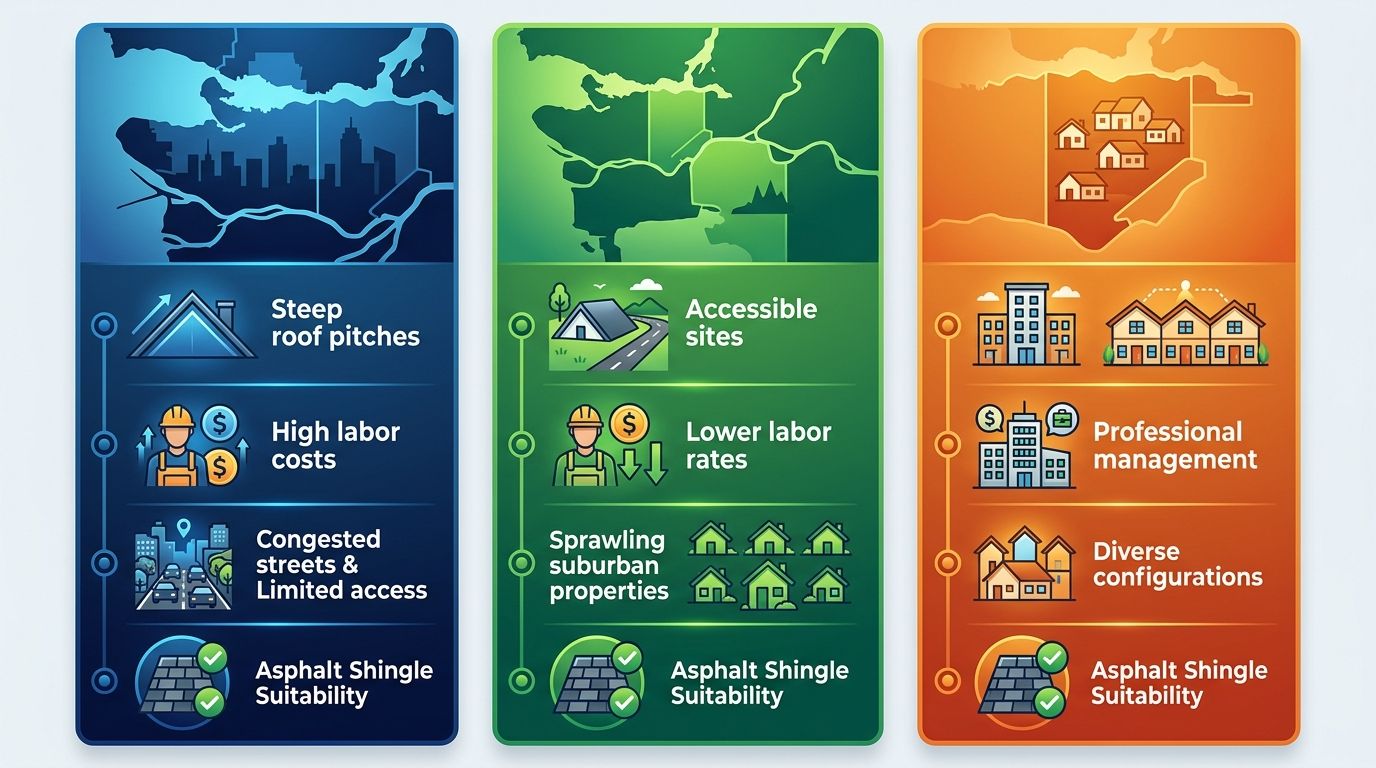
Roof replacement factors comparison across Vancouver areas
Contact Paragon Roofing BC for a free on-site inspection to get your precise roof replacement cost quote.
Available Roof Replacement Services in BC
At Paragon Roofing BC, we provide comprehensive roof replacement services across British Columbia as a Trusted Roofing Contractor Across British Columbia. Our full-service capabilities cover residential, commercial, and strata properties, with competitive roof replacement cost options starting from free on-site inspections that deliver detailed photo reports for accurate estimates. With decades of local experience in the Lower Mainland and BBB A+ accreditation, we ensure quality installations backed by warranties.
For full roof replacement in BC, we offer these specialized services:
- Roof replacement (removal & replacement): We remove old layers and install new systems, minimizing disruption while extending roof life, per Paragon Roofing BC’s internal service guidelines.
- Reroofing: Overlay compatible materials on existing structures for cost-effective renewal, ideal for asphalt or cedar upgrades.
- Asphalt shingle roof replacement: Popular for BC homes, we replace with durable shingles suited to wet climates; to understand roof replacement cost in Vancouver, request our free assessment.
- Metal roofing replacement: Install long-lasting panels resistant to coastal winds and rain, as highlighted in our Vancouver operations overview.
- Tile roofing replacement: Swap clay or concrete tiles for enhanced durability and aesthetics on sloped roofs.
- Cedar shake replacement: Convert traditional shakes to synthetic or treated options for fire safety and low maintenance.
- Solar roofing integration: Seamlessly add solar metal roofs with 18-25% efficiency, leveraging standing seam designs for Lower Mainland weather, per our specialized FAQs.
Warranties vary by manufacturer—check terms and contract. Estimates are subject to on-site inspection, and we maintain WorkSafeBC coverage and liability insurance. Contact us today for a free inspection to protect your investment. Protecting Your Home. Building Your Family’s Future. Perfection In Roofing.
Local Factors Affecting Roof Replacement Costs
Beyond national averages outlined in resources on roof replacement cost in Canada, local BC conditions drive significant variations in roof replacement costs. We break them down here, drawing from our decades of local experience across the Lower Mainland and British Columbia as a BBB A+ accredited, WorkSafeBC-covered contractor delivering Perfection In Roofing.
Key factors include:
- Labor Rates: Urban areas like Vancouver face higher rates and union influences compared to rural Interior BC, as industry benchmarks from Taves Roofing indicate. This elevates the roof replacement cost for projects in the Lower Mainland.
- Material Availability: Remote Northern BC sites incur delivery surcharges, unlike efficient access in the Lower Mainland, per our company’s localized homeowner guide from Paragon Roofing BC.
- Building Codes: Variations for snow load and wind resistance add complexity and expense to asphalt shingle roof replacement, especially in high-risk zones.
- Climate Impacts: Coastal rainy regions experience seasonal disruptions extending timelines versus drier Okanagan areas, increasing overall roof replacement expenses.
Our free on-site inspections provide tailored insights. Contact us for a competitive estimate based on your location—Protecting Your Home. Building Your Family’s Future. Estimates subject to on-site inspection and final scope confirmation.
Steps to Start Your Roof Replacement
Following signs that it’s time for roof replacement, we at Paragon Roofing BC begin with a free on-site inspection to assess your needs accurately. This initial step addresses common questions about starting the process and determining roof replacement cost in British Columbia.
- Schedule and Conduct Inspection: We start by arranging your free inspection. Our team performs a visual assessment of the current roof condition, identifies damage types like missing shingles or leaks, takes detailed photos for a report, and discusses findings with you, per a detailed industry process guide from SquareDash, a roofing contractor blog.
- Prepare Detailed Quote: Post-inspection, we deliver a competitive quote covering old roofing removal, asphalt shingle roof replacement, and other materials. It includes timeline estimates—tear-off (1 day), underlayment/deck repair (1 day), shingle installation (1-3 days)—as manufacturer benchmarks from TAMKO indicate, factoring in roof replacement cost in Canada.
- Handle Permits and Site Prep: We obtain necessary British Columbia permits and prepare the site by protecting landscaping and securing the area.
- Customer Approval: You review and approve the quote, select materials via consultation, and set the start date.
With decades of Lower Mainland experience and BBB A+ accreditation, we ensure a smooth start. Estimates are subject to on-site inspection. Protecting Your Home. Building Your Family’s Future. Once scheduled, our team executes the full replacement process.
Choosing the Right Roof Replacement Partner
When ready for roof replacement, your partner choice directly influences roof replacement cost. Partner with experienced local contractors like us across British Columbia to avoid costly errors.
We bring decades of experience in the Lower Mainland and BC, BBB A+ accreditation, and full-service residential, commercial, and strata capabilities, including Solar Integrated Roofing and asphalt shingle roof replacement. Paragon Roofing provides free on-site inspections with photo reports, warranty-backed installations, seasonal maintenance plans, and competitive pricing.
Estimates are subject to on-site inspection. Contact us for your free inspection to discuss roof replacement cost.
This article was researched and written with the assistance of AI tools.
Resources
- Get 2025 Vancouver Roof Replacement Cost Guide
- Explore Solar Metal Roofing for Vancouver Climates
- Learn Metro Vancouver Roof Replacement Cost Details
- Access Professional Roof Maintenance in Vancouver
- Discover 2025 Metal Roof Costs in Vancouver
- Explore Vancouver Roofing FAQs and Lifespan Tips
- Find Expert Vancouver Roofing Services by Paragon
- Compare Average BC Roof Replacement Costs by Material
- Estimate 2026 Canada Roof Replacement Costs Guide
- Calculate Canadian Roof Replacement Costs by Type
- Understand Complete Roof Replacement Timeline Process
- Master Step-by-Step Roof Replacement Process Guide
Table of Contents
- New Roofing Materials in British Columbia
- Roofing Materials Overview in Metro Vancouver
- Modern Roofing Solutions in British Columbia
- Climate-Specific Roofing for the Lower Mainland
- Choosing New Roofing in British Columbia
- Upgrading with New Roofing Materials
New Roofing Materials in British Columbia
For new installations in British Columbia, consider these advanced new roofing materials bc that deliver durability against the region’s wet weather and heavy rains. With decades of local experience across the Lower Mainland and BC, we guide homeowners toward options suited to coastal conditions.
Architectural shingles bc offer premium asphalt construction with enhanced wind resistance up to 130 mph and fiber-glass reinforcement for aesthetic appeal. Ideal for residential new roofs, these materials provide superior protection and longevity, as noted in Paragon Roofing BC’s overview of available coverings.
Metal roofing bc, particularly standing seam panels, excels in longevity over 50 years, energy efficiency through reflectivity, and resilience in coastal BC environments. According to our company’s material services summary, metal options minimize maintenance while boosting sustainability.
We provide consultation and supply through our roofing materials services in Vancouver extended across BC. Our team handles full new roof installation using these materials—contact us for a free on-site inspection to discuss new roofing materials bc tailored to your property.
Roofing Materials Overview in Metro Vancouver
Metro Vancouver’s wet, temperate climate, characterized by heavy rainfall exceeding 1,189 mm annually and mild winters, demands climate-resilient new roofing materials BC homeowners can trust for lasting protection. Frequent wind-driven rain and prolonged dampness accelerate wear on standard roofs, making durable, moisture-resistant options essential. With decades of local experience, we at Paragon Roofing BC guide clients toward new roofing materials in BC that stand up to these challenges.
Comparison of New Roofing Materials for BC
Table comparing key attributes of emerging roofing materials suitable for Vancouver’s climate.
| Material | Durability (Years) | Eco-Friendliness | Cost Range |
|---|---|---|---|
| TPO | 20-30 | High | $8-12/sqft |
| Architectural Shingles | 25-40 | Medium | $5-9/sqft |
| Metal Roofing | 40-70 | High | $10-18/sqft |
| Synthetic Slate | 50+ | Very High | $15-25/sqft |
Data based on RCABC standards and local contractor experience
Costs approximate for Vancouver area 2026 projections
Architectural shingles in BC provide a reliable choice with a 25-40 year lifespan despite Vancouver’s moisture challenges, as practical insights from Paragon Roofing BC highlight. Proper ventilation, quality installation, and routine maintenance like gutter cleaning extend performance in wet conditions. These shingles balance affordability and resilience for many Lower Mainland homes.
Metal roofing BC excels with 40-70 year durability, perfectly suited to the Lower Mainland’s rains and winds, according to expert guidance from Paragon Roofing BC. Made from recyclable materials like steel or aluminum, they offer fire resistance and minimal upkeep. We install these innovative options to deliver long-term value.
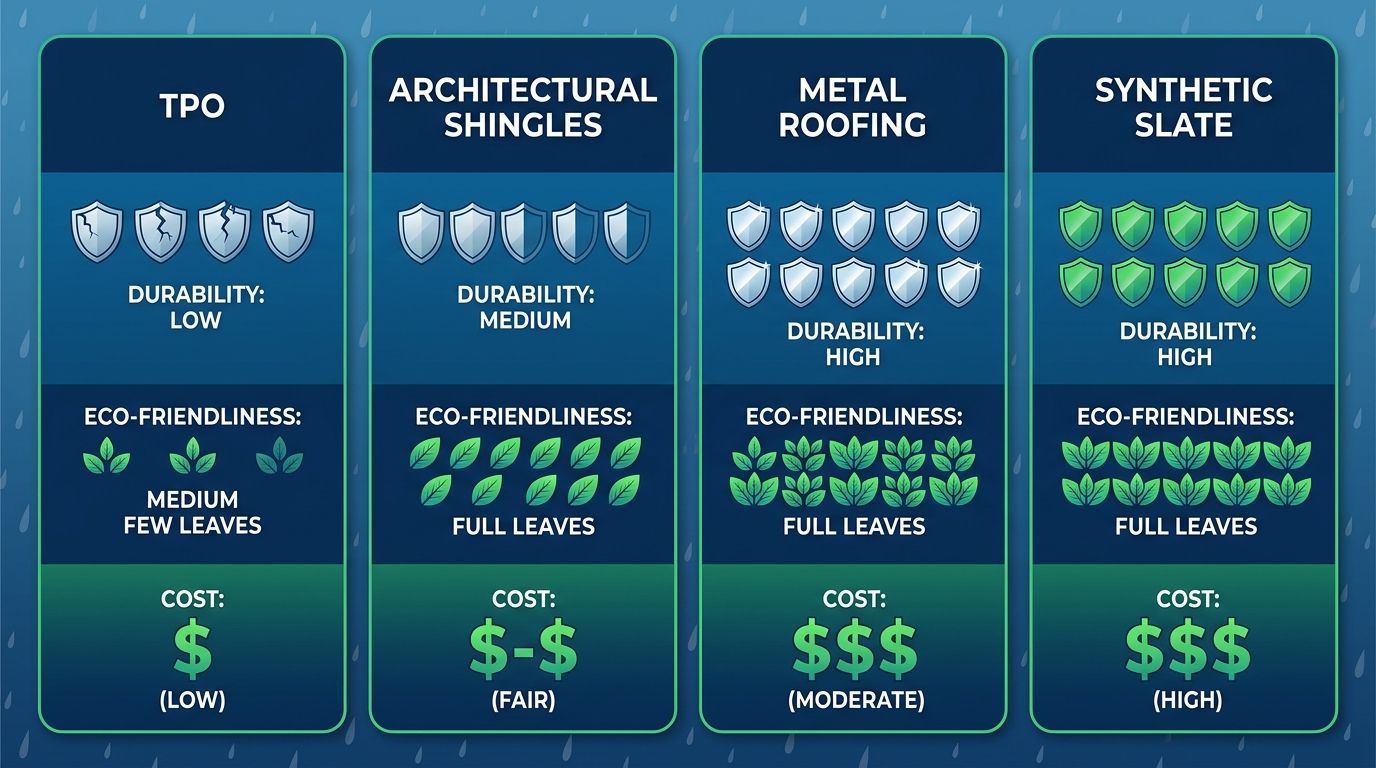
Roofing materials comparison for Metro Vancouver climate using icons
Contact Paragon Roofing BC for a free on-site inspection to match the best material to your roof. These competitive costs are 2026 Vancouver projections subject to final scope confirmation and site review. Explore our asphalt shingle or metal roofing services for tailored solutions.
Modern Roofing Solutions in British Columbia
Building on traditional methods, we at Paragon Roofing BC offer cutting-edge new roofing materials in BC tailored for superior durability and energy efficiency amid British Columbia’s wet winters and mild summers. These advanced roofing products withstand harsh weather while reducing energy costs. We specialize in sourcing and installing these innovative options to protect properties across the Lower Mainland.
TPO roofing leads as a premier choice for flat and low-slope roofs. The Roofing Contractors Association of BC (RCABC) sets authoritative industry standards for fully adhered, mechanically fastened, or torch-on systems, emphasizing thicknesses and installation to ensure resistance to UV exposure and punctures. Explore standards for TPO torch-on roofing in British Columbia via RCABC guidelines, which guide our precise applications.
Architectural shingles in BC elevate standard asphalt with layered designs for impact resistance and algae protection, backed by enhanced manufacturer warranties up to 50 years when installed by certified teams like ours. Paragon Roofing BC supplies these premium shingle systems for lasting aesthetic appeal and performance.
Metal roofing in BC delivers exceptional longevity—over 50 years according to Paragon Roofing BC—with standing seam and corrugated profiles excelling in weather resistance for residential homes and commercial buildings in Vancouver and Surrey areas.
Our roof materials services include expert consultation, material supply, and complimentary on-site inspections with photo reports to match the ideal modern solution to your needs. Roofing. It’s what we do.
Contact us today for custom modern roofing solutions and competitive pricing. Perfection In Roofing. Warranties vary by manufacturer and product—check manufacturer terms and written contract.
Climate-Specific Roofing for the Lower Mainland
In the Lower Mainland’s unique wet climate, we recommend new roofing materials BC tailored to over 1,200 mm annual rainfall, wind-driven rain, moss growth, and damp conditions that promote leaks. These challenges demand durable solutions for longevity and energy efficiency. Roofing. It’s what we do.
Architectural shingles BC excel with multi-layer fiberglass construction offering wind resistance up to 130 mph and hail impact durability. Metal roofing BC provides 40-70 year lifespans, corrosion-resistant coated steel or aluminum, and low thermal expansion for humidity cycles. Paragon Roofing BC shares practical tips: energy-efficient reflective coatings reduce attic heat gain by 10-20%, enhancing savings in our temperate weather through better insulation and ventilation.
Evaluate repair versus replacement with our decades of local experience. Repair minor leaks or moss on roofs under 15 years; replace if 20+ years old, granule loss exceeds 20%, or multiple leaks persist. As Paragon Roofing BC expert guidance notes, assess deck integrity and ventilation in rainy exposures. BBB A+ rated, we offer competitive pricing and free on-site inspections to meet your needs.
Choosing New Roofing in British Columbia
Once you’ve determined replacement is needed, selecting the right new roofing materials bc proves essential for British Columbia’s rainy climate, marked by heavy precipitation, moss growth, and wind. These conditions demand durable options that withstand moisture and variable weather, as our decades of local experience across Vancouver and the Lower Mainland shows.
We recommend evaluating key factors: climate resistance to wind, moss, and occasional heavy snow; energy efficiency for cost savings; extended warranty lengths; and aesthetic alignment with neighborhood homes. Architectural shingles bc offer cost-effective appeal, mimicking cedar shake styles with 30-50 year lifespans suited for BC conditions, per Paragon Roofing BC’s practical homeowner guides.
For superior longevity, metal roofing bc excels with 50+ year durability, low maintenance, and fire resistance, ideal for Vancouver’s steep pitches and marine exposure, as detailed in our up-to-date internal cost resources. When facing roof repair vs replacement in Vancouver, proactive choices extend life through regular roof maintenance—we provide free on-site inspections.
Contact Paragon Roofing BC for a personalized quote and competitive pricing. With the right materials selected, consider next steps like budgeting and scheduling.
Upgrading with New Roofing Materials
Once we’ve inspected your roof, upgrading with new roofing materials in BC provides superior durability against wet weather and improved energy efficiency. We recommend new roofing materials BC for homes facing our region’s challenges, as detailed in Paragon Roofing BC’s roof materials services.
Architectural shingles BC offer aesthetic appeal and longevity for residential upgrades. Metal roofing BC excels in resisting moss and high winds, backed by our decades of local experience across the Lower Mainland.
Roofing. It’s what we do. Schedule a free on-site inspection today. Estimates and final prices are subject to on-site inspection and final scope confirmation. Our team handles seamless installation of these materials.
This article was researched and written with the assistance of AI tools.
Resources
- Get Expert Roofing Materials Services in Vancouver
- Learn Roof Repair vs Replacement in Vancouver Climate
- Get Residential Commercial Roofing Maintenance in Vancouver
- Explore Durable Metal Roofs for Lower Mainland
- Discover Asphalt Shingle Lifespan in Vancouver Climate
- Maximize Energy Savings with Vancouver Roofing Solutions
- Find 2025 Metal Roof Costs Guide Vancouver
- Compare TPO Torch-On Roofing Systems in BC
Table of Contents
- Essential Guide to Roof Replacement in Vancouver
- Roofing Landscape in Metro Vancouver
- Paragon Roofing Services in Lower Mainland
- Local Factors for Roof Replacement in BC
- Steps to Begin Your Roof Replacement Project
- Next Steps for Your Vancouver Roof Replacement
Essential Guide to Roof Replacement in Vancouver
For Vancouver homeowners ready to proceed, timely roof replacement is crucial in our rainy Pacific Northwest climate, where moisture damage risks like leaks and mold can compromise home integrity. The process begins with a thorough assessment to evaluate your roof’s condition, followed by material selection suited to local weather, and professional installation adhering to Vancouver’s building codes. We ensure every step prioritizes durability and compliance.
Vancouver roof replacement costs in 2025 typically range from CAD $12–$22 per square foot for most homes, according to up-to-date local market pricing benchmarks from Paragon Roofing BC, factoring in materials like asphalt shingles ($4–$7 per square foot) and labor, plus 5% GST. The roof replacement timeline in Vancouver usually spans 1–3 days for standard projects, though seasonal delays or inspections may extend this. For reliable results, contact us for residential roofing services in Vancouver. Delve deeper into pricing factors next.
Roofing Landscape in Metro Vancouver
Building on the essentials of roof replacement, Metro Vancouver’s unique geography and regulations shape local projects in profound ways. The region’s rainy climate in the Lower Mainland, combined with diverse building types from high-rises to suburban homes, demands resilient materials like asphalt shingles. Regulatory influences from the Government of British Columbia ensure code-compliant installations, while frequent moisture accelerates wear on roofs. We at Paragon Roofing BC navigate these factors daily to deliver durable solutions for homeowners.
Regional differences significantly impact roof replacement processes across Metro Vancouver. Urban areas face steeper challenges due to density and access, while suburbs benefit from quicker permitting. Asphalt shingle replacements, the standard choice, see costs varying by neighborhood based on size and complexity for average homes of 1,500-2,500 sq ft. Understanding roof replacement cost in Vancouver requires considering local factors like high-rise logistics in dense zones versus easier suburban setups, as practical estimates from Paragon Roofing BC indicate.
Permitting delays often extend timelines in cities, contrasting with faster approvals in outlying areas, per Roofing Contractors Association of BC (RCABC) guidelines. These variations highlight the need for tailored planning to meet 2025 projections under BC Building Code standards.
Comparison of Roof Replacement Costs Across Vancouver Areas
The following table outlines average 2025 costs for asphalt shingle replacements in key neighborhoods, factoring in accessibility and regulations for typical projects.
| Neighborhood | Average Cost (Asphalt Shingles) | Key Factors | Timeline (Days) |
|---|---|---|---|
| Downtown Vancouver | $15,000 – $25,000 | Urban density, permitting delays | 5-7 |
| Surrey | $12,000 – $20,000 | Larger lots, faster permitting | 3-5 |
| Burnaby | $13,000 – $22,000 | Slope variations, weather exposure | 4-6 |
Data sourced from Paragon Roofing BC 2025 estimates and RCABC guidelines.
At Paragon Roofing BC, we customize quotes following on-site assessments to account for unique elements like slope and client needs, ensuring efficient roof replacement timelines in Vancouver. Our approach aligns with provincial regulations, providing transparent estimates subject to final inspection—warranties vary by manufacturer terms.
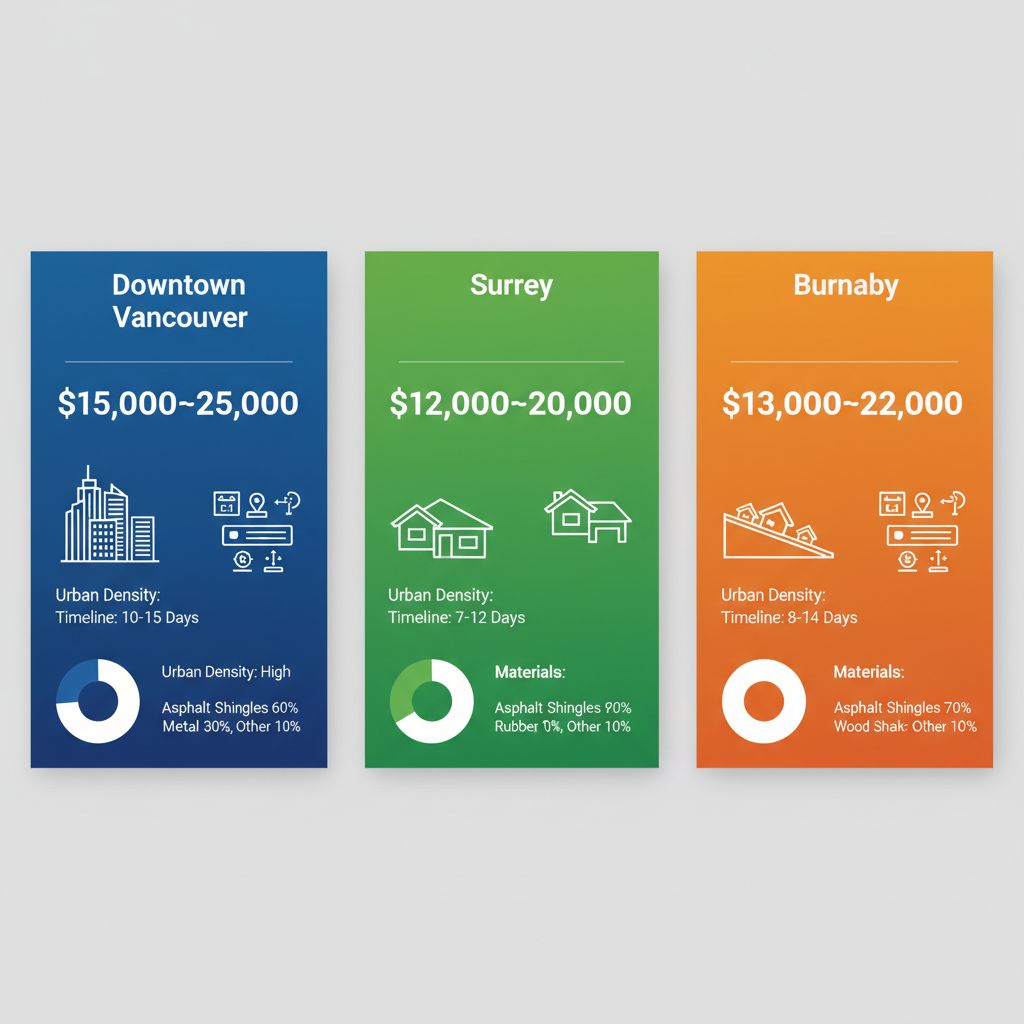
2025 roof replacement cost comparisons across Metro Vancouver areas
These insights emphasize local expertise for code-compliant projects. Free inspections from experienced providers like us help budget effectively amid regional nuances.
Paragon Roofing Services in Lower Mainland
Building on foundational roofing needs in British Columbia, we at Paragon Roofing BC bring decades of local expertise to the Lower Mainland, delivering durable, weather-resistant solutions tailored to coastal climates. From roof replacement projects to comprehensive maintenance, our services protect homes and businesses in Vancouver and surrounding areas against heavy rains and temperature shifts. We prioritize quality materials like asphalt shingles and metal roofing to ensure long-term performance.
Our roof installation and replacement processes follow expert guidelines from Paragon Roofing BC. We begin with thorough site preparation, removing old materials and conducting structural assessments to identify any underlying issues. Next, we apply underlayment for added protection, followed by precise layering of new shingles or membranes suited to Vancouver’s rainy conditions. For multi-family properties, we specialize in strata inspections, employing leak detection methods like infrared scanning to pinpoint problems early. Our maintenance plans include scheduled checks to prevent disruptions in shared buildings, minimizing costly future repairs.
Multi-Family Roofing Services
We inspect roofs using detailed checklists tailored for multi-unit structures, focusing on common areas prone to wear. Repair techniques address leaks promptly, while preventive schedules keep properties secure year-round.
Commercial Roofing Repair and Maintenance
For businesses, we offer emergency fixes for flat roofs, including patching membrane tears and cleaning drainage systems. Regular inspections comply with Vancouver building codes, extending roof lifespan and ensuring operational safety, as outlined in our professional protocols.
Clients benefit from free consultations, robust workmanship warranties, and flexible financing for roof replacement in the Lower Mainland. Factors like material choices and labor influence Vancouver roof replacement cost, typically ranging from assessments to final installations. Projects follow a reliable roof replacement timeline Vancouver, spanning one to two weeks from initial evaluation to completion.
For personalized advice on your project, contact us today for a customized quote. Explore our roofing FAQ in Vancouver for more details on common concerns before scheduling.
Local Factors for Roof Replacement in BC
While roof replacement fundamentals apply universally, British Columbia’s unique environment introduces specific considerations that homeowners must address. From stringent regulations to challenging weather, these local factors influence material choices, timing, and costs for replacing a roof in BC. At Paragon Roofing BC, we guide clients through these elements to ensure durable, compliant results.
The BC Building Code mandates seismic reinforcements and energy-efficient designs for roof replacements, prioritizing safety in earthquake-prone areas. For rental properties, official provincial regulations outline landlord responsibilities for major structural repairs, including roofs, under the Residential Tenancy Act. Landlords must maintain these features, with tenants reporting issues promptly to avoid disputes. Consult rental repairs maintenance in British Columbia for detailed obligations.
BC’s wet coastal climate and heavy interior snowfall demand durable materials like metal or composite shingles, which offer lifespans of 50 years or more per National Roofing Contractors Association benchmarks. These resist premature wear from moisture and ice dams, extending roof replacement timelines. In Vancouver, the roof replacement timeline Vancouver projects often face delays during rainy seasons, so we recommend spring or summer scheduling to minimize disruptions.
Environmental rules restrict asphalt shingle disposal, promoting recycling to reduce landfill impact. Urban areas like Vancouver see higher labor and permit costs, with fees averaging $200 to $500 adding to the Vancouver roof replacement cost. These factors, including eco-friendly options, raise overall expenses but ensure sustainable outcomes.
Understanding these local factors sets the stage for evaluating your project’s budget and timeline. Contact Paragon Roofing BC for a free inspection and personalized quote tailored to your needs.
Steps to Begin Your Roof Replacement Project
Once you’ve identified the need for replacement, starting your roof replacement project correctly sets the foundation for success in British Columbia. Proper assessment and planning minimize disruptions and ensure quality results tailored to your home’s needs.
- Schedule a Professional Inspection: Begin with a thorough roof inspection by certified experts to assess damage like missing shingles or leaks. Document findings with photos for reference. As local contractors, we at Paragon Roofing BC provide free on-site inspections to guide your decisions accurately.
- Establish Your Budget: Set a realistic budget considering materials and labor. In Vancouver, roof replacement costs typically range from $10,000 to $20,000 for asphalt shingles, according to Consumer Reports’ industry guidelines adjusted for local factors. Factor in a contingency for unexpected issues to avoid surprises.
- Research Certified Contractors: Select reliable roofers in South Surrey or Vancouver by verifying licenses through the Roofing Contractors Association of BC. Stay informed on roofing technical updates in British Columbia to ensure compliance with current regulations and best practices.
- Arrange Consultations: Meet with at least three local professionals to discuss your project. Inquire about the roof replacement timeline in Vancouver, usually 1-3 days for standard jobs, helping you plan around weather and daily life.
- Secure Permits and Insurance: Obtain required permits from British Columbia municipal authorities and review your homeowner’s insurance for coverage. This step protects you legally and financially before work begins.
Contact Paragon Roofing BC today for expert guidance on your project. After planning, evaluate your roofing material options carefully.
Next Steps for Your Vancouver Roof Replacement
Now that you’ve identified the need for roof replacement in Vancouver, act promptly to prevent further damage from BC’s wet climate.
- Schedule a free inspection with a licensed local roofer like us at Paragon Roofing BC to assess damage and material suitability for Vancouver’s weather.
- Gather at least three quotes from reputable Vancouver contractors, considering the Vancouver roof replacement cost averages of $8,000-$20,000 for asphalt shingles on a standard home.
- Discuss the roof replacement timeline in Vancouver, typically 1-3 days for installation but allowing 2-4 weeks for permitting and prep during rainy seasons.
- Consult a roofing buying guide from Consumer Reports for durable materials like metal or composite shingles resistant to moss and wind.
Contact Paragon Roofing BC today for a personalized quote tailored to your Vancouver property.
This article was researched and written with the assistance of AI tools.
Resources
- Discover 2025 Roof Replacement Costs in Vancouver Guide
- Explore Expert Residential Roofing Services in Greater Vancouver
- Learn Essential Vancouver Roofing FAQ for Wet Climates
- Get Reliable Multifamily Roofing Services for BC Strata
- Access Trusted South Surrey Roofing Services and Inspections
- Secure Commercial Roof Repair and Maintenance in Vancouver
- Master Roof Installation and Replacement Guide in Vancouver
- Understand Rental Repairs and Maintenance Rules in BC
- Review Latest Roofing Technical Updates for BC Standards
- Find Top Roofing Materials Buying Guide and Tips
- Evaluate Roofing Materials for Durability Performance and Cost
- Explore BC Building Code 2024 Regulations and Adaptations
Table of Contents
- Comprehensive Roofing Guide for Metro Vancouver
- Roofing Landscape in the BC Lower Mainland
- Roofing Services Across Vancouver and Lower Mainland
- Local Roofing Factors in BC Climate
- Steps to Secure Roofing in Vancouver
- Elevate Your Roofing in the Lower Mainland
Comprehensive Roofing Guide for Metro Vancouver
While roofing basics apply everywhere, Metro Vancouver’s rainy climate demands durable roofing like asphalt shingles or metal roofing to combat moss growth risks, according to Paragon Roofing BC’s official service catalog for local material options.
Timely roof repair addresses leaks and prevents water damage in Vancouver homes. We specialize in residential roofing, including roof installation and roof replacement, tailored for wet weather where roofs average 20-30 years lifespan in coastal areas.
For expert roofing materials services in Vancouver, Paragon Roofing BC offers proven solutions like asphalt shingles and metal roofing, as detailed in their service catalog.
Choose licensed Metro Vancouver roofers experienced in BC codes. Key tips:
- Schedule inspections post-rainy seasons.
- Prioritize ventilation to reduce moss.
Contact Paragon Roofing BC for reliable roofing services.
Roofing Landscape in the BC Lower Mainland
Narrowing to the Lower Mainland, we see diverse microclimates shaping roofing choices: heavy coastal rain in Vancouver, drier inland winds in Surrey, and mixed conditions across the region. These factors influence material suitability for roofing in the BC Lower Mainland, where we at Paragon Roofing BC draw on local expertise to recommend options that withstand local weather.
Asphalt shingles excel in Vancouver’s moderate rain, offering affordability and rain resistance with moderate durability for varied Lower Mainland weather, as NRCA guidelines note their dominance in steep-slope applications. Metal roofing provides superior wind resistance and longevity, ideal for Surrey’s inland exposure despite higher upfront costs; authoritative NRCA benchmarks highlight its growing popularity and weather resistance. Cedar shake delivers traditional aesthetic appeal for Lower Mainland homes but demands regular roof maintenance roof maintenance to combat moss and rot, per industry-standard inspection protocols from NRCA.
The following table summarizes roofing material suitability across Metro Vancouver areas, drawing from NRCA roofing materials guidelines and Paragon Roofing BC local project experience:
Roofing Material Suitability Across Metro Vancouver Areas
Comparison table evaluating popular roofing materials for different sub-regions based on climate, durability, and cost-effectiveness.
| Material | Vancouver (Coastal) | Surrey (Inland) | Lower Mainland (Varied) |
|---|---|---|---|
| Asphalt Shingles | Excellent for moderate rain; affordable | N/A | Moderate durability |
| Metal Roofing | N/A | Superior longevity in wind; higher initial cost | High wind resistance |
| Cedar Shake | N/A | N/A | Traditional aesthetic; requires maintenance |
This comparison reveals asphalt shingles as a cost-effective choice for coastal rain, while metal offers premium durability inland. Local contractor hands-on expertise from Paragon Roofing BC installations in Metro Vancouver confirms cedar shake’s appeal in traditional settings, though it elevates roof repair needs without upkeep. Proper selection aligns with climate, extending lifespan and minimizing interventions.
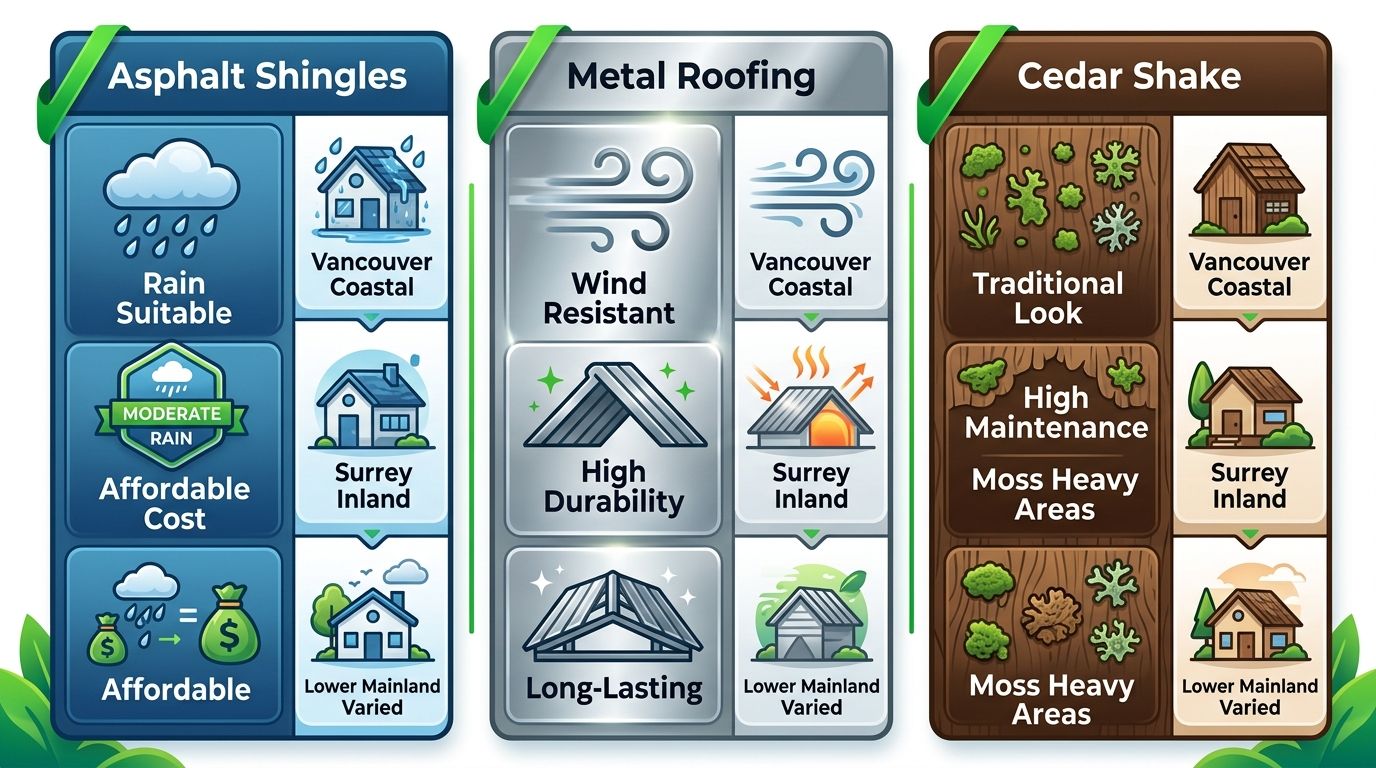
Roofing materials suitability comparison for Metro Vancouver climates
We integrate these insights into residential roofing projects, ensuring optimal shingle installation or roof replacement. Local experts like Paragon Roofing BC ensure optimal installations, minimizing future repairs.
Roofing Services Across Vancouver and Lower Mainland
For Vancouver-area homes and businesses, our roofing services ensure lasting protection against the region’s heavy rains and mild winters. Paragon Roofing BC delivers reliable solutions across Vancouver, Burnaby, Richmond, Surrey, Coquitlam, and surrounding Lower Mainland communities. With local offices in Vancouver and Surrey, we provide quick response times for all jobs.
We specialize in essential services tailored to local needs:
- Roof maintenance schedules, including bi-annual professional inspections as recommended by Paragon Roofing BC for wet climates—regular roof maintenance prevents costly issues and extends roof life by up to 30 years.
- Spring: Clean gutters and clear moss.
- Fall: Inspect ridges for wear.
- Emergency roof repair for leaks and storm damage, drawing on expert troubleshooting from Paragon Roofing BC.
- Residential roofing installations and full replacements using asphalt shingles, metal, and cedar shakes.
- Comprehensive roof inspections with photo reports.
- Ventilation and drainage upgrades for energy efficiency.
These align with National Roofing Contractors Association (NRCA) standards for quality workmanship, ensuring safety and durability. Practical seasonal checks, like trimming branches in summer per Paragon Roofing BC advice, catch problems early and save up to 10 times on emergency costs.
Our local expertise minimizes disruptions with fast Lower Mainland service. Contact us at 604-358-3436 or contact@paragonroofingbc.ca to schedule an inspection today. Beyond repairs, explore our full replacements for complete peace of mind.
Local Roofing Factors in BC Climate
While standard roofing principles apply, BC’s climate demands localized adaptations for roofing in BC. Our experience at Paragon Roofing BC shows heavy rainfall, snow, wind, and temperature swings challenge roofs uniquely, promoting durability through smart material choices and upkeep.
BC’s wet coastal areas foster moss growth and algae, as Paragon Roofing BC’s practical local contractor advice notes. Proper ventilation and metal roofs prevent this, reducing roof repair needs. In interior regions, snow loads of 30-50 lbs/sq ft per building codes require sturdy residential roofing designs. Proactive roof maintenance extends lifespan significantly.
Coastal high winds up to 110+ mph call for asphalt shingles with sealants or rated metal options. Mountainous freeze-thaw cycles demand soffit ventilation and eave protection against ice dams. NRCIA’s standardized industry checklist highlights inspecting valleys, flashings, and gutters amid annual rainfall over 100 inches in spots.
- Schedule bi-annual checks post-rainy seasons.
- Clear moss from shingles early.
- Verify snow load compliance yearly.
- Follow a professional roof inspection guide for thorough assessments.
Professional assessments ensure compliance—see our inspection guide.
Steps to Secure Roofing in Vancouver
Vancouver’s wet weather and coastal winds pose significant risks to roofs, making secure residential roofing choices essential for homeowners. To mitigate these risks, follow these steps when hiring professional roofing services in Vancouver.
NRCIA provides authoritative industry standards for choosing professional roofing contractor. Key criteria include verifying credentials and ensuring protections align with BC requirements.
- Verify BC contractor licensing through the Consumer Protection BC portal to confirm legitimacy.
- Confirm liability insurance and WorkSafeBC coverage; we maintain these to protect clients from on-site incidents.
- Request 3+ local references and check BBB ratings, prioritizing firms with proven Vancouver track records.
- Obtain written quotes detailing material specs like wind-resistant shingles for coastal areas, timelines, and scope.
- Review NRCA guidelines for comprehensive contracts, warranties, and workmanship assurances.
These steps safeguard your investment. Contact Paragon Roofing BC for trusted residential roofing. Once secured, regular roof repair ensures longevity and scheduled maintenance further extends service life and protects your investment.
Elevate Your Roofing in the Lower Mainland
Elevate your roofing standards in the Lower Mainland, BC, with Paragon Roofing BC’s expert transformations using premium materials as outlined in the roofing materials guide. From our Vancouver office, we deliver tailored roof repair and residential roofing solutions to combat heavy rain, coastal winds, and moss growth, as highlighted by Paragon Roofing BC’s service priorities. Committed to National Roofing Contractors Association (NRCA) guidelines, we ensure lasting quality. Residents, elevate your home today with our local expertise.
This article was researched and written with the assistance of AI tools.
Resources
- Get Comprehensive Roofing Materials Services in Vancouver
- Get Roof Maintenance and 24/7 Emergency Services
- Learn Seasonal Roof Maintenance Tips for BC
- Extend Roof Lifespan with Bi-Annual Maintenance
- Get Professional Flat Roof and Cedar Maintenance
- Schedule Bi-Annual Roof Inspections and Gutter Cleaning
- Choose Top Vancouver Roofing Companies for Quality
- Learn Professional Roof Inspection Guide and Benefits
- Discover Criteria for Selecting Roofing Contractors
- Explore Roofing Materials Types and Standards Guide
- Download Free Roof Inspection Checklist PDF
- Access NRCA Training Resources for Roofers
Table of Contents
- Expert Roof Installation in Vancouver, British Columbia
- Vancouver and Lower Mainland Roofing Overview
- Roof Installation Services Availability
- Local Considerations for Roof Installation
- Steps to Start Your Roof Installation
- Schedule Professional Roof Installation with Us
Expert Roof Installation in Vancouver, British Columbia
We at Paragon Roofing BC deliver roof installation replacement in Vancouver tailored to the local climate. Roof installation here demands expertise to combat heavy rainfall, moss growth, and high winds per British Columbia Building Code Section 9.26.
Our process starts with removing old roofing and inspecting decking. We install ice and water shield underlayment, metal flashing, starter strips, then asphalt shingle installation row by row with proper nailing. Self-sealing shingles resist winds up to 110 mph, as detailed in our comprehensive local guide, Paragon Roofing BC.
Expert work ensures 25-50 year warranties, energy efficiency, and higher property value while avoiding leaks. Roof installation cost factors include size, pitch, access, and premium materials.
Contact us for quotes; full installation outperforms patching in Vancouver’s wet conditions.
Vancouver and Lower Mainland Roofing Overview
Vancouver’s relentless rainfall and urban density create unique demands for durable roof installation. Building on broader BC roofing trends, the Lower Mainland requires weather-resistant materials like asphalt shingles and metal systems to withstand heavy precipitation and wind. We at Paragon Roofing BC specialize in these adaptations across key areas.
Roof Installation Comparison Across Key Lower Mainland Areas
Compare typical roof types, costs, and timelines for installations in major areas served by Paragon Roofing BC.
| Area | Common Roof Types | Avg. 2025 Cost Range (sq ft) | Optimal Install Timing | Local Challenges |
|---|---|---|---|---|
| Vancouver | Asphalt shingle, TPO | $8-15 | Spring/Fall | Urban access, strata rules |
| Surrey | Metal, torch-on | $7-14 | Summer | Larger lots, weather exposure |
| Burnaby | Asphalt, flat systems | $9-16 | Spring | Multi-family density |
- Data from Paragon Roofing BC project averages and BC building trends. Cite NRCA standards for cost estimates.
This table highlights roof installation cost variations, with Vancouver and Burnaby at the higher end due to density and access issues, per National Roofing Contractors Association (NRCA) guidelines for cost estimates and best practices. Surrey benefits from summer timing on larger lots, favoring metal and torch-on for exposure. Paragon Roofing BC project averages confirm these 2025 projections, emphasizing quality over low bids for long-term performance.
Regional rainfall heavily influences choices, promoting asphalt shingle installation in Vancouver and Burnaby alongside TPO flats. For metal options, Paragon Roofing BC’s practical local installation guide details metal roof over shingles in Vancouver feasibility, ensuring deck integrity and ventilation in wet conditions. These factors optimize the roof setup process against moss and leaks.
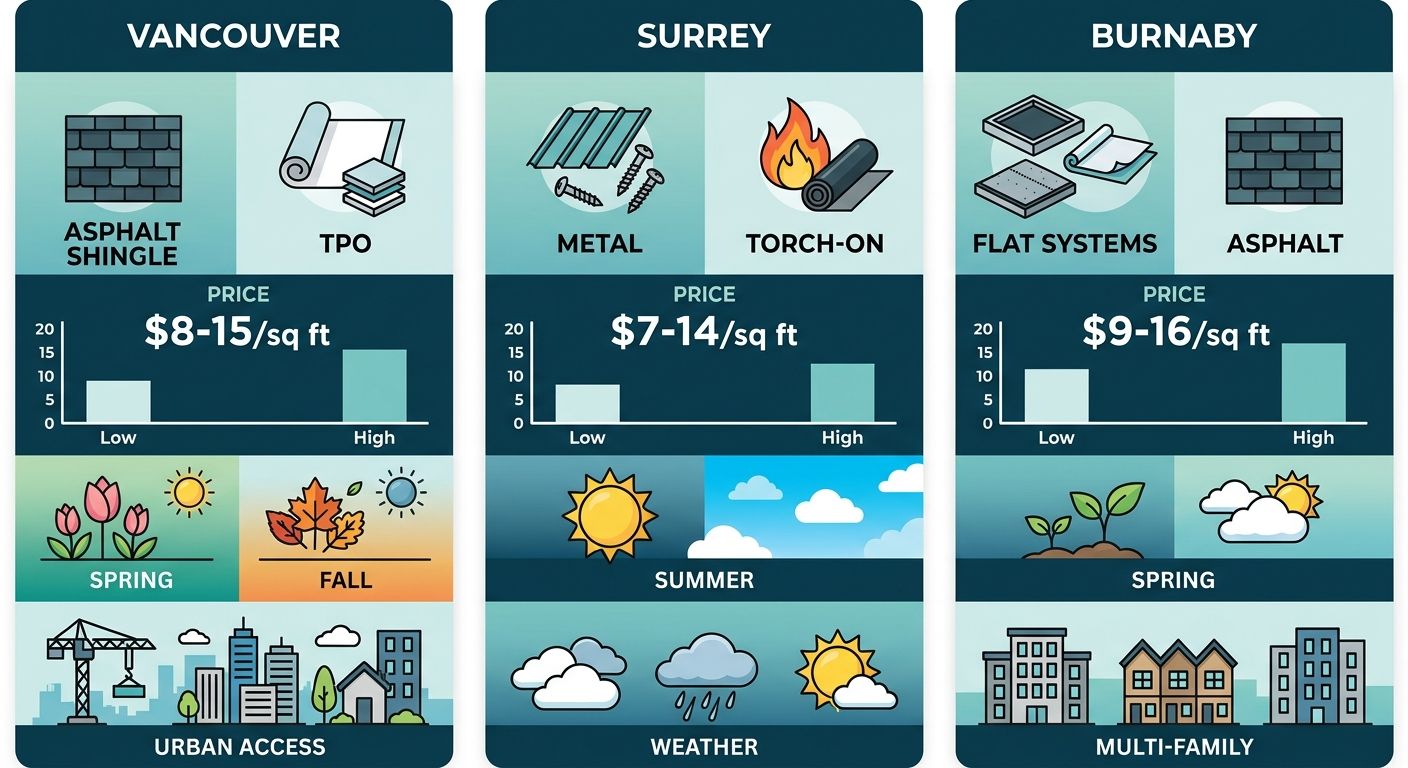
Roof installation comparison across Vancouver, Surrey, Burnaby
Paragon Roofing BC overcomes these challenges with tailored expertise. Contact us for your area’s custom roof installation plan.
Roof Installation Services Availability
Building on our comprehensive roofing solutions, here’s where roof installation is readily available from Paragon Roofing BC. We serve key areas in Metro Vancouver, including Vancouver and Burnaby, for both residential and commercial properties. Our services ensure reliable protection against the region’s wet climate, with asphalt shingle installation as a primary offering.
In Vancouver, we provide full roof installation tailored to local challenges like constant rain and moss growth. As detailed in our Vancouver roofing FAQ, Paragon Roofing BC offers asphalt shingles that typically last 18–25 years with proper care, alongside options for steeper residential slopes. For detailed answers on timelines and materials, see the Vancouver roofing FAQ. Seasonal scheduling favors late spring and summer for optimal results.
Our capabilities extend to Burnaby, where roof maintenance context supports seamless roof installation services, as outlined in Paragon Roofing BC’s location-specific overview. We handle distinctions between residential roofs—using asphalt shingles or cedar—and commercial flat or low-slope systems like TPO or EPDM, per our company blog on system differences. These variations influence scheduling, with commercial projects requiring more time due to scale and complexity.
Roof installation cost factors, such as property size, materials, and complexity, remain transparent and competitive in our service regions. Contact us today for a free quote to secure your spot amid seasonal demand. Once availability is confirmed, explore the step-by-step installation journey.
Local Considerations for Roof Installation
In British Columbia, roof installation must adhere to unique provincial rules for safety and compliance. At Paragon Roofing BC, we guide clients through these local considerations for roof installation to prevent delays and fines.
Building permits are required for most re-roofing projects on residential properties in British Columbia, per official provincial guidelines from the British Columbia building permits renovations. Exemptions apply to minor repairs under specific square footage thresholds. Permit fees impact roof installation cost, so verify with local authorities via the Building Permit Hub. Contact your municipality to confirm.
Key BC Building Code standards, as authoritative provincial construction standards from the Government of British Columbia, include:
- Wind load resistance for structural integrity.
- Fire ratings for asphalt shingle installation.
- Minimum slope requirements for proper drainage.
These ensure durable, safe roofs.
WorkSafeBC reports highlight risks, like a 2022 incident where a worker fell 9 meters while rolling out roofing membrane due to absent fall protection and inadequate training. Prevent this with guardrails, harnesses, and licensed supervisors. Hire BC-familiar contractors like us for compliant work. Meeting these ensures smooth, cost-effective roof installation.
Steps to Start Your Roof Installation
With the decision made for a new roof, follow these essential steps to launch your project safely in British Columbia. Proper preparation for roof installation ensures compliance, cost control, and lasting results, protecting your home from the region’s heavy rains and winds.
Step 1: Conduct a Thorough Roof Inspection
You’ll begin by assessing damage, leaks, and structural integrity. Paragon Roofing BC offers practical insights from a trusted local roofing expert, recommending professional evaluation if unsure to catch issues early and avoid escalation.
Step 2: Obtain Necessary Building Permits
Research local requirements in Delta and surrounding areas. Official mandatory regulations from the Government of British Columbia require verifying compliance with British Columbia building codes standards before proceeding.
Step 3: Develop a Realistic Budget
Factor in roof installation cost for materials like asphalt shingles and certified labor. This step helps anticipate expenses for a smooth shingle roofing process.
Step 4: Select Roofing Materials
Choose durable options such as asphalt shingles. Asphalt shingle installation involves underlayment for waterproofing and flashing around edges to prevent leaks.
Step 5: Hire a Licensed Roofing Contractor
Engage experts like Paragon Roofing BC for code-compliant work that enhances home value.
Contact us at Paragon Roofing BC today to proceed seamlessly with your roof installation, ensuring safety and savings.
Schedule Professional Roof Installation with Us
Ready for reliable roof installation in British Columbia? We at Paragon Roofing BC specialize in timely, high-quality installs serving Vancouver homes and the Lower Mainland.
Our team utilizes premier NRCA roofing education from the National Roofing Contractors Association (NRCA), mastering asphalt shingle installation techniques for durable results, strong warranties, and avoidance of roof installation cost overruns from DIY errors.
Schedule now for a free quote! Contact us via phone, email, or online form at paragonroofingbc.ca.
This article was researched and written with the assistance of AI tools.
Resources
- Discover Roof Installation and Replacement Guide in Vancouver
- Learn Metal Roof Over Shingles Installation in Vancouver
- Explore Vancouver Roofing FAQ on Lifespans and Maintenance
- Get Professional Roof Maintenance Plans for Burnaby
- Compare Residential and Commercial Roofing Differences Vancouver
- Find Best Reliable Roofing Company in Vancouver
- Boost Home Value with Quality Roofing in Delta
- Navigate BC Building Permits for Renovations Process
- Access BC Building Codes and Standards Resources
- Enroll in NRCA Roofing Education and Certifications
- Discover Canada Greener Homes Retrofit Grants Eligibility
- Learn Roofing Fall Safety from WorkSafeBC Incident
Table of Contents
- The Importance of Roof Inspections in Vancouver
- Understanding Roof Inspections in Vancouver
- Key Benefits of Professional Roof Inspections in Vancouver
- How Professional Roof Inspections Work in Vancouver
- Best Practices for Roof Inspections and Maintenance in Vancouver
- Prioritizing Roof Health in Vancouver
The Importance of Roof Inspections in Vancouver
Vancouver’s relentless rainfall and damp climate pose unique challenges for homeowners, accelerating roof wear through heavy precipitation, moss accumulation, and potential leaks that can compromise structural integrity. A routine roof inspection in Vancouver is essential to safeguard against these elements, preventing minor issues from escalating into major, costly damages. For instance, undetected water intrusion during the wet season can lead to mold growth and weakened framing, underscoring the need for proactive measures in our region.
At Paragon Roofing BC, we emphasize the superiority of professional roof evaluations in Vancouver over DIY efforts, as our trained experts uncover hidden problems like attic ventilation deficiencies or flashing failures that untrained eyes might miss. With decades of local experience across the Lower Mainland and our BBB A+ accreditation, we offer free on-site inspections complete with detailed photo reports to empower homeowners. Considering the roof inspection cost in Vancouver, investing in these Vancouver roof assessment services early far outweighs the expense of extensive repairs, especially when spotting signs you need a roof inspection in Vancouver, such as granule loss or interior stains.
This guide explores the benefits of professional inspections, the step-by-step process, and best practices tailored to our coastal environment. Drawing from the professional roof inspection guide, we highlight how early detection aligns with industry standards to protect your investment and ensure long-term roof health.
Understanding Roof Inspections in Vancouver
At Paragon Roofing BC, we emphasize the importance of thorough roof inspections — including our comprehensive roof inspection — to safeguard homes against the region’s challenging weather. Vancouver’s frequent rain and mild winters demand proactive evaluations to prevent leaks and structural issues. Our free on-site inspections provide detailed photo reports, helping homeowners make informed decisions about maintenance and repairs.
What Roof Inspections Entail in Vancouver’s Climate
A standard roof inspection in Vancouver involves a systematic assessment of both exterior and interior elements to identify potential vulnerabilities. This includes visual checks of shingles for wear, flashing around chimneys and vents for cracks, and gutters for clogs that could lead to water buildup. Interior assessments focus on attics for signs of water intrusion, such as stains on ceilings or insulation dampness. According to comprehensive roofing guidelines, these inspections detect early issues like damaged shingles in about 70% of routine checks, preventing escalation.
In Vancouver’s rainy and temperate climate, the roof inspection process adapts to local conditions like persistent moisture and moss growth, which accelerate deterioration. Inspectors pay special attention to algae on north-facing slopes and fog-induced condensation that promotes mold. The local roof check procedures also evaluate drainage efficiency to handle heavy downpours, ensuring water flows away from the foundation. We at Paragon Roofing BC observe that these tailored elements extend roof life by addressing humidity-related risks unique to the Lower Mainland.
For instance, during a recent evaluation, our team identified subtle flashing gaps exacerbated by coastal winds, averting a potential leak before the next storm season.
Frequency and Timing for Vancouver Roofs
Recommended frequency for roof inspections in Vancouver aligns with the National Roofing Contractors Association guidelines, suggesting annual or bi-annual checks depending on roof age and exposure. Newer roofs under 10 years may need evaluations every two years, while older asphalt shingle systems require yearly reviews to monitor weathering. Post-storm inspections within 24-48 hours are crucial after intense rain events, which are common here.
Vancouver’s climate influences timing, with pre-winter assessments in fall ideal to prepare for freeze-thaw cycles and heavy precipitation. Triggers include visible signs you need a roof inspection in Vancouver, such as granule loss from shingles or sagging areas after windstorms. Routine checks mitigate the roof inspection cost in Vancouver, often under $300 for our free initial service, saving thousands in future repairs by catching issues early. The NRCA stresses that consistent timing based on seasonal changes enhances longevity in wet regions like ours.
A practical example: Homeowners scheduling bi-annual visits post-rainy season report fewer emergency calls, as we identify minor drainage tweaks that prevent major water damage.
Ventilation and Other Key Checks
Ventilation checks during a Vancouver roof inspection evaluate attic airflow through soffits, ridge vents, and exhaust fans to prevent heat buildup and moisture retention. Additional elements include moisture testing with tools like infrared cameras to detect hidden leaks, alongside structural integrity reviews of rafters and sheathing. These comprehensive assessments ensure balanced air circulation, reducing energy loss and mold risks.
In humid Vancouver conditions, improper ventilation exacerbates condensation from the area’s fog and rain, leading to attic humidity levels above 60% that foster mildew. Our evaluations also cover drainage systems and flashing integrity, critical for diverting water in this temperate zone. As noted in local winter prep resources, addressing ventilation early avoids ice dams and related damage during mild but wet winters. We incorporate moss removal assessments, a common local issue, to maintain clear pathways for air exchange.
For example, in a strata property inspection, we upgraded soffit vents, improving airflow and eliminating persistent dampness odors reported by residents.
Key Benefits of Professional Roof Inspections in Vancouver
At Paragon Roofing BC, we understand the unique challenges posed by Vancouver’s frequent rains and winds, making a professional roof inspection in Vancouver essential for protecting your home. These inspections reveal hidden issues early, preventing minor problems from turning into major expenses. While the roof inspection cost in Vancouver may seem like an upfront investment, it pales in comparison to the savings from avoiding extensive repairs. We offer complimentary on-site inspections to help homeowners get started without added costs.
Preventing Costly Damage and Repairs
Early detection through regular roof inspections is crucial in Vancouver’s wet climate, where moisture can quickly lead to leaks and structural issues. We help clients identify problems like damaged shingles or clogged gutters before they cause interior water damage or mold growth, which can cost thousands to remediate. For instance, after heavy storms common in our region, scheduling an inspection addresses signs you need a roof inspection in Vancouver, such as loose flashing or pooling water, preventing escalation.
Our seasonal maintenance plans, inspired by best practices in residential roofing maintenance, include thorough checks that extend roof life and reduce long-term repair needs. According to industry experts from the National Roofing Contractors Association (NRCA), timely post-storm inspections like ours significantly lower the risk of costly damage. By catching issues early, we ensure your roof remains resilient against the elements. One homeowner shared how our inspection prevented a leak from ruining their living room, saving them from a major overhaul.
Enhancing Safety and Longevity
Professional roof inspections in Vancouver enhance safety by spotting hazards that could lead to collapses or falls, especially on older structures battered by wind and rain. We prioritize checks for weak spots in cedar shakes or asphalt shingles, common local materials, to mitigate risks and promote secure living environments. Regular evaluations also improve ventilation, reducing energy loss and preventing ice dams during cooler months, which directly contributes to a safer home.
Through our biannual visits, we extend roof longevity by 5-10 years via proactive repairs, tailored to Vancouver’s demanding weather. This approach aligns with roofing guidelines resources that stress consistent upkeep for durability. Homeowners benefit from our expertise in moss removal and sealant reapplication, ensuring optimal performance. A strata property manager once noted our inspections helped avoid safety violations, giving them peace of mind for residents.
Insurance and Resale Value Advantages
Roof inspections provide valuable documentation for insurance claims in Vancouver, where storm damage is frequent, streamlining approvals and reducing out-of-pocket expenses. We deliver detailed photo reports from our free assessments, which insurers appreciate for verifying issues like wind-lifted tiles. This preparation can expedite payouts and protect your financial interests during unexpected events.
For resale, a current inspection report boosts property value by assuring buyers of the roof’s condition, a key factor in competitive markets. Our warranty-backed services add credibility, highlighting the roof’s remaining lifespan and maintenance history. Drawing from NRCA insights on storm roof repairs, we emphasize how professional checks support claims effectively. Vancouver homeowners often find that investing in our inspections enhances marketability, with one client crediting their report for a smoother sale and higher offer.
How Professional Roof Inspections Work in Vancouver
At Paragon Roofing BC, we conduct thorough roof inspections in Vancouver to ensure the longevity and safety of your property. These local roof diagnostic steps account for the region’s frequent rain and diverse building types, including strata and multifamily structures. Our process provides clear insights into potential issues, helping homeowners identify signs you need a roof inspection in Vancouver early.
The Step-by-Step Inspection Process
Our team begins a roof inspection in Vancouver with prompt site arrival, equipped with safety gear to navigate Vancouver’s varied terrains. We start with an exterior visual scan, checking shingles, flashing, and edges for wear, moss, or storm damage common in our wet climate. Next, we perform an attic interior review, assessing insulation, rafters, and any signs of leaks or rot.
Ventilation and chimney checks follow, ensuring proper airflow to prevent moisture buildup, which is crucial for Vancouver homes. For multifamily properties, we adapt our approach to cover multiple units safely, often coordinating with strata councils. Safety measures include harnesses, non-slip boots, and weather monitoring, especially during rainy seasons.
We use established Vancouver inspection procedures to document each stage, integrating multifamily roofing services for comprehensive coverage in shared buildings.
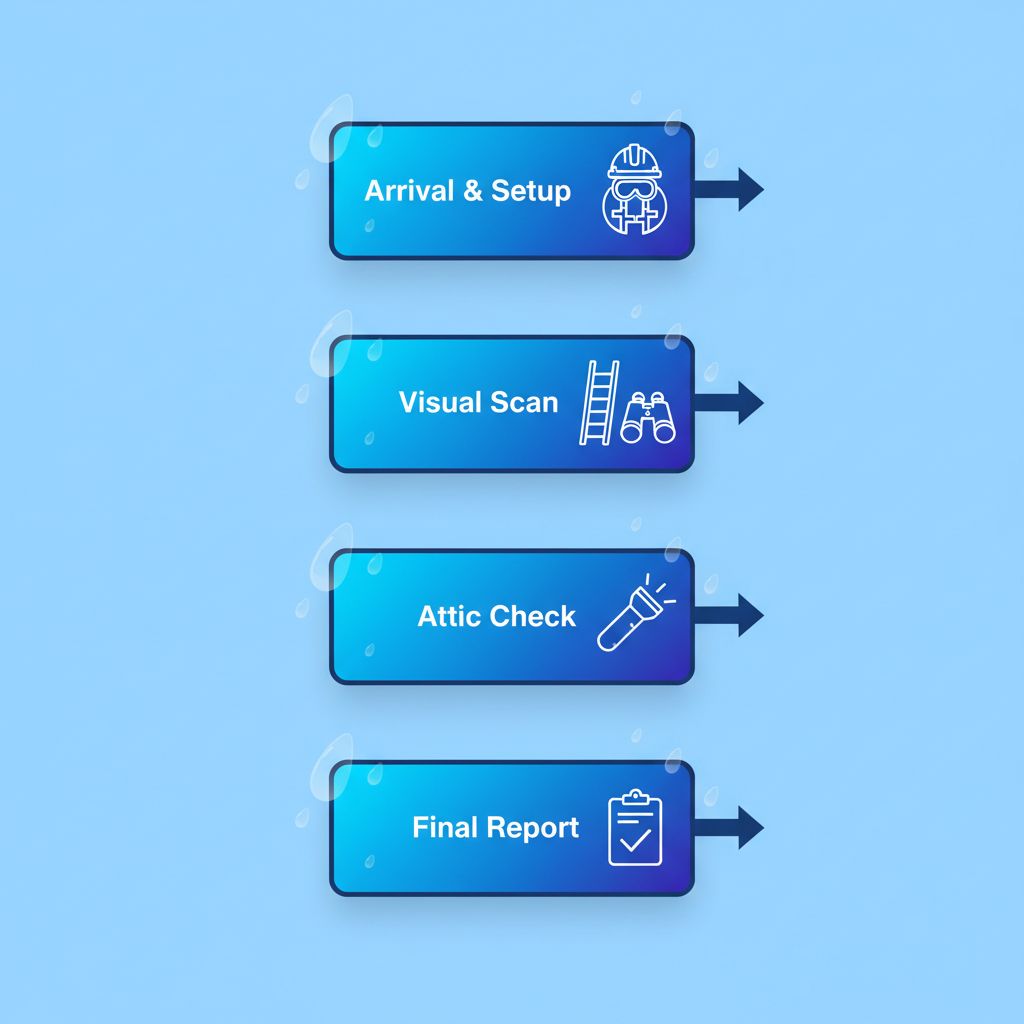
Horizontal process flow of professional roof inspections in Vancouver
This diagram illustrates our methodical approach, from initial assessment to final walkthrough, emphasizing efficiency and precision tailored to local conditions. By following these local roof diagnostic steps, we minimize disruptions while maximizing detection accuracy.
Tools and Techniques for Thorough Checks
In Vancouver’s challenging environment, our inspections incorporate advanced tools for reliable results. Ladders provide stable access for standard visual checks on sloped roofs, while drones survey hard-to-reach multi-story buildings, offering aerial views without risking technician safety. Thermal imaging detects hidden moisture beneath surfaces, ideal for identifying leaks before they worsen.
We adapt these techniques for sloped and flat roofs prevalent in strata complexes. Drone surveys enhance coverage for larger properties, and moisture meters pinpoint damp areas exacerbated by heavy rains. Our expertise ensures these methods align with industry standards, drawing from our commitment to thorough evaluations as a trusted local provider.
Tool choices depend on roof type and accessibility; for instance, drones excel in urban high-rises. The following table compares key methods we use:
| Method | Coverage | Cost Range | Best For |
|---|---|---|---|
| Visual Ladder Inspection | Surface-level visuals, edges | $200–$400 | Residential, low-rise homes |
| Drone Survey | Aerial overview, hard-to-reach | $300–$600 (roof inspection cost in Vancouver) | Multi-story, strata buildings |
| Thermal Imaging | Hidden moisture, insulation | $400–$700 | Flat roofs, leak detection |
These options reflect factors like property size and complexity, with drone methods often justified by their efficiency in preventing costly repairs. As noted in our maintenance guidelines, investing in advanced techniques supports long-term durability against Vancouver’s weather.
Interpreting Results and Next Steps
Post-inspection, we deliver a detailed report outlining findings, complete with photos and videos for transparency. Reports categorize issues by priority, from minor ventilation tweaks to urgent chimney repairs, tailored to Vancouver’s climate risks like moss accumulation.
We discuss results on-site or via follow-up, explaining visible damage indicators that signal the need for action. Recommendations include targeted maintenance or full repairs, integrated with our repair services for seamless progression.
For multifamily scenarios, we provide strata-specific advice on scheduling. Next steps might involve budgeting for fixes or enrolling in our seasonal plans, ensuring compliance with local standards. This thorough process empowers you to protect your investment proactively.
Best Practices for Roof Inspections and Maintenance in Vancouver
At Paragon Roofing BC, we understand the unique challenges Vancouver’s climate poses to roofing systems, from heavy rainfall to occasional heavy winds. Our experience across the Lower Mainland guides homeowners and property managers toward proactive care that prevents costly damage. Implementing best local inspection habits ensures your roof withstands the region’s persistent moisture, extending its lifespan and protecting your investment.
Recognizing Signs of Needed Inspections
Vancouver’s damp environment accelerates roof wear, making it essential to spot signs you need a roof inspection in Vancouver early. We advise homeowners to monitor for indicators that demand immediate attention, such as curling shingles that lift at edges due to moisture expansion, or granules accumulating in gutters from deteriorating asphalt surfaces. Water stains on ceilings or walls often signal interior leaks, while sagging areas in the roofline point to structural weakening from prolonged exposure to rain.
Other Vancouver roof warning signs include damaged flashing around chimneys and vents, which can allow water infiltration during storms, and moss growth that traps moisture and erodes underlying materials. Attending to these signs you need a roof inspection in Vancouver promptly avoids escalation into major repairs. By conducting a roof inspection in Vancouver at the first hint of trouble, you safeguard your home against the local wet weather.
To help identify these issues systematically, the following table outlines common signs and their implications:
| Sign | Description | Urgency Level |
|---|---|---|
| Curling Shingles | Edges lift due to moisture and temperature fluctuations, creating entry points for water | High |
| Granules in Gutters | Loose asphalt granules indicate surface erosion, reducing protective layers | Medium |
| Water Stains | Discoloration on interior surfaces from leaks, suggesting penetration | High |
| Missing Flashing | Gaps around penetrations like vents allow wind-driven rain to enter | High |
We recommend calling professionals when any high-urgency sign appears, as our free onsite inspections, inspired by regional practices in areas like South Surrey, provide detailed assessments to confirm the extent of damage.
Seasonal and Post-Storm Strategies
Timing is crucial for effective roof care in Vancouver’s mild but wet climate. We suggest scheduling inspections in spring to assess winter storm impacts and in fall to prepare for the rainy season, aligning with our biannual maintenance programs. These periods allow for clearing debris and addressing minor wear before conditions worsen.
Post-storm strategies are vital after heavy winds or prolonged rain, common in the Lower Mainland. Immediately inspect for loose shingles or displaced flashing, ensuring safe access by clearing pathways first. For strata properties, we coordinate group assessments to streamline recovery, drawing from our expertise in residential roof maintenance as outlined in local service guides.
Preparation enhances safety and thoroughness: secure ladders on stable ground and avoid inspections during active rain. These best practices minimize risks while maximizing the roof’s resilience against BC weather patterns.
Ongoing Maintenance After Inspections
Following an inspection, we outline targeted follow-up actions to maintain roof health amid Vancouver’s climate. Start with gutter cleaning twice yearly to prevent clogs from leaves and moss, which exacerbate drainage issues in our rainy locale. Ensure proper ventilation by checking ridge vents and soffits, as poor airflow traps humidity and promotes decay.
Our seasonal plans at Paragon Roofing BC, available for residential and strata properties, include proactive measures like sealant reapplication and minor repairs during routine visits. Budgeting for roof inspection cost in Vancouver is straightforward, with our free initial evaluations helping estimate ongoing needs without surprise expenses.
These routines yield benefits like reduced energy loss and fewer emergency calls, fostering long-term durability. By integrating commercial roofing repair in Vancouver into broader property management, businesses also benefit from our comprehensive approach tailored to local demands.
Prioritizing Roof Health in Vancouver
In summary, maintaining roof health through regular inspections is essential for Vancouver homeowners facing our region’s relentless rain and mild winters. We’ve covered the importance of roof inspection in Vancouver, from identifying signs you need a roof inspection in Vancouver like leaks or shingle wear to understanding the straightforward process and benefits of early detection. By prioritizing these practices, you protect your property from costly damage and ensure long-term durability in our wet climate.
Key takeaways include the value of professional vigilance tailored to local weather challenges, such as moss buildup and drainage issues highlighted in our seasonal preparation tips. Our comprehensive services, from inspections to full replacements, deliver reliable results backed by decades of experience. We offer free on-site assessments with transparent roof inspection cost in Vancouver, helping you budget effectively without surprises.
As a trusted roofing contractor across British Columbia, we invite you to contact our Vancouver office at 997 Seymour St Suite 250 or our Surrey location at 12233 92 Avenue for roofing services in South Surrey and beyond. Schedule your no-obligation consultation today to sustain your Vancouver roofs and embrace ongoing local roof care for a secure future.
Resources
- Get Specialized Multifamily Roofing Services in Vancouver
- Discover Experienced Roofing Services in South Surrey
- Obtain Expert Commercial Roofing Repair in Vancouver
- Schedule Proactive Residential Roof Maintenance in Vancouver
- Prepare Vancouver Roofs for Winter and Rainy Seasons
- Explore Comprehensive Vancouver Roofing Services by Experts
- Find Vancouver’s Best Roofing Company for Quality Installations
- Learn Professional Roof Inspection Guide for Safety
- Ensure Comprehensive Roof Inspections to Extend Lifespan
- Access NRCA Roofing Guidelines and Best Practices
- Guide to Safe Storm Roof Repairs and Assessments
