
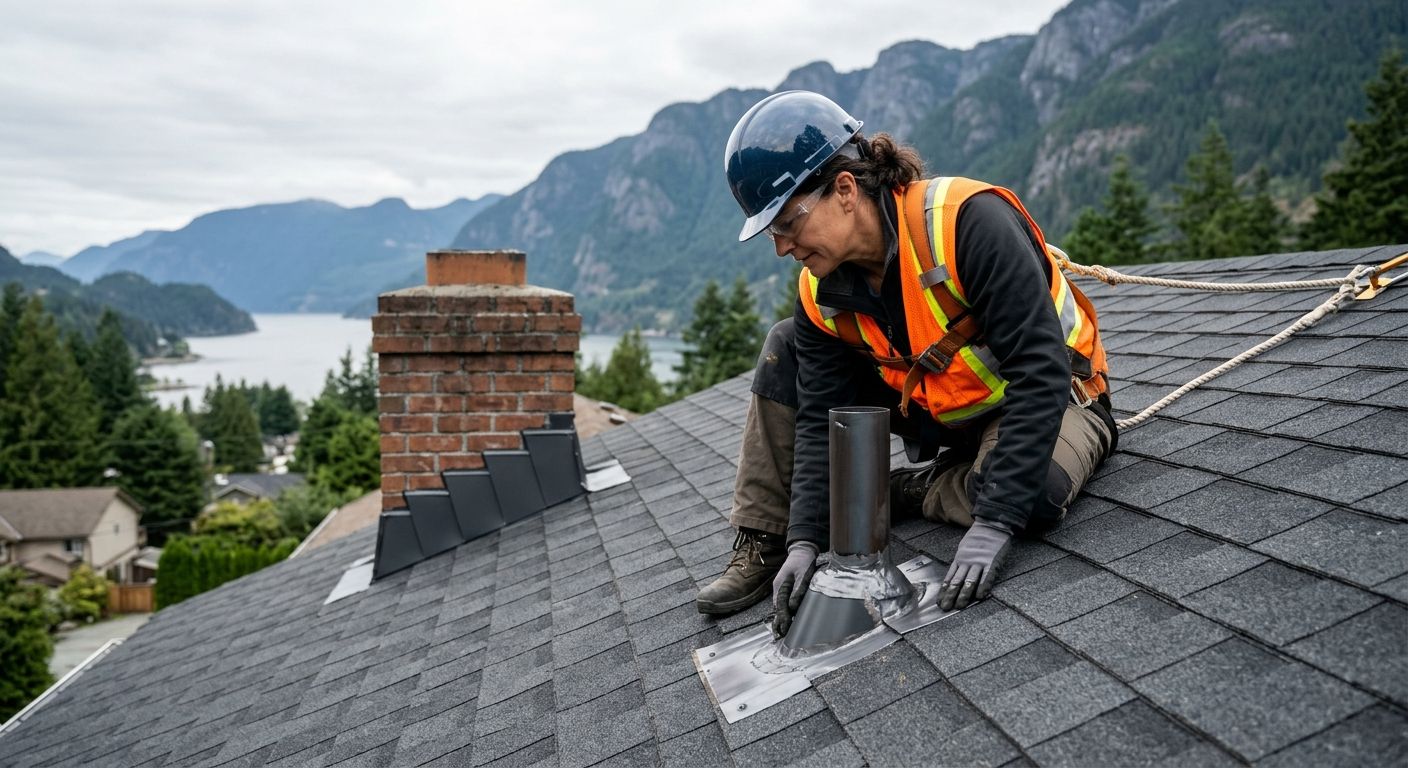
Table of Contents
- Common Roof Installation Mistakes to Avoid in British Columbia
- Roofing Fundamentals: Signs of Failure and Replacement Timing
- Mastering Roof Installation: Techniques and Common Errors
- Cost-Effective Roofing in Vancouver: Smart Planning and Budgeting
- Advanced Safety Protocols and Post-Installation Troubleshooting
- Frequently Asked Roof Installation Questions
- Moving Forward with Confidence
Common Roof Installation Mistakes to Avoid in British Columbia
Avoiding common roof installation mistakes in British Columbia starts with understanding where installations most often go wrong, because even a single overlooked detail can lead to leaks, structural decay, and a drastically shortened roof lifespan in this region’s heavy-rainfall and variable climate. For homeowners considering a new roof, knowing the most frequent errors before work begins helps you ask informed questions and choose a contractor who follows industry best practices.
In British Columbia, roofs must endure heavy snow loads in winter, relentless autumn rain, and coastal winds, which means that everything from flashing techniques to shingle alignment and ventilation must be executed with precision. When corners are cut, the consequences, such as ice dams, attic moisture, and shingle blow-off, turn into costly emergency repairs that could have been prevented.
With over two decades of experience serving Vancouver, Surrey, Burnaby and the Fraser Valley, we at Paragon Roofing BC have seen how even small installation missteps can compromise a roof’s performance. This guide highlights the most common errors we encounter so you can approach your next roofing project with greater confidence and avoid the headache of early roof replacement.
Learning to recognize the early signs of a failing roof is the first step toward prevention; once you understand what to look for, you can ensure that any replacement or repair is done right from the start. Protecting Your Home. Building Your Family’s Future.
Key Takeaways
- Spotting roofing issues is only a portion of roofing knowledge.
- The service life of a roof is determined largely by the skill of its installation.
- Careful planning, together with a realistic budget for the Vancouver market, should be in place before any work begins to avoid installation mistakes.
- Careful planning sets the stage, but safe installation demands equal consideration to hidden hazards.
- What are the most common roof installation mistakes?
Roofing Fundamentals: Signs of Failure and Replacement Timing
Spotting roofing issues is only a portion of roofing knowledge. Homeowners need to know when a roof is actually failing, and this can help avoid additional damage to a home and expensive interior repairs. People who know the indicators of failure know when to seek a professional opinion.
Some of the exterior signs of a failing roof are:
- Curled or buckling shingles and missing shingles after storms.
- Dark streaks or organic growth on the surface and excessive granules collecting in gutters.
- A sagging roofline and rusted or broken flashing around chimneys, vents, and roof penetrations.
Inside the home, watch for these warning signs:
- Water stains on ceilings or walls and daylight visible through attic roof boards.
- A persistent musty smell or visible mould and evidence of recurring leaks after repairs.
- Signs that insulation or ventilation is compromised, which often shows up as higher energy use or uneven indoor temperatures.
If several of these symptoms are present, it’s time to call a professional. As a trusted roofing contractor, we at Paragon Roofing BC perform complete roof inspections and determine if problems are isolated or system wide. Additionally, we provide our clients with a thorough report so they are able to make informed decisions about repairs and/or replacement.
The weather and climate conditions in British Columbia and the Lower Mainland of Canada speed up the deterioration of roofing materials. There are additional stresses placed on roofing materials from high levels of rain and snow, as well as repeated freezing and thawing. Roof inspections are recommended annually and after major storms. This can help identify problems before they get worse.
Both the materials selected and the quality of the installation play important roles in how a roof performs. Even durable products can be detrimentally affected if fasteners are misplaced, attic ventilation is inadequate, underlayment techniques are incorrect, or flashing around penetrations is poorly done. It is important to consider both the history and the current conditions of a roof to make a determination about repairs vs. replacement.
There are situations where the presence of multiple failure signs and/or the evidence of interior damage makes replacement more attractive from a long term value perspective than the continued pursuit of repeated minor repairs. We help homeowners weigh the risks of ongoing leaks and escalating interior damage against the expected benefits of a new installation.
After you confirm that replacement is the right path, the next priority is making sure the new roof is installed correctly from day one. Understanding the common failure signs and installation pitfalls puts you in a strong position to select materials and contractors that protect your home for years to come.
Mastering Roof Installation: Techniques and Common Errors
The service life of a roof is determined largely by the skill of its installation. Across Greater Vancouver, where rain, wind, and temperature shifts test every building envelope, recognizing common roof installation mistakes to avoid can prevent both structural damage and costly repairs. We believe meticulous technique is the foundation of every durable roof.
The Necessity of Air Gaps Under Metal Roofs
Metal panels conduct heat rapidly and readily form condensation when the underside is cold. We create a ventilated air gap under every metal roof to promote airflow from soffit to ridge. This gap expels moisture before it damages the sheathing.
The correct design uses vertical battens or a dimpled mat to maintain at least a 1-inch ventilation cavity. A common mistake is fastening metal directly to the deck without any separation. Trapped humidity then rusts the panel back and rots the plywood silently. Homeowners can spot the problem by checking the attic for rust lines along fasteners or by noting condensation on cold mornings.
Flashing and Waterproofing: Preventing Leaks Before They Start
Every chimney, skylight, and vent needs layered flashing to divert water. We install step flashing woven into the shingles and counter-flashing embedded in the vertical surface. A drip edge at the eaves completes the system by guiding runoff into the gutter.
Frequent errors include overlap that falls short of two inches, sealant replacing metal, and omission of the drip edge. Rain then follows the gap behind the flashing and soaks the roof deck. Homeowners can look for cracked caulking or light gaps between flashing and brickwork—both are clear signs that water may already be entering.
Material-Specific Pitfalls: Metal, Asphalt, and Flat Roofs
Metal roofs require sliding clips to accommodate thermal movement; rigid fastening causes oil-canning and elongated holes. Asphalt shingles need nails placed in the adhesive strip and driven flush—overdriven or misplaced fasteners leave tabs vulnerable to wind uplift. Flat membranes rely on fully adhered seams and a slope that drains water within 48 hours; any ponding or wrinkled laps point to adhesion failure and inadequate drainage. Checking a roof for these defects is straightforward—wavy panels, lifted shingles, and standing water each signal poor workmanship.
The table below contrasts correct techniques with the field mistakes that most often lead to early roof failure in Greater Vancouver.
| Roofing System | Correct Installation Practice | Common Installation Mistake | Consequence of Mistake | Remediation/Prevention |
|---|---|---|---|---|
| Metal | Install with ventilated air gap and expansion clips | Fastening panels directly to deck or over-tightening screws | Condensation, rust, panel buckling | Retrofit batten system and replace damaged fasteners |
| Asphalt | Nail within the adhesive strip, use correct number and placement | Nailing outside the nail line or under-driving fasteners | Wind blow-off, shingle lifting | Re-nail shingles and inspect for underlying deck damage |
| Flat | Fully adhere or heat-weld seams with proper drainage slope | Incomplete seam bonding and insufficient slope | Ponding water, membrane failure | Repair seams and improve drainage with tapered insulation |
Knowing these contrasts equips a homeowner to demand the workmanship that British Columbia’s weather demands. When installation follows these proven methods, the roof delivers decades of reliable performance and avoids the expense of premature replacement—a direct saving that forms the basis of any sound roofing budget. At Paragon Roofing BC, our promise of Guaranteed Your Satisfaction starts with getting every installation detail right the first time.
Cost-Effective Roofing in Vancouver: Smart Planning and Budgeting
Careful planning, together with a realistic budget for the Vancouver market, should be in place before any work begins to avoid installation mistakes.
Understanding Typical Roof Costs in Vancouver
Labor and material costs in different Vancouver neighborhoods can impact the cost of a typical roof.
Key cost components to confirm up front:
- Materials: asphalt, metal, tile, cedar or synthetic options.
- Labour: crew size, experience, and tear-off complexity.
- Underlayment, flashing, and ventilation upgrades.
- Removal and disposal: include waste hauling and disposal fees in estimates.
- Permits and inspections: municipal permit costs and inspection coordination are part of a complete scope.
| Project Type | Typical Cost Range (Vancouver, BC) | Sq. Ft. Range | Cost Drivers & Budgeting Tips | Mistakes That Inflate Final Cost |
|---|---|---|---|---|
| Asphalt shingle replacement | Request a personalized estimate – contact for transparent pricing | Varies by roof size and complexity – schedule an inspection for an accurate measurement | Material quality, roof pitch, accessibility, tear-off labour, and ventilation; always confirm warranty coverage in writing | Skipping permit applications, hiring unlicensed labour, ignoring attic ventilation needs, underestimating waste disposal fees |
| Metal roof installation | Contact for a transparent quote tailored to your roof profile | Depends on layout and panel type – an on-site measurement gives precise figures | Panel gauge, fastener system, underlayment upgrades, and complexity of flashing details; verify installer’s metal-specific training | Improper fastening patterns that cause leaks, neglecting thermal movement provisions, cutting corners on underlayment |
| Flat roof replacement (torch-on/TPO) | Varies by system and insulation requirements – request a site evaluation | Size and number of penetrations affect the range – a professional takeoff is essential | Membrane thickness, insulation upgrades, drainage slope modifications, and disposal of existing layers; budget for proper sump and scupper detailing | Inadequate slope planning, omitting vapour barriers, failing to tie into existing wall flashing correctly |
| Cedar conversion | Price depends on structural reinforcement and disposal of old material – ask for a comprehensive quote | Roof area plus roof pitch and existing sheathing condition determine quantities | Structural upgrades for heavier materials, underlayment designed for shakes, and detailed flashing around protrusions; confirm that the contract includes waste removal | Neglecting structural load calculations, skipping secondary water-shedding underlayment, using untreated fasteners that corrode |
Vetting Roofing Contractors: Credentials and Warning Signs
We advise Vancouver homeowners to look for manufacturer certifications such as CertainTeed Shingle Master or IKO RoofPro, and to confirm membership in regional organisations like the BC Roofing Association.
What to request before you hire:
- Proof of current liability insurance and workers’ compensation coverage; ask to see certificates.
- Manufacturer certifications and training records specific to your chosen roofing system.
- A list of recent local references and the opportunity to view completed work in person.
- Clear, itemised written quotes that break down materials, labour, permits and disposal.
Red flags to watch for:
- High-pressure sales tactics or demands for unusually large upfront payments.
- Bids that are significantly lower than comparable estimates.
Ensuring Compliance with BC Building Standards
Compliance with the Building Code of British Columbia prevents the cutting of corners in roofing installations that can lead to leaks and premature failure. Proper flashing at valleys, walls and penetrations, designated ice-dam protection where required, and balanced attic ventilation preserve the roof assembly and roofing materials.
Not having permits can put homeowners at risk of being subject to enforcement by the local municipality and may void manufacturer warranties that require code-compliant installation.
Advanced Safety Protocols and Post-Installation Troubleshooting
Careful planning sets the stage, but safe installation demands equal consideration to hidden hazards. The RCABC bulletin states nails and screws used during roofing can penetrate electrical raceways and cables that are located beneath the roof deck. Electrical Rule 2-032 states that a person is not allowed to damage electrical installations and that person is also responsible to identify and locate all electrical equipment prior to the start of any roofing work.
At Paragon Roofing BC, our RCABC-compliant practices require mapping concealed raceways, de-energizing circuits when necessary, and protecting every penetration point. The bulletin prescribes two protective measures: maintain at least 38 mm (1.5 inches) of clearance between electrical components and the roof deck, or install a steel shielding plate at least 5 mm (3/16 inch) thick that extends 38 mm beyond the equipment on all sides.
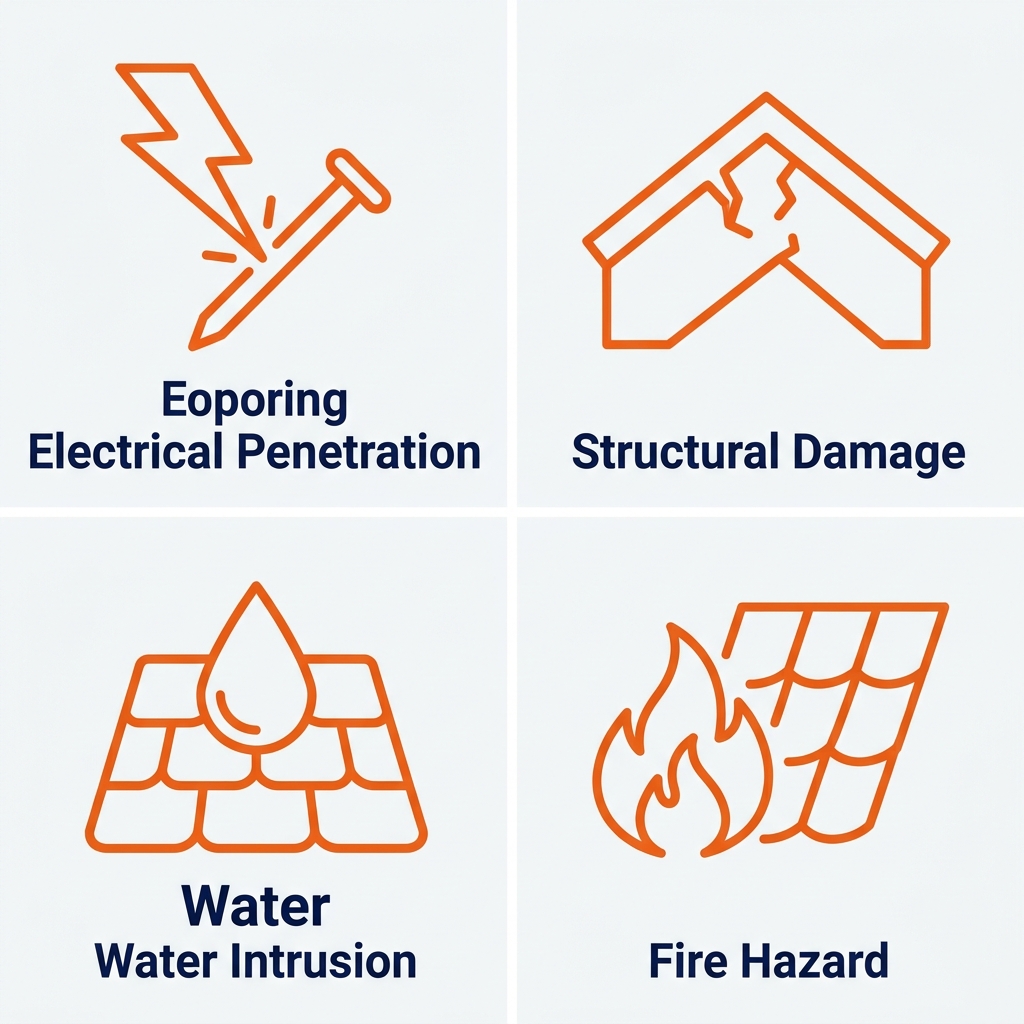
| Hazard Category | Risk Description | Caused by Installation Error? | Prevention Strategy |
|---|---|---|---|
| Electrical Penetration Hazard | Nails or screws can penetrate concealed raceways and cables, creating a risk of electric shock or fire. | Yes – failure to pre-identify electrical equipment locations. | Mandatory identification of concealed raceways prior to roofing; maintain 38 mm clearance or install 5 mm steel plate. |
| Structural Damage | Excess load or improper fastening can impair deck strength. | Yes | Refer to manufacturer guidelines. |
| Water Intrusion | Faulty flashing or underlayment can allow moisture ingress. | Yes | Refer to manufacturer guidelines. |
| Fire Hazard | Hot work near combustible materials can ignite roof components. | Yes | Refer to manufacturer guidelines. |
After the installation, we perform an audit to locate any electrical anomalies, which may include tripped breakers and/or flickering lights, that may indicate a cable has been punctured. If we discover an anomaly, we contact a licensed electrician to isolate the circuit and repair it to prevent further damage.
If we suspect that there is concealed damage, we perform a thermal imaging survey to determine if there are hot spots that may indicate arcing or resistance heating. If there are, we then coordinate with a licensed electrician to isolate and repair the affected circuit before it escalates.
Understanding the safety measures and troubleshooting steps gives homeowners the confidence to address the most common questions about a new roof.
Frequently Asked Roof Installation Questions
What are the most common roof installation mistakes?
There are a few common roofing mistakes. Improper nailing patterns can cause leaks and shorten your roof’s lifespan. Inadequate flashing can cause leaks around chimneys or skylights. Not providing proper attic ventilation can cause leaks and shorten your roof’s lifespan.
How long does it take to install a roof?
Most single-family homes are completed within one to three days, though larger roofs or projects involving multiple layers of tear-off take longer.
Is it necessary for me to be on site during the roofing process?
While you do not have to be on site, being present lets you communicate directly with the crew and verify that work meets your expectations.
What is the average lifetime of a roof?
In roofing, there are a lot of variables, and it’s useful to know typical averages. Asphalt shingles generally last 20-30 years. Metal, tile, and slate roofs can last 50 years or more.
Now that you know the answers to these questions, you can feel more at ease during your upcoming roofing process.
FAQ
Do you need an air gap under a metal roof?
Yes, a metal roof requires a ventilated air gap. The gap, typically at least one inch deep and created with battens or a dimpled mat, promotes airflow that expels moisture before it can condense and damage the sheathing. Fastening metal panels directly to the deck traps humidity, leading to rust and rot.
What does a failing roof look like?
A failing roof shows exterior signs such as curled, buckling, or missing shingles, dark streaks, excessive granules in gutters, a sagging roofline, and rusted or broken flashing around chimneys and vents. Indoors, look for water stains on ceilings, daylight visible through attic roof boards, a persistent musty smell, or visible mould.
What are the hazards associated with roofing work?
A primary hazard is the potential for nails or screws to penetrate concealed electrical raceways and cables beneath the roof deck, creating shock or fire risks. BC Electrical Code Rule 2-032 requires that the person performing the work identify and locate all electrical equipment beforehand and avoid damaging any installation.
At what point should you replace your roof?
Replacement is warranted when multiple exterior signs of failure, such as widespread shingle damage, sagging, and flashing deterioration, are accompanied by interior evidence like water stains, mould, or daylight in the attic. At that stage, ongoing leaks and escalating interior damage often make a full replacement more cost-effective than repeated minor repairs.
Moving Forward with Confidence
With common roof installation mistakes to avoid now clear, you can move forward confidently. Paragon Roofing BC brings over two decades of local experience and offers complimentary roof inspections, BBB accreditation, and fully insured services across the Lower Mainland. Our team has served homeowners throughout Vancouver, Burnaby, Richmond, Surrey with transparent pricing and workmanship. We provide manufacturer-backed warranties and financing options; however, warranty terms vary, pricing is subject to onsite inspection, and insurance coverage depends on your policy. For a free estimate or consultation, call 604-358-3436 or visit Vancouver or Surrey offices.
Need Expert Roofing Guidance?
Now that you have a thorough understanding of the common roof installation mistakes to avoid in British Columbia, you can confidently protect your investment. A professional inspection is the logical next step to ensure your roof is properly installed and free of hidden errors. Paragon Roofing BC brings over 20 years of local experience and a commitment to quality craftsmanship, using trusted brands and industry certifications. We offer free, complimentary roof inspections to assess your roof’s condition without any obligation. Our team is available seven days a week to answer your questions and provide transparent recommendations. You can reach us at 604-358-3436 or visit our Vancouver office at 997 Seymour St Suite 250, Vancouver, BC V6B 3M1, Canada. Schedule your inspection today to avoid costly mistakes and enjoy long-term peace of mind.
