
Roof Repair Vancouver: Complete Guide to Fixing Leaks
Table of Contents
- Roof Repair in Vancouver: What Homeowners Need to Know
- Understanding Roof Issues in Vancouver’s Climate
- Common Roof Repair Services for Vancouver Homes
- How Vancouver’s Weather Affects Roof Longevity
- Steps to Address Roof Damage in Vancouver
- Protecting Your Home with Timely Roof Repairs
Roof Repair in Vancouver: What Homeowners Need to Know
When it comes to roof repair in Vancouver, our wet climate causes distinct challenges like leaks, moss, and shingle damage. Starting with a professional roof inspection can reveal hidden issues before they lead to costly structural damage and mold.
Common Roof Repair Issues in Vancouver
Our local weather often leads to roof leaks, missing or curled shingles, heavy moss growth, and damaged flashing. These problems can compromise your home’s protection and require prompt attention.
Signs You Need Roof Repairs
Watch for water stains on ceilings, granules in gutters, or daylight coming through the roof boards. Timely repairs extend your roof’s lifespan and are often more cost-effective than a full replacement.
As a licensed, BBB A+ rated contractor with decades of local experience, Paragon Roofing BC offers free on-site inspections with photo reports and strictly follows WorkSafeBC safety protocols.
Understanding Roof Issues in Vancouver’s Climate
Vancouver’s coastal climate creates unique challenges for residential roofing. Homeowners frequently need roof repair Vancouver services due to persistent moisture and environmental factors. Heavy rainfall, high humidity, salt air near the waterfront, and abundant tree debris all contribute to accelerated wear on roofing systems across the Lower Mainland.
We at Paragon Roofing BC have seen how these conditions affect different neighborhoods in distinct ways. The following table outlines common issues by area and the recommended actions to protect your home.
| Area | Climate Exposure | Common Roof Issues | Recommended Action |
|---|---|---|---|
| Downtown Vancouver | High rainfall, wind, and salt air | Leaks around vents, flashing failure, moss growth | Bi-annual inspections, prompt leak repair |
| West Side | Heavy rain, tree debris | Clogged gutters, shingle granule loss, leaks | Gutter cleaning, shingle replacement as needed |
| East Vancouver | Variable rainfall, older homes | Aged roofing materials, flashing deterioration | Full inspection, consider replacement if age >20 years |
Understanding these regional differences helps homeowners recognize early warning signs before minor problems escalate. The National Roofing Contractors Association recommends bi-annual inspections in high-moisture zones to catch seasonal damage early. For those needing roofing services in South Surrey, our team brings over two decades of local experience to every project.
Vancouver roof problems vary by neighborhood, but proactive roof maintenance Vancouver strategies make a significant difference. The next section explores practical inspection and repair services that keep your roof in peak condition year-round.
Common Roof Repair Services for Vancouver Homes
When heavy rain or coastal winds expose vulnerabilities, timely roof repair Vancouver homeowners trust becomes essential to prevent small issues from escalating. Our team at Paragon Roofing BC begins every job with a free on-site inspection and photo report, so you understand exactly what your roof needs before any work starts.
The most frequent residential repairs we handle include:
- Leak detection and repair – caused by damaged shingles, deteriorated flashing, or clogged gutters. We trace moisture entry and seal it at the source.
- Shingle replacement – matching your existing materials and securing weatherproof layers that stand up to BC’s wet climate.
- Flashing repair – resealing vulnerable points around chimneys, vents, and skylights to stop water intrusion.
- Gutter and downspout cleaning or repair – restoring proper drainage so runoff doesn’t back up under the roof edge.
- Ventilation and roof-vent repair – correcting airflow to prevent moisture buildup and ice dams that shorten roof life.
Each residential roof repair Vancouver service follows a diagnostic-first approach, and our technicians apply the same rigorous standards we use on larger projects. In addition to our residential services, we also provide commercial roof repair in Vancouver for business properties. Protecting Your Home. Building Your Family’s Future. — that’s the commitment behind every repair we complete.
Now that you know the common repairs, learn how our technicians carry out each service.
How Vancouver’s Weather Affects Roof Longevity
For homeowners looking into roof repair Vancouver, the local climate is the single most important factor dictating how long their roofing system will last. According to the British Columbia provincial government portal, the Lower Mainland experiences over 160 rainy days annually, creating persistent moisture that fuels moss growth, wood rot, and the gradual erosion of protective granules on asphalt shingles. Without consistent attention, this moisture exposure can cut a roof’s expected lifespan by several years.
Beyond the rain, clear summer skies bring strong UV radiation that breaks down roofing materials over time, causing fading, cracking, and embrittlement in both asphalt and cedar shakes. Winter introduces a damaging freeze-thaw cycle, where water seeps into tiny cracks, freezes and expands, then thaws—widening fissures and creating pathways for leaks. Poor attic ventilation and clogged gutters compound these effects, trapping moisture against the roof deck and accelerating structural wear regardless of the material chosen.
Choosing weather-resistant options like metal or high-grade asphalt can noticeably extend service life in Vancouver’s demanding conditions. At Paragon Roofing BC, our decades of local experience have shown that routine maintenance—twice-yearly inspections, gutter cleaning, and timely moss treatment—is the most effective defence against this climate. Protecting Your Home. Building Your Family’s Future. Understanding these regional weather challenges makes it clear why proactive care from a trusted, BBB A+ accredited contractor is essential for preserving your roof’s integrity.
Steps to Address Roof Damage in Vancouver
Discovering damage to your roof can be stressful, making timely roof repair in Vancouver essential to prevent further water intrusion. Following a clear, safety-first process helps you protect your property while avoiding unnecessary risks.
- Assess damage from the ground first. Never climb onto a damaged roof without proper fall protection and training. Look for missing shingles, sagging areas, or debris from a safe vantage point.
- Document everything you see. Take clear photos and write detailed notes about the damage. This creates a valuable record for your insurance provider and any contractor you consult.
- Contact a professional roofing contractor. We recommend reaching out immediately for a comprehensive inspection and repair estimate. Professional evaluation identifies hidden structural issues that ground-level observation cannot reveal.
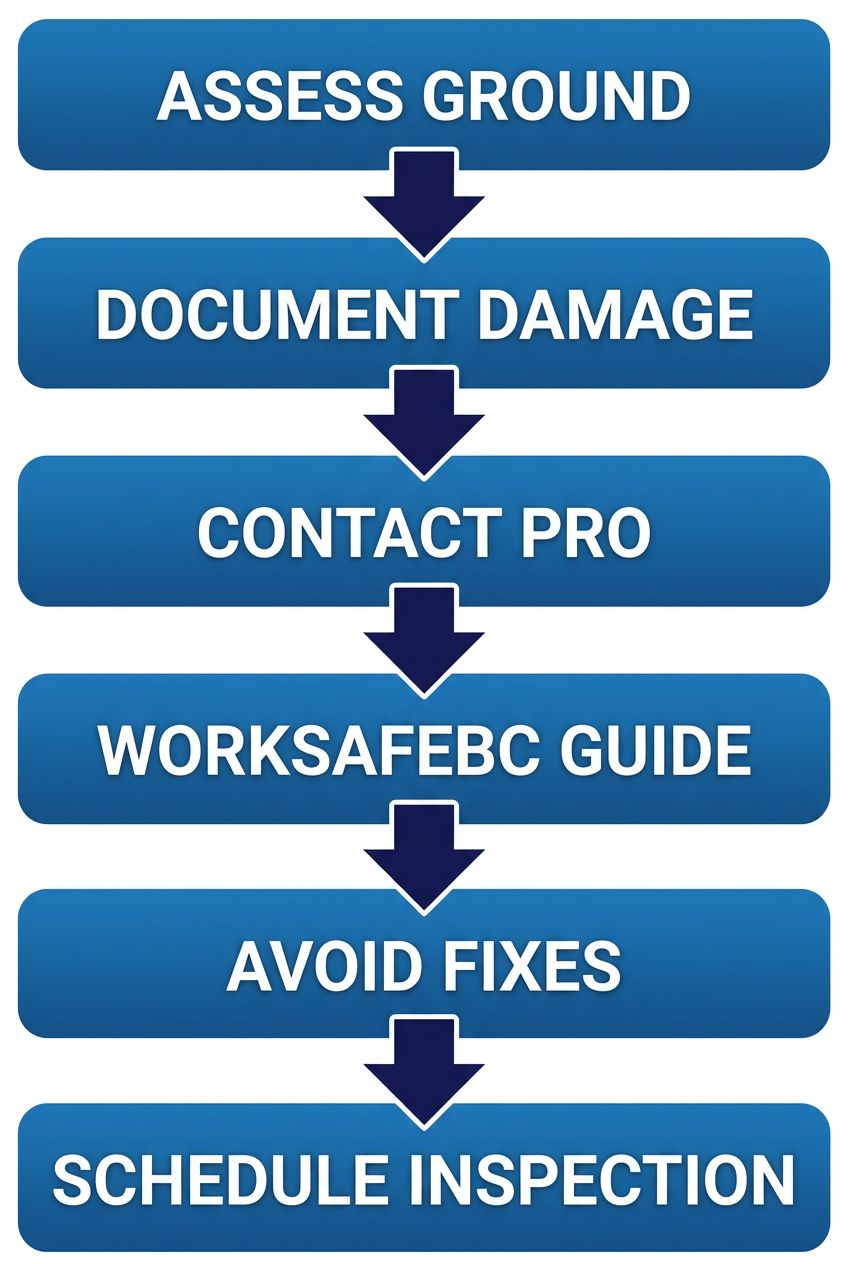
Six-step roof damage response process for Vancouver homeowners from Paragon Roofing BC.
Before anyone accesses your roof, review WorkSafeBC roof safety guidelines, which set the regulatory standard for fall protection and safe work practices in British Columbia. Avoid temporary fixes that may worsen the damage or create hazards — emergency tarping and repairs should always be left to qualified professionals who carry proper insurance and WorkSafeBC coverage.
Schedule your inspection promptly. Delaying repairs often leads to escalating water damage and costly structural deterioration. We encourage you to take the next step by booking a free on-site inspection with us, the Trusted Roofing Contractor Across British Columbia, so you can move forward with confidence and clarity.
Protecting Your Home with Timely Roof Repairs
When you need roof repair in Vancouver, acting quickly is one of the most important steps you can take toward Protecting Your Home. A small leak or loose shingle may seem minor, but coastal weather can turn it into widespread water damage in weeks. We follow best practices endorsed by the roofing industry association to catch these problems early.
Delaying work lets moisture reach sheathing, framing, and drywall, which threatens your family’s safety and raises repair costs. Timely roof repairs help protect interiors, preserve foundation integrity, and keep your home secure during British Columbia’s rainy seasons.
We offer a free on-site inspection that makes it easy to identify trouble before it grows. Prompt roof repair extends your roof’s lifespan and saves you money long-term, and that commitment to proactive care is what drives our work across the Lower Mainland.
Resources
- Get Expert Roofing Services in South Surrey
- Get Expert Commercial Roof Repair in Vancouver
- Get Professional Roof Inspection in Lower Mainland
- Get Emergency Roof Leak Repair in Vancouver
- Discover Warning Signs for Roof Inspection
- Get Expert Commercial Roof Inspection in Vancouver
- Discover Roof Inspection Pricing for Your Property
- Explore NRCA Resources for Roofing Professionals
- Access BC Government Services and Resources
- Explore WorkSafeBC Resources for Workplace Safety
Table of Contents
- Asphalt Shingles vs Synthetic Roofing in a Damp Climate
- Brand Overview: Asphalt Shingles and Synthetic Roofing Options
- Feature Comparison: Moss Resistance, Rain Performance, and Lifespan
- Pricing Analysis: Cost, Value, and Return for Lower Mainland Homes
- Verdict: Choosing the Right Material for Your Home
- Protect Your Home with the Right Damp-Climate Roofing
Asphalt Shingles vs Synthetic Roofing in a Damp Climate
When considering the best roofing material for homes in a damp climate, the debate often centers on asphalt shingles vs synthetic roofing damp climate performance. In our experience across the Lower Mainland, asphalt shingles remain a cost-effective and reliable choice. Modern algae resistant asphalt shingles incorporate special granules that actively deter moss and dark streaks, a common concern in moisture-prone areas. While proper ventilation is critical for any system, asphalt’s design effectively channels water away when professionally installed.
Synthetic materials, such as rubber or polymer, also form a key part of the composite roofing vs asphalt shingles comparison. These products can offer enhanced impact resistance and a longer potential lifespan, though they typically come at a more competitive initial investment. Ultimately, both options can protect your home effectively if the installation is handled with local expertise. For guaranteed performance, we invite you to explore our asphalt shingle services in Vancouver.
Brand Overview: Asphalt Shingles and Synthetic Roofing Options
Architectural Asphalt Shingles – The West Coast Standard
For the damp coastal climate, the debate of asphalt shingles vs synthetic roofing damp climate often begins with proven performance. Architectural asphalt shingles feature multi-layer design, Class A fire rating, and algae-resistant ceramic granules, making them ideal for heavy rain, moss, and freeze-thaw cycles. Paragon Roofing BC’s experience with algae resistant asphalt shingles brings this durable solution to homes, embracing Perfection In Roofing.
Synthetic Slate and Composite Shingles – The Modern Alternative
Engineered from polymer-based composites, synthetic slate and composite shingles offer UV stability, impact resistance, and a lightweight profile that replicates natural slate or cedar. These modern alternatives require minimal maintenance and resist moisture-related degradation. When comparing composite roofing vs asphalt shingles, the synthetic choice appeals to homeowners seeking a premium, low-maintenance aesthetic without the weight of natural stone. We offer free on-site inspections to help you evaluate the benefits firsthand.
Material Science for Damp Climates
Both materials behave differently under moisture. Asphalt shingles rely on granule coatings to shed water, while polymer-based synthetics exhibit negligible porosity, limiting moss and algae adhesion. However, ventilation synergy is crucial — effective ridge and soffit venting reduces under-shingle moisture. Our asphalt shingle services in Vancouver integrate proper venting to protect against condensation, extending roof life even in shaded coastal zones.
Feature Comparison: Moss Resistance, Rain Performance, and Lifespan
In Metro Vancouver, our damp, shaded environment tests roof materials in ways that drier regions never experience. When comparing asphalt shingles vs synthetic roofing damp climate performance, three factors stand out for homeowners: moss and algae resistance, storm resilience, and expected service life. Understanding how architectural shingles and composite alternatives handle these conditions is essential for making an informed investment.
Moss and Algae Resistance in BC’s Shaded Zones
Moss thrives where moisture lingers, and Vancouver’s tree-canopied neighborhoods provide ideal conditions. Algae resistant asphalt shingles use copper-infused granules to slow organic growth, yet their asphalt surface remains porous enough to host moss over time. Synthetic roofing takes a different approach — its non-porous polymer composition resists adhesion and cleans more easily, making composite roofing vs asphalt shingles a meaningful comparison for heavily shaded properties.
Heavy Rain and Wind Performance in Coastal Storms
Architectural shingles rely on multi-layer seal strips and achieve strong wind-driven rain ratings when installed with proper underlayment, though they remain susceptible to ice dams during freeze-thaw cycles. Synthetic materials flex without cracking, deliver higher wind ratings — often to 150 mph — and handle coastal storm moisture with greater freeze-thaw durability.
The following table summarizes how these two material categories perform across the attributes that matter most in British Columbia’s damp climate:
| Feature | Asphalt Shingles (Architectural) | Synthetic Roofing (Composite/Slate) |
|---|---|---|
| Moss & Algae Resistance | Copper-infused granules reduce moss; zinc strips work, but organic surface still hosts growth over time | Non-porous polymer resists moss adhesion; easier to clean; superior in damp shaded areas outdoors |
| Heavy Rain Performance | Multi-layer seal strips; Class D wind-driven rain; good with proper underlayment but prone to ice dams | Flexible panels seal tightly; excellent impact resistance; better freeze-thaw handling in coastal storms |
| Average Lifespan | 25-30 years in BC if well-ventilated; shorter in shaded moss-prone zones | 40-50 years with minimal maintenance; engineered to resist UV and moisture cycling |
| Wind Rating | Manufacturer claims up to 130 mph (Class H) with proper nailing pattern in high-wind zones | Often rated to 150 mph due to interlocking panels and lighter per sq weight |
| Environmental Impact | Oil-based; limited recycling (<10% in BC); ends up in landfill. Heavier carbon footprint. | Often contains recycled plastics; lighter = less transport fuel; longer life reduces replacement cycles |
Based on manufacturer data and NRCA guidelines for damp-climate performance.
These material differences directly influence maintenance needs and long-term cost — covered next.
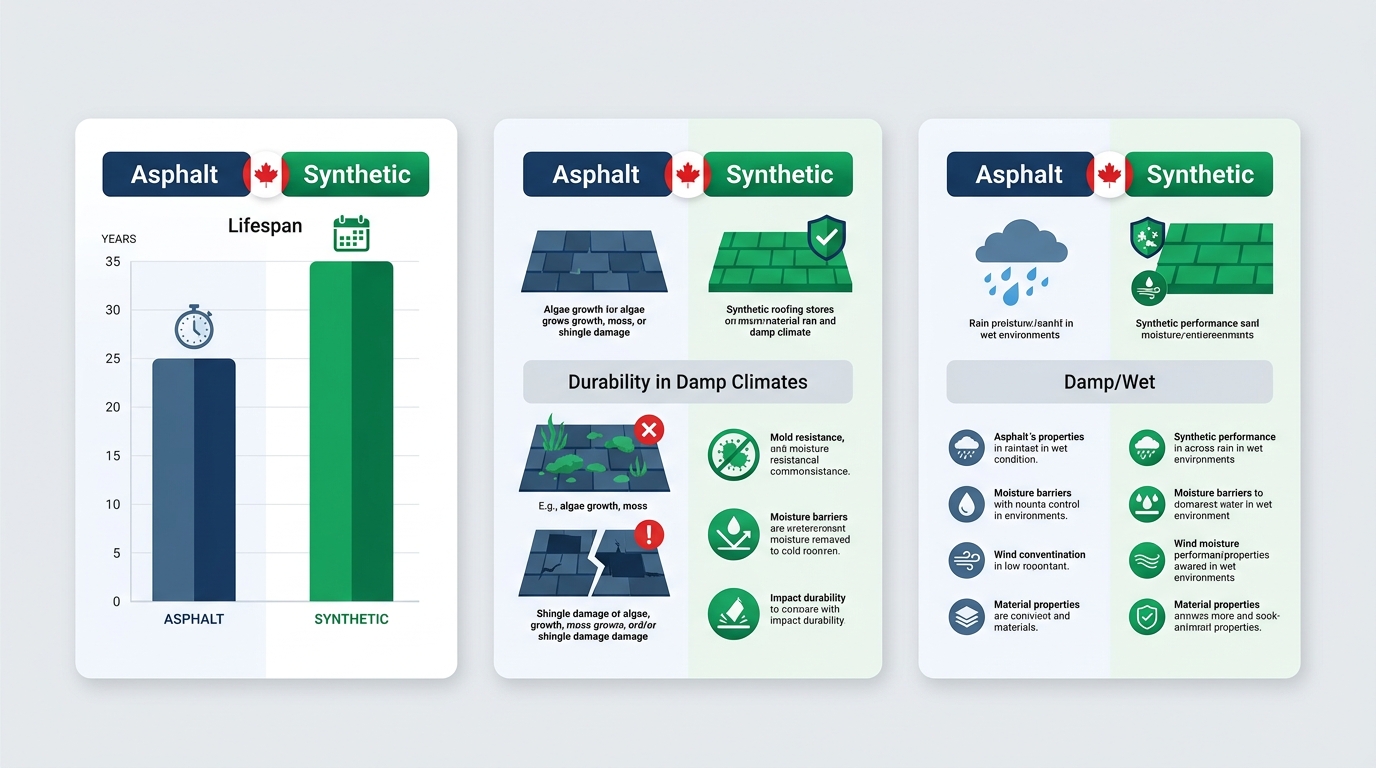
Asphalt vs synthetic roofing comparison for damp Vancouver climate
Pricing Analysis: Cost, Value, and Return for Lower Mainland Homes
When comparing asphalt shingles vs synthetic roofing damp climate, the key question for Lower Mainland homeowners is not just about the initial price but about long-term value in our region’s unique conditions. We understand that your roof is a major investment, and our decades of experience across Vancouver and the BC Lower Mainland have shown us which materials truly stand up to constant moisture and shade. Our BBB A+ accreditation reflects our commitment to helping you make an informed decision based on honest, competitive pricing rather than absolute guarantees.
Initial Investment Range for Asphalt vs Synthetic
For homeowners seeking the best roofing for damp shaded climates, synthetic materials offer superior resistance at a higher upfront cost. Based on our internal pricing analysis, asphalt shingles typically fall in the range of $4 to $6 per square foot installed, while synthetic composite options generally run $7 to $10 per square foot. Premium synthetic slate products represent the upper tier at approximately $10 to $15 per square foot installed. These approximate ranges reflect the reality that composite roofing vs asphalt shingles is a decision between lower initial cost and enhanced long-term performance. We emphasize that every roof is unique and final pricing requires an on-site inspection from our team to account for roof pitch, accessibility, and existing deck condition.
Lifetime Cost and Resale Value Considerations
Looking beyond the initial investment, the true value comparison becomes clearer when you consider total cost of ownership. Asphalt shingles provide reliable service for 25 to 30 years with proper maintenance, while synthetic roofing extends that lifespan significantly to 40 to 50 years. This means homeowners who choose synthetic materials may avoid an entire roof replacement cycle, substantially reducing long-term costs. In the BC Lower Mainland real estate market, we’ve observed that homes with synthetic roofs can command a resale premium, particularly on shaded or moss-prone lots where buyers recognize the inherent value of superior moisture and algae resistance. The durability of algae resistant asphalt shingles can also contribute positively to a home’s marketability, though the extended lifespan of synthetic options typically offers a stronger return on investment for buyers who plan to stay long-term.
Maintenance and Warranty Factors
Warranty coverage and ongoing maintenance requirements further distinguish these material choices. Algae resistant asphalt shingles may come with limited warranties covering 30 to 50 years against specific issues, while synthetic materials typically include a 50-year limited warranty from the manufacturer. However, we always remind homeowners that manufacturer terms vary and should be carefully reviewed in the written contract. Our seasonal maintenance plans are designed to extend the service life of any roof type by addressing climate-specific challenges like moss growth and moisture damage before they compromise the roofing system. We maintain comprehensive liability insurance and WorkSafeBC coverage for every project, and our maintenance programs help both asphalt and synthetic roof owners minimize long-term costs through proactive care. The final step in selecting the right material is a free on-site inspection and detailed quote from our team, which leads naturally to our next discussion on practical installation differences.
Paragon Roofing BC remains a Trusted Roofing Contractor Across British Columbia, dedicated to protecting your home and building your family’s future.
Verdict: Choosing the Right Material for Your Home
Now that you understand the features of each material, the next step is deciding which best suits your home in the Pacific Northwest. An asphalt shingles vs synthetic roofing damp climate comparison ultimately comes down to your property’s specific conditions, your long-term plans, and your maintenance priorities. Here is our advisory guide, based on our experience across the Lower Mainland.
When Architectural Asphalt Is the Better Fit
Architectural asphalt shingles may be the better fit when budget and a proven track record are top priorities. We often recommend this option for tightly shaded lots where upfront investment is a key concern and for homes expected to be sold within 10 years. In strata complexes needing a uniform appearance, algae resistant asphalt shingles can provide a clean, consistent look with the benefit of added damp-condition warranty features. Asphalt also remains a go-to for projects where the total roof replacement cost must be managed carefully, making it a sound short- to medium-term solution.
When Synthetic Roofing Delivers Superior Damp-Climate Performance
Synthetic roofing delivers superior long-term performance when moss abatement and lower maintenance are the primary goals. For homes heavily shaded by mature trees or located on north-facing slopes, a composite roofing vs asphalt shingles comparison highlights synthetic’s clear advantage in resisting constant moisture. Our experience shows that eco-conscious homeowners and those planning to stay 20 or more years benefit greatly from this material’s durability and minimal upkeep in Vancouver’s rain-heavy climate.
Hybrid and Custom Solutions for West Coast Conditions
A hybrid approach can balance aesthetics and budget by using different materials on different roof slopes. We often suggest placing high-end synthetic slate on visible front slopes for maximum curb appeal, while installing architectural asphalt on the back slopes to manage overall project cost. This custom strategy addresses the unique challenges of West Coast conditions without compromise. For a personalized recommendation tailored to your property, contact Paragon Roofing BC for a material consultation. Our team can help you weigh the best damp climate roofing comparison for your home.
Protect Your Home with the Right Damp-Climate Roofing
British Columbia’s rainy winters and persistent humidity accelerate roof wear, encouraging moss, algae, and moisture intrusion that can compromise ordinary materials. Choosing between asphalt shingles vs synthetic roofing damp climate conditions demands a clear understanding of how each option handles our coastal weather.
Asphalt shingles remain a traditional, budget-conscious choice. Paragon Roofing BC frequently recommends algae resistant asphalt shingles with specialized mineral coatings that help prevent dark streaks and organic buildup on rooftops throughout the Lower Mainland.
Synthetic slate offers a lightweight, modern alternative that replicates the classic look of quarried stone while delivering superior moisture resistance and minimal maintenance. When homeowners ask about composite roofing vs asphalt shingles, our team highlights synthetic slate’s engineered design that resists warping and deterioration even during prolonged wet seasons.
With decades of local experience, Paragon Roofing BC selects materials purpose-built for our climate—Protecting Your Home. Building Your Family’s Future. In the following sections, we’ll compare these two options in depth so you can make an informed, long-term decision.
Resources
- Get Professional Asphalt Shingle Services in Vancouver
- Expert Asphalt Shingle Installation and Replacement
- Discover Durable Synthetic Slate Roofing in Vancouver
- Learn About Asphalt Shingle Options for Vancouver Homes
- Explore Diverse Roofing Materials and Services in Vancouver
- Consider Flat Roof to Low-Slope Conversion in Vancouver
- Find Trusted Roof Leak Repair Services in Vancouver
- Access Roofing Industry Resources and Education
