
Best Solar Integrated Roofing Options for 2026 Homes
Table of Contents
- Exploring Solar Integrated Roofing in Vancouver, BC
- Fundamentals of Solar Integrated Roofing
- In-Depth Analysis of Solar Roofing Technologies
- Practical Applications of Solar Roofing in BC
- Advanced Solar Roofing Solutions for 2025
- Frequently Asked Questions on Solar Roofing
- Choosing Solar Integrated Roofing with Paragon
Exploring Solar Integrated Roofing in Vancouver, BC
We at Paragon Roofing BC recognize the shift from traditional roofing to innovative, energy-generating solutions in Vancouver, BC. Solar integrated roofing embeds photovoltaic cells—solar technology that converts sunlight into electricity—directly into materials like shingles or tiles. This approach eliminates bulky panels, creating a seamless, efficient roof that harnesses Vancouver’s ample sunlight for renewable power.
Solar integrated roofing offers significant environmental advantages in Vancouver, BC. By generating clean energy, it reduces carbon footprints and supports sustainability goals for homes and businesses. According to practical insights from Paragon Roofing BC, these systems align with local incentives like BC Hydro rebates, making adoption more accessible. Practical applications suit the city’s sloped roofs, common in its architecture, and integrate with home energy systems to offset high costs during rainy seasons.
Key benefits include:
- Reduced energy consumption: Up to 15-40% annual savings, as noted in authoritative guidance from Paragon Roofing BC on Vancouver’s climate.
- Enhanced durability: Withstands coastal weather, providing long-term value.
- Incentive eligibility: Qualifies for provincial rebates, boosting ROI.
For types, solar shingles provide aesthetic integration, replacing traditional materials while producing power. Solar roof tiles offer durable, high-output performance ideal for Vancouver’s mild summers. When selecting energy efficient roofing in Vancouver, these options maximize utility bill reductions through strategic integration.
Installation in Vancouver, BC, requires compliance with municipal codes and certified local contractors to ensure warranty coverage and grid connectivity. We recommend partnering with experts like Paragon Roofing BC for seamless implementation. Expect 20-30% average energy savings on bills, delivering strong ROI for commercial properties—explore next steps with us for tailored solutions.
Fundamentals of Solar Integrated Roofing
Solar integrated roofing represents an innovative approach where photovoltaic (PV) technology, which converts sunlight into electricity, is embedded directly into roofing materials. This seamless integration eliminates the need for separate solar panels, providing both energy generation and weather protection in one system. At Paragon Roofing BC, we see this as a game-changer for sustainable upgrades in British Columbia, particularly for homes and commercial properties seeking to reduce reliance on traditional energy sources.
What sets solar integrated roofing apart from conventional solar panels? Unlike mounted arrays that require additional racking, these systems blend aesthetics with functionality, ideal for modern builds or retrofits. They address key homeowner concerns about roof space and visual appeal while contributing to energy independence.
The three primary types cater to diverse needs and budgets. Solar shingles use thin-film PV cells within an asphalt-like material, mimicking traditional roofing for a low-profile look. These offer efficiencies of 15-20% and suit seamless replacements on existing structures. Solar roof tiles feature interlocking modular units with crystalline silicon panels, providing an upscale, tile-like appearance with 18-22% efficiency. They appeal to those prioritizing design in residential or commercial settings. Solar metal roofs incorporate panels into durable standing-seam sheets, achieving 20-25% efficiency and excelling in harsh weather with longevity up to 50 years.
Installation methods vary by type, influencing overall feasibility. Solar shingles are nailed or adhered directly over existing roofs, similar to standard shingle work, minimizing disruption. Solar roof tiles require a racking system elevated over the base roof for wiring access and airflow. Solar metal roofs integrate panels during the metal assembly, ensuring watertight seals through bolting—best for new installations.
When evaluating options, consider technology maturity, ease of installation, and cost drivers like labor and materials. According to U.S. Department of Energy guidelines, adapted for the Canadian market with BC premiums, initial costs reflect roof size and energy output. The following table outlines key differences for a 100 sqm roof, helping initial assessments.
| Type | Technology | Installation Method | Initial Cost Range (CAD) |
|---|---|---|---|
| Solar Shingles | Photovoltaic cells integrated into shingle material | Adhesive or nailing on existing roof | 15,000 – 25,000 per 100 sqm |
| Solar Roof Tiles | Modular tiles with built-in solar panels | Racking system over base roof | 20,000 – 35,000 per 100 sqm |
| Solar Metal Roofs | Panels attached to metal roofing sheets | Direct integration during metal install | 25,000 – 40,000 per 100 sqm |
In British Columbia’s coastal climate, these systems shine for durability against rain and wind, aligning with regional renewable goals. Environment America research highlights solar shingles’ market evolution, noting improved efficiencies despite past cost hurdles, while our local insights from Paragon Roofing BC emphasize reduced carbon footprints—up to 40% energy savings annually. For Delta properties, eco friendly roofing in Delta supports sustainability initiatives, offering ROI through net metering and incentives. Commercial operators benefit from scalable installations, with metal roofs ideal for industrial durability and tiles for aesthetic commercial facades. We recommend structural assessments to match types to specific needs, ensuring long-term performance in Delta’s wet environment.
These fundamentals underscore solar integrated roofing’s potential for eco-conscious upgrades. As we explore incentives and maintenance next, consider how these systems fit your energy goals in Vancouver and beyond.
Building on this overview, the infographic visually reinforces key trade-offs, aiding decisions for BC installations.
In-Depth Analysis of Solar Roofing Technologies
As a trusted roofing contractor across British Columbia, we at Paragon Roofing BC recognize the growing interest in solar integrated roofing solutions for both residential and commercial properties in Vancouver’s unique climate. These technologies blend energy generation with durable roofing, offering long-term benefits amid the region’s variable weather.
How Solar Shingles Integrate with Residential Structures
Solar shingles represent an innovative approach to solar integrated roofing, seamlessly combining photovoltaic functionality with traditional roofing aesthetics. The solar shingles history reveals their evolution from early prototypes to modern systems using crystalline silicon cells embedded in durable, shingle-like modules. These cells capture sunlight and convert it into electricity through the photovoltaic process, where photons excite electrons in the silicon layers, generating direct current that inverters transform into usable alternating current for homes.
Installation on sloped roofs in Vancouver’s typical 4/12 pitch involves interlocking the shingles directly onto the underlayment, mimicking conventional asphalt shingles while distributing weight evenly to withstand coastal winds up to 90 km/h. We recommend flexible mounting systems that allow for thermal expansion, ensuring secure attachment without compromising the roof’s integrity. This integration requires precise alignment to maximize sun exposure, often incorporating micro-inverters at each shingle for optimized output even under partial shading from nearby evergreens.
According to local roofing expert insights from Paragon Roofing BC, standing seam alternatives can enhance durability for solar attachments on steeper pitches, providing superior wind resistance and easier access for maintenance. Homeowners benefit from reduced visible bulk compared to panel arrays, preserving curb appeal while generating up to 10 kW for a standard 2,000 sq ft roof. This adaptation suits Vancouver’s sloped residential structures, bridging energy efficiency with structural reliability.
Compatibility of Solar Systems with TPO and Flat Roofs
Integrating solar systems with TPO membranes on flat roofs presents unique challenges for commercial buildings in British Columbia, particularly in Vancouver where seismic activity and heavy rains demand robust solutions. TPO, or thermoplastic polyolefin, is a popular single-ply membrane for its heat-welded seams and UV resistance, yet mismatches in thermal expansion rates between the flexible TPO and rigid solar panels can lead to stress points and potential leaks over time.
Key issues include puncturing the membrane during mounting and ensuring waterproofing integrity, as noted in authoritative industry standards from the Roofing Contractors Association of BC. Solutions involve non-penetrating ballasts like concrete pavers or weighted racks to secure panels without drilling, minimizing breach risks. For added stability, rail systems with adhesive attachments distribute loads evenly, complying with wind uplift requirements in the Lower Mainland’s gusty conditions.
Recent roofing practices manual updates emphasize enhanced sealing protocols, such as silicone-based flashings around mounting points to prevent water ingress on commercial TPO roofs. These updates, drawn from RCABC’s revisions to waterproofing standards, ensure compatibility for buildings like warehouses and offices, where flat roofs cover large surfaces. At Paragon Roofing BC, our experience with TPO installations highlights the importance of site-specific engineering to align solar arrays with the membrane’s elasticity, reducing long-term maintenance needs.
In commercial settings across Vancouver, these integration strategies address common hurdles like limited roof space and access constraints. For instance, hybrid setups combine surface-mounted panels with perimeter anchoring, allowing solar systems to overlay existing TPO without full replacement. This approach not only preserves warranty coverage but also leverages TPO’s reflective properties to boost panel efficiency by up to 5% through reduced heat buildup. As businesses seek sustainable upgrades, understanding these adaptations ensures seamless performance in British Columbia’s demanding environment.
The following table compares key solar roofing technologies in terms of compatibility and output, tailored to local conditions:
| Technology | TPO Compatibility | Cloudy Weather Efficiency (%) | Energy Output (kWh/sqm/year in BC) |
|---|---|---|---|
| Solar Shingles | Partial – requires hybrid setup | 15-20 | 800-1000 |
| Solar Tiles | Limited – surface mounting only | 12-18 | 700-900 |
| Solar Metal | High – direct panel attachment | 18-25 | 900-1200 |
This comparison underscores the trade-offs for Vancouver businesses evaluating solar integrated roofing options. Solar metal systems excel in direct attachment to TPO, minimizing penetration risks while achieving higher efficiencies, as supported by government-backed research on cool roof technologies from the U.S. Department of Energy. In contrast, solar shingles demand hybrid configurations, potentially increasing upfront costs but offering aesthetic versatility for mixed-use properties. Energy outputs reflect adjustments for British Columbia’s irradiance, with metal variants providing the most reliable yields amid frequent cloud cover.
Vancouver’s climate, featuring approximately 1,800 cloudy hours annually, amplifies the value of high-efficiency options like solar metal roofs, which maintain 18-25% performance per U.S. Department of Energy data adapted to local conditions. Lower outputs from tiles highlight the need for oversized arrays in commercial applications, while shingles suit hybrid retrofits. Local expert insights from Paragon Roofing BC affirm that selecting based on building type optimizes ROI, with metal integrations yielding 10-15% more energy than tiles over a decade. These metrics guide informed decisions for sustainable roofing in the Lower Mainland.
Performance Metrics in Cloudy Climates
Solar roofing technologies in British Columbia’s Lower Mainland must contend with frequent overcast skies, where efficiency typically drops 20-30% compared to sunnier regions. Local solar irradiance averages 3.5 kWh/m²/day, influencing annual outputs for systems like solar roof tiles, which capture diffuse light through advanced polycrystalline cells but yield 700-900 kWh/sqm/year under these conditions per adapted cool roof guidelines.
Reliable government-backed research from the U.S. Department of Energy indicates that reflective surfaces in cool roofs enhance photovoltaic performance by mitigating heat, crucial in Vancouver’s mild yet cloudy weather. Solar metal roofs, for instance, achieve 900-1200 kWh/sqm/year, benefiting from standing seam designs that facilitate direct panel mounting and better airflow for cooling. This results in sustained efficiency of 18-25%, even during prolonged gray periods common to the region.
Authoritative industry standards from the Roofing Contractors Association of BC stress the role of proper ventilation in maintaining output, preventing efficiency losses from moisture buildup. For commercial operators, these metrics translate to meaningful savings, with metal systems offsetting 40-50% of energy needs in mid-sized facilities. Building on this compatibility, the next consideration is economic viability in BC, including incentives for such installations.
Practical Applications of Solar Roofing in BC
Building on the environmental and economic benefits of solar roofing, practical applications in British Columbia focus on seamless integration for both residential and commercial properties. At Paragon Roofing BC, we specialize in solar integrated roofing solutions tailored to Vancouver’s unique climate, enabling businesses and homeowners to harness renewable energy while enhancing roof durability.
To bring these benefits to life, understanding the installation process is essential.
Installation Processes for Commercial and Residential Projects
At Paragon Roofing BC, we guide clients through a structured seven-step installation for solar integrated systems, ensuring efficiency and compliance in Vancouver. The process begins with an initial consultation and site assessment, where our team evaluates roof condition, structural integrity, and solar exposure to determine feasibility. This step, drawing on local expertise, identifies optimal panel placement to maximize energy yield.
Next comes the design phase, calculating energy needs based on usage patterns and property size. We then secure permitting and approvals from BC Hydro, navigating provincial regulations efficiently. Material selection follows, choosing durable options like solar shingles for residential roofs or robust panels for commercial setups.
Physical installation starts with roof preparation, including any necessary repairs or underlayment. Integration of electrical systems connects the solar array to inverters and the grid. Finally, a thorough inspection and grid connection testing verify performance and safety.
Commercial projects often involve larger-scale coordination, such as phased installations to minimize downtime, while residential ones prioritize aesthetics and quicker timelines. With our decades of local experience, we adapt these steps for Vancouver’s wet weather, ensuring long-term reliability.
Beyond setup, budgeting is key to making solar roofing accessible.
Cost Analysis and Budgeting for 2025 Installations
For 2025 solar roofing projects in British Columbia, costs vary based on system type and scale, with average totals for a 100 sqm roof ranging from CAD 20,000 to 40,000. Base material costs sit at CAD 150-400 per sqm, covering options like solar shingles or tiles, while labour rates in BC hover at CAD 50-100 per hour due to skilled trades and regional demand. According to Paragon Roofing BC’s local expert projections, these figures account for inflation-adjusted increases, influenced by Vancouver’s marine climate requiring enhanced weatherproofing.
Additional expenses include permitting (CAD 500-1,000) and electrical integration (CAD 2,000-5,000). BC-specific factors, such as higher material transport costs and compliance with seismic standards, add 10-15% to national averages. However, incentives mitigate these: the federal Investment Tax Credit offers 30% off eligible costs, and provincial rebates up to CAD 5,000 through programs like CleanBC Better Homes. For businesses, bulk installations qualify for enhanced deductions. By bundling with roof replacements, clients can leverage BC Hydro rebates up to CAD 10,000 for energy-efficient upgrades, making 2025 a strategic time for investment in Vancouver.
When evaluating options, several factors shape overall expenses and value in the Canadian context. Material durability plays a key role, as BC’s frequent rain demands corrosion-resistant choices like metal-integrated systems. Local labour rates, averaging 20% above national figures due to Vancouver’s construction boom, influence totals, while energy prices—around CAD 0.12/kWh—amplify ROI potential. Sourcing from certified suppliers ensures quality, avoiding hidden fees from subpar imports. For a typical commercial property, these elements can push initial outlays higher, but long-term savings on utility bills offset them. Paragon Roofing BC’s free on-site inspections help pinpoint exact needs, factoring in roof pitch and orientation for precise estimates. Government data from the U.S. Department of Energy, adapted for Canadian parallels, underscores how upfront investments yield substantial returns through reduced emissions and energy independence.
| Option | Installation Cost (CAD/sqm) | Annual Maintenance Cost | Expected ROI (Years) |
|---|---|---|---|
| Solar Shingles | 150-250 | 200-400 | 7-10 |
| Solar Tiles | 200-300 | 300-500 | 8-12 |
| Solar Metal Roofs | 250-400 | 150-300 | 6-9 |
Solar shingles offer a balance of affordability and integration, ideal for residential roofs in Vancouver, while solar roof tiles provide superior aesthetics for commercial facades, though at higher upkeep. Solar metal roofs excel in durability against BC winds, boasting the quickest ROI per adjusted Paragon and Energy.gov data. Canadian incentives further enhance viability: the federal Greener Homes Grant covers up to CAD 5,000 for retrofits, complemented by GST/HST rebates on installations. Net metering allows excess energy sales back to BC Hydro, accelerating payback—often under 8 years for businesses. Provincial programs like the BC Energy Step Code incentivize commercial adopters with tax credits, while low-interest loans from Canada Greener Homes reduce barriers. For enterprises in Vancouver, these supports, combined with our full-service plans, transform solar integrated roofing into a smart financial move, cutting operational costs by 20-30% annually. Homeowners benefit similarly through streamlined rebates. Always consult local experts to tailor incentives, ensuring maximum savings aligned with 2025 projections.
Sustaining performance requires ongoing care, particularly in Vancouver’s variable weather.
Maintenance Routines for Long-Term Performance
At Paragon Roofing BC, we recommend quarterly checks to optimize solar roofing longevity, based on our Vancouver plans. In spring, clean debris from solar panels and inspect seals for moisture ingress. Summer routines focus on heat damage assessments, verifying inverter functionality amid high temperatures.
Fall maintenance secures components against winds, tightening mounts and clearing gutters. Winter protocols include safe snow removal to prevent shading and structural strain, using soft tools to avoid scratches.
Annual professional servicing, costing CAD 200-500, covers full diagnostics and efficiency tests. For detailed answers on common queries like these seasonal checks, see our roofing FAQs in Vancouver. Drawing from practical Q&A guidance as a BC roofing specialist, this approach ensures warranties remain valid and output peaks, per U.S. Department of Energy homeowner guidelines.
Advanced Solar Roofing Solutions for 2025
Building on foundational solar options, 2025 brings advanced innovations in solar integrated roofing that promise greater efficiency and seamless integration for homes in British Columbia. As technology evolves, these solutions feature enhanced photovoltaic efficiency rates exceeding 22 percent, alongside AI-driven optimization to combat Canadian winters’ reduced sunlight hours. In Burnaby and Vancouver, where sloped homes dominate the landscape, emerging systems like solar shingles, tiles, and metal roofs address local challenges such as heavy rainfall and seismic activity while promoting energy independence.
Solar shingles stand out for their lightweight design, making them ideal for retrofitting existing sloped roofs in Burnaby without structural overhauls. According to Paragon Roofing BC’s local expert advice, these photovoltaic shingle systems offer moderate green roof compatibility due to their reduced weight, allowing partial integration of vegetation layers. In Vancouver’s wet climate, they boast a projected 25-30 year lifespan, blending durability with aesthetic appeal for urban homeowners seeking sustainable upgrades.
Transitioning to solar roof tiles, these integrated tile panels provide superior structural strength, enabling high green roof compatibility on sloped homes in Burnaby, where seismic considerations are paramount. Environment America’s industry analysis on emerging solar technologies highlights their potential for full vegetation support, optimizing insulation and stormwater management in BC’s rainy conditions. For Vancouver residences, these tiles ensure robust performance against coastal winds and moisture.
When exploring green roofing compatibility in solar setups, homeowners can further enhance thermal regulation by considering cool roofs benefits, which reflect heat to lower cooling demands. Solar metal roofs excel here, with photovoltaic layers embedded for seamless energy generation. Paragon Roofing BC benchmarks indicate these endure 50+ years in Vancouver’s persistent rain, far outlasting traditional options through corrosion-resistant coatings and superior drainage.
The following table compares key advanced features for 2025 solar tech, highlighting smart integration and green roofing compatibility to guide selections for BC properties.
| Feature | Solar Shingles | Solar Tiles | Solar Metal |
|---|---|---|---|
| Smart Monitoring | Basic app integration | Advanced IoT | Full AI optimization |
| Green Roof Compatibility | Moderate – lightweight only | Low – weight limits | High – structural support |
This comparison underscores how solar metal options lead in AI-driven efficiency, ideal for tech-savvy Vancouver homeowners, while shingles suit budget-conscious green integrations in Burnaby. In British Columbia, these technologies align with BC Hydro incentives, potentially offsetting installation costs by up to 30 percent through rebates for energy-efficient upgrades, as per local programs.
At Paragon Roofing BC, we see these 2025 advancements reducing energy bills by 20-40 percent annually and slashing carbon footprints for urban settings. Homeowners in Vancouver and Burnaby gain long-term ROI through resilient, eco-friendly roofs that withstand regional weather. Contact us for 2025 assessments to explore tailored solar integrated roofing solutions. These innovations not only enhance efficiency but also integrate seamlessly with local permitting processes in BC.
Frequently Asked Questions on Solar Roofing
As solar integrated roofing gains popularity in British Columbia for its seamless blend of energy generation and aesthetic appeal, we at Paragon Roofing BC address common queries to help residential and commercial clients make informed decisions.
What is solar integrated roofing and how does it differ from traditional panels?
Solar integrated roofing embeds photovoltaic cells directly into roof materials like shingles or tiles, unlike traditional panels mounted atop existing roofs, offering a sleeker, more durable design as per RCABC guidelines.
How is solar shingles or solar roof tiles installed on an existing roof in British Columbia?
Installation begins with a site assessment for compatibility, followed by structural checks and obtaining permits from local authorities; we ensure compliance with BC building codes before securing the integrated solar shingles.
What are the typical costs and incentives for solar roof tiles in Canada?
Costs average $20-30 per square foot, with federal and provincial rebates reducing upfront expenses by up to 30%, improving ROI for commercial buildings through long-term energy savings, according to practical insights from Paragon Roofing BC.
How long do solar shingles last and what maintenance do they require?
Solar shingles typically carry 25-30 year warranties and require annual inspections for debris removal and performance checks to maintain efficiency, aligning with RCABC’s roofing standards.
What are the environmental benefits of solar integrated roofing for commercial buildings?
It reduces carbon footprints by generating clean energy, cutting reliance on fossil fuels and lowering operational costs for businesses in British Columbia.
For tailored advice on solar integrated roofing, contact us at Paragon Roofing BC for a free consultation.
Choosing Solar Integrated Roofing with Paragon
Building on the energy efficiency gains of solar roofing solutions, when selecting a provider like Paragon Roofing BC, consider these key aspects for optimal results. Solar integrated roofing seamlessly combines protective roofing with solar power generation, enhancing sustainability for homes and businesses in Vancouver and Delta.
Our installations deliver substantial energy savings, potentially reducing utility bills by 15-40% in Vancouver’s rainy climate, as practical advice from Paragon Roofing BC indicates. We offer durable options like solar shingles for aesthetic integration and solar roof tiles compatible with existing structures in Delta’s renewable energy homes, providing long-term ROI through scalable designs.
Choose us for our expertise in eco-friendly materials, local regulation compliance, and tailored commercial consultations.
Contact Paragon Roofing BC for a free assessment on solar integrated roofing suitability. Once selected, professional installation ensures optimal performance.
This article was researched and written with the assistance of AI tools.
Resources
- Discover Eco-Friendly Roofing Options for Delta Homes
- Maximize Energy Savings Through Vancouver Roofing Strategies
- Explore Comprehensive Roofing FAQs for Vancouver Properties
- Understand Metal Roof Lifespan in Vancouver Climates
- Estimate 2025 Roof Replacement Costs in Vancouver
- Select Best Roofing for Burnaby Sloped Homes
- Compare Standing Seam vs Metal Shingles in Vancouver
- Review RCABC Roofing Practices Manual Updates
- Explore History and Evolution of Solar Shingles
- Learn Cool Roofs Benefits for Energy Efficiency
- Follow Homeowner’s Guide to Solar Energy Systems
Table of Contents
- Exploring Cedar Shake Roofing in Vancouver
- Understanding Cedar Shake Roofing
- Benefits of Cedar Shake Roofing
- How Cedar Shake Roofing Works
- Best Practices for Cedar Shake Roofing
- Choosing Cedar Shake Roofing Solutions
Exploring Cedar Shake Roofing in Vancouver
In Vancouver’s rich architectural heritage, where natural beauty meets modern living, cedar shake roofing in Vancouver, British Columbia, stands out as a timeless choice. Homeowners and property managers appreciate these hand-split western red cedar shingles for their rustic charm and seamless integration with the coastal landscape. We at Paragon Roofing BC understand the unique needs of Vancouver properties, drawing on decades of local experience to deliver durable natural wood roofing solutions.
Cedar shake roofing thrives in British Columbia’s wet climate, offering superior weather resistance and natural insulation that enhances energy efficiency. Its popularity stems from the visual appeal that complements West Coast aesthetics, with many local homes featuring this material for its longevity when properly cared for. Key decision factors include cedar shake maintenance to prevent moss growth and ensure fire safety in urban settings, alongside initial costs balanced against long-term property value enhancement. According to industry insights, cedar roofs are prevalent in over 20% of BC’s traditional architecture, providing a premium option for both residential and commercial applications.
This guide explores the benefits, cedar shake installation processes, and best practices tailored to the Lower Mainland. From strata evaluations to multi-family projects, we preview how to assess suitability for your needs.
As trusted experts, we offer free on-site inspections and comprehensive roofing materials services in Vancouver to guide your decisions with warranty-backed assurance.
Understanding Cedar Shake Roofing
Cedar shake roofing in Vancouver, British Columbia, offers a timeless option for properties seeking natural durability and aesthetic appeal. As a trusted roofing contractor across British Columbia, we at Paragon Roofing BC specialize in cedar shake and wood roofing solutions, drawing on decades of local experience to guide property managers and homeowners through selection and implementation. This section explores the core elements of cedar shake systems, from their composition to their performance in our region’s demanding climate, helping you evaluate their value for residential, strata, and commercial applications.
Material Composition and Sourcing
Cedar shakes are hand-split from western red cedar heartwood, prized for its natural oils that provide resistance to decay and insects, ensuring a textured surface that enhances visual depth compared to machine-sawn shingles. This composition results in lightweight yet robust red cedar shingle systems, with thicknesses varying from 18 to 24 inches for optimal overlap and water shedding. The material’s low thermal conductivity also contributes to energy efficiency in building envelopes.
In British Columbia, sustainable sourcing practices dominate, with suppliers like those in Surrey adhering to Forest Practices Code standards to harvest from certified forests, minimizing environmental impact while supporting local economies. According to The Ultimate Guide to Roofing Materials in Vancouver, cedar remains a top choice for its regional availability, with trends showing increased demand for eco-friendly wood roofing amid growing sustainability mandates.
For practical implications, we recommend cedar shake installation from vetted British Columbia suppliers to ensure compliance with local building codes. Our free on-site inspections can assess sourcing feasibility, protecting your investment in authentic, renewably sourced materials for long-term property value.
Suitability for Vancouver Climate
Cedar shake excels in Vancouver’s wet, coastal environment due to its inherent moisture resistance, where tight-grained western red cedar expands minimally in humid conditions, preventing warping or cupping under prolonged rain exposure. The material’s natural tannins act as a preservative, offering better performance than many alternatives in areas with annual precipitation exceeding 1,200 mm, while its breathability allows vapor escape to reduce mold risks. Temperature fluctuations from mild winters to occasional freezes are mitigated by cedar’s flexibility, maintaining integrity without cracking.
Local relevance is evident in how cedar withstands coastal winds up to 100 km/h, as supported by Roofing Materials Guidelines from the National Roofing Contractors Association, which endorse treated wood shakes meeting ASTM standards for Class A fire resistance in humid zones like the Lower Mainland. This aligns with Vancouver’s climate, where synthetic options often falter in extreme wet-dry cycles.
Practically, cedar shake maintenance involves periodic treatments to preserve these traits, ensuring 30-50 years of service. We at Paragon Roofing BC integrate these considerations into our seasonal maintenance plans, safeguarding strata properties against leaks and extending roof lifespan in our variable weather.
Comparison to Synthetic Options
When evaluating cedar shake against synthetic alternatives, key criteria include aesthetics for curb appeal, durability under environmental stress, and overall cost for lifecycle value, particularly for heritage or commercial properties in Vancouver where authenticity drives ROI. Natural cedar provides an organic patina that evolves beautifully, contrasting with synthetics’ uniform appearance that can appear artificial over time. Environmental impact favors cedar’s renewability, reducing carbon footprints compared to petroleum-based composites.
The table below summarizes these aspects based on industry benchmarks:
| Feature | Natural Cedar Shake | Synthetic Composite |
|---|---|---|
| Aesthetic Appeal | Authentic, organic patina | Uniform, mimic appearance |
| Lifespan | 30-50 years (maintained) | 40-50 years |
| Sustainability | High (Renewable resource) | Lower (Petroleum-based) |
Interpreting these differences, cedar shake stands out for heritage properties seeking timeless appeal and sustainability, though it demands proactive upkeep. Synthetics suit budget-conscious projects but may not match cedar’s environmental credentials. For alternatives like asphalt shingle services in Vancouver, we offer consultations to balance cost with performance, emphasizing warranties that align with manufacturer terms after on-site evaluation.
Benefits of Cedar Shake Roofing
Cedar shake roofing offers enduring appeal and practical advantages for properties across Vancouver, British Columbia. We frequently recommend it to commercial managers seeking a blend of tradition and performance in strata and multi-family buildings. These benefits extend from visual charm to enhanced safety and efficiency, supporting long-term investment decisions.
Aesthetic and Value Enhancement
Cedar shake roofing in Vancouver, British Columbia, captures the natural elegance that complements the region’s architectural heritage, from heritage homes to modern commercial structures. Its textured, hand-split appearance adds warmth and character, elevating curb appeal in neighborhoods like Kitsilano or Gastown. We see cedar shake adding value to properties by creating a distinctive look that stands out against more uniform options.
Real estate data indicates that homes with premium wood roofs can see resale values increase by up to 5-7%, as buyers appreciate the rustic yet sophisticated finish. In our experience serving Lower Mainland properties, this enhancement translates to higher rental yields for multi-family units, where aesthetic differentiation attracts tenants. For commercial applications, the timeless style boosts brand image without the uniformity of standard materials.
Property managers benefit from this upgrade, as it justifies premium pricing in competitive markets. Our BBB-accredited team ensures installations that maximize these visual and financial gains, protecting your investment in Vancouver’s dynamic real estate landscape.
Fire Resistance and Safety Features
Addressing fire concerns is crucial in urban Vancouver settings, where dense commercial and residential zones demand compliant materials. Cedar shakes, when properly treated, meet British Columbia Building Code standards, providing reliable safety for strata and multi-family buildings. We prioritize fire-retardant cedar shingles to mitigate risks from wildfires or urban sparks, ensuring peace of mind for property operators.
Vancouver regulations, aligned with BCAB #1123, require 100% edge grain for premium grades, enhancing durability against ignition. Treatments like fire-retardant impregnation achieve Class B or C ratings, far surpassing untreated wood. The following table outlines key treatment options and their implications:
| Treatment Grade | Safety Rating | Cost Impact |
|---|---|---|
| Pressure-Treated Fire Retardant | Class B / Class C | +10-15% |
| Untreated Premium Grade | Standard Decay Resistance | Baseline |
While untreated options keep costs down, they pose higher risks in fire-prone areas, potentially increasing insurance premiums. Fire-retardant treatments offer optimal balance, reducing spread rates by up to 50% per code tests, though they add 10-15% to installation expenses. For commercial managers, selecting treated cedar aligns safety with budget, minimizing liability in high-occupancy buildings. Our warranty-backed services include these enhancements, ensuring code compliance without compromise.
Longevity and Insulation Advantages
Durable wood roof benefits shine through cedar shake’s impressive 30-50 year lifespan, especially with dedicated cedar shake maintenance. In Vancouver’s wet climate, regular care prevents moss buildup and rot, extending performance far beyond basic coverings. We advocate biannual inspections—spring and fall—to clear debris and apply sealants, as outlined in our maintenance programs.
Proper ventilation and edge-grain quality, per BC standards, resist moisture damage, while natural oils provide inherent rot resistance. Energy-wise, cedar’s thermal properties insulate effectively, cutting heating costs by 10-15% in multi-family setups compared to asphalt alternatives like asphalt shingle roofing services. This efficiency lowers utility bills and supports eco-friendly operations with minimal environmental impact from renewable sourcing.
For commercial properties, these advantages yield strong ROI through reduced repairs and energy savings. Strata councils appreciate the low-maintenance profile post-installation, backed by our seasonal plans. Investing in cedar shake delivers sustained value, safeguarding assets in British Columbia’s variable weather.
How Cedar Shake Roofing Works
Cedar shake roofing offers a timeless aesthetic and natural insulation properties that suit the Pacific Northwest climate. At Paragon Roofing BC, we specialize in delivering high-quality installations tailored to commercial and multi-family properties across the Lower Mainland. This section delves into the practical aspects of how cedar shake roofing functions, from initial setup to long-term care, ensuring durability and compliance with local building standards.
Installation Process Overview
Cedar shake roofing in Vancouver, British Columbia, begins with meticulous site preparation to guarantee a stable foundation. We start by inspecting the existing roof structure for any damage and removing old materials if necessary. Next, we apply an underlayment, such as asphalt-saturated felt, following roofing materials guidelines that recommend ASTM-compliant products for water resistance in humid conditions.
- Eave Starter Course: Lay the first row of shakes along the eaves, using corrosion-resistant nails spaced 1-2 inches from the edge to prevent splitting.
- Progressive Courses: Work upward in offset patterns, staggering joints by at least 1.5 inches to avoid leaks, typically covering 10 inches of exposure per row.
- Ridge and Hip Capping: Install pre-cut ridge shakes or caps, securing them with two nails each to seal the roof peak against wind-driven rain.
- Flashing Integration: Add metal flashing around penetrations like vents and chimneys, ensuring proper overlap for ventilation and drainage.
- Finishing Touches: Trim edges and inspect for uniformity, applying initial sealant if required.
These shake application techniques typically span 1-2 weeks for a standard commercial project, depending on roof size. For safety, we always use harnesses and scaffoldings during elevated work, prioritizing team and site protection. In commercial settings, we coordinate with property managers to minimize disruptions, often completing phases over weekends.
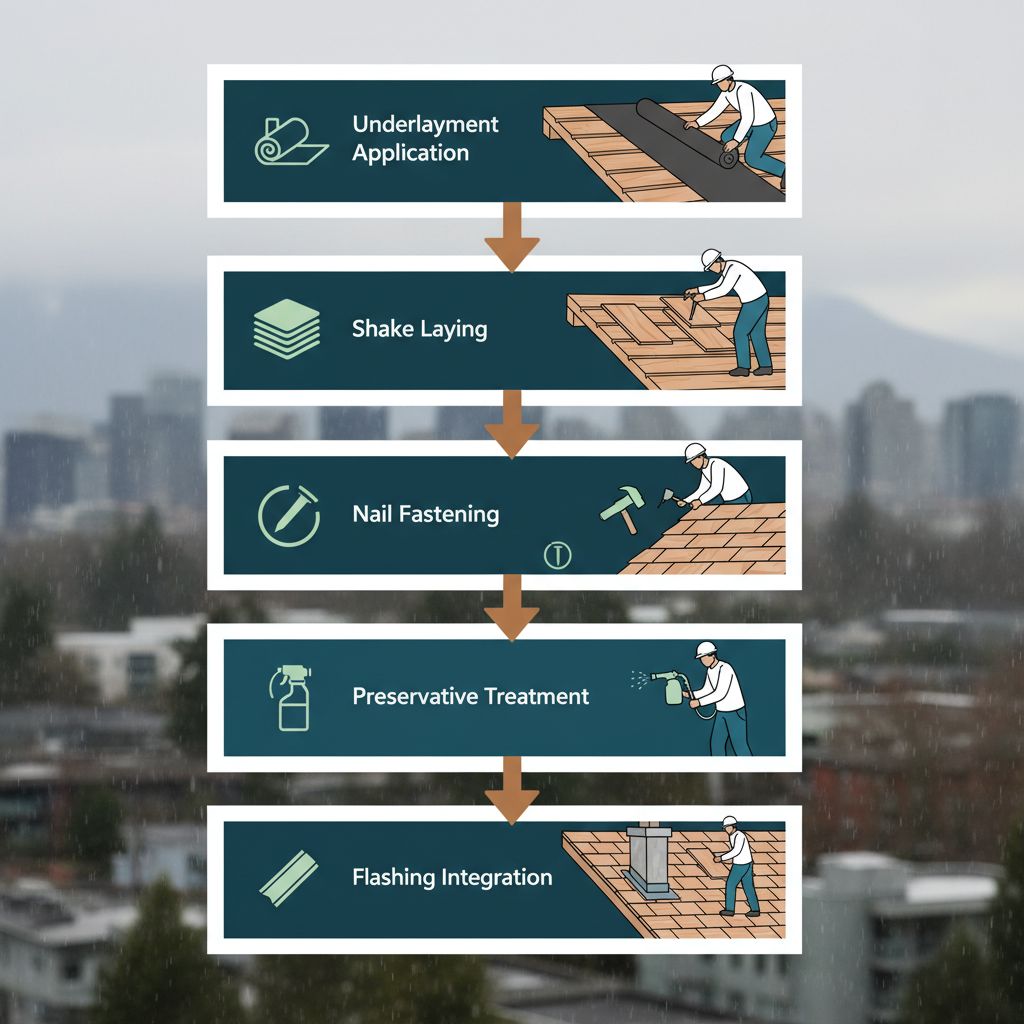
Step-by-step guide to cedar shake roofing installation process
This visual aids in understanding the layered approach that enhances airflow and weatherproofing, crucial for Vancouver’s frequent rains.
Treatment Methods for Durability
To combat British Columbia’s humid climate, cedar shakes require robust preservative treatments for wood roofs that prevent rot and fungal growth. We apply oil-based preservatives like copper naphthenate immediately after installation, penetrating the wood fibers to inhibit decay organisms. This treatment, often followed by semi-transparent stains, not only boosts UV resistance but also maintains the natural grain appearance.
Ongoing cedar shake maintenance involves biannual inspections to reapply coatings, especially after heavy winter exposure. For instance, penetrating sealants are brushed on every 3-5 years, extending lifespan to 30+ years when combined with proper ventilation. Unlike synthetic slate options from our services, which offer inherent weatherproofing without frequent upkeep, cedar demands these proactive steps but rewards with eco-friendly appeal.
In commercial applications, we schedule treatments during low-occupancy periods, ensuring minimal impact on operations. Safety considerations include using low-VOC products to protect workers and building occupants from fumes during application.
Integration with Existing Structures
Retrofitting cedar shakes onto various building types requires assessing structural load and aesthetic harmony. We evaluate roof pitch, ensuring slopes above 4:12 to facilitate drainage and prevent moisture accumulation. For multi-family units, common in Surrey and Burnaby, integration involves upgrading trusses if needed to support the material’s weight, around 3-4 pounds per square foot.
The following table outlines compatibility and challenges for different structures:
| Structure Type | Compatibility Level | Primary Integration Challenge |
|---|---|---|
| Residential Heritage | High | Ornate flashing matching |
| Multi-Family / Strata | High | Truss load reinforcement |
| Commercial Complex | Moderate | Large area ventilation |
Residential projects often proceed smoothly due to simpler access, while multi-family and commercial integrations benefit from our coordinated expertise, including temporary weather barriers. We address challenges through custom flashing and underlayment enhancements, drawing from NRCA standards for secure fastening—nailing into solid wood at least 1 inch above the butt line.
By leveraging decades of local experience, we ensure seamless adaptations that enhance property value without compromising existing infrastructure. This approach aligns with our commitment to protecting structures across the Lower Mainland.
As Trusted Roofing Contractor Across British Columbia, we handle these integrations with precision, focusing on long-term performance and client satisfaction.
Best Practices for Cedar Shake Roofing
Implementing cedar shake roofing in Vancouver, British Columbia, requires careful attention to sourcing, maintenance, and compliance to ensure longevity and performance in the region’s damp climate. We at Paragon Roofing BC draw on decades of local experience to guide property managers and homeowners toward durable solutions that align with commercial needs.
Sourcing and Supplier Selection
Sourcing high-quality materials forms the foundation of successful cedar shake roofing in Vancouver, British Columbia. Opt for certified suppliers in British Columbia that provide sustainably harvested western red cedar, known for its natural resistance to decay and insects. Local cedar suppliers in the Lower Mainland, such as those partnered with established roofing firms, ensure timely delivery and compliance with regional standards.
To select the right supplier, begin by verifying certifications from the Forest Stewardship Council and adherence to BC sourcing guidelines. Request samples to assess grain quality and thickness, typically 18-22 inches for premium shakes. We recommend reaching out to suppliers with proven track records in Metro Vancouver, where proximity reduces shipping costs and supports eco-friendly practices.
Benefits include enhanced durability against coastal moisture and potential cost savings through bulk purchasing from trusted local cedar suppliers. This approach minimizes risks of substandard materials that could lead to premature wear, ultimately protecting your investment in the Fraser Valley area.
Ongoing Maintenance Strategies
Effective cedar shake maintenance is essential for extending the lifespan of your roof amid British Columbia’s wet weather. Routine roof care protocols prevent issues like moss growth and rot, which are common in Vancouver’s humid environment. We offer seasonal maintenance plans tailored for strata properties, including free on-site inspections and detailed photo reports to track condition over time.
Key practices include annual visual checks for loose shakes or debris accumulation, followed by gentle cleaning to remove moss without damaging the wood. Apply preservative treatments every five years, focusing on oil-based stains that penetrate deeply for protection. For cleaning, use low-pressure washing biannually, avoiding harsh chemicals that strip natural oils.
The return on investment from proactive cedar shake maintenance is significant, often reducing repair costs by up to 30% over a decade. The following table outlines core practices:
| Task | Frequency | Key Objective |
|---|---|---|
| Visual Inspection | Annual | ID loose shakes/leaks |
| Moss Removal | Biannual | Prevent moisture trap |
| Stain/Sealer Reapplication | 3-5 Years | UV/Water barrier |
Implementing these steps ensures compliance with best practices while optimizing performance. Schedule professional assessments through our BBB A+ accredited services to maintain ventilation and avoid common pitfalls in cedar shake maintenance.
Compliance and Contractor Tips
Adhering to local regulations during cedar shake installation safeguards your property and ensures safety. In British Columbia, focus on fire-resistant treatments and proper underlayment as per the cedar shake building code, which requires offset joints of at least 40 mm between courses to prevent water infiltration. Ventilation standards mandate adequate airflow to combat moisture buildup in Vancouver’s climate.
Choose contractors with strata experience by reviewing portfolios and confirming WorkSafeBC coverage. We prioritize clear communication and manufacturer-compliant installations, providing proposals that detail scope and exclusions. Verify A+ BBB accreditation and request references from similar Lower Mainland projects.
Selecting experienced pros minimizes risks and supports long-term value. Our full-service capabilities, from inspections to warranty-backed work, help navigate codes efficiently, ensuring your cedar shake installation meets all requirements while aligning with budget goals.
Choosing Cedar Shake Roofing Solutions
Cedar shake roofing in Vancouver, British Columbia, stands out for its timeless appeal and natural resilience, offering property owners a blend of durability and aesthetic charm that enhances any structure in the Lower Mainland. At Paragon Roofing BC, we specialize in sustainable cedar solutions that withstand the region’s wet climate while elevating property values. Our expertise ensures that every project aligns with local building standards, providing long-lasting protection for residential and commercial buildings alike.
Key takeaways include the superior durability and beauty of cedar shakes, which require dedicated cedar shake maintenance to promote longevity and fire safety through regular treatments and inspections. Proper cedar shake installation, guided by the cedar shake installation code, guarantees optimal performance and compliance. For commercial properties, these features boost curb appeal and operational efficiency, making expert wood roofing care an investment in enduring quality.
We invite you to contact Paragon Roofing BC, your trusted roofing contractor across British Columbia, for a free on-site inspection and personalized quote. Our full-service commitment covers everything from sourcing to installation and ongoing maintenance plans, helping you protect your investment. Schedule today and discover how we can tailor cedar solutions to your needs.
Resources
- Get Comprehensive Roofing Materials and Services in Vancouver
- Discover Asphalt Shingle Installation and Repair Services Vancouver
- Explore Affordable Durable Asphalt Shingle Roofing for Vancouver
- Install Synthetic Slate Roofing for Weather-Resistant Vancouver Properties
- Schedule Tailored Roof Maintenance Plans for Vancouver Homes
- Choose Trusted Best Roofing Company in Vancouver
- Learn Optimal Roofing Materials Guide for Vancouver Climate
- Explore NRCA Guidelines on Steep-Slope Roofing Materials
- Understand BC Building Code for Cedar Shake Installation
- Learn Joint Offset Rules for Cedar Roof Shakes Code
Table of Contents
- The Importance of Roof Inspections in Vancouver
- Understanding Roof Inspections in Vancouver
- Benefits of Regular Roof Inspections
- How Roof Inspections Work in Practice
- Best Practices for Roof Inspections in BC
- Prioritizing Roof Inspections for Long-Term Protection
The Importance of Roof Inspections in Vancouver
In the rainy climate of Metro Vancouver, where heavy downpours and persistent moisture are the norm, a roof inspection in Vancouver, BC, is essential for safeguarding homes and buildings. The region’s relentless drizzle fosters moss growth, leaks, and wind damage that can compromise roof integrity over time. At Paragon Roofing BC, we have seen how these elements accelerate wear, as noted in local maintenance guides preparing roofs for the wet season, where unchecked issues lead to mold and structural weakening.
Neglecting regular inspections can result in costly repairs, insurance claim denials, and even safety hazards. For instance, a Vancouver homeowner recently discovered a hidden leak through our free on-site evaluation, preventing extensive interior damage just before winter. As a BBB A+ accredited provider with decades of experience across the Lower Mainland, we serve residential, multi-family, and commercial properties with detailed photo reports. This guide covers professional roof evaluation in the Lower Mainland, including expectations, frequency, benefits, processes, and best practices aligned with BC building codes. We also explore Vancouver-area roof assessments, such as the roof inspection checklist for pre-purchase checks in areas like Burnaby and Surrey, highlighting risks like curling shingles and attic moisture stains that homebuyers must verify to avoid surprises.
Whether you’re facing visible signs like granule buildup in gutters or simply seeking peace of mind, contact us at Paragon Roofing BC for roof inspections in Burnaby and beyond. Our expertise ensures your investment stays protected year-round.
Understanding Roof Inspections in Vancouver
At Paragon Roofing BC, we emphasize the importance of thorough roof inspections to safeguard properties against the relentless wet weather in Vancouver. With decades of local experience, we guide homeowners and property managers through this essential process, ensuring roofs withstand the region’s unique challenges like heavy rainfall and wind. Understanding these inspections empowers you to protect your investment proactively.
What to Expect During an Inspection
During a roof inspection in Vancouver, BC, expect a systematic evaluation tailored to local conditions. Our certified professionals arrive on-site equipped for a comprehensive assessment, typically lasting one to two hours depending on roof size and complexity. This process aligns with National Roofing Contractors Association (NRCA) standards, focusing on safety and detail.
The inspection begins with an exterior visual check from the ground and ladder, examining shingles for wear, flashing for corrosion, and gutters for clogs—common issues in our rainy climate. We then access the attic to inspect insulation, ventilation, and underside decking for moisture damage or rot. For steeper or multi-story roofs, we utilize drones to capture high-resolution images safely, avoiding risks while identifying hidden problems like loose cedar shakes often battered by coastal winds. A key component of this is following a roof inspection checklist in Delta, adapted for similar Lower Mainland properties, which includes verifying drainage efficiency and seal integrity. Residential inspections prioritize homeowner accessibility, while commercial ones incorporate scope for larger flat roofs under BC building codes. Homeowners should prepare by clearing yard debris and securing pets. We conclude with a detailed report, including photos and recommendations, highlighting any urgent repairs.
In Vancouver’s damp environment, this thorough approach prevents minor leaks from escalating, as statistics show over 70% of local roof failures stem from unchecked moisture accumulation. By demystifying the process, we build trust in our free on-site evaluations.
Inspection Frequency in BC’s Climate
We recommend bi-annual Vancouver roof evaluations for most properties, aligning with the Lower Mainland’s wet weather patterns that accelerate deterioration. Spring and fall inspections capture seasonal damage, such as winter ice damming or summer UV exposure on asphalt shingles.
For residential roofs, inspect every six months to monitor moss growth and granule loss, exacerbated by prolonged dampness—key factors in Vancouver where annual rainfall exceeds 1,200 mm. Commercial and multi-family buildings demand quarterly Lower Mainland roof checks due to higher foot traffic and exposure, complying with BC codes that mandate ventilation assessments to prevent mold. Factors like roof material influence frequency: cedar shake roofs, prone to wind damage here, benefit from annual professional reviews, while durable metal systems may suffice with semi-annual ones. Our seasonal maintenance plans incorporate these schedules, including gutter cleaning to mitigate water pooling. Neglecting this can shorten roof lifespan by up to 30%, per industry insights on regional climate impacts.
Adhering to this rhythm ensures compliance and longevity, particularly vital for strata properties in our humid coastal zone.
Recognizing Signs of Roof Issues
Homeowners in Metro Vancouver should watch for indicators signaling the need for a professional roof inspection, as early detection averts costly water damage in our rainy locale.
Visible cues include granule loss on shingles, creating bald patches that speed erosion; sagging sections pointing to structural weakening from rot; and curling edges on asphalt, common after heavy winds. Subtle interior signs like water stains on ceilings or musty attic odors suggest hidden leaks, with NRCA guidelines noting that 80% of such issues trace to poor flashing in wet climates. Moss or algae buildup, thriving in Vancouver’s moisture, erodes materials over time. For commercial roofs, persistent ponding after rain violates drainage codes and risks systemic failure.
- Granule loss or bald shingles: Indicates aging and vulnerability to leaks.
- Sagging or dips: Signals deck compromise, often from untreated moisture.
- Interior stains or damp spots: Early leak evidence requiring immediate attention.
- Damaged flashing around chimneys: Prone to failure in wind-driven rain.
- Moss proliferation: Accelerates decay in shaded, damp areas.
We advise scheduling upon noticing these, as roof inspection cost is minimal compared to repair expenses—typically under $300 for our no-obligation assessments. Addressing them promptly preserves property value in BC’s demanding weather.
Benefits of Regular Roof Inspections
At Paragon Roofing BC, we understand that regular roof repair or replace in Vancouver decisions often start with proactive inspections. A roof inspection in Vancouver, BC, stands as a cornerstone of property care, helping homeowners and managers safeguard their investments against the region’s relentless rains and winds. By catching issues early, these evaluations not only extend roof lifespan but also deliver substantial financial and safety advantages. Consider the pros of routine checks versus the risks of neglect:
- Pros of Inspected Roofs: Early detection prevents minor leaks from becoming structural damage; enhances energy efficiency by addressing ventilation gaps; ensures compliance with BC building codes for smoother insurance renewals.
- Cons of Uninspected Roofs: Accelerated wear leads to emergency repairs costing thousands; heightened liability in multi-family settings; potential resale value loss due to undisclosed defects.
This approach aligns with industry standards from the National Roofing Contractors Association (NRCA), which recommends annual maintenance to mitigate weather-related deterioration.
Longevity and Cost Savings for Properties
We prioritize regular roof maintenance evaluations to help properties in Metro Vancouver withstand BC’s demanding weather patterns. These proactive Vancouver roof checks identify vulnerabilities like deteriorating flashing or inadequate underlayment before they escalate, potentially extending a roof’s life by 5-10 years according to NRCA guidelines on maintenance frequency. For instance, a simple inspection might reveal moss accumulation common in rainy seasons, allowing us to recommend targeted treatments that prevent widespread granule loss on asphalt shingles.
The financial upside is clear when weighing roof inspection cost against future expenses. Early intervention often averts major overhauls; our clients in Surrey and beyond have saved up to 40% on repair bills by addressing issues spotted during free on-site assessments. We back these efforts with seasonal maintenance plans that include detailed photo reports, ensuring transparency and peace of mind. Tailored to residential and vacation properties, our services draw on decades of local experience to optimize durability without unnecessary outlays. As Vancouver’s climate intensifies, these steps protect your asset while aligning with our commitment to long-term performance.
Safety and Compliance for Commercial Buildings
For commercial and multi-family properties, roof inspections for commercial buildings represent a critical safeguard against operational disruptions and legal exposures. In Vancouver’s regulatory landscape, we help strata councils and industrial operators reduce risks by adhering to BC codes that mandate structural integrity checks. Our comprehensive roof inspection checklist covers essentials like edge securing, drainage systems, and ventilation, drawing from NRCA safety protocols to prevent falls and water ingress during heavy downpours.
Safety extends to liability mitigation; undetected leaks in high-rises can lead to mold growth affecting tenant health, while poor maintenance invites fines under local bylaws. We serve multi-family and industrial roofs with thorough evaluations that highlight compliance gaps, such as outdated flat roof membranes prone to ponding. Our BBB A+ accredited team provides warranty-backed solutions, including TPO and EPDM installations, to fortify these structures. By integrating these inspections into routine operations, clients avoid costly downtime and ensure occupant well-being, reflecting our full-service capabilities across the Lower Mainland.
Peace of Mind Before Property Purchases
Pre-purchase roof inspections offer invaluable assurance for Vancouver homebuyers and strata managers navigating the competitive real estate market. We address the importance of roof inspections before purchase by delivering detailed reports that uncover hidden issues, empowering informed negotiations and averting post-sale surprises. In areas like the Lower Mainland, where older homes often harbor ventilation deficiencies or cedar shake wear, our evaluations provide leverage to adjust offers based on projected repair needs.
This process aligns with NRCA recommendations for buyer due diligence, focusing on material condition and code adherence to protect insurance eligibility. For strata properties, our assessments detail communal roof health, helping managers budget for collective maintenance. Clients appreciate our free inspections, complete with photo documentation, which clarify roof inspection cost implications upfront. As trusted partners, we emphasize how these checks fit into broader property strategies, teasing the practical steps in our upcoming guide on seamless inspection processes. Ultimately, this foresight builds confidence in your investment amid Vancouver’s variable conditions.
How Roof Inspections Work in Practice
At Paragon Roofing BC, we conduct roof inspections in Vancouver, BC, with a focus on protecting properties from the region’s challenging wet climate. Our methodical process ensures homeowners identify potential issues early, preventing costly repairs. This section outlines the key elements of these assessments, from professional protocols to homeowner options and specialized equipment.
Key Steps in Professional Assessments
We begin a professional roof inspection with arrival at the site, where our team reviews any client concerns and assesses site-specific conditions like steep pitches common in Vancouver homes. Safety setup follows immediately, including harnessing up and securing ladders to comply with WorkSafeBC standards. Next comes the exterior walk, carefully examining shingles for wear, flashing around chimneys, and valleys for moss accumulation, which thrives in BC’s damp environment.
Interior checks involve attic access to evaluate ventilation per BC building codes, checking for moisture stains or inadequate insulation that could lead to rot in cedar shakes or asphalt roofs. For materials like asphalt shingles prevalent in Surrey, we probe for granule loss from heavy rains. The process concludes with report generation, providing detailed findings and recommendations tailored to seasonal factors, such as pre-winter checks for ice dam risks.
This structured approach aligns with NRCA best practices, offering a thorough evaluation that DIY methods often overlook.
DIY vs Professional Checklists
In the Lower Mainland’s rainy climate, a basic DIY roof inspection checklist can suffice for spotting obvious issues like loose shingles after a storm, but it falls short for hidden problems such as attic leaks or structural weaknesses. Homeowners might perform a ground-level visual scan or use binoculars for safety, noting curling edges on asphalt or moss on cedar. However, professionals are essential for comprehensive diagnostics, especially in wet conditions where undetected moisture accelerates damage.
The following table compares key aspects of self-performed checks versus expert services to guide Vancouver residents in deciding the best path forward.
| Aspect | DIY Inspection | Professional Inspection |
|---|---|---|
| Basic visual check from ground/ladder | Surface-level identification of obvious issues | High safety risks / Expertise ensures accurate assessments |
| Scope | Limited access | Full access including attic, flashing, and ventilation |
While DIY efforts provide a starting point, they carry significant safety risks on slippery, moss-covered roofs. At Paragon Roofing BC, we offer free on-site inspections with photo reports, ensuring accurate assessments without the hazards or limitations of self-checks. This service highlights the value of expert input, particularly for roof inspection cost savings through early detection.
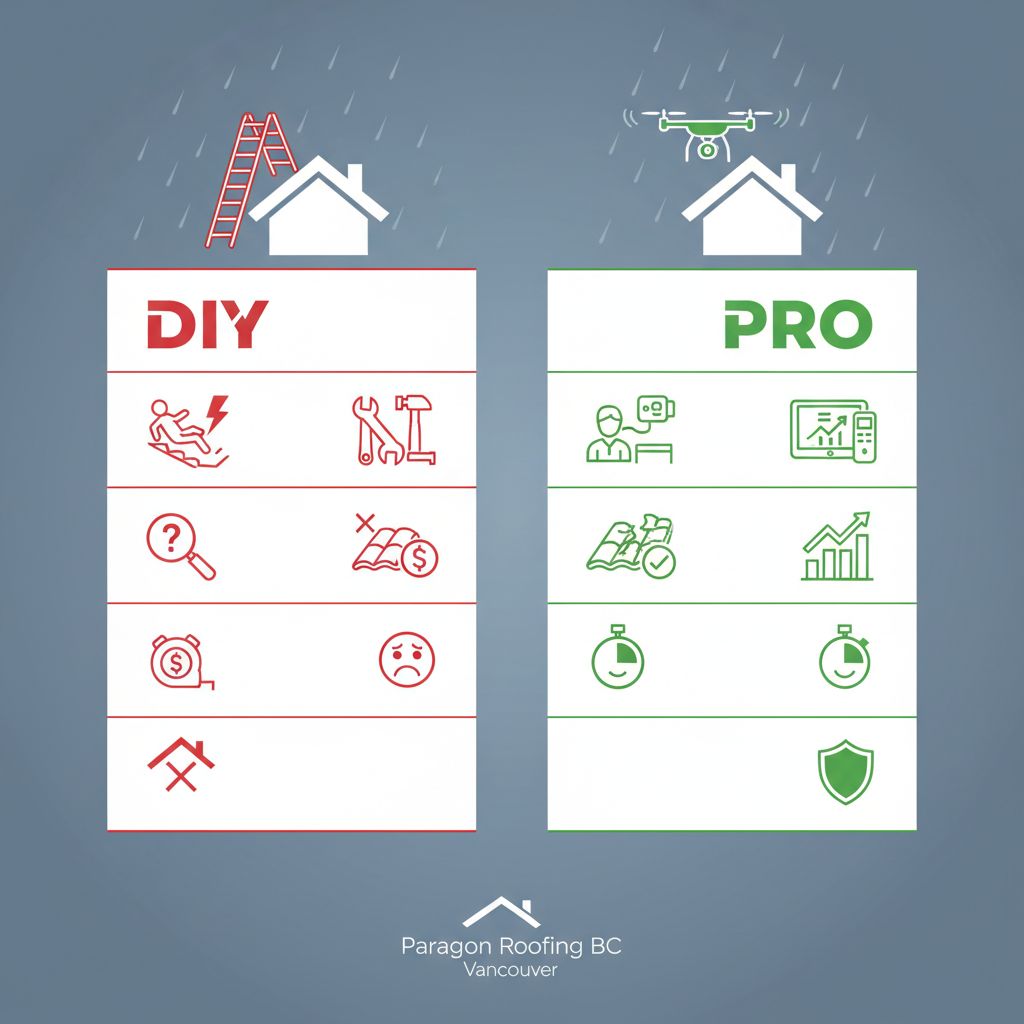
DIY vs professional roof inspection comparison in Vancouver
Expanding on these differences, professional evaluations incorporate local Delta-style checklists, adapting for Vancouver’s coastal winds and rain to deliver reliable insights.
Tools and Techniques Used
Our team employs advanced tools for detailed roof assessment protocols in Vancouver inspection procedures, ensuring precision across BC roof types like asphalt, cedar, and flat systems. Ladders and harnesses form the foundation for safe access, while moisture meters detect hidden water intrusion in cedar shakes prone to rot from persistent drizzle.
Drones provide aerial views of hard-to-reach areas, ideal for identifying granule buildup on asphalt shingles without risking falls. Thermal imaging reveals heat loss or leaks in flat roofs, aligning with NRCA guidelines for ventilation checks. For seasonal adaptations, we use infrared cameras during summer to spot ventilation deficiencies that exacerbate winter ice dams.
These techniques, drawn from professional guides, allow us to address common issues like algae growth efficiently, offering homeowners peace of mind through comprehensive roof inspection results.
Best Practices for Roof Inspections in BC
At Paragon Roofing BC, we prioritize thorough roof inspections to safeguard properties across Metro Vancouver and the Lower Mainland against the region’s relentless rains and winds. Incorporating a roof inspection in Vancouver, BC, into your maintenance routine ensures early detection of issues, extending roof life and preventing costly damages. We draw from decades of local expertise to share these best practices, emphasizing safety, timeliness, and value.
Cost Factors and Free Options
Understanding roof inspection cost in British Columbia starts with key influences like property size, roof complexity, and location accessibility. In Metro Vancouver, residential inspections typically range from $200 to $500, while commercial ones climb higher due to scale and regulatory needs for strata properties. Urgency, such as post-storm assessments, can add premiums, but proactive scheduling keeps expenses manageable. We at Paragon Roofing BC offer free initial on-site inspections and detailed photo reports for homeowners and businesses in areas like West Vancouver and Port Moody, eliminating upfront costs for eligible projects and allowing us to provide transparent quotes based on actual conditions.
Regional averages in Vancouver reflect these factors, with asphalt roofs often on the lower end due to straightforward access, while cedar variants require more handling. The following table breaks down typical costs:
| Roof Type | Residential Cost | Commercial Cost | Factors Influencing Price |
|---|---|---|---|
| Asphalt Shingles | $200-400 | $500+ for multi-unit | Accessibility, size, height, roof pitch |
| Cedar Shake | $300-500 | $600+ | Material handling, weather exposure |
| Flat/Low-Slope | $250-450 | $700+ | Specialized tools, flat roof access |
This breakdown highlights how material and access drive roof inspection cost variations, yet our free options deliver exceptional value without compromising thoroughness. By leveraging these no-cost assessments, clients in the Lower Mainland gain peace of mind and informed budgeting, aligning with NRCA guidelines for cost-effective maintenance.
Seasonal and Material-Specific Tips
Vancouver’s wet climate demands strategic timing for inspections, ideally in spring to prepare for summer sun and fall to brace for winter storms. We recommend a roof inspection checklist tailored to local conditions, including checks for moss buildup, granule loss, and flashing integrity. For asphalt shingles, prevalent in residential areas, focus on wind damage and algae stains during high-rainfall seasons; inspect edges and vents quarterly to maintain ventilation as per NRCA standards.
Cedar shake roofs, common in heritage neighborhoods like those in Port Moody, require material-specific care against moisture rot—treat with preservatives annually and examine for splitting after heavy winds. Flat roofs, often on commercial builds, benefit from drainage tests in fall to prevent ponding, using TPO or torch-on systems suited to coastal humidity. Our optimized inspection routines incorporate these tips, ensuring BC roof maintenance strategies address heavy precipitation and humidity for longevity.
Safety remains paramount; always use stable ladders and harnesses, or consult professionals for steep pitches. These practices, informed by our experience in West Vancouver’s diverse architectures, help prevent leaks and uphold warranty compliance.
When to Invest in Professional Services
In the Lower Mainland, DIY inspections suit basic visual checks, but professional involvement is essential for complex scenarios like post-storm evaluations or strata compliance audits. We advise turning to experts when spotting irregular wear, such as uneven shingle alignment or interior water stains, which signal underlying issues beyond surface-level fixes. For commercial properties, regulatory demands and safety risks make pros indispensable, especially on multi-unit structures.
Investing in our services proves worthwhile during high-risk periods, like after wind events in areas such as Burnaby or Surrey, where hidden damages could escalate. Following a professional roof inspection guide ensures accurate diagnostics and repairs, avoiding costly oversights. Our certified teams handle these with precision, providing BC roof maintenance strategies that prioritize durability against local weather extremes and deliver long-term savings through early intervention.
Prioritizing Roof Inspections for Long-Term Protection
Regular roof inspections play a vital role in protecting Vancouver properties from British Columbia’s relentless rain, wind, and occasional snow. As we’ve explored throughout this guide, prioritizing a roof inspection in Vancouver, BC early can uncover issues like moss buildup, granule loss, or flashing damage, as outlined in a standard roof inspection checklist. We recommend annual checks for most homes and more frequent assessments for commercial buildings, especially after severe weather, to maintain structural integrity and prevent minor problems from escalating.
The benefits extend far beyond immediate fixes. By identifying potential failures ahead of time, roof inspections lead to significant cost savings through timely repairs rather than full replacements, with average roof inspection costs proving a small investment compared to long-term damages. Enhanced safety for occupants and workers is another key advantage, ensuring your property remains secure against leaks and structural weaknesses. Our comprehensive services cater to residential, multi-family, and commercial needs, backed by decades of local experience and BBB A+ accreditation.
For sustained roof health strategies and effective Vancouver protection measures, we invite you to contact our team for a free initial assessment. Reach us at our Vancouver office at 997 Seymour St Suite 250, Vancouver BC V6B 3M1, or Surrey office at 12233 92 Avenue, Surrey BC V3V 7R9. Drawing from roofing guidelines resources, we also offer ongoing maintenance plans to keep your roof performing optimally year-round. Schedule today and experience peace of mind with Paragon Roofing BC.
Resources
- Schedule Expert Roof Inspections in Burnaby for Durability
- Discover Comprehensive Roof Inspection Checklist for Delta Buyers
- Decide Between Roof Repair or Replacement in Vancouver Climate
- Get Trusted Roofing Services in West Vancouver for Protection
- Obtain Professional Roofing Services in Port Moody for Longevity
- Find the Best Roofing Company in Vancouver for Reliability
- Prepare Vancouver Roofs for Winter with Seasonal Maintenance Checklist
- Conduct Comprehensive Roof Inspections to Detect Early Damage
- Explore Professional Roof Inspection Guide for Annual Checks
- Access NRCA Roofing Guidelines and Resources for Maintenance
