Best Cedar Shake Roofing Options for 2026 Homes
Table of Contents
- Exploring Cedar Shake Roofing in Vancouver
- Understanding Cedar Shake Roofing
- Benefits of Cedar Shake Roofing
- How Cedar Shake Roofing Works
- Best Practices for Cedar Shake Roofing
- Choosing Cedar Shake Roofing Solutions
Exploring Cedar Shake Roofing in Vancouver
In Vancouver’s rich architectural heritage, where natural beauty meets modern living, cedar shake roofing in Vancouver, British Columbia, stands out as a timeless choice. Homeowners and property managers appreciate these hand-split western red cedar shingles for their rustic charm and seamless integration with the coastal landscape. We at Paragon Roofing BC understand the unique needs of Vancouver properties, drawing on decades of local experience to deliver durable natural wood roofing solutions.
Cedar shake roofing thrives in British Columbia’s wet climate, offering superior weather resistance and natural insulation that enhances energy efficiency. Its popularity stems from the visual appeal that complements West Coast aesthetics, with many local homes featuring this material for its longevity when properly cared for. Key decision factors include cedar shake maintenance to prevent moss growth and ensure fire safety in urban settings, alongside initial costs balanced against long-term property value enhancement. According to industry insights, cedar roofs are prevalent in over 20% of BC’s traditional architecture, providing a premium option for both residential and commercial applications.
This guide explores the benefits, cedar shake installation processes, and best practices tailored to the Lower Mainland. From strata evaluations to multi-family projects, we preview how to assess suitability for your needs.
As trusted experts, we offer free on-site inspections and comprehensive roofing materials services in Vancouver to guide your decisions with warranty-backed assurance.
Understanding Cedar Shake Roofing
Cedar shake roofing in Vancouver, British Columbia, offers a timeless option for properties seeking natural durability and aesthetic appeal. As a trusted roofing contractor across British Columbia, we at Paragon Roofing BC specialize in cedar shake and wood roofing solutions, drawing on decades of local experience to guide property managers and homeowners through selection and implementation. This section explores the core elements of cedar shake systems, from their composition to their performance in our region’s demanding climate, helping you evaluate their value for residential, strata, and commercial applications.
Material Composition and Sourcing
Cedar shakes are hand-split from western red cedar heartwood, prized for its natural oils that provide resistance to decay and insects, ensuring a textured surface that enhances visual depth compared to machine-sawn shingles. This composition results in lightweight yet robust red cedar shingle systems, with thicknesses varying from 18 to 24 inches for optimal overlap and water shedding. The material’s low thermal conductivity also contributes to energy efficiency in building envelopes.
In British Columbia, sustainable sourcing practices dominate, with suppliers like those in Surrey adhering to Forest Practices Code standards to harvest from certified forests, minimizing environmental impact while supporting local economies. According to The Ultimate Guide to Roofing Materials in Vancouver, cedar remains a top choice for its regional availability, with trends showing increased demand for eco-friendly wood roofing amid growing sustainability mandates.
For practical implications, we recommend cedar shake installation from vetted British Columbia suppliers to ensure compliance with local building codes. Our free on-site inspections can assess sourcing feasibility, protecting your investment in authentic, renewably sourced materials for long-term property value.
Suitability for Vancouver Climate
Cedar shake excels in Vancouver’s wet, coastal environment due to its inherent moisture resistance, where tight-grained western red cedar expands minimally in humid conditions, preventing warping or cupping under prolonged rain exposure. The material’s natural tannins act as a preservative, offering better performance than many alternatives in areas with annual precipitation exceeding 1,200 mm, while its breathability allows vapor escape to reduce mold risks. Temperature fluctuations from mild winters to occasional freezes are mitigated by cedar’s flexibility, maintaining integrity without cracking.
Local relevance is evident in how cedar withstands coastal winds up to 100 km/h, as supported by Roofing Materials Guidelines from the National Roofing Contractors Association, which endorse treated wood shakes meeting ASTM standards for Class A fire resistance in humid zones like the Lower Mainland. This aligns with Vancouver’s climate, where synthetic options often falter in extreme wet-dry cycles.
Practically, cedar shake maintenance involves periodic treatments to preserve these traits, ensuring 30-50 years of service. We at Paragon Roofing BC integrate these considerations into our seasonal maintenance plans, safeguarding strata properties against leaks and extending roof lifespan in our variable weather.
Comparison to Synthetic Options
When evaluating cedar shake against synthetic alternatives, key criteria include aesthetics for curb appeal, durability under environmental stress, and overall cost for lifecycle value, particularly for heritage or commercial properties in Vancouver where authenticity drives ROI. Natural cedar provides an organic patina that evolves beautifully, contrasting with synthetics’ uniform appearance that can appear artificial over time. Environmental impact favors cedar’s renewability, reducing carbon footprints compared to petroleum-based composites.
The table below summarizes these aspects based on industry benchmarks:
| Feature | Natural Cedar Shake | Synthetic Composite |
|---|---|---|
| Aesthetic Appeal | Authentic, organic patina | Uniform, mimic appearance |
| Lifespan | 30-50 years (maintained) | 40-50 years |
| Sustainability | High (Renewable resource) | Lower (Petroleum-based) |
Interpreting these differences, cedar shake stands out for heritage properties seeking timeless appeal and sustainability, though it demands proactive upkeep. Synthetics suit budget-conscious projects but may not match cedar’s environmental credentials. For alternatives like asphalt shingle services in Vancouver, we offer consultations to balance cost with performance, emphasizing warranties that align with manufacturer terms after on-site evaluation.
Benefits of Cedar Shake Roofing
Cedar shake roofing offers enduring appeal and practical advantages for properties across Vancouver, British Columbia. We frequently recommend it to commercial managers seeking a blend of tradition and performance in strata and multi-family buildings. These benefits extend from visual charm to enhanced safety and efficiency, supporting long-term investment decisions.
Aesthetic and Value Enhancement
Cedar shake roofing in Vancouver, British Columbia, captures the natural elegance that complements the region’s architectural heritage, from heritage homes to modern commercial structures. Its textured, hand-split appearance adds warmth and character, elevating curb appeal in neighborhoods like Kitsilano or Gastown. We see cedar shake adding value to properties by creating a distinctive look that stands out against more uniform options.
Real estate data indicates that homes with premium wood roofs can see resale values increase by up to 5-7%, as buyers appreciate the rustic yet sophisticated finish. In our experience serving Lower Mainland properties, this enhancement translates to higher rental yields for multi-family units, where aesthetic differentiation attracts tenants. For commercial applications, the timeless style boosts brand image without the uniformity of standard materials.
Property managers benefit from this upgrade, as it justifies premium pricing in competitive markets. Our BBB-accredited team ensures installations that maximize these visual and financial gains, protecting your investment in Vancouver’s dynamic real estate landscape.
Fire Resistance and Safety Features
Addressing fire concerns is crucial in urban Vancouver settings, where dense commercial and residential zones demand compliant materials. Cedar shakes, when properly treated, meet British Columbia Building Code standards, providing reliable safety for strata and multi-family buildings. We prioritize fire-retardant cedar shingles to mitigate risks from wildfires or urban sparks, ensuring peace of mind for property operators.
Vancouver regulations, aligned with BCAB #1123, require 100% edge grain for premium grades, enhancing durability against ignition. Treatments like fire-retardant impregnation achieve Class B or C ratings, far surpassing untreated wood. The following table outlines key treatment options and their implications:
| Treatment Grade | Safety Rating | Cost Impact |
|---|---|---|
| Pressure-Treated Fire Retardant | Class B / Class C | +10-15% |
| Untreated Premium Grade | Standard Decay Resistance | Baseline |
While untreated options keep costs down, they pose higher risks in fire-prone areas, potentially increasing insurance premiums. Fire-retardant treatments offer optimal balance, reducing spread rates by up to 50% per code tests, though they add 10-15% to installation expenses. For commercial managers, selecting treated cedar aligns safety with budget, minimizing liability in high-occupancy buildings. Our warranty-backed services include these enhancements, ensuring code compliance without compromise.
Longevity and Insulation Advantages
Durable wood roof benefits shine through cedar shake’s impressive 30-50 year lifespan, especially with dedicated cedar shake maintenance. In Vancouver’s wet climate, regular care prevents moss buildup and rot, extending performance far beyond basic coverings. We advocate biannual inspections—spring and fall—to clear debris and apply sealants, as outlined in our maintenance programs.
Proper ventilation and edge-grain quality, per BC standards, resist moisture damage, while natural oils provide inherent rot resistance. Energy-wise, cedar’s thermal properties insulate effectively, cutting heating costs by 10-15% in multi-family setups compared to asphalt alternatives like asphalt shingle roofing services. This efficiency lowers utility bills and supports eco-friendly operations with minimal environmental impact from renewable sourcing.
For commercial properties, these advantages yield strong ROI through reduced repairs and energy savings. Strata councils appreciate the low-maintenance profile post-installation, backed by our seasonal plans. Investing in cedar shake delivers sustained value, safeguarding assets in British Columbia’s variable weather.
How Cedar Shake Roofing Works
Cedar shake roofing offers a timeless aesthetic and natural insulation properties that suit the Pacific Northwest climate. At Paragon Roofing BC, we specialize in delivering high-quality installations tailored to commercial and multi-family properties across the Lower Mainland. This section delves into the practical aspects of how cedar shake roofing functions, from initial setup to long-term care, ensuring durability and compliance with local building standards.
Installation Process Overview
Cedar shake roofing in Vancouver, British Columbia, begins with meticulous site preparation to guarantee a stable foundation. We start by inspecting the existing roof structure for any damage and removing old materials if necessary. Next, we apply an underlayment, such as asphalt-saturated felt, following roofing materials guidelines that recommend ASTM-compliant products for water resistance in humid conditions.
- Eave Starter Course: Lay the first row of shakes along the eaves, using corrosion-resistant nails spaced 1-2 inches from the edge to prevent splitting.
- Progressive Courses: Work upward in offset patterns, staggering joints by at least 1.5 inches to avoid leaks, typically covering 10 inches of exposure per row.
- Ridge and Hip Capping: Install pre-cut ridge shakes or caps, securing them with two nails each to seal the roof peak against wind-driven rain.
- Flashing Integration: Add metal flashing around penetrations like vents and chimneys, ensuring proper overlap for ventilation and drainage.
- Finishing Touches: Trim edges and inspect for uniformity, applying initial sealant if required.
These shake application techniques typically span 1-2 weeks for a standard commercial project, depending on roof size. For safety, we always use harnesses and scaffoldings during elevated work, prioritizing team and site protection. In commercial settings, we coordinate with property managers to minimize disruptions, often completing phases over weekends.
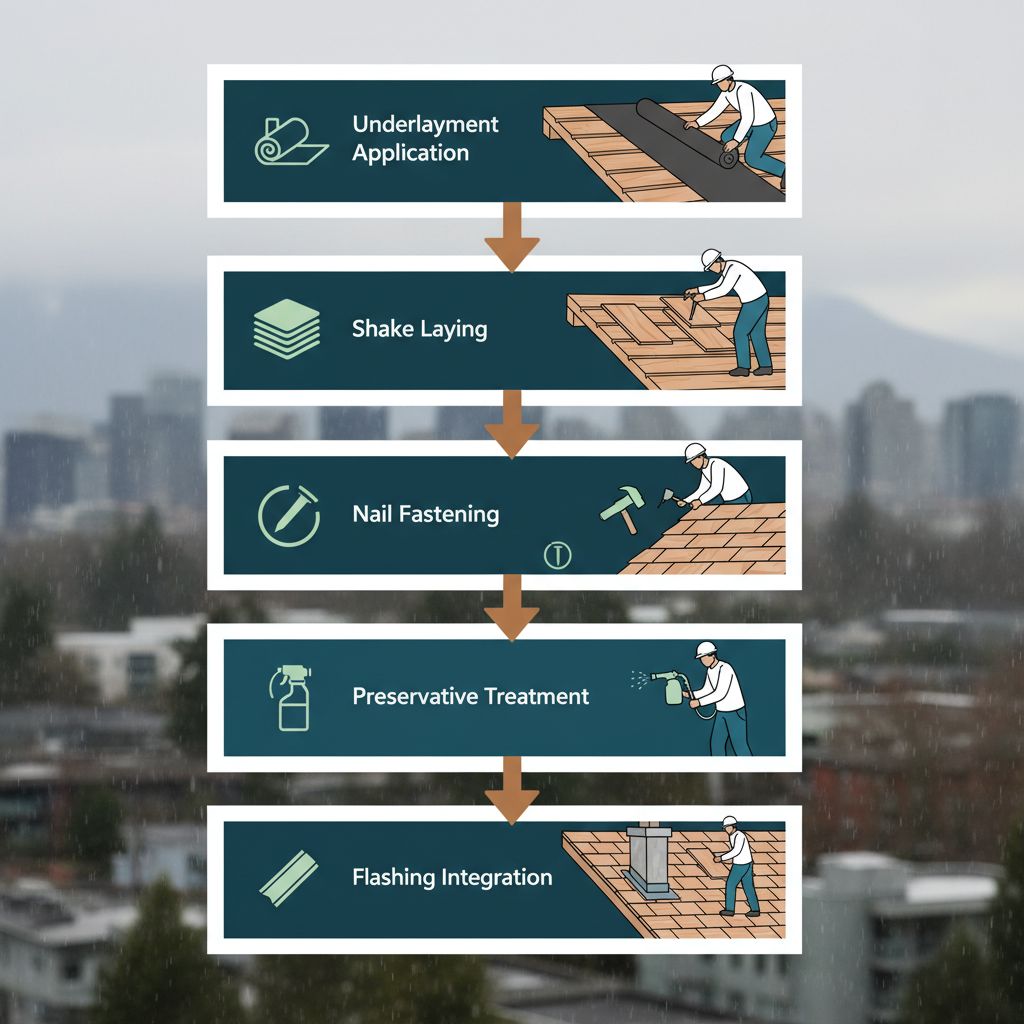
Step-by-step guide to cedar shake roofing installation process
This visual aids in understanding the layered approach that enhances airflow and weatherproofing, crucial for Vancouver’s frequent rains.
Treatment Methods for Durability
To combat British Columbia’s humid climate, cedar shakes require robust preservative treatments for wood roofs that prevent rot and fungal growth. We apply oil-based preservatives like copper naphthenate immediately after installation, penetrating the wood fibers to inhibit decay organisms. This treatment, often followed by semi-transparent stains, not only boosts UV resistance but also maintains the natural grain appearance.
Ongoing cedar shake maintenance involves biannual inspections to reapply coatings, especially after heavy winter exposure. For instance, penetrating sealants are brushed on every 3-5 years, extending lifespan to 30+ years when combined with proper ventilation. Unlike synthetic slate options from our services, which offer inherent weatherproofing without frequent upkeep, cedar demands these proactive steps but rewards with eco-friendly appeal.
In commercial applications, we schedule treatments during low-occupancy periods, ensuring minimal impact on operations. Safety considerations include using low-VOC products to protect workers and building occupants from fumes during application.
Integration with Existing Structures
Retrofitting cedar shakes onto various building types requires assessing structural load and aesthetic harmony. We evaluate roof pitch, ensuring slopes above 4:12 to facilitate drainage and prevent moisture accumulation. For multi-family units, common in Surrey and Burnaby, integration involves upgrading trusses if needed to support the material’s weight, around 3-4 pounds per square foot.
The following table outlines compatibility and challenges for different structures:
| Structure Type | Compatibility Level | Primary Integration Challenge |
|---|---|---|
| Residential Heritage | High | Ornate flashing matching |
| Multi-Family / Strata | High | Truss load reinforcement |
| Commercial Complex | Moderate | Large area ventilation |
Residential projects often proceed smoothly due to simpler access, while multi-family and commercial integrations benefit from our coordinated expertise, including temporary weather barriers. We address challenges through custom flashing and underlayment enhancements, drawing from NRCA standards for secure fastening—nailing into solid wood at least 1 inch above the butt line.
By leveraging decades of local experience, we ensure seamless adaptations that enhance property value without compromising existing infrastructure. This approach aligns with our commitment to protecting structures across the Lower Mainland.
As Trusted Roofing Contractor Across British Columbia, we handle these integrations with precision, focusing on long-term performance and client satisfaction.
Best Practices for Cedar Shake Roofing
Implementing cedar shake roofing in Vancouver, British Columbia, requires careful attention to sourcing, maintenance, and compliance to ensure longevity and performance in the region’s damp climate. We at Paragon Roofing BC draw on decades of local experience to guide property managers and homeowners toward durable solutions that align with commercial needs.
Sourcing and Supplier Selection
Sourcing high-quality materials forms the foundation of successful cedar shake roofing in Vancouver, British Columbia. Opt for certified suppliers in British Columbia that provide sustainably harvested western red cedar, known for its natural resistance to decay and insects. Local cedar suppliers in the Lower Mainland, such as those partnered with established roofing firms, ensure timely delivery and compliance with regional standards.
To select the right supplier, begin by verifying certifications from the Forest Stewardship Council and adherence to BC sourcing guidelines. Request samples to assess grain quality and thickness, typically 18-22 inches for premium shakes. We recommend reaching out to suppliers with proven track records in Metro Vancouver, where proximity reduces shipping costs and supports eco-friendly practices.
Benefits include enhanced durability against coastal moisture and potential cost savings through bulk purchasing from trusted local cedar suppliers. This approach minimizes risks of substandard materials that could lead to premature wear, ultimately protecting your investment in the Fraser Valley area.
Ongoing Maintenance Strategies
Effective cedar shake maintenance is essential for extending the lifespan of your roof amid British Columbia’s wet weather. Routine roof care protocols prevent issues like moss growth and rot, which are common in Vancouver’s humid environment. We offer seasonal maintenance plans tailored for strata properties, including free on-site inspections and detailed photo reports to track condition over time.
Key practices include annual visual checks for loose shakes or debris accumulation, followed by gentle cleaning to remove moss without damaging the wood. Apply preservative treatments every five years, focusing on oil-based stains that penetrate deeply for protection. For cleaning, use low-pressure washing biannually, avoiding harsh chemicals that strip natural oils.
The return on investment from proactive cedar shake maintenance is significant, often reducing repair costs by up to 30% over a decade. The following table outlines core practices:
| Task | Frequency | Key Objective |
|---|---|---|
| Visual Inspection | Annual | ID loose shakes/leaks |
| Moss Removal | Biannual | Prevent moisture trap |
| Stain/Sealer Reapplication | 3-5 Years | UV/Water barrier |
Implementing these steps ensures compliance with best practices while optimizing performance. Schedule professional assessments through our BBB A+ accredited services to maintain ventilation and avoid common pitfalls in cedar shake maintenance.
Compliance and Contractor Tips
Adhering to local regulations during cedar shake installation safeguards your property and ensures safety. In British Columbia, focus on fire-resistant treatments and proper underlayment as per the cedar shake building code, which requires offset joints of at least 40 mm between courses to prevent water infiltration. Ventilation standards mandate adequate airflow to combat moisture buildup in Vancouver’s climate.
Choose contractors with strata experience by reviewing portfolios and confirming WorkSafeBC coverage. We prioritize clear communication and manufacturer-compliant installations, providing proposals that detail scope and exclusions. Verify A+ BBB accreditation and request references from similar Lower Mainland projects.
Selecting experienced pros minimizes risks and supports long-term value. Our full-service capabilities, from inspections to warranty-backed work, help navigate codes efficiently, ensuring your cedar shake installation meets all requirements while aligning with budget goals.
Choosing Cedar Shake Roofing Solutions
Cedar shake roofing in Vancouver, British Columbia, stands out for its timeless appeal and natural resilience, offering property owners a blend of durability and aesthetic charm that enhances any structure in the Lower Mainland. At Paragon Roofing BC, we specialize in sustainable cedar solutions that withstand the region’s wet climate while elevating property values. Our expertise ensures that every project aligns with local building standards, providing long-lasting protection for residential and commercial buildings alike.
Key takeaways include the superior durability and beauty of cedar shakes, which require dedicated cedar shake maintenance to promote longevity and fire safety through regular treatments and inspections. Proper cedar shake installation, guided by the cedar shake installation code, guarantees optimal performance and compliance. For commercial properties, these features boost curb appeal and operational efficiency, making expert wood roofing care an investment in enduring quality.
We invite you to contact Paragon Roofing BC, your trusted roofing contractor across British Columbia, for a free on-site inspection and personalized quote. Our full-service commitment covers everything from sourcing to installation and ongoing maintenance plans, helping you protect your investment. Schedule today and discover how we can tailor cedar solutions to your needs.
Resources
- Get Comprehensive Roofing Materials and Services in Vancouver
- Discover Asphalt Shingle Installation and Repair Services Vancouver
- Explore Affordable Durable Asphalt Shingle Roofing for Vancouver
- Install Synthetic Slate Roofing for Weather-Resistant Vancouver Properties
- Schedule Tailored Roof Maintenance Plans for Vancouver Homes
- Choose Trusted Best Roofing Company in Vancouver
- Learn Optimal Roofing Materials Guide for Vancouver Climate
- Explore NRCA Guidelines on Steep-Slope Roofing Materials
- Understand BC Building Code for Cedar Shake Installation
- Learn Joint Offset Rules for Cedar Roof Shakes Code
Table of Contents
- The Essentials of Roof Maintenance in British Columbia
- Understanding Roof Maintenance Needs
- Benefits of Regular Roof Maintenance
- How Roof Maintenance Works
- Best Practices for Roof Maintenance
- Sustaining Your Roof in British Columbia
The Essentials of Roof Maintenance in British Columbia
In the rainy climate of Metro Vancouver and the British Columbia Lower Mainland, roof maintenance plays a vital role in safeguarding homes and properties from persistent downpours and seasonal shifts. At Paragon Roofing BC, we define roof maintenance as routine checks and minor repairs that extend your roof’s lifespan, preventing leaks and structural issues common in our region. Neglecting these essentials can lead to costly damages, especially during heavy rains that foster moss growth and water pooling.
Vancouver’s weather presents unique challenges, including relentless precipitation and winter ice that strain roofing systems. A local homeowner once faced a sudden leak during a stormy night because unchecked debris clogged their gutters, highlighting the risks of oversight. We recommend proactive roof winter preparation in Vancouver, such as regular roof inspection and gutter cleaning, to mitigate these threats. Our decades of local experience and BBB A+ accreditation ensure comprehensive services for residential, strata, and commercial properties, including free on-site inspections and seasonal maintenance plans backed by warranties. Studies show proper upkeep can extend roof life by up to 30 years, saving 10 times the cost of preventive care compared to emergency repairs.
As trusted roofing contractors across British Columbia, we guide you through understanding specific needs driven by local conditions, exploring benefits, processes, and best practices next.
Understanding Roof Maintenance Needs
In Metro Vancouver’s temperate yet challenging climate, marked by persistent rain and coastal humidity, roof maintenance plays a vital role in protecting properties from accelerated deterioration. We often see how these conditions foster issues like moss growth and water infiltration, making proactive care essential for homeowners and property managers alike. Understanding these dynamics helps prevent costly repairs and extends roof lifespan.
Vancouver’s Weather Impact on Roofs
Vancouver’s relentless rainfall, averaging over 1,200 mm annually, combined with occasional fierce winds and temperature swings, relentlessly tests roof durability, often leading to premature wear within just a few seasons.
Fall deluges in Metro Vancouver frequently overwhelm drainage systems, causing water pooling on roofs and promoting moss proliferation, especially on north-facing slopes where sunlight is limited. Wind gusts exceeding 60 km/h, common during winter storms, can loosen shingles and flashing, while spring thaws exacerbate ice dams in milder elevations, allowing meltwater to seep under materials and into the structure. Local examples abound: in heritage neighborhoods like Kitsilano, cedar shake roofs succumb to fungal decay from trapped moisture, and modern asphalt installations in East Van develop leaks from clogged valleys. These climatic pressures in British Columbia highlight the need for tailored roof upkeep strategies, as unchecked humidity fosters algae that erodes granule protection on shingles.
To mitigate, schedule bi-annual inspections to catch early signs of moisture retention.
Types of Roofs Requiring Specific Care
The humid environment of Metro Vancouver demands distinct approaches for common roof types, where heavy precipitation and mild winters amplify material-specific vulnerabilities, risking structural compromise if neglected.
Residential asphalt shingles, prevalent in single-family homes across the Lower Mainland, suffer granule loss from constant UV exposure and acid rain, leading to faster cracking in BC’s wet cycles. Flat commercial roofs, often using torch-on or TPO membranes in office buildings, face ponding issues from poor slope design, with humidity accelerating adhesive failures and seam separations. For strata properties in multi-family complexes, like condos in Surrey or Burnaby, shared cedar or synthetic slate roofs require coordinated care to address wind-driven debris and ventilation gaps that trap condensation. In our experience serving these diverse structures, coastal salt air further corrodes metal edges, while flat systems in industrial zones demand regular membrane checks to prevent blistering from thermal fluctuations.
Prioritize material-compatible climatic roof care, such as algae-resistant coatings for shingles, to enhance resilience.
Signs That Maintenance Is Overdue
Visible cues from Vancouver’s weather patterns, like persistent dampness and debris buildup, signal when roofs demand attention, prompting timely intervention to avert extensive damage.
Homeowners in British Columbia should watch for these indicators of overdue care:
- Granule loss on asphalt shingles, appearing as bald patches that expose the underlying material to UV degradation.
- Sagging sections or buckled areas, often from water saturation weakening the decking beneath.
- Missing or curling shingles, exacerbated by wind in areas like Burnaby, where roof maintenance in Burnaby addresses such common failures.
- Dark streaks or moss patches, indicating poor drying and potential rot.
- Clogged gutters causing overflows, a leading cause as poor drainage accounts for about 40% of roof issues per failure analyses.
We recommend calling professionals like us for a thorough roof inspection when multiple signs appear, especially post-storm, as our free photo reports provide clear documentation. Gutter cleaning in fall prevents ice dams, while bi-annual checks for strata and commercial roofs ensure compliance and safety. Early detection through these practices saves on repairs and maintains warranties.
By addressing weather impacts, roof types, and warning signs, effective maintenance in Vancouver fosters durable protection and peace of mind for all property types.
Benefits of Regular Roof Maintenance
At Paragon Roofing BC, we understand the critical role of roof maintenance in protecting properties across British Columbia’s challenging climate. Regular roof maintenance in Vancouver and the Lower Mainland not only shields homes and businesses from relentless rain and wind but also delivers substantial long-term value. By prioritizing proactive measures, homeowners and property managers can avoid unexpected disruptions and enjoy peace of mind.
Extending Roof Lifespan and Saving Costs
Routine roof maintenance extends the lifespan of roofing systems from a typical 20 years to potentially 50 or more, depending on materials like asphalt shingles or metal roofing. This benefit arises from addressing minor wear before it escalates into structural failures.
In the Lower Mainland, where annual precipitation exceeds 2,300 mm, unchecked issues like moss growth or clogged systems accelerate deterioration. For instance, a simple seasonal roof checklist in Burnaby can identify lifted shingles or debris buildup early, preventing costly water damage. Industry data shows that preventive care costs just 1% to 3% of the roof’s value annually, while ignoring it can lead to repairs 10 times more expensive—saving Lower Mainland homeowners over $5,000 on major fixes like full replacements. We help clients achieve sustained roofing health through our free on-site inspections, ensuring early detection via thorough roof inspections.
Enhancing Safety and Property Value
Well-maintained roofs significantly enhance safety by mitigating risks such as slips from moss or water intrusion leading to mold and structural instability. This proactive roof care reduces hazards for families and strata properties alike.
In BC’s competitive real estate market, leaks from neglected flashing or vents can cause hidden attic damage, devaluing homes by thousands during resale. A Vancouver study highlights how water pooling on flat roofs contributes to foundation issues if gutters remain uncleaned, but regular interventions prevent these. Property values rise by up to 10% with documented maintenance records, appealing to buyers in high-demand areas like the Lower Mainland. We support this through our gutter cleaning services, tailored for multi-family units, providing essential preventive roof maintenance services to avert issues like mold growth.
Environmental and Energy Efficiency Gains
Regular upkeep improves a roof’s insulation and ventilation, leading to notable energy efficiency gains and alignment with sustainable practices in Vancouver’s eco-conscious community. Better-sealed systems minimize heat loss during winters and reduce cooling needs in milder seasons.
Vancouver’s damp conditions exacerbate energy loss through poor attic ventilation, but maintenance like clearing vents can achieve up to 25% reduction in energy use, as noted by industry experts. For commercial clients, this translates to lower utility bills and a smaller carbon footprint, supporting green roofing initiatives. Trimming branches and removing algae preserve material integrity, enhancing overall sustainability. Our seasonal plans incorporate these elements, offering ventilation repairs and drainage solutions to optimize energy performance for residential and industrial properties.
In summary, the benefits of consistent roof care at Paragon Roofing BC extend far beyond immediate repairs, fostering longevity, safety, and efficiency in British Columbia’s demanding environment. Homeowners in Burnaby and Vancouver save on costs, boost property appeal, and contribute to environmental goals through simple steps like bi-annual roof inspections and gutter cleaning. Our evidence-based approach, backed by decades of local experience and free consultations, empowers clients to protect their investments. By choosing us, you invest in proactive roof care that delivers lasting returns, from avoided $5,000+ repairs to enhanced resale value and reduced energy consumption. We maintain liability insurance and WorkSafeBC coverage to ensure every project upholds the highest standards.
How Roof Maintenance Works
At Paragon Roofing BC, our roof maintenance in Vancouver and the Lower Mainland follows a structured approach tailored to the region’s wet climate and diverse property types. We emphasize proactive care to prevent issues like moss buildup and water damage, ensuring longevity for residential, commercial, and strata roofs. Our certified teams adhere to industry standards, integrating roofing guidelines maintenance for reliable results.
Step-by-Step Inspection Process
Our inspection process begins with a thorough arrival assessment at your property in areas like Port Moody or Vancouver. We start with a visual scan from the ground and ladder, checking for visible damage such as missing shingles, cracked flashing, or debris accumulation on slopes and flat surfaces.
Next, we ascend to the roof for a detailed roof inspection, examining granule loss on asphalt shingles, moss growth in humid spots, and seal integrity around vents and skylights. Attic checks follow, where we assess ventilation, insulation, and signs of leaks like water stains or mold. For commercial strata properties, we inspect low-slope membranes for ponding water risks. Throughout, we use digital tools for photo documentation, capturing high-resolution images of potential issues to create a comprehensive report. This systematic method, informed by NRCA standards, identifies hidden problems early, preventing failures as outlined in professional analysis guides.
Safety is paramount; always secure ladders and wear protective gear during any self-checks, but consult professionals for elevated access.
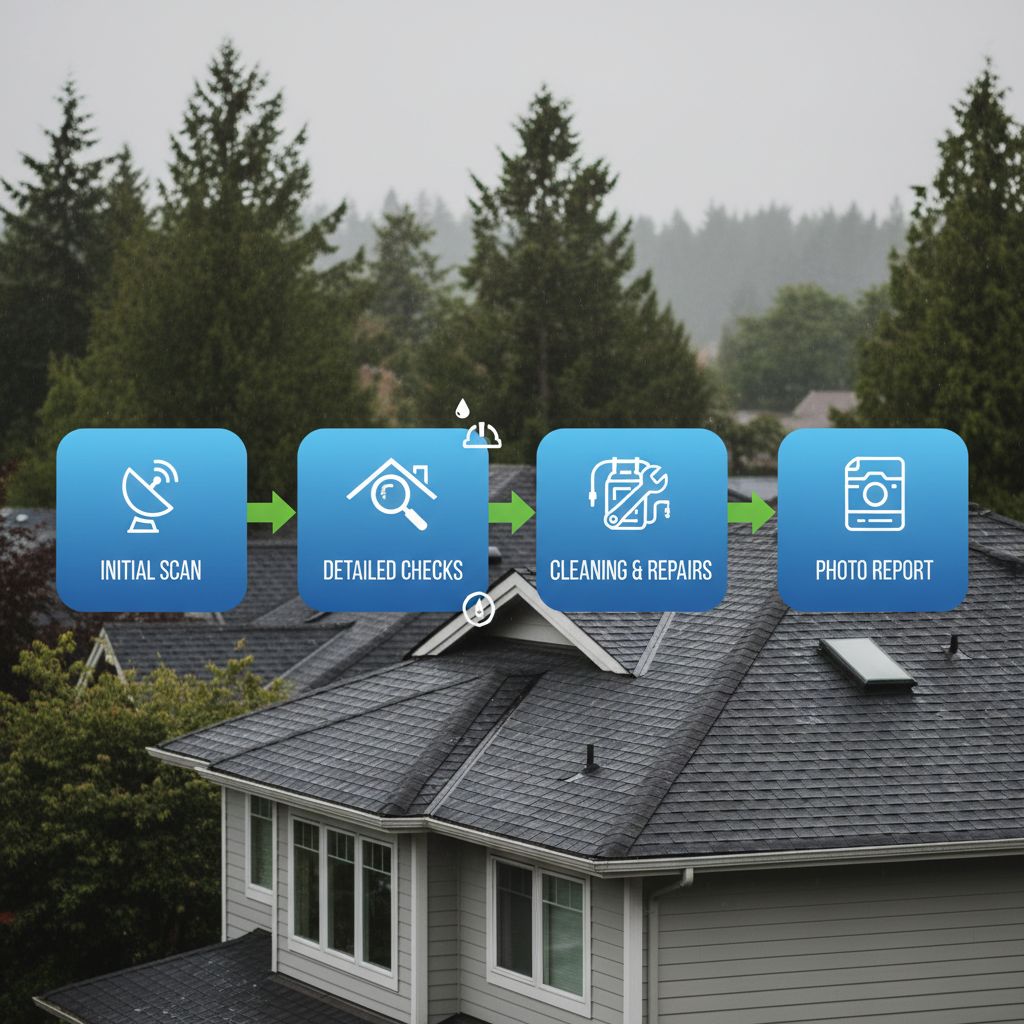
This visual aid reinforces our maintenance procedures, showing how inspections lead seamlessly into repairs, helping property owners in BC understand the full workflow.
Common Repair and Cleaning Techniques
Our roof servicing methods for cleaning start with gutter cleaning schedules twice yearly, using soft-brush tools and low-pressure rinsing to remove leaves and debris without damaging fascia in rainy Vancouver conditions.
For repairs, we employ targeted techniques like applying sealant to minor leaks on asphalt or cedar roofs, and pressure washing for moss removal on north-facing slopes common in the Lower Mainland. On flat roofs, we conduct membrane checks, patching low-slope areas with compatible adhesives to address ponding from heavy BC rains. Tools include zinc strips for moss prevention and infrared thermography for detecting hidden moisture in commercial setups. These hands-on approaches, drawn from Port Moody project experiences, align with NRCA recommendations to extend roof life and avoid failure escalation.
Tip: Schedule seasonal cleanings post-fall to mitigate winter ice dams, but avoid high-pressure methods that can strip protective granules.
Professional vs. DIY Approaches
Our professional services handle complex tasks like high-elevation repairs and flat roof maintenance for safety and precision, using certified equipment and teams insured under WorkSafeBC.
Homeowners can manage basic DIY approaches, such as ground-level debris clearing or simple gutter cleaning with extendable tools, but these suit only minor, accessible issues on single-family homes. For multi-family or industrial properties, our expertise ensures compliance with strata guidelines, addressing ventilation and drainage holistically. Professional involvement prevents errors that lead to failures, as analysis shows poor DIY attempts often worsen leaks or structural damage. We provide free on-site assessments to determine the best path, empowering you while highlighting when our full-service capabilities are essential.
Caution: DIY on steep or flat roofs risks falls; always call us for heights over one story or any leak detection to safeguard your investment.
Best Practices for Roof Maintenance
At Paragon Roofing BC, we emphasize proactive roof maintenance in Vancouver and across British Columbia to safeguard properties against the region’s relentless weather. Effective roof maintenance extends lifespan, prevents leaks, and reduces repair costs, especially in our wet climate. Drawing from decades of local experience, we recommend tailored strategies that align with Metro Vancouver’s challenges like heavy rainfall and occasional ice.
Seasonal Checklists for BC Weather
British Columbia’s diverse seasons demand specific actions to protect roofs from environmental stresses. In Vancouver, where heavy rain dominates, these checklists focus on prevention. We advise homeowners to adapt routines based on local patterns, such as frequent downpours and mild winters with ice risks.
- Spring: After winter melt, prioritize gutter cleaning to remove debris and prevent water buildup. Inspect shingles for wind damage and check flashing around chimneys for cracks. Clear moss from sloped surfaces to avoid moisture retention in our rainy springs.
- Summer: Examine for UV degradation on exposed materials; trim overhanging branches to reduce shade and mold. Ensure attic ventilation to combat heat buildup, tightening loose fasteners on metal edges.
- Fall: Remove fallen leaves through thorough gutter cleaning and sweep valleys to avoid blockages. Inspect ridges and hips for wear, preparing for wetter months ahead.
- Winter: Monitor for ice dams by clearing eaves; check for snow accumulation on flat areas. Insulate against condensation to prevent interior damage from our damp colds.
These steps, inspired by regional guidelines, promote optimal roof care. For safety, we recommend professional assistance for high-risk tasks.
Frequency and Professional Scheduling
Regular roof inspections are essential for long-term health, particularly in BC’s variable conditions. According to the NRCA roof maintenance manual, best practices suggest bi-annual professional evaluations—once in spring and fall—to catch issues early. We at Paragon Roofing BC align with this, recommending quarterly DIY visual scans supplemented by our expert visits.
Homeowners should schedule around seasonal transitions, booking ahead to avoid peak demand. Our preventive maintenance plans include free on-site inspections with detailed photo reports, covering everything from leak detection to ventilation checks. For rental properties, tenancy guidelines underscore the need for prompt reporting of issues, where landlords handle major upkeep—making our services ideal for coordinated care. Contact us at our Vancouver or Surrey offices to set up a customized schedule, ensuring compliance and peace of mind without overcommitting to unneeded work.
Tips for Different Roof Materials
The Lower Mainland features varied roofing types, each requiring distinct regional maintenance protocols. Asphalt shingles, common in residential settings, benefit from annual gentle cleaning to remove algae without harsh chemicals, preserving their granule layer against UV rays. We suggest eco-friendly moss treatments suited to our humid environment.
Metal roofs demand corrosion prevention through regular washing to clear salt and pollutants from coastal air; inspect seams for rust during dry spells. For flat roofs prevalent in commercial buildings, conduct membrane inspections bi-annually, focusing on ponding water after heavy rains—our TPO and torch-on solutions thrive with diligent drainage checks.
Across materials, integrate sustainable practices like green roof care for energy efficiency. These tailored approaches, backed by our full-service expertise, minimize wear and support warranties. Always consult professionals for material-specific assessments to maintain structural integrity in BC’s demanding weather.
Sustaining Your Roof in British Columbia
Maintaining your roof in British Columbia’s wet climate is essential for longevity and protection against moisture damage from frequent rains and storms. As we’ve explored throughout this guide, regular roof maintenance in areas like Metro Vancouver prevents small issues from escalating, saving homeowners significant costs on repairs. From seasonal inspections to addressing moss growth on asphalt shingles, these practices extend the life of durable options like metal or torch-on roofs, particularly in older Burnaby homes where freeze-thaw cycles accelerate wear.
We recommend twice-yearly checks—spring and fall—to assess winter damage and prepare for storms, as outlined in local building guidelines. For rental properties, understanding tenancy repairs maintenance in British Columbia ensures landlords handle major issues while tenants report concerns promptly. Schedule a free roof inspection with us today; our team covers residential, strata, and commercial needs across the Lower Mainland. Pair this with professional gutter cleaning to manage debris and water flow effectively.
Ongoing roof protection through sustained care plans builds resilience against BC’s challenging weather. Contact Paragon Roofing BC for expert support—let’s safeguard your investment for years to come and ensure lasting value.
Resources
- Prepare Vancouver Roofs for Winter with Seasonal Checklist
- Get Tailored Roof Maintenance Services in Burnaby
- Follow Burnaby Seasonal Roofing Checklist for Homeowners
- Explore Full-Service Roofing Solutions in Port Moody
- Implement Surrey Seasonal Roof Maintenance Checklist Guide
- Learn Essential Post-Installation Roof Care in Vancouver
- Schedule Regular Roof Inspections for Burnaby Homes
- Access NRCA Comprehensive Roofing Guidelines and Resources
- Utilize NRCA Roof Maintenance Manual for Professionals
- Understand BC Tenancy Repair and Maintenance Guidelines
- Discover Importance of Proactive Roof Maintenance Benefits
- Conduct Professional Roof Failure Analysis Guide