
Best Solar Integrated Roofing Options for 2026 Homes
Table of Contents
- Exploring Solar Integrated Roofing in Vancouver, BC
- Fundamentals of Solar Integrated Roofing
- In-Depth Analysis of Solar Roofing Technologies
- Practical Applications of Solar Roofing in BC
- Advanced Solar Roofing Solutions for 2025
- Frequently Asked Questions on Solar Roofing
- Choosing Solar Integrated Roofing with Paragon
Exploring Solar Integrated Roofing in Vancouver, BC
We at Paragon Roofing BC recognize the shift from traditional roofing to innovative, energy-generating solutions in Vancouver, BC. Solar integrated roofing embeds photovoltaic cells—solar technology that converts sunlight into electricity—directly into materials like shingles or tiles. This approach eliminates bulky panels, creating a seamless, efficient roof that harnesses Vancouver’s ample sunlight for renewable power.
Solar integrated roofing offers significant environmental advantages in Vancouver, BC. By generating clean energy, it reduces carbon footprints and supports sustainability goals for homes and businesses. According to practical insights from Paragon Roofing BC, these systems align with local incentives like BC Hydro rebates, making adoption more accessible. Practical applications suit the city’s sloped roofs, common in its architecture, and integrate with home energy systems to offset high costs during rainy seasons.
Key benefits include:
- Reduced energy consumption: Up to 15-40% annual savings, as noted in authoritative guidance from Paragon Roofing BC on Vancouver’s climate.
- Enhanced durability: Withstands coastal weather, providing long-term value.
- Incentive eligibility: Qualifies for provincial rebates, boosting ROI.
For types, solar shingles provide aesthetic integration, replacing traditional materials while producing power. Solar roof tiles offer durable, high-output performance ideal for Vancouver’s mild summers. When selecting energy efficient roofing in Vancouver, these options maximize utility bill reductions through strategic integration.
Installation in Vancouver, BC, requires compliance with municipal codes and certified local contractors to ensure warranty coverage and grid connectivity. We recommend partnering with experts like Paragon Roofing BC for seamless implementation. Expect 20-30% average energy savings on bills, delivering strong ROI for commercial properties—explore next steps with us for tailored solutions.
Fundamentals of Solar Integrated Roofing
Solar integrated roofing represents an innovative approach where photovoltaic (PV) technology, which converts sunlight into electricity, is embedded directly into roofing materials. This seamless integration eliminates the need for separate solar panels, providing both energy generation and weather protection in one system. At Paragon Roofing BC, we see this as a game-changer for sustainable upgrades in British Columbia, particularly for homes and commercial properties seeking to reduce reliance on traditional energy sources.
What sets solar integrated roofing apart from conventional solar panels? Unlike mounted arrays that require additional racking, these systems blend aesthetics with functionality, ideal for modern builds or retrofits. They address key homeowner concerns about roof space and visual appeal while contributing to energy independence.
The three primary types cater to diverse needs and budgets. Solar shingles use thin-film PV cells within an asphalt-like material, mimicking traditional roofing for a low-profile look. These offer efficiencies of 15-20% and suit seamless replacements on existing structures. Solar roof tiles feature interlocking modular units with crystalline silicon panels, providing an upscale, tile-like appearance with 18-22% efficiency. They appeal to those prioritizing design in residential or commercial settings. Solar metal roofs incorporate panels into durable standing-seam sheets, achieving 20-25% efficiency and excelling in harsh weather with longevity up to 50 years.
Installation methods vary by type, influencing overall feasibility. Solar shingles are nailed or adhered directly over existing roofs, similar to standard shingle work, minimizing disruption. Solar roof tiles require a racking system elevated over the base roof for wiring access and airflow. Solar metal roofs integrate panels during the metal assembly, ensuring watertight seals through bolting—best for new installations.
When evaluating options, consider technology maturity, ease of installation, and cost drivers like labor and materials. According to U.S. Department of Energy guidelines, adapted for the Canadian market with BC premiums, initial costs reflect roof size and energy output. The following table outlines key differences for a 100 sqm roof, helping initial assessments.
| Type | Technology | Installation Method | Initial Cost Range (CAD) |
|---|---|---|---|
| Solar Shingles | Photovoltaic cells integrated into shingle material | Adhesive or nailing on existing roof | 15,000 – 25,000 per 100 sqm |
| Solar Roof Tiles | Modular tiles with built-in solar panels | Racking system over base roof | 20,000 – 35,000 per 100 sqm |
| Solar Metal Roofs | Panels attached to metal roofing sheets | Direct integration during metal install | 25,000 – 40,000 per 100 sqm |
In British Columbia’s coastal climate, these systems shine for durability against rain and wind, aligning with regional renewable goals. Environment America research highlights solar shingles’ market evolution, noting improved efficiencies despite past cost hurdles, while our local insights from Paragon Roofing BC emphasize reduced carbon footprints—up to 40% energy savings annually. For Delta properties, eco friendly roofing in Delta supports sustainability initiatives, offering ROI through net metering and incentives. Commercial operators benefit from scalable installations, with metal roofs ideal for industrial durability and tiles for aesthetic commercial facades. We recommend structural assessments to match types to specific needs, ensuring long-term performance in Delta’s wet environment.
These fundamentals underscore solar integrated roofing’s potential for eco-conscious upgrades. As we explore incentives and maintenance next, consider how these systems fit your energy goals in Vancouver and beyond.
Building on this overview, the infographic visually reinforces key trade-offs, aiding decisions for BC installations.
In-Depth Analysis of Solar Roofing Technologies
As a trusted roofing contractor across British Columbia, we at Paragon Roofing BC recognize the growing interest in solar integrated roofing solutions for both residential and commercial properties in Vancouver’s unique climate. These technologies blend energy generation with durable roofing, offering long-term benefits amid the region’s variable weather.
How Solar Shingles Integrate with Residential Structures
Solar shingles represent an innovative approach to solar integrated roofing, seamlessly combining photovoltaic functionality with traditional roofing aesthetics. The solar shingles history reveals their evolution from early prototypes to modern systems using crystalline silicon cells embedded in durable, shingle-like modules. These cells capture sunlight and convert it into electricity through the photovoltaic process, where photons excite electrons in the silicon layers, generating direct current that inverters transform into usable alternating current for homes.
Installation on sloped roofs in Vancouver’s typical 4/12 pitch involves interlocking the shingles directly onto the underlayment, mimicking conventional asphalt shingles while distributing weight evenly to withstand coastal winds up to 90 km/h. We recommend flexible mounting systems that allow for thermal expansion, ensuring secure attachment without compromising the roof’s integrity. This integration requires precise alignment to maximize sun exposure, often incorporating micro-inverters at each shingle for optimized output even under partial shading from nearby evergreens.
According to local roofing expert insights from Paragon Roofing BC, standing seam alternatives can enhance durability for solar attachments on steeper pitches, providing superior wind resistance and easier access for maintenance. Homeowners benefit from reduced visible bulk compared to panel arrays, preserving curb appeal while generating up to 10 kW for a standard 2,000 sq ft roof. This adaptation suits Vancouver’s sloped residential structures, bridging energy efficiency with structural reliability.
Compatibility of Solar Systems with TPO and Flat Roofs
Integrating solar systems with TPO membranes on flat roofs presents unique challenges for commercial buildings in British Columbia, particularly in Vancouver where seismic activity and heavy rains demand robust solutions. TPO, or thermoplastic polyolefin, is a popular single-ply membrane for its heat-welded seams and UV resistance, yet mismatches in thermal expansion rates between the flexible TPO and rigid solar panels can lead to stress points and potential leaks over time.
Key issues include puncturing the membrane during mounting and ensuring waterproofing integrity, as noted in authoritative industry standards from the Roofing Contractors Association of BC. Solutions involve non-penetrating ballasts like concrete pavers or weighted racks to secure panels without drilling, minimizing breach risks. For added stability, rail systems with adhesive attachments distribute loads evenly, complying with wind uplift requirements in the Lower Mainland’s gusty conditions.
Recent roofing practices manual updates emphasize enhanced sealing protocols, such as silicone-based flashings around mounting points to prevent water ingress on commercial TPO roofs. These updates, drawn from RCABC’s revisions to waterproofing standards, ensure compatibility for buildings like warehouses and offices, where flat roofs cover large surfaces. At Paragon Roofing BC, our experience with TPO installations highlights the importance of site-specific engineering to align solar arrays with the membrane’s elasticity, reducing long-term maintenance needs.
In commercial settings across Vancouver, these integration strategies address common hurdles like limited roof space and access constraints. For instance, hybrid setups combine surface-mounted panels with perimeter anchoring, allowing solar systems to overlay existing TPO without full replacement. This approach not only preserves warranty coverage but also leverages TPO’s reflective properties to boost panel efficiency by up to 5% through reduced heat buildup. As businesses seek sustainable upgrades, understanding these adaptations ensures seamless performance in British Columbia’s demanding environment.
The following table compares key solar roofing technologies in terms of compatibility and output, tailored to local conditions:
| Technology | TPO Compatibility | Cloudy Weather Efficiency (%) | Energy Output (kWh/sqm/year in BC) |
|---|---|---|---|
| Solar Shingles | Partial – requires hybrid setup | 15-20 | 800-1000 |
| Solar Tiles | Limited – surface mounting only | 12-18 | 700-900 |
| Solar Metal | High – direct panel attachment | 18-25 | 900-1200 |
This comparison underscores the trade-offs for Vancouver businesses evaluating solar integrated roofing options. Solar metal systems excel in direct attachment to TPO, minimizing penetration risks while achieving higher efficiencies, as supported by government-backed research on cool roof technologies from the U.S. Department of Energy. In contrast, solar shingles demand hybrid configurations, potentially increasing upfront costs but offering aesthetic versatility for mixed-use properties. Energy outputs reflect adjustments for British Columbia’s irradiance, with metal variants providing the most reliable yields amid frequent cloud cover.
Vancouver’s climate, featuring approximately 1,800 cloudy hours annually, amplifies the value of high-efficiency options like solar metal roofs, which maintain 18-25% performance per U.S. Department of Energy data adapted to local conditions. Lower outputs from tiles highlight the need for oversized arrays in commercial applications, while shingles suit hybrid retrofits. Local expert insights from Paragon Roofing BC affirm that selecting based on building type optimizes ROI, with metal integrations yielding 10-15% more energy than tiles over a decade. These metrics guide informed decisions for sustainable roofing in the Lower Mainland.
Performance Metrics in Cloudy Climates
Solar roofing technologies in British Columbia’s Lower Mainland must contend with frequent overcast skies, where efficiency typically drops 20-30% compared to sunnier regions. Local solar irradiance averages 3.5 kWh/m²/day, influencing annual outputs for systems like solar roof tiles, which capture diffuse light through advanced polycrystalline cells but yield 700-900 kWh/sqm/year under these conditions per adapted cool roof guidelines.
Reliable government-backed research from the U.S. Department of Energy indicates that reflective surfaces in cool roofs enhance photovoltaic performance by mitigating heat, crucial in Vancouver’s mild yet cloudy weather. Solar metal roofs, for instance, achieve 900-1200 kWh/sqm/year, benefiting from standing seam designs that facilitate direct panel mounting and better airflow for cooling. This results in sustained efficiency of 18-25%, even during prolonged gray periods common to the region.
Authoritative industry standards from the Roofing Contractors Association of BC stress the role of proper ventilation in maintaining output, preventing efficiency losses from moisture buildup. For commercial operators, these metrics translate to meaningful savings, with metal systems offsetting 40-50% of energy needs in mid-sized facilities. Building on this compatibility, the next consideration is economic viability in BC, including incentives for such installations.
Practical Applications of Solar Roofing in BC
Building on the environmental and economic benefits of solar roofing, practical applications in British Columbia focus on seamless integration for both residential and commercial properties. At Paragon Roofing BC, we specialize in solar integrated roofing solutions tailored to Vancouver’s unique climate, enabling businesses and homeowners to harness renewable energy while enhancing roof durability.
To bring these benefits to life, understanding the installation process is essential.
Installation Processes for Commercial and Residential Projects
At Paragon Roofing BC, we guide clients through a structured seven-step installation for solar integrated systems, ensuring efficiency and compliance in Vancouver. The process begins with an initial consultation and site assessment, where our team evaluates roof condition, structural integrity, and solar exposure to determine feasibility. This step, drawing on local expertise, identifies optimal panel placement to maximize energy yield.
Next comes the design phase, calculating energy needs based on usage patterns and property size. We then secure permitting and approvals from BC Hydro, navigating provincial regulations efficiently. Material selection follows, choosing durable options like solar shingles for residential roofs or robust panels for commercial setups.
Physical installation starts with roof preparation, including any necessary repairs or underlayment. Integration of electrical systems connects the solar array to inverters and the grid. Finally, a thorough inspection and grid connection testing verify performance and safety.
Commercial projects often involve larger-scale coordination, such as phased installations to minimize downtime, while residential ones prioritize aesthetics and quicker timelines. With our decades of local experience, we adapt these steps for Vancouver’s wet weather, ensuring long-term reliability.
Beyond setup, budgeting is key to making solar roofing accessible.
Cost Analysis and Budgeting for 2025 Installations
For 2025 solar roofing projects in British Columbia, costs vary based on system type and scale, with average totals for a 100 sqm roof ranging from CAD 20,000 to 40,000. Base material costs sit at CAD 150-400 per sqm, covering options like solar shingles or tiles, while labour rates in BC hover at CAD 50-100 per hour due to skilled trades and regional demand. According to Paragon Roofing BC’s local expert projections, these figures account for inflation-adjusted increases, influenced by Vancouver’s marine climate requiring enhanced weatherproofing.
Additional expenses include permitting (CAD 500-1,000) and electrical integration (CAD 2,000-5,000). BC-specific factors, such as higher material transport costs and compliance with seismic standards, add 10-15% to national averages. However, incentives mitigate these: the federal Investment Tax Credit offers 30% off eligible costs, and provincial rebates up to CAD 5,000 through programs like CleanBC Better Homes. For businesses, bulk installations qualify for enhanced deductions. By bundling with roof replacements, clients can leverage BC Hydro rebates up to CAD 10,000 for energy-efficient upgrades, making 2025 a strategic time for investment in Vancouver.
When evaluating options, several factors shape overall expenses and value in the Canadian context. Material durability plays a key role, as BC’s frequent rain demands corrosion-resistant choices like metal-integrated systems. Local labour rates, averaging 20% above national figures due to Vancouver’s construction boom, influence totals, while energy prices—around CAD 0.12/kWh—amplify ROI potential. Sourcing from certified suppliers ensures quality, avoiding hidden fees from subpar imports. For a typical commercial property, these elements can push initial outlays higher, but long-term savings on utility bills offset them. Paragon Roofing BC’s free on-site inspections help pinpoint exact needs, factoring in roof pitch and orientation for precise estimates. Government data from the U.S. Department of Energy, adapted for Canadian parallels, underscores how upfront investments yield substantial returns through reduced emissions and energy independence.
| Option | Installation Cost (CAD/sqm) | Annual Maintenance Cost | Expected ROI (Years) |
|---|---|---|---|
| Solar Shingles | 150-250 | 200-400 | 7-10 |
| Solar Tiles | 200-300 | 300-500 | 8-12 |
| Solar Metal Roofs | 250-400 | 150-300 | 6-9 |
Solar shingles offer a balance of affordability and integration, ideal for residential roofs in Vancouver, while solar roof tiles provide superior aesthetics for commercial facades, though at higher upkeep. Solar metal roofs excel in durability against BC winds, boasting the quickest ROI per adjusted Paragon and Energy.gov data. Canadian incentives further enhance viability: the federal Greener Homes Grant covers up to CAD 5,000 for retrofits, complemented by GST/HST rebates on installations. Net metering allows excess energy sales back to BC Hydro, accelerating payback—often under 8 years for businesses. Provincial programs like the BC Energy Step Code incentivize commercial adopters with tax credits, while low-interest loans from Canada Greener Homes reduce barriers. For enterprises in Vancouver, these supports, combined with our full-service plans, transform solar integrated roofing into a smart financial move, cutting operational costs by 20-30% annually. Homeowners benefit similarly through streamlined rebates. Always consult local experts to tailor incentives, ensuring maximum savings aligned with 2025 projections.
Sustaining performance requires ongoing care, particularly in Vancouver’s variable weather.
Maintenance Routines for Long-Term Performance
At Paragon Roofing BC, we recommend quarterly checks to optimize solar roofing longevity, based on our Vancouver plans. In spring, clean debris from solar panels and inspect seals for moisture ingress. Summer routines focus on heat damage assessments, verifying inverter functionality amid high temperatures.
Fall maintenance secures components against winds, tightening mounts and clearing gutters. Winter protocols include safe snow removal to prevent shading and structural strain, using soft tools to avoid scratches.
Annual professional servicing, costing CAD 200-500, covers full diagnostics and efficiency tests. For detailed answers on common queries like these seasonal checks, see our roofing FAQs in Vancouver. Drawing from practical Q&A guidance as a BC roofing specialist, this approach ensures warranties remain valid and output peaks, per U.S. Department of Energy homeowner guidelines.
Advanced Solar Roofing Solutions for 2025
Building on foundational solar options, 2025 brings advanced innovations in solar integrated roofing that promise greater efficiency and seamless integration for homes in British Columbia. As technology evolves, these solutions feature enhanced photovoltaic efficiency rates exceeding 22 percent, alongside AI-driven optimization to combat Canadian winters’ reduced sunlight hours. In Burnaby and Vancouver, where sloped homes dominate the landscape, emerging systems like solar shingles, tiles, and metal roofs address local challenges such as heavy rainfall and seismic activity while promoting energy independence.
Solar shingles stand out for their lightweight design, making them ideal for retrofitting existing sloped roofs in Burnaby without structural overhauls. According to Paragon Roofing BC’s local expert advice, these photovoltaic shingle systems offer moderate green roof compatibility due to their reduced weight, allowing partial integration of vegetation layers. In Vancouver’s wet climate, they boast a projected 25-30 year lifespan, blending durability with aesthetic appeal for urban homeowners seeking sustainable upgrades.
Transitioning to solar roof tiles, these integrated tile panels provide superior structural strength, enabling high green roof compatibility on sloped homes in Burnaby, where seismic considerations are paramount. Environment America’s industry analysis on emerging solar technologies highlights their potential for full vegetation support, optimizing insulation and stormwater management in BC’s rainy conditions. For Vancouver residences, these tiles ensure robust performance against coastal winds and moisture.
When exploring green roofing compatibility in solar setups, homeowners can further enhance thermal regulation by considering cool roofs benefits, which reflect heat to lower cooling demands. Solar metal roofs excel here, with photovoltaic layers embedded for seamless energy generation. Paragon Roofing BC benchmarks indicate these endure 50+ years in Vancouver’s persistent rain, far outlasting traditional options through corrosion-resistant coatings and superior drainage.
The following table compares key advanced features for 2025 solar tech, highlighting smart integration and green roofing compatibility to guide selections for BC properties.
| Feature | Solar Shingles | Solar Tiles | Solar Metal |
|---|---|---|---|
| Smart Monitoring | Basic app integration | Advanced IoT | Full AI optimization |
| Green Roof Compatibility | Moderate – lightweight only | Low – weight limits | High – structural support |
This comparison underscores how solar metal options lead in AI-driven efficiency, ideal for tech-savvy Vancouver homeowners, while shingles suit budget-conscious green integrations in Burnaby. In British Columbia, these technologies align with BC Hydro incentives, potentially offsetting installation costs by up to 30 percent through rebates for energy-efficient upgrades, as per local programs.
At Paragon Roofing BC, we see these 2025 advancements reducing energy bills by 20-40 percent annually and slashing carbon footprints for urban settings. Homeowners in Vancouver and Burnaby gain long-term ROI through resilient, eco-friendly roofs that withstand regional weather. Contact us for 2025 assessments to explore tailored solar integrated roofing solutions. These innovations not only enhance efficiency but also integrate seamlessly with local permitting processes in BC.
Frequently Asked Questions on Solar Roofing
As solar integrated roofing gains popularity in British Columbia for its seamless blend of energy generation and aesthetic appeal, we at Paragon Roofing BC address common queries to help residential and commercial clients make informed decisions.
What is solar integrated roofing and how does it differ from traditional panels?
Solar integrated roofing embeds photovoltaic cells directly into roof materials like shingles or tiles, unlike traditional panels mounted atop existing roofs, offering a sleeker, more durable design as per RCABC guidelines.
How is solar shingles or solar roof tiles installed on an existing roof in British Columbia?
Installation begins with a site assessment for compatibility, followed by structural checks and obtaining permits from local authorities; we ensure compliance with BC building codes before securing the integrated solar shingles.
What are the typical costs and incentives for solar roof tiles in Canada?
Costs average $20-30 per square foot, with federal and provincial rebates reducing upfront expenses by up to 30%, improving ROI for commercial buildings through long-term energy savings, according to practical insights from Paragon Roofing BC.
How long do solar shingles last and what maintenance do they require?
Solar shingles typically carry 25-30 year warranties and require annual inspections for debris removal and performance checks to maintain efficiency, aligning with RCABC’s roofing standards.
What are the environmental benefits of solar integrated roofing for commercial buildings?
It reduces carbon footprints by generating clean energy, cutting reliance on fossil fuels and lowering operational costs for businesses in British Columbia.
For tailored advice on solar integrated roofing, contact us at Paragon Roofing BC for a free consultation.
Choosing Solar Integrated Roofing with Paragon
Building on the energy efficiency gains of solar roofing solutions, when selecting a provider like Paragon Roofing BC, consider these key aspects for optimal results. Solar integrated roofing seamlessly combines protective roofing with solar power generation, enhancing sustainability for homes and businesses in Vancouver and Delta.
Our installations deliver substantial energy savings, potentially reducing utility bills by 15-40% in Vancouver’s rainy climate, as practical advice from Paragon Roofing BC indicates. We offer durable options like solar shingles for aesthetic integration and solar roof tiles compatible with existing structures in Delta’s renewable energy homes, providing long-term ROI through scalable designs.
Choose us for our expertise in eco-friendly materials, local regulation compliance, and tailored commercial consultations.
Contact Paragon Roofing BC for a free assessment on solar integrated roofing suitability. Once selected, professional installation ensures optimal performance.
This article was researched and written with the assistance of AI tools.
Resources
- Discover Eco-Friendly Roofing Options for Delta Homes
- Maximize Energy Savings Through Vancouver Roofing Strategies
- Explore Comprehensive Roofing FAQs for Vancouver Properties
- Understand Metal Roof Lifespan in Vancouver Climates
- Estimate 2025 Roof Replacement Costs in Vancouver
- Select Best Roofing for Burnaby Sloped Homes
- Compare Standing Seam vs Metal Shingles in Vancouver
- Review RCABC Roofing Practices Manual Updates
- Explore History and Evolution of Solar Shingles
- Learn Cool Roofs Benefits for Energy Efficiency
- Follow Homeowner’s Guide to Solar Energy Systems
Table of Contents
- Asphalt Shingles in Vancouver: An Overview for BC Homeowners
- Fundamentals of Asphalt Shingles for Canadian Climates
- Key Benefits of Asphalt Shingles for BC Properties
- The Installation Process for Asphalt Shingles in BC
- Best Practices for Asphalt Shingle Maintenance in Metro Vancouver
- Choosing Asphalt Shingles for Your Vancouver Home
Asphalt Shingles in Vancouver: An Overview for BC Homeowners
In the rainy climate of Vancouver, BC, asphalt shingles stand out as a reliable choice for homeowners seeking durable protection. These versatile roofing materials, made from fiberglass mats coated with asphalt and topped with mineral granules, offer affordability and ease of installation that make them popular across Canada. At Paragon Roofing BC, we see asphalt shingles in Vancouver, BC, as an ideal solution for residential properties facing frequent downpours and mild winters.
Asphalt shingles provide strong weather resistance and a variety of aesthetic options to complement local architecture. In BC conditions, they typically last 15 to 30 years with proper maintenance, addressing common concerns about BC shingle durability. Their layered design effectively sheds water, ensuring homes stay dry during heavy rains—a key reason they suit Vancouver’s unpredictable weather. As a trusted roofing contractor across British Columbia, we offer asphalt shingle services in Vancouver, including free on-site inspections to assess your needs.
This guide explores their benefits, asphalt shingle installation cost in Metro Vancouver, and asphalt shingles vs metal roofing for Vancouver asphalt roofing options. For instance, a Kitsilano home we serviced gained enhanced curb appeal and leak prevention through timely asphalt shingle replacement. Consider these factors to protect your investment in our region’s challenging environment.
Fundamentals of Asphalt Shingles for Canadian Climates
Asphalt shingles remain a top choice for roofing in Vancouver due to their balance of affordability and performance in wet, temperate conditions. We recommend considering these materials for their adaptability to British Columbia’s climate, where frequent rain and moderate temperatures demand reliable water resistance. For local installations and options, see asphalt shingle roofing in Vancouver. This section explores their composition, durability, and aesthetic appeal to help homeowners make informed choices.
Types and Composition of Asphalt Shingles
Asphalt shingles consist of a fiberglass mat as the core structural base, providing strength and flexibility. This mat is saturated with asphalt layers for waterproofing and durability, while protective granules embedded on the surface shield against ultraviolet rays and add color. In Vancouver shingle materials suited to BC weather, these granules often include ceramic coatings for enhanced algae resistance, crucial in the region’s humid environment.
Common types include 3-tab shingles, which offer a basic, uniform appearance at a lower cost; architectural or laminated shingles that provide a dimensional, textured look for better visual depth; and luxury or designer varieties with premium features like superior impact resistance. For instance, fiberglass-based options from reputable manufacturers align with North American standards for fire and wind performance, making them ideal for asphalt shingles in Vancouver, BC. We often see these used in Metro Vancouver homes to withstand coastal moisture without compromising integrity. Recyclability adds an environmental benefit, as many components can be repurposed post-service life.
Lifespan and Durability Factors in Vancouver
In the Lower Mainland, BC asphalt roofing lifespan typically ranges from 20 to 30 years, depending on quality installation and environmental exposure. Factors like UV radiation and persistent moisture significantly influence longevity, with field-aged shingles showing up to 50% reduction in tear strength due to weather shocks, as noted in Canadian research. Proper ventilation and underlayment further protect against ice dams and leaks common in rainy seasons.
Installation quality plays a key role; subpar work can halve expected durability, elevating asphalt shingle installation cost and repair needs. Compared to asphalt shingles vs metal roofing, asphalt offers easier pros like lower upfront expenses and simpler repairs, though it requires routine maintenance to combat granule loss from heavy rains. In Vancouver, algae-resistant varieties extend performance by preventing discoloration, ensuring homes in strata communities maintain value over decades.
Color Trends and Aesthetic Options
Current trends for 2024-2025 favor deep greys, classic blacks, and earthy tones like weathered wood or slate hues, which complement Vancouver’s modern and Craftsman-style homes. These neutral palettes highlight architectural details while blending seamlessly with the Pacific Northwest landscape. Energy-efficient choices, such as cool-roof shingles with high solar reflectance, reduce cooling needs in milder BC summers and may qualify for incentives.
Granules not only provide these colours but also bolster UV protection, enhancing overall resilience. For a Vancouver home example, a grey architectural shingle on a Kitsilano bungalow can mimic natural cedar while offering superior weather resistance. We advise selecting shades that harmonize with neighborhood aesthetics, using manufacturer tools for visualization to achieve lasting curb appeal.
Key Benefits of Asphalt Shingles for BC Properties
Asphalt shingles stand out as a reliable choice for properties across British Columbia, particularly in the rainy Lower Mainland. With our decades of experience serving Metro Vancouver homeowners and strata councils, we’ve witnessed how these materials deliver consistent performance against local weather challenges. They offer a balance of protection, affordability, and style that aligns with Canadian building standards, making them ideal for residential and multi-family applications.
Durability and Weather Resistance Advantages
In Vancouver’s frequent downpours and gusty winds, asphalt shingles provide robust defense through their layered construction of fiberglass mats, asphalt coatings, and mineral granules. These elements direct water away effectively, preventing leaks and structural damage common in the region’s temperate climate. Granule technology enhances resistance to algae and UV degradation, ensuring longevity of 20 to 30 years with proper care. Asphalt shingles in Vancouver, BC, excel here, as their flexibility absorbs thermal shifts without cracking, unlike rigid alternatives.
We’ve installed countless systems that withstand BC’s wet winters, reducing insurance claims from wind uplift. Compared to metal options, asphalt handles rain admirably while being lighter and easier to adapt to sloped roofs prevalent in the area. Homeowners often ask if asphalt shingles can handle BC rain, and the answer lies in their proven track record against moisture, supported by NRCA guidelines for ventilation to avoid buildup.
To help evaluate options, the following table offers a quick comparison of asphalt shingles versus metal and tile roofing, focusing on key homeowner priorities like cost and climate suitability in British Columbia. Data draws from NRCA guidelines and Canadian building standards for accurate local applicability.
| Benefit Category | Asphalt Shingles | Metal Roofing | Tile Roofing |
|---|---|---|---|
| Cost per Sq. Ft. (CAD) | $3-6 | $8-15 / 40+ Years | $10-20 / 50+ Years |
| Weather Resistance (BC Rain) | High – Algae-resistant options | Very High – Corrosion-resistant | High – But heavier |
| Maintenance | Low – Annual inspections | Very Low | Moderate – Cleaning needed |
This overview highlights why asphalt shingles often appeal for Vancouver properties, balancing upfront affordability with solid weather performance without the added weight concerns of tile. Metal roofing shines in longevity but demands specialized support, which may complicate retrofits on older homes. For most BC residents prioritizing resilience without excessive complexity, asphalt provides a practical edge.
Cost-Effectiveness and Aesthetic Appeal
Affordability drives many decisions in Metro Vancouver, where asphalt shingle installation cost ranges from $3 to $6 per square foot, offering strong value over a 20- to 30-year lifespan. This positions them as an accessible option for budget-conscious homeowners, far below metal’s higher initial outlay despite its durability. We’ve advised numerous clients on these savings, noting how asphalt’s lifecycle costs remain competitive, especially with energy-efficient variants that lower utility bills.
Aesthetic versatility further enhances their appeal, with styles mimicking slate or wood shakes in various colors to complement neighborhood aesthetics. This curb appeal boosts property values, a key consideration for strata properties. In comparisons like asphalt shingles vs metal roofing, asphalt wins for seamless integration on traditional BC homes, providing visual warmth without the industrial look of metal.
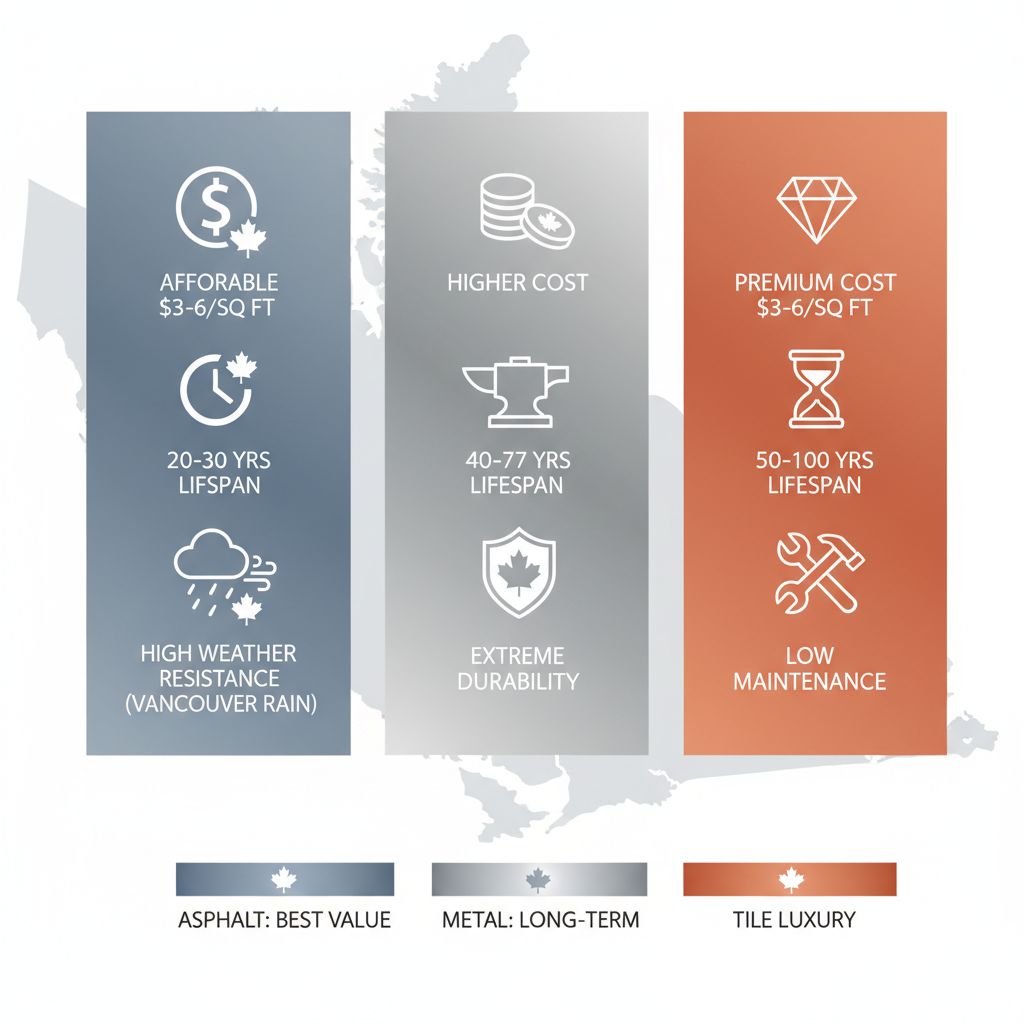
Key benefits of asphalt shingles versus metal and tile for BC homes
Such designs not only satisfy personal tastes but also align with local zoning for harmonious community appearances, making asphalt a versatile, economical choice.
Environmental and Maintenance Benefits
Sustainability matters in Canada, and modern asphalt shingles incorporate recycled content, reducing waste while meeting environmental regulations. Their reflectivity aids energy efficiency, cutting cooling needs in milder BC summers, as noted in ARMA resources. Recycling programs for old shingles further minimize landfill impact, appealing to eco-aware Lower Mainland residents.
Maintenance remains straightforward, with annual inspections sufficing to address minor issues like granule loss, per NRCA best practices. This low-effort approach suits busy homeowners, avoiding the frequent cleaning tile demands or metal’s potential condensation checks. We’ve seen how proper ventilation extends life, preventing mold in humid conditions.
For those weighing asphalt shingles vs metal roofing in Canada, asphalt’s ease of repair and lower environmental footprint during production make it suitable for sustainable builds. Vancouver shingle advantages include compliance with strata rules, offering peace of mind through warranties and simple upkeep. For a detailed overview, explore our asphalt shingles in Vancouver guide.
The Installation Process for Asphalt Shingles in BC
At Paragon Roofing BC, we specialize in delivering reliable asphalt shingle installations tailored to the unique demands of British Columbia’s climate. As a trusted roofing contractor across British Columbia, we ensure every project adheres to high standards, protecting your home while building your family’s future. This process highlights our expertise in handling wet conditions common in Vancouver, emphasizing preparation, precise techniques, and thorough checks to achieve perfection in roofing.
Preparation and Materials Needed
We begin every asphalt shingle project with a thorough site assessment, known as Vancouver roof prep, to evaluate the roof’s pitch, existing damage, and structural integrity. This step is crucial in BC’s rainy environment, where steep pitches help with water runoff, and any underlying issues must be addressed to prevent future leaks. Our team checks for rot or weak spots, ensuring the surface is clean and dry before proceeding.
Key materials include high-quality asphalt shingles designed for durability, fiberglass-based underlayment for added waterproofing, and galvanized nails for secure fastening. We also incorporate ice and water shields in vulnerable areas, adapting to local weather patterns. Tools required encompass hammers, utility knives, chalk lines, and safety gear like harnesses and ladders. Considering asphalt shingle installation cost, these essentials typically range from $5,000 to $12,000 for an average home, influenced by material grades and roof size. For asphalt shingles in Vancouver, BC, we select algae-resistant options to combat moisture-related growth, drawing from established standards to guarantee longevity without compromising aesthetics.
Step-by-Step Installation Techniques
Our BC shingle laying methods prioritize safety and precision, starting with installing the starter course along the eaves using adhesive-backed strips for immediate sealing against wind-driven rain. Next, we lay the first row of shingles, overlapping them by five inches and nailing them per the asphalt shingle roofing guide, with four nails per shingle positioned 1-2 inches from edges to enhance wind resistance. As we progress up the roof, field laying involves staggering joints to avoid water infiltration, a vital adaptation for BC’s frequent downpours.
Flashing installation at valleys and chimneys follows, using metal or compatible materials sealed with roofing cement. For ridge capping, we cut shingles into pieces and secure them with nails, ensuring full coverage. Compared to asphalt shingles vs metal roofing, our asphalt approach offers cost-effective flexibility for sloped roofs in humid climates, though metal excels in extreme durability. We always follow NRCA safety standards, using harnesses on steep pitches and avoiding common errors like improper nailing that could lead to premature failure. Professional execution is essential, as DIY attempts risk voiding warranties and safety hazards in our variable weather.
Post-Installation Checks and Adjustments
Following installation, we conduct comprehensive inspections to verify alignment, secure nailing, and proper sealing, focusing on Lower Mainland roofs exposed to heavy rains. Ventilation checks ensure adequate airflow through soffit and ridge vents, preventing moisture buildup that could shorten shingle life. Immediate weatherproofing involves applying sealants to exposed edges and testing for leaks with hose simulations.
Our team documents findings with photos, aligning with Paragon Roofing BC’s commitment to transparency. Adjustments might include adding extra underlayment or reinforcing weak points, all while adhering to WorkSafeBC guidelines. Regular post-install maintenance, like biannual inspections, helps sustain performance. We caution that while these steps provide robust protection, warranties vary by manufacturer—always review terms in your contract. By prioritizing these checks, we help homeowners avoid costly repairs and ensure long-term reliability in BC’s challenging conditions.
Best Practices for Asphalt Shingle Maintenance in Metro Vancouver
Maintaining asphalt shingles in Vancouver’s damp climate requires proactive steps to prevent premature wear from moss, heavy rain, and wind. At Paragon Roofing BC, we recommend tailored routines that extend roof life and avoid costly replacements. These practices build on proper installation by focusing on regular upkeep, ensuring your home stays protected year-round.
Routine Inspection and Cleaning Routines
We advise bi-annual inspections in spring and fall to catch issues early, aligning with BC’s rainy seasons and foliage growth. Start with a visual check from the ground using binoculars, looking for missing granules, curled edges, or soft spots. Climb safely with a ladder to assess shingles up close, checking for moss buildup common in Metro Vancouver shingle care. For cleaning, gently remove debris like leaves and branches with a soft brush to avoid damaging the surface.
Address algae and moss safely by applying a solution of water and household bleach, diluted at a 50:50 ratio, followed by a thorough rinse. Avoid high-pressure washing, which can strip protective granules. These BC maintenance routines, informed by roofing guidelines resources, include attic ventilation checks to reduce moisture—crucial in our humid environment. Why prioritize this? Studies from the National Research Council show that field-aged asphalt shingles in wet climates lose up to 50% tear strength without care, but regular cleaning preserves durability and meets building code standards.
- Clear gutters to ensure proper drainage.
- Inspect flashing around chimneys and vents.
- Document findings with photos for future reference.
By integrating asphalt shingles in Vancouver, BC, into these habits, homeowners extend roof lifespan by 10-15 years.
Repair Strategies for Common Issues
Common problems like leaks, granule loss, and wind damage demand prompt action in our windy coastal area. For minor leaks, identify the source by checking interior ceilings for stains, then seal small cracks with roofing cement applied via a caulking gun. Granule loss often signals aging; sweep loose particles and apply a shingle sealant to exposed areas, but monitor for widespread wear indicating full replacement.
Wind damage may lift tabs—secure them with roofing nails and sealant, ensuring overlaps match original installation. In Vancouver, we see more moss-related deterioration, so trim overhanging branches to minimize growth. Compare this to asphalt shingles vs metal roofing: while metal requires less frequent cleaning due to its durability, asphalt benefits from these targeted repairs to handle rain better without the higher upfront cost.
DIY suits small fixes, but we threshold professional help for anything above two layers or structural concerns, per Paragon’s seasonal plans. The National Research Council highlights that timely interventions can maintain tensile strength, preventing 50% reductions from weather exposure. Tips include using galvanized nails for wind-prone spots and ensuring proper attic airflow to curb condensation.
- Safety first—use harnesses on steep pitches.
- Match materials to avoid mismatches.
- Test seals after rain to verify effectiveness.
These strategies save on asphalt shingle installation cost long-term by averting escalation.
Long-Term Planning and Professional Tips
Plan for asphalt shingle lifespans of 20-30 years in BC’s climate, budgeting annually to cover inspections at $200-400 each. Factor in replacement costs influenced by roof size and access—consult us for precise quotes. We emphasize ventilation upgrades early, as poor airflow accelerates shingle curling in humid conditions.
Versus metal options, asphalt offers affordability for most Vancouver homes, but requires diligent upkeep; metal demands less but higher initial investment. Cost-saving tips: Join our seasonal maintenance plans for discounted checks, reducing emergency calls. When to call experts like Paragon Roofing BC? If inspections reveal over 20% damage or insurance claims arise—we provide free on-site assessments with photo reports.
Budgeting ties into asphalt shingle installation cost considerations; variables like material quality add premiums, but proper practices cut overall expenses by 30%. The Canadian Roofing Contractors Association data supports scheduling pro evaluations every five years to align with warranties.
- Review manufacturer guarantees annually.
- Save for reserves based on age assessments.
- Schedule consultations for ventilation audits.
We advise these steps to safeguard your investment proactively.
Several factors influence the overall expense of asphalt shingle projects in British Columbia, particularly in Metro Vancouver where labor and access play key roles. Understanding these helps homeowners allocate funds wisely, especially when tying maintenance into broader financial planning.
| Factor | Description | Average Cost Impact (CAD) |
|---|---|---|
| Roof Size | Larger roofs increase material needs | $5,000-10,000 for 1,500 sq ft |
| Material Quality | Architectural vs. 3-tab | +20-50% premium |
| Location/Access | Vancouver steep pitches or strata | +$1,000-3,000 labor |
This table, based on Canadian Roofing Contractors Association data adjusted for BC, illustrates how scale and specifics drive pricing. For instance, strata properties often incur extra labor due to access challenges in urban settings. Proper maintenance practices, as outlined earlier, significantly reduce long-term costs by extending shingle life and minimizing repair needs—potentially saving thousands over decades. We recommend consulting Paragon Roofing BC for personalized budgeting sessions to navigate these variables and ensure cost-effective decisions tailored to your property.
Choosing Asphalt Shingles for Your Vancouver Home
In summary, asphalt shingles in Vancouver, BC, offer a reliable and versatile option for homeowners seeking durable protection against the region’s frequent rain and variable weather. With a typical lifespan of 20 to 30 years when properly installed, these shingles excel in handling British Columbia’s wet climate while providing cost-effective solutions compared to alternatives. Key benefits include their ease of installation, energy efficiency, and aesthetic flexibility to complement various architectural styles. When weighing asphalt shingles vs metal roofing, asphalt stands out for its affordability and lighter weight, though metal may edge out in longevity for certain high-wind areas. Environmental considerations favor asphalt for its recyclability in sustainable BC roofing choices, though both materials minimize waste through long-term performance.
Budgeting for asphalt shingle installation cost in 2026 requires factoring in material quality and labor, often ranging from $5,000 to $12,000 for an average home, depending on roof size and complexity. Trends point toward impact-resistant varieties to combat hail and reduce insurance premiums. To ensure longevity, prioritize professional installation and regular maintenance, including annual inspections to catch issues early. Drawing from long-term studies on asphalt shingle durability in Canada, field-aged samples show up to 50% strength reduction over time, underscoring the value of quality materials and climate-adapted practices.
At Paragon Roofing BC, we’re committed to helping you evaluate Vancouver home shingle solutions through our free on-site inspections and detailed assessments. Contact us today to discuss your roofing needs and take the first step toward a secure, weather-resistant roof that protects your investment for years to come.
Resources
- Get Affordable Asphalt Shingle Services for Vancouver Properties
- Discover Asphalt Shingle Roofing Options in Vancouver Areas
- Explore Guide to Asphalt Shingles for Vancouver Climate
- Schedule Roof Inspections to Prevent Vancouver Water Damage
- Obtain Comprehensive Roof Inspections for Wet Vancouver Weather
- Expert Asphalt Shingle Installation Tailored for Vancouver Rain
- Find Post-Storm Roof Inspections for Vancouver Longevity
- Understand Asphalt Shingle Roofing Systems and Performance Standards
- Access Roofing Guidelines Resources for Maintenance and Repairs
- Learn Durability Insights on Aged Asphalt Shingles in Canada
- Explore Color Science in Asphalt Roofing for Aesthetic Appeal
- Compare Asphalt Shingles Versus Metal Roofing Alternatives
