
Metal Roofing Cost vs Asphalt Shingles BC: Complete Cost Comparison
Table of Contents
- Comparing Metal Roofing and Asphalt Shingles in British Columbia
- Metal Roofing and Asphalt Shingles Across British Columbia
- Roofing Services for Metal and Asphalt Installations
- How BC’s Climate and Building Codes Influence Roofing Choices
- Steps for Choosing Between Metal and Asphalt Roofing
- Making the Right Roofing Investment for Your Home
Comparing Metal Roofing and Asphalt Shingles in British Columbia
Metal Roofing and Asphalt Shingles Across British Columbia
Choosing between metal and asphalt often starts with understanding the true metal roofing cost vs asphalt shingles bc — a comparison shaped by our region’s heavy rain, coastal moisture, and occasional winter storms. Our roofing materials guide in Vancouver covers all the options, and the table below breaks down the key factors side by side.
| Factor | Metal Roofing | Asphalt Shingles |
|---|---|---|
| Upfront Cost | $8–$15 per square foot | $3–$6 per square foot |
| Average Lifespan | 40–70 years | 15–25 years |
| Maintenance Requirements | Low; occasional inspections and cleaning | Moderate; periodic repairs and replacement |
| Snow and Wind Resistance | Excellent; Class 4 impact rating, sheds snow easily | Good; can be prone to wind uplift in severe storms |
| Resale Value Impact | 4–6% increase in home value | Minimal increase; expected by buyers |
| Energy Efficiency | Reflective coatings reduce cooling costs | Standard; limited reflectivity |
Upfront cost is a major consideration, and the residential metal roof cost per square foot bc is undeniably higher. However, that initial investment buys decades of performance — metal roofs typically last twice as long or more, which often balances the long-term ledger for BC homeowners planning to stay in their homes.
Lifespan tells a similar story across our service areas. On the Lower Mainland, consistent moisture and UV exposure shorten asphalt shingle life noticeably, while properly specified metal systems with PVDF coatings routinely reach the upper end of that 40–70 year range.
Maintenance reality in BC favours metal. Our damp climate encourages moss and algae on shingle roofs, driving periodic cleaning and repairs. Metal’s smooth surface resists biological growth naturally, keeping call-back frequency low.
Snow and wind resistance matters from the North Shore to the Fraser Valley. Metal’s Class 4 impact rating and slick profile let snow slide off before ice dams form — a real advantage when heavy, wet snow loads arrive from Pacific systems.
Resale value often surprises homeowners. The metal roof vs asphalt shingles resale value bc data shows a measurable 4–6% lift for metal, which buyers recognize as a long-life upgrade that transfers both durability and curb appeal.
Energy efficiency completes the picture. Reflective metal coatings cut attic heat gain during warmer months, and our coastal summer sun can push indoor temperatures higher than people expect. Pairing that reflectivity with balanced ventilation keeps cooling demand manageable.
Beyond the roof itself, environmental impact deserves attention. Metal roofing is fully recyclable at end of life, while torn-off asphalt shingles add significantly to landfill waste. Rebate programs through CleanBC and other local initiatives may apply to related energy or insulation upgrades that coordinate with a roof replacement — we encourage homeowners to ask about current incentives during their consultation.
If you’re weighing these two materials for your own home, we’ll help you run the numbers with a free on-site inspection. Our team knows Lower Mainland weather patterns firsthand and can point out which system fits your property’s exposure, slope, and budget. Reach out to schedule a visit and get a tailored recommendation you can act on.
Roofing Services for Metal and Asphalt Installations
Protecting Your Home. Building Your Family’s Future.
Paragon Roofing BC is a full-service roofing contractor, and we install both metal and asphalt shingle roofing systems for homeowners across the Lower Mainland. Our team helps you evaluate the trade-offs between these two popular material categories so you can make a confident, informed decision.
Many homeowners ask about metal roofing cost vs asphalt shingles in BC when they begin their research. For those seeking durability and longevity, Paragon offers premium metal roofing in Vancouver with options in standing seam and exposed fastener profiles. In Vancouver’s coastal climate, metal roofs with corrosion-resistant coatings can deliver a lifespan of 40 to 70 years with proper maintenance. Their reflective surfaces also improve energy efficiency, and while the residential metal roof cost per square foot in BC typically sits above asphalt at the outset, the longer replacement cycle often results in a lower lifecycle cost over decades.
Asphalt shingles remain a trusted choice for many neighbourhoods in BC. We install architectural shingles for dimensional appearance and enhanced durability, as well as traditional 3-tab shingles for simpler roof lines. Asphalt systems carry a more affordable upfront material cost and a replacement cycle that usually falls between 15 and 30 years. Both metal and asphalt roofs are available in multiple colours and styles to suit your home’s architectural character. When homeowners weigh metal roof vs asphalt shingles resale value in BC, the decision often comes down to the balance between initial budget and long-term property investment.
Our installers are trained for both material types and use manufacturer-approved techniques. A free on-site inspection is the best way to evaluate your home’s structural capacity, budget, and aesthetic goals. Contact Paragon Roofing BC to schedule yours, and we will guide you to the right roofing system for your home.
Trusted Roofing Contractor Across British Columbia.
How BC’s Climate and Building Codes Influence Roofing Choices
Beyond material performance, British Columbia’s unique climate and strict building codes play a decisive role in which roofing system is truly suitable for a home. When evaluating metal roofing cost vs asphalt shingles in BC, it’s important to consider how climate and building codes affect the overall value. Our province endures relentless rainfall, heavy snow loads in interior and upper elevations, and corrosive coastal winds that relentlessly test roofing assemblies. These conditions demand materials with exceptional moisture resistance, structural strength to handle snow accumulation, and secure fastening to withstand wind uplift, making material selection a matter of performance rather than preference alone.
Roofing choices are not left to chance because the Government of British Columbia mandates minimum standards for roofing materials, including underlayment types, slope ratios, and attachment methods tailored to regional weather zones. According to the British Columbia building code roofing materials, minimum underlayment requirements vary by rainfall intensity zone. Metal roofing, for instance, must meet specific uplift resistance and corrosion-resistance standards. For homes near the coast, this can mean choosing aluminum over steel to prevent corrosion or specifying stainless steel fasteners, which directly influences the residential metal roof cost per square foot in BC.
Compliance with these regulations protects homeowners from premature failure and complex insurance issues, making it a non-negotiable aspect of planning. While code-compliant systems may require a higher initial investment, the metal roof vs asphalt shingles resale value in BC often increases through reduced long-term maintenance and replacement costs. As a trusted roofing contractor across British Columbia, we recommend installations that meet or exceed these regional demands, ensuring lasting protection for your home.
Steps for Choosing Between Metal and Asphalt Roofing
Now that you understand the basics of each material, follow these steps to make the right choice for your BC home. Weighing the metal roofing cost vs asphalt shingles BC residents face involves more than just sticker price.
- Assess local climate: In British Columbia, metal sheds heavy rain and snow loads better, while asphalt withstands hail.
- Compare lifespan and maintenance: Metal roofs last 40–70 years with minimal upkeep, compared to 15–30 years for asphalt, according to the Metal Roofing Alliance.
- Evaluate cost over time: While asphalt has a competitive initial cost, a residential metal roof cost per square foot BC is offset by longevity and energy savings, delivering greater long-term value.
- Consider resale value: The metal roof vs asphalt shingles resale value BC homeowners see often trends higher, as modern metal roofing can boost home value perception.
- Get a professional inspection: We recommend a free on-site inspection from Paragon Roofing BC to assess your roof structure and feasibility.
Our inspections follow strict roof maintenance safety in British Columbia guidelines set by WorkSafeBC. Contact Paragon Roofing BC today for a free inspection and expert advice on your roofing project. As a Trusted Roofing Contractor Across British Columbia, Paragon can help you choose the best material.
Making the Right Roofing Investment for Your Home
When weighing these options, the investment decision often comes down to metal roofing cost vs asphalt shingles BC homeowners need to evaluate. As a Trusted Roofing Contractor Across British Columbia, we see residential metal roof cost per square foot BC run higher initially, but metal roof vs asphalt shingles resale value BC favors the longer-lasting option. Metal roofing’s 40–70 year lifespan compared to asphalt shingles’ 15–25 years often equalizes lifetime costs through fewer replacements. To get a personalized cost comparison for your home, explore our recommended metal roofing resources.
Resources
- Find Premium Metal Roofing Services in Vancouver
- Get Trusted Roofing Services from Vancouver’s Best
- Discover the Best Roofing Materials for Vancouver Climate
- Compare Standing Seam and Metal Shingles in Vancouver
- Get 2025 Metal Roof Cost Guide for Vancouver
- Find the Best Metal Roofing Material for Vancouver Homes
- Discover How to Install Metal Roof Over Shingles in Vancouver
- Explore Metal Roofing Resources from the Metal Roofing Alliance
- Find Workplace Safety and Roofing Resources from WorkSafeBC
- Find British Columbia Government Resources for Roofing and Safety
Table of Contents
- Understanding Roof Replacement Costs in Vancouver, British Columbia
- Roof Replacement Costs Across Vancouver Areas
- Available Roof Replacement Services in BC
- Local Factors Affecting Roof Replacement Costs
- Steps to Start Your Roof Replacement
- Choosing the Right Roof Replacement Partner
Understanding Roof Replacement Costs in Vancouver, British Columbia
Beyond timing, Vancouver homeowners must grasp roof replacement cost factors specific to our rainy climate and strict building codes. According to Paragon Roofing BC internal benchmarks, the roof replacement cost in Vancouver 2025 typically ranges from $8,000–$20,000 for standard asphalt shingle roof replacement on 1,500–2,500 sq ft homes, influenced by:
- Roof square footage and pitch complexity
- Material choices (asphalt shingles mid-range; metal or tile premium)
- Urban accessibility challenges
- Required upgrades like ventilation
We at Paragon Roofing BC, with decades of local experience, provide free on-site inspections with photo reports for precise quotes. Estimates and final prices are subject to on-site inspection and final scope confirmation. Contact us for your personalized roof replacement quote in Vancouver. Costs vary significantly by material—explore options below.
Roof Replacement Costs Across Vancouver Areas
While provincial averages provide a baseline, roof replacement costs in Vancouver areas vary significantly due to local labor rates, steep roof pitches, and strata properties. For broader context on average roof replacement cost in British Columbia, asphalt shingle installations reflect these regional differences. Protecting Your Home. Building Your Family’s Future. starts with understanding roof replacement expenses tailored to the Lower Mainland.
The following table compares average costs for asphalt shingle roof replacement in key neighborhoods, based on size and materials.
Comparison of Roof Replacement Costs by Lower Mainland Area
| Area | Asphalt Shingle Cost (per sqm) | Key Factors |
|---|---|---|
| Vancouver | $200 – $350 ($10,000 – $25,000 total) | High labor, steep pitches |
| Surrey | $180 – $320 ($9,000 – $22,000 total) | Lower labor rates |
| Burnaby | $190 – $340 ($9,500 – $23,000 total) | Strata properties common |
Data from Green Building Canada and Paragon Roofing BC estimates. Assumes 200 sqm roof; excludes extras like skylights.
Vancouver shows higher roof replacement costs from steep pitches and high demand, as noted in Paragon Roofing BC local expert insights. Surrey offers affordability with lower labor rates, while Burnaby’s strata properties add complexity, per Green Building Canada benchmarking data. These factors, including roof replacement cost variations, underscore the need for precise assessments.
Estimates and final prices are subject to on-site inspection and final scope confirmation. We maintain liability insurance and WorkSafeBC coverage. With decades of local experience across the Lower Mainland and BBB A+ accreditation, our team delivers competitive pricing on asphalt shingle roof replacement.
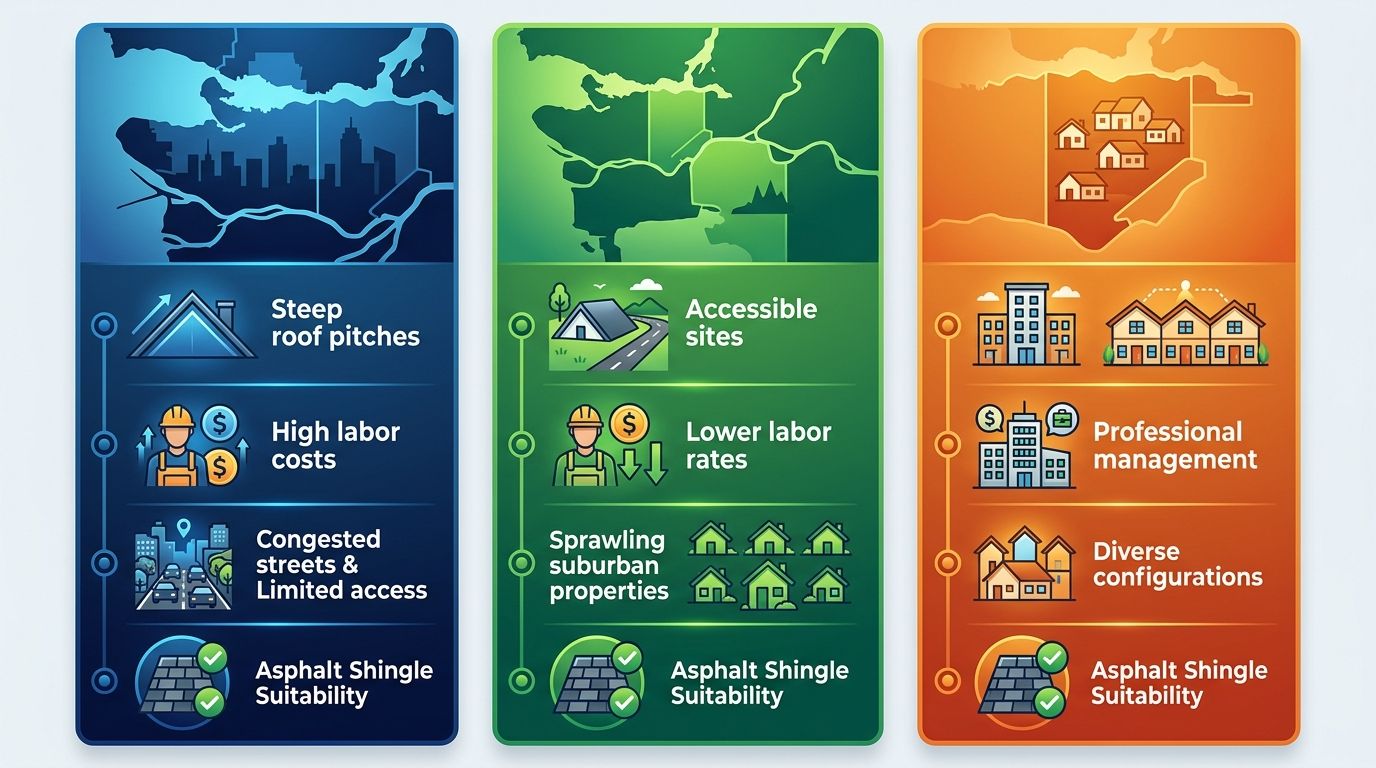
Roof replacement factors comparison across Vancouver areas
Contact Paragon Roofing BC for a free on-site inspection to get your precise roof replacement cost quote.
Available Roof Replacement Services in BC
At Paragon Roofing BC, we provide comprehensive roof replacement services across British Columbia as a Trusted Roofing Contractor Across British Columbia. Our full-service capabilities cover residential, commercial, and strata properties, with competitive roof replacement cost options starting from free on-site inspections that deliver detailed photo reports for accurate estimates. With decades of local experience in the Lower Mainland and BBB A+ accreditation, we ensure quality installations backed by warranties.
For full roof replacement in BC, we offer these specialized services:
- Roof replacement (removal & replacement): We remove old layers and install new systems, minimizing disruption while extending roof life, per Paragon Roofing BC’s internal service guidelines.
- Reroofing: Overlay compatible materials on existing structures for cost-effective renewal, ideal for asphalt or cedar upgrades.
- Asphalt shingle roof replacement: Popular for BC homes, we replace with durable shingles suited to wet climates; to understand roof replacement cost in Vancouver, request our free assessment.
- Metal roofing replacement: Install long-lasting panels resistant to coastal winds and rain, as highlighted in our Vancouver operations overview.
- Tile roofing replacement: Swap clay or concrete tiles for enhanced durability and aesthetics on sloped roofs.
- Cedar shake replacement: Convert traditional shakes to synthetic or treated options for fire safety and low maintenance.
- Solar roofing integration: Seamlessly add solar metal roofs with 18-25% efficiency, leveraging standing seam designs for Lower Mainland weather, per our specialized FAQs.
Warranties vary by manufacturer—check terms and contract. Estimates are subject to on-site inspection, and we maintain WorkSafeBC coverage and liability insurance. Contact us today for a free inspection to protect your investment. Protecting Your Home. Building Your Family’s Future. Perfection In Roofing.
Local Factors Affecting Roof Replacement Costs
Beyond national averages outlined in resources on roof replacement cost in Canada, local BC conditions drive significant variations in roof replacement costs. We break them down here, drawing from our decades of local experience across the Lower Mainland and British Columbia as a BBB A+ accredited, WorkSafeBC-covered contractor delivering Perfection In Roofing.
Key factors include:
- Labor Rates: Urban areas like Vancouver face higher rates and union influences compared to rural Interior BC, as industry benchmarks from Taves Roofing indicate. This elevates the roof replacement cost for projects in the Lower Mainland.
- Material Availability: Remote Northern BC sites incur delivery surcharges, unlike efficient access in the Lower Mainland, per our company’s localized homeowner guide from Paragon Roofing BC.
- Building Codes: Variations for snow load and wind resistance add complexity and expense to asphalt shingle roof replacement, especially in high-risk zones.
- Climate Impacts: Coastal rainy regions experience seasonal disruptions extending timelines versus drier Okanagan areas, increasing overall roof replacement expenses.
Our free on-site inspections provide tailored insights. Contact us for a competitive estimate based on your location—Protecting Your Home. Building Your Family’s Future. Estimates subject to on-site inspection and final scope confirmation.
Steps to Start Your Roof Replacement
Following signs that it’s time for roof replacement, we at Paragon Roofing BC begin with a free on-site inspection to assess your needs accurately. This initial step addresses common questions about starting the process and determining roof replacement cost in British Columbia.
- Schedule and Conduct Inspection: We start by arranging your free inspection. Our team performs a visual assessment of the current roof condition, identifies damage types like missing shingles or leaks, takes detailed photos for a report, and discusses findings with you, per a detailed industry process guide from SquareDash, a roofing contractor blog.
- Prepare Detailed Quote: Post-inspection, we deliver a competitive quote covering old roofing removal, asphalt shingle roof replacement, and other materials. It includes timeline estimates—tear-off (1 day), underlayment/deck repair (1 day), shingle installation (1-3 days)—as manufacturer benchmarks from TAMKO indicate, factoring in roof replacement cost in Canada.
- Handle Permits and Site Prep: We obtain necessary British Columbia permits and prepare the site by protecting landscaping and securing the area.
- Customer Approval: You review and approve the quote, select materials via consultation, and set the start date.
With decades of Lower Mainland experience and BBB A+ accreditation, we ensure a smooth start. Estimates are subject to on-site inspection. Protecting Your Home. Building Your Family’s Future. Once scheduled, our team executes the full replacement process.
Choosing the Right Roof Replacement Partner
When ready for roof replacement, your partner choice directly influences roof replacement cost. Partner with experienced local contractors like us across British Columbia to avoid costly errors.
We bring decades of experience in the Lower Mainland and BC, BBB A+ accreditation, and full-service residential, commercial, and strata capabilities, including Solar Integrated Roofing and asphalt shingle roof replacement. Paragon Roofing provides free on-site inspections with photo reports, warranty-backed installations, seasonal maintenance plans, and competitive pricing.
Estimates are subject to on-site inspection. Contact us for your free inspection to discuss roof replacement cost.
This article was researched and written with the assistance of AI tools.
Resources
- Get 2025 Vancouver Roof Replacement Cost Guide
- Explore Solar Metal Roofing for Vancouver Climates
- Learn Metro Vancouver Roof Replacement Cost Details
- Access Professional Roof Maintenance in Vancouver
- Discover 2025 Metal Roof Costs in Vancouver
- Explore Vancouver Roofing FAQs and Lifespan Tips
- Find Expert Vancouver Roofing Services by Paragon
- Compare Average BC Roof Replacement Costs by Material
- Estimate 2026 Canada Roof Replacement Costs Guide
- Calculate Canadian Roof Replacement Costs by Type
- Understand Complete Roof Replacement Timeline Process
- Master Step-by-Step Roof Replacement Process Guide
Table of Contents
- Exploring Cedar Shake Roofing in Vancouver
- Understanding Cedar Shake Roofing
- Benefits of Cedar Shake Roofing
- How Cedar Shake Roofing Works
- Best Practices for Cedar Shake Roofing
- Choosing Cedar Shake Roofing Solutions
Exploring Cedar Shake Roofing in Vancouver
In Vancouver’s rich architectural heritage, where natural beauty meets modern living, cedar shake roofing in Vancouver, British Columbia, stands out as a timeless choice. Homeowners and property managers appreciate these hand-split western red cedar shingles for their rustic charm and seamless integration with the coastal landscape. We at Paragon Roofing BC understand the unique needs of Vancouver properties, drawing on decades of local experience to deliver durable natural wood roofing solutions.
Cedar shake roofing thrives in British Columbia’s wet climate, offering superior weather resistance and natural insulation that enhances energy efficiency. Its popularity stems from the visual appeal that complements West Coast aesthetics, with many local homes featuring this material for its longevity when properly cared for. Key decision factors include cedar shake maintenance to prevent moss growth and ensure fire safety in urban settings, alongside initial costs balanced against long-term property value enhancement. According to industry insights, cedar roofs are prevalent in over 20% of BC’s traditional architecture, providing a premium option for both residential and commercial applications.
This guide explores the benefits, cedar shake installation processes, and best practices tailored to the Lower Mainland. From strata evaluations to multi-family projects, we preview how to assess suitability for your needs.
As trusted experts, we offer free on-site inspections and comprehensive roofing materials services in Vancouver to guide your decisions with warranty-backed assurance.
Understanding Cedar Shake Roofing
Cedar shake roofing in Vancouver, British Columbia, offers a timeless option for properties seeking natural durability and aesthetic appeal. As a trusted roofing contractor across British Columbia, we at Paragon Roofing BC specialize in cedar shake and wood roofing solutions, drawing on decades of local experience to guide property managers and homeowners through selection and implementation. This section explores the core elements of cedar shake systems, from their composition to their performance in our region’s demanding climate, helping you evaluate their value for residential, strata, and commercial applications.
Material Composition and Sourcing
Cedar shakes are hand-split from western red cedar heartwood, prized for its natural oils that provide resistance to decay and insects, ensuring a textured surface that enhances visual depth compared to machine-sawn shingles. This composition results in lightweight yet robust red cedar shingle systems, with thicknesses varying from 18 to 24 inches for optimal overlap and water shedding. The material’s low thermal conductivity also contributes to energy efficiency in building envelopes.
In British Columbia, sustainable sourcing practices dominate, with suppliers like those in Surrey adhering to Forest Practices Code standards to harvest from certified forests, minimizing environmental impact while supporting local economies. According to The Ultimate Guide to Roofing Materials in Vancouver, cedar remains a top choice for its regional availability, with trends showing increased demand for eco-friendly wood roofing amid growing sustainability mandates.
For practical implications, we recommend cedar shake installation from vetted British Columbia suppliers to ensure compliance with local building codes. Our free on-site inspections can assess sourcing feasibility, protecting your investment in authentic, renewably sourced materials for long-term property value.
Suitability for Vancouver Climate
Cedar shake excels in Vancouver’s wet, coastal environment due to its inherent moisture resistance, where tight-grained western red cedar expands minimally in humid conditions, preventing warping or cupping under prolonged rain exposure. The material’s natural tannins act as a preservative, offering better performance than many alternatives in areas with annual precipitation exceeding 1,200 mm, while its breathability allows vapor escape to reduce mold risks. Temperature fluctuations from mild winters to occasional freezes are mitigated by cedar’s flexibility, maintaining integrity without cracking.
Local relevance is evident in how cedar withstands coastal winds up to 100 km/h, as supported by Roofing Materials Guidelines from the National Roofing Contractors Association, which endorse treated wood shakes meeting ASTM standards for Class A fire resistance in humid zones like the Lower Mainland. This aligns with Vancouver’s climate, where synthetic options often falter in extreme wet-dry cycles.
Practically, cedar shake maintenance involves periodic treatments to preserve these traits, ensuring 30-50 years of service. We at Paragon Roofing BC integrate these considerations into our seasonal maintenance plans, safeguarding strata properties against leaks and extending roof lifespan in our variable weather.
Comparison to Synthetic Options
When evaluating cedar shake against synthetic alternatives, key criteria include aesthetics for curb appeal, durability under environmental stress, and overall cost for lifecycle value, particularly for heritage or commercial properties in Vancouver where authenticity drives ROI. Natural cedar provides an organic patina that evolves beautifully, contrasting with synthetics’ uniform appearance that can appear artificial over time. Environmental impact favors cedar’s renewability, reducing carbon footprints compared to petroleum-based composites.
The table below summarizes these aspects based on industry benchmarks:
| Feature | Natural Cedar Shake | Synthetic Composite |
|---|---|---|
| Aesthetic Appeal | Authentic, organic patina | Uniform, mimic appearance |
| Lifespan | 30-50 years (maintained) | 40-50 years |
| Sustainability | High (Renewable resource) | Lower (Petroleum-based) |
Interpreting these differences, cedar shake stands out for heritage properties seeking timeless appeal and sustainability, though it demands proactive upkeep. Synthetics suit budget-conscious projects but may not match cedar’s environmental credentials. For alternatives like asphalt shingle services in Vancouver, we offer consultations to balance cost with performance, emphasizing warranties that align with manufacturer terms after on-site evaluation.
Benefits of Cedar Shake Roofing
Cedar shake roofing offers enduring appeal and practical advantages for properties across Vancouver, British Columbia. We frequently recommend it to commercial managers seeking a blend of tradition and performance in strata and multi-family buildings. These benefits extend from visual charm to enhanced safety and efficiency, supporting long-term investment decisions.
Aesthetic and Value Enhancement
Cedar shake roofing in Vancouver, British Columbia, captures the natural elegance that complements the region’s architectural heritage, from heritage homes to modern commercial structures. Its textured, hand-split appearance adds warmth and character, elevating curb appeal in neighborhoods like Kitsilano or Gastown. We see cedar shake adding value to properties by creating a distinctive look that stands out against more uniform options.
Real estate data indicates that homes with premium wood roofs can see resale values increase by up to 5-7%, as buyers appreciate the rustic yet sophisticated finish. In our experience serving Lower Mainland properties, this enhancement translates to higher rental yields for multi-family units, where aesthetic differentiation attracts tenants. For commercial applications, the timeless style boosts brand image without the uniformity of standard materials.
Property managers benefit from this upgrade, as it justifies premium pricing in competitive markets. Our BBB-accredited team ensures installations that maximize these visual and financial gains, protecting your investment in Vancouver’s dynamic real estate landscape.
Fire Resistance and Safety Features
Addressing fire concerns is crucial in urban Vancouver settings, where dense commercial and residential zones demand compliant materials. Cedar shakes, when properly treated, meet British Columbia Building Code standards, providing reliable safety for strata and multi-family buildings. We prioritize fire-retardant cedar shingles to mitigate risks from wildfires or urban sparks, ensuring peace of mind for property operators.
Vancouver regulations, aligned with BCAB #1123, require 100% edge grain for premium grades, enhancing durability against ignition. Treatments like fire-retardant impregnation achieve Class B or C ratings, far surpassing untreated wood. The following table outlines key treatment options and their implications:
| Treatment Grade | Safety Rating | Cost Impact |
|---|---|---|
| Pressure-Treated Fire Retardant | Class B / Class C | +10-15% |
| Untreated Premium Grade | Standard Decay Resistance | Baseline |
While untreated options keep costs down, they pose higher risks in fire-prone areas, potentially increasing insurance premiums. Fire-retardant treatments offer optimal balance, reducing spread rates by up to 50% per code tests, though they add 10-15% to installation expenses. For commercial managers, selecting treated cedar aligns safety with budget, minimizing liability in high-occupancy buildings. Our warranty-backed services include these enhancements, ensuring code compliance without compromise.
Longevity and Insulation Advantages
Durable wood roof benefits shine through cedar shake’s impressive 30-50 year lifespan, especially with dedicated cedar shake maintenance. In Vancouver’s wet climate, regular care prevents moss buildup and rot, extending performance far beyond basic coverings. We advocate biannual inspections—spring and fall—to clear debris and apply sealants, as outlined in our maintenance programs.
Proper ventilation and edge-grain quality, per BC standards, resist moisture damage, while natural oils provide inherent rot resistance. Energy-wise, cedar’s thermal properties insulate effectively, cutting heating costs by 10-15% in multi-family setups compared to asphalt alternatives like asphalt shingle roofing services. This efficiency lowers utility bills and supports eco-friendly operations with minimal environmental impact from renewable sourcing.
For commercial properties, these advantages yield strong ROI through reduced repairs and energy savings. Strata councils appreciate the low-maintenance profile post-installation, backed by our seasonal plans. Investing in cedar shake delivers sustained value, safeguarding assets in British Columbia’s variable weather.
How Cedar Shake Roofing Works
Cedar shake roofing offers a timeless aesthetic and natural insulation properties that suit the Pacific Northwest climate. At Paragon Roofing BC, we specialize in delivering high-quality installations tailored to commercial and multi-family properties across the Lower Mainland. This section delves into the practical aspects of how cedar shake roofing functions, from initial setup to long-term care, ensuring durability and compliance with local building standards.
Installation Process Overview
Cedar shake roofing in Vancouver, British Columbia, begins with meticulous site preparation to guarantee a stable foundation. We start by inspecting the existing roof structure for any damage and removing old materials if necessary. Next, we apply an underlayment, such as asphalt-saturated felt, following roofing materials guidelines that recommend ASTM-compliant products for water resistance in humid conditions.
- Eave Starter Course: Lay the first row of shakes along the eaves, using corrosion-resistant nails spaced 1-2 inches from the edge to prevent splitting.
- Progressive Courses: Work upward in offset patterns, staggering joints by at least 1.5 inches to avoid leaks, typically covering 10 inches of exposure per row.
- Ridge and Hip Capping: Install pre-cut ridge shakes or caps, securing them with two nails each to seal the roof peak against wind-driven rain.
- Flashing Integration: Add metal flashing around penetrations like vents and chimneys, ensuring proper overlap for ventilation and drainage.
- Finishing Touches: Trim edges and inspect for uniformity, applying initial sealant if required.
These shake application techniques typically span 1-2 weeks for a standard commercial project, depending on roof size. For safety, we always use harnesses and scaffoldings during elevated work, prioritizing team and site protection. In commercial settings, we coordinate with property managers to minimize disruptions, often completing phases over weekends.
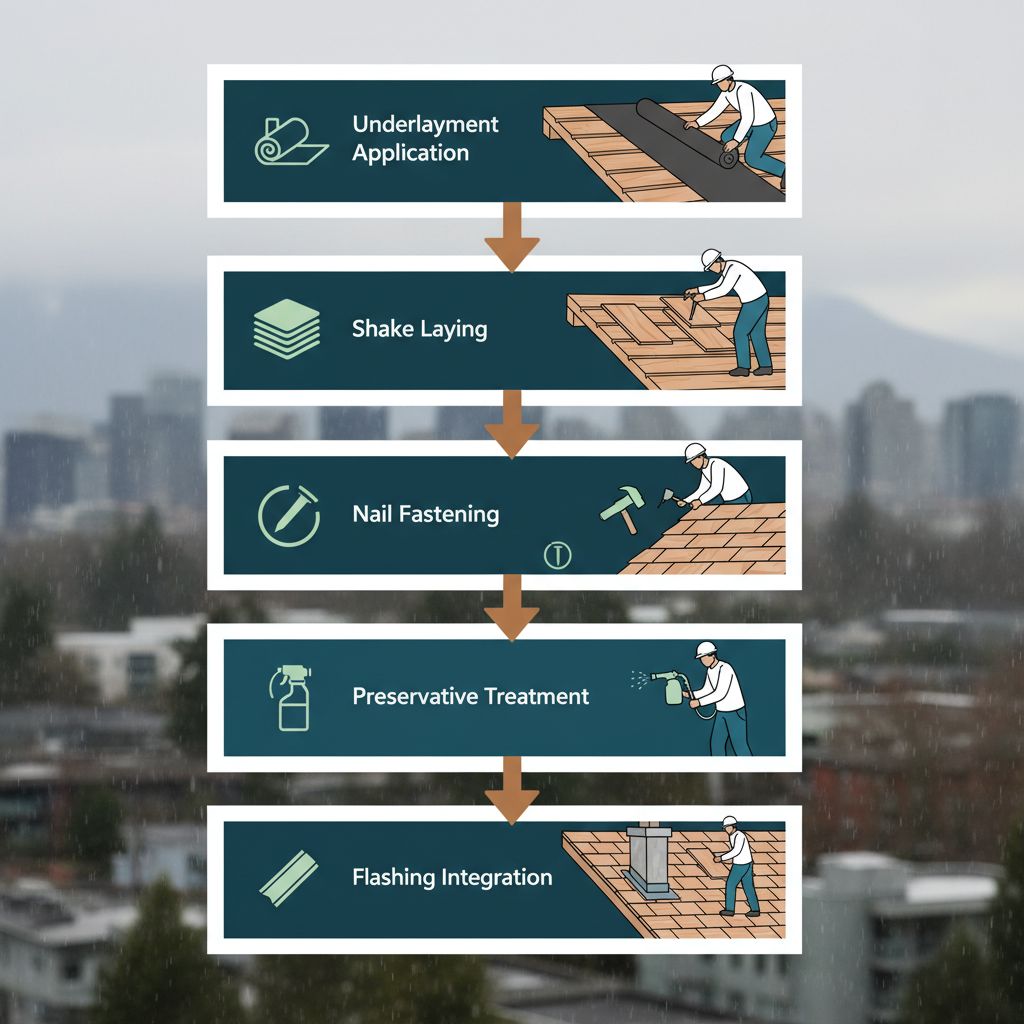
Step-by-step guide to cedar shake roofing installation process
This visual aids in understanding the layered approach that enhances airflow and weatherproofing, crucial for Vancouver’s frequent rains.
Treatment Methods for Durability
To combat British Columbia’s humid climate, cedar shakes require robust preservative treatments for wood roofs that prevent rot and fungal growth. We apply oil-based preservatives like copper naphthenate immediately after installation, penetrating the wood fibers to inhibit decay organisms. This treatment, often followed by semi-transparent stains, not only boosts UV resistance but also maintains the natural grain appearance.
Ongoing cedar shake maintenance involves biannual inspections to reapply coatings, especially after heavy winter exposure. For instance, penetrating sealants are brushed on every 3-5 years, extending lifespan to 30+ years when combined with proper ventilation. Unlike synthetic slate options from our services, which offer inherent weatherproofing without frequent upkeep, cedar demands these proactive steps but rewards with eco-friendly appeal.
In commercial applications, we schedule treatments during low-occupancy periods, ensuring minimal impact on operations. Safety considerations include using low-VOC products to protect workers and building occupants from fumes during application.
Integration with Existing Structures
Retrofitting cedar shakes onto various building types requires assessing structural load and aesthetic harmony. We evaluate roof pitch, ensuring slopes above 4:12 to facilitate drainage and prevent moisture accumulation. For multi-family units, common in Surrey and Burnaby, integration involves upgrading trusses if needed to support the material’s weight, around 3-4 pounds per square foot.
The following table outlines compatibility and challenges for different structures:
| Structure Type | Compatibility Level | Primary Integration Challenge |
|---|---|---|
| Residential Heritage | High | Ornate flashing matching |
| Multi-Family / Strata | High | Truss load reinforcement |
| Commercial Complex | Moderate | Large area ventilation |
Residential projects often proceed smoothly due to simpler access, while multi-family and commercial integrations benefit from our coordinated expertise, including temporary weather barriers. We address challenges through custom flashing and underlayment enhancements, drawing from NRCA standards for secure fastening—nailing into solid wood at least 1 inch above the butt line.
By leveraging decades of local experience, we ensure seamless adaptations that enhance property value without compromising existing infrastructure. This approach aligns with our commitment to protecting structures across the Lower Mainland.
As Trusted Roofing Contractor Across British Columbia, we handle these integrations with precision, focusing on long-term performance and client satisfaction.
Best Practices for Cedar Shake Roofing
Implementing cedar shake roofing in Vancouver, British Columbia, requires careful attention to sourcing, maintenance, and compliance to ensure longevity and performance in the region’s damp climate. We at Paragon Roofing BC draw on decades of local experience to guide property managers and homeowners toward durable solutions that align with commercial needs.
Sourcing and Supplier Selection
Sourcing high-quality materials forms the foundation of successful cedar shake roofing in Vancouver, British Columbia. Opt for certified suppliers in British Columbia that provide sustainably harvested western red cedar, known for its natural resistance to decay and insects. Local cedar suppliers in the Lower Mainland, such as those partnered with established roofing firms, ensure timely delivery and compliance with regional standards.
To select the right supplier, begin by verifying certifications from the Forest Stewardship Council and adherence to BC sourcing guidelines. Request samples to assess grain quality and thickness, typically 18-22 inches for premium shakes. We recommend reaching out to suppliers with proven track records in Metro Vancouver, where proximity reduces shipping costs and supports eco-friendly practices.
Benefits include enhanced durability against coastal moisture and potential cost savings through bulk purchasing from trusted local cedar suppliers. This approach minimizes risks of substandard materials that could lead to premature wear, ultimately protecting your investment in the Fraser Valley area.
Ongoing Maintenance Strategies
Effective cedar shake maintenance is essential for extending the lifespan of your roof amid British Columbia’s wet weather. Routine roof care protocols prevent issues like moss growth and rot, which are common in Vancouver’s humid environment. We offer seasonal maintenance plans tailored for strata properties, including free on-site inspections and detailed photo reports to track condition over time.
Key practices include annual visual checks for loose shakes or debris accumulation, followed by gentle cleaning to remove moss without damaging the wood. Apply preservative treatments every five years, focusing on oil-based stains that penetrate deeply for protection. For cleaning, use low-pressure washing biannually, avoiding harsh chemicals that strip natural oils.
The return on investment from proactive cedar shake maintenance is significant, often reducing repair costs by up to 30% over a decade. The following table outlines core practices:
| Task | Frequency | Key Objective |
|---|---|---|
| Visual Inspection | Annual | ID loose shakes/leaks |
| Moss Removal | Biannual | Prevent moisture trap |
| Stain/Sealer Reapplication | 3-5 Years | UV/Water barrier |
Implementing these steps ensures compliance with best practices while optimizing performance. Schedule professional assessments through our BBB A+ accredited services to maintain ventilation and avoid common pitfalls in cedar shake maintenance.
Compliance and Contractor Tips
Adhering to local regulations during cedar shake installation safeguards your property and ensures safety. In British Columbia, focus on fire-resistant treatments and proper underlayment as per the cedar shake building code, which requires offset joints of at least 40 mm between courses to prevent water infiltration. Ventilation standards mandate adequate airflow to combat moisture buildup in Vancouver’s climate.
Choose contractors with strata experience by reviewing portfolios and confirming WorkSafeBC coverage. We prioritize clear communication and manufacturer-compliant installations, providing proposals that detail scope and exclusions. Verify A+ BBB accreditation and request references from similar Lower Mainland projects.
Selecting experienced pros minimizes risks and supports long-term value. Our full-service capabilities, from inspections to warranty-backed work, help navigate codes efficiently, ensuring your cedar shake installation meets all requirements while aligning with budget goals.
Choosing Cedar Shake Roofing Solutions
Cedar shake roofing in Vancouver, British Columbia, stands out for its timeless appeal and natural resilience, offering property owners a blend of durability and aesthetic charm that enhances any structure in the Lower Mainland. At Paragon Roofing BC, we specialize in sustainable cedar solutions that withstand the region’s wet climate while elevating property values. Our expertise ensures that every project aligns with local building standards, providing long-lasting protection for residential and commercial buildings alike.
Key takeaways include the superior durability and beauty of cedar shakes, which require dedicated cedar shake maintenance to promote longevity and fire safety through regular treatments and inspections. Proper cedar shake installation, guided by the cedar shake installation code, guarantees optimal performance and compliance. For commercial properties, these features boost curb appeal and operational efficiency, making expert wood roofing care an investment in enduring quality.
We invite you to contact Paragon Roofing BC, your trusted roofing contractor across British Columbia, for a free on-site inspection and personalized quote. Our full-service commitment covers everything from sourcing to installation and ongoing maintenance plans, helping you protect your investment. Schedule today and discover how we can tailor cedar solutions to your needs.
Resources
- Get Comprehensive Roofing Materials and Services in Vancouver
- Discover Asphalt Shingle Installation and Repair Services Vancouver
- Explore Affordable Durable Asphalt Shingle Roofing for Vancouver
- Install Synthetic Slate Roofing for Weather-Resistant Vancouver Properties
- Schedule Tailored Roof Maintenance Plans for Vancouver Homes
- Choose Trusted Best Roofing Company in Vancouver
- Learn Optimal Roofing Materials Guide for Vancouver Climate
- Explore NRCA Guidelines on Steep-Slope Roofing Materials
- Understand BC Building Code for Cedar Shake Installation
- Learn Joint Offset Rules for Cedar Roof Shakes Code
Table of Contents
- The Importance of Roof Inspections in Vancouver
- Understanding Roof Inspections in Vancouver
- Key Benefits of Professional Roof Inspections in Vancouver
- How Professional Roof Inspections Work in Vancouver
- Best Practices for Roof Inspections and Maintenance in Vancouver
- Prioritizing Roof Health in Vancouver
The Importance of Roof Inspections in Vancouver
Vancouver’s relentless rainfall and damp climate pose unique challenges for homeowners, accelerating roof wear through heavy precipitation, moss accumulation, and potential leaks that can compromise structural integrity. A routine roof inspection in Vancouver is essential to safeguard against these elements, preventing minor issues from escalating into major, costly damages. For instance, undetected water intrusion during the wet season can lead to mold growth and weakened framing, underscoring the need for proactive measures in our region.
At Paragon Roofing BC, we emphasize the superiority of professional roof evaluations in Vancouver over DIY efforts, as our trained experts uncover hidden problems like attic ventilation deficiencies or flashing failures that untrained eyes might miss. With decades of local experience across the Lower Mainland and our BBB A+ accreditation, we offer free on-site inspections complete with detailed photo reports to empower homeowners. Considering the roof inspection cost in Vancouver, investing in these Vancouver roof assessment services early far outweighs the expense of extensive repairs, especially when spotting signs you need a roof inspection in Vancouver, such as granule loss or interior stains.
This guide explores the benefits of professional inspections, the step-by-step process, and best practices tailored to our coastal environment. Drawing from the professional roof inspection guide, we highlight how early detection aligns with industry standards to protect your investment and ensure long-term roof health.
Understanding Roof Inspections in Vancouver
At Paragon Roofing BC, we emphasize the importance of thorough roof inspections — including our comprehensive roof inspection — to safeguard homes against the region’s challenging weather. Vancouver’s frequent rain and mild winters demand proactive evaluations to prevent leaks and structural issues. Our free on-site inspections provide detailed photo reports, helping homeowners make informed decisions about maintenance and repairs.
What Roof Inspections Entail in Vancouver’s Climate
A standard roof inspection in Vancouver involves a systematic assessment of both exterior and interior elements to identify potential vulnerabilities. This includes visual checks of shingles for wear, flashing around chimneys and vents for cracks, and gutters for clogs that could lead to water buildup. Interior assessments focus on attics for signs of water intrusion, such as stains on ceilings or insulation dampness. According to comprehensive roofing guidelines, these inspections detect early issues like damaged shingles in about 70% of routine checks, preventing escalation.
In Vancouver’s rainy and temperate climate, the roof inspection process adapts to local conditions like persistent moisture and moss growth, which accelerate deterioration. Inspectors pay special attention to algae on north-facing slopes and fog-induced condensation that promotes mold. The local roof check procedures also evaluate drainage efficiency to handle heavy downpours, ensuring water flows away from the foundation. We at Paragon Roofing BC observe that these tailored elements extend roof life by addressing humidity-related risks unique to the Lower Mainland.
For instance, during a recent evaluation, our team identified subtle flashing gaps exacerbated by coastal winds, averting a potential leak before the next storm season.
Frequency and Timing for Vancouver Roofs
Recommended frequency for roof inspections in Vancouver aligns with the National Roofing Contractors Association guidelines, suggesting annual or bi-annual checks depending on roof age and exposure. Newer roofs under 10 years may need evaluations every two years, while older asphalt shingle systems require yearly reviews to monitor weathering. Post-storm inspections within 24-48 hours are crucial after intense rain events, which are common here.
Vancouver’s climate influences timing, with pre-winter assessments in fall ideal to prepare for freeze-thaw cycles and heavy precipitation. Triggers include visible signs you need a roof inspection in Vancouver, such as granule loss from shingles or sagging areas after windstorms. Routine checks mitigate the roof inspection cost in Vancouver, often under $300 for our free initial service, saving thousands in future repairs by catching issues early. The NRCA stresses that consistent timing based on seasonal changes enhances longevity in wet regions like ours.
A practical example: Homeowners scheduling bi-annual visits post-rainy season report fewer emergency calls, as we identify minor drainage tweaks that prevent major water damage.
Ventilation and Other Key Checks
Ventilation checks during a Vancouver roof inspection evaluate attic airflow through soffits, ridge vents, and exhaust fans to prevent heat buildup and moisture retention. Additional elements include moisture testing with tools like infrared cameras to detect hidden leaks, alongside structural integrity reviews of rafters and sheathing. These comprehensive assessments ensure balanced air circulation, reducing energy loss and mold risks.
In humid Vancouver conditions, improper ventilation exacerbates condensation from the area’s fog and rain, leading to attic humidity levels above 60% that foster mildew. Our evaluations also cover drainage systems and flashing integrity, critical for diverting water in this temperate zone. As noted in local winter prep resources, addressing ventilation early avoids ice dams and related damage during mild but wet winters. We incorporate moss removal assessments, a common local issue, to maintain clear pathways for air exchange.
For example, in a strata property inspection, we upgraded soffit vents, improving airflow and eliminating persistent dampness odors reported by residents.
Key Benefits of Professional Roof Inspections in Vancouver
At Paragon Roofing BC, we understand the unique challenges posed by Vancouver’s frequent rains and winds, making a professional roof inspection in Vancouver essential for protecting your home. These inspections reveal hidden issues early, preventing minor problems from turning into major expenses. While the roof inspection cost in Vancouver may seem like an upfront investment, it pales in comparison to the savings from avoiding extensive repairs. We offer complimentary on-site inspections to help homeowners get started without added costs.
Preventing Costly Damage and Repairs
Early detection through regular roof inspections is crucial in Vancouver’s wet climate, where moisture can quickly lead to leaks and structural issues. We help clients identify problems like damaged shingles or clogged gutters before they cause interior water damage or mold growth, which can cost thousands to remediate. For instance, after heavy storms common in our region, scheduling an inspection addresses signs you need a roof inspection in Vancouver, such as loose flashing or pooling water, preventing escalation.
Our seasonal maintenance plans, inspired by best practices in residential roofing maintenance, include thorough checks that extend roof life and reduce long-term repair needs. According to industry experts from the National Roofing Contractors Association (NRCA), timely post-storm inspections like ours significantly lower the risk of costly damage. By catching issues early, we ensure your roof remains resilient against the elements. One homeowner shared how our inspection prevented a leak from ruining their living room, saving them from a major overhaul.
Enhancing Safety and Longevity
Professional roof inspections in Vancouver enhance safety by spotting hazards that could lead to collapses or falls, especially on older structures battered by wind and rain. We prioritize checks for weak spots in cedar shakes or asphalt shingles, common local materials, to mitigate risks and promote secure living environments. Regular evaluations also improve ventilation, reducing energy loss and preventing ice dams during cooler months, which directly contributes to a safer home.
Through our biannual visits, we extend roof longevity by 5-10 years via proactive repairs, tailored to Vancouver’s demanding weather. This approach aligns with roofing guidelines resources that stress consistent upkeep for durability. Homeowners benefit from our expertise in moss removal and sealant reapplication, ensuring optimal performance. A strata property manager once noted our inspections helped avoid safety violations, giving them peace of mind for residents.
Insurance and Resale Value Advantages
Roof inspections provide valuable documentation for insurance claims in Vancouver, where storm damage is frequent, streamlining approvals and reducing out-of-pocket expenses. We deliver detailed photo reports from our free assessments, which insurers appreciate for verifying issues like wind-lifted tiles. This preparation can expedite payouts and protect your financial interests during unexpected events.
For resale, a current inspection report boosts property value by assuring buyers of the roof’s condition, a key factor in competitive markets. Our warranty-backed services add credibility, highlighting the roof’s remaining lifespan and maintenance history. Drawing from NRCA insights on storm roof repairs, we emphasize how professional checks support claims effectively. Vancouver homeowners often find that investing in our inspections enhances marketability, with one client crediting their report for a smoother sale and higher offer.
How Professional Roof Inspections Work in Vancouver
At Paragon Roofing BC, we conduct thorough roof inspections in Vancouver to ensure the longevity and safety of your property. These local roof diagnostic steps account for the region’s frequent rain and diverse building types, including strata and multifamily structures. Our process provides clear insights into potential issues, helping homeowners identify signs you need a roof inspection in Vancouver early.
The Step-by-Step Inspection Process
Our team begins a roof inspection in Vancouver with prompt site arrival, equipped with safety gear to navigate Vancouver’s varied terrains. We start with an exterior visual scan, checking shingles, flashing, and edges for wear, moss, or storm damage common in our wet climate. Next, we perform an attic interior review, assessing insulation, rafters, and any signs of leaks or rot.
Ventilation and chimney checks follow, ensuring proper airflow to prevent moisture buildup, which is crucial for Vancouver homes. For multifamily properties, we adapt our approach to cover multiple units safely, often coordinating with strata councils. Safety measures include harnesses, non-slip boots, and weather monitoring, especially during rainy seasons.
We use established Vancouver inspection procedures to document each stage, integrating multifamily roofing services for comprehensive coverage in shared buildings.
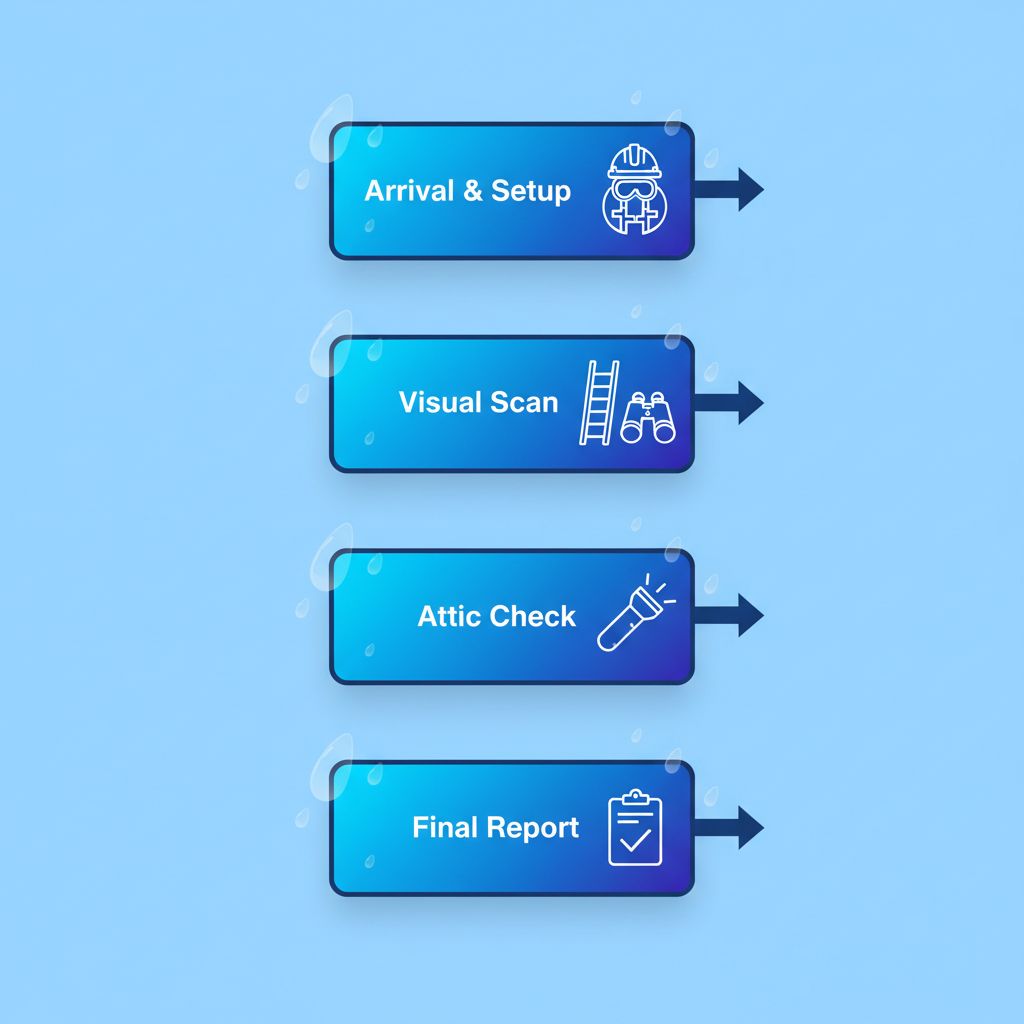
Horizontal process flow of professional roof inspections in Vancouver
This diagram illustrates our methodical approach, from initial assessment to final walkthrough, emphasizing efficiency and precision tailored to local conditions. By following these local roof diagnostic steps, we minimize disruptions while maximizing detection accuracy.
Tools and Techniques for Thorough Checks
In Vancouver’s challenging environment, our inspections incorporate advanced tools for reliable results. Ladders provide stable access for standard visual checks on sloped roofs, while drones survey hard-to-reach multi-story buildings, offering aerial views without risking technician safety. Thermal imaging detects hidden moisture beneath surfaces, ideal for identifying leaks before they worsen.
We adapt these techniques for sloped and flat roofs prevalent in strata complexes. Drone surveys enhance coverage for larger properties, and moisture meters pinpoint damp areas exacerbated by heavy rains. Our expertise ensures these methods align with industry standards, drawing from our commitment to thorough evaluations as a trusted local provider.
Tool choices depend on roof type and accessibility; for instance, drones excel in urban high-rises. The following table compares key methods we use:
| Method | Coverage | Cost Range | Best For |
|---|---|---|---|
| Visual Ladder Inspection | Surface-level visuals, edges | $200–$400 | Residential, low-rise homes |
| Drone Survey | Aerial overview, hard-to-reach | $300–$600 (roof inspection cost in Vancouver) | Multi-story, strata buildings |
| Thermal Imaging | Hidden moisture, insulation | $400–$700 | Flat roofs, leak detection |
These options reflect factors like property size and complexity, with drone methods often justified by their efficiency in preventing costly repairs. As noted in our maintenance guidelines, investing in advanced techniques supports long-term durability against Vancouver’s weather.
Interpreting Results and Next Steps
Post-inspection, we deliver a detailed report outlining findings, complete with photos and videos for transparency. Reports categorize issues by priority, from minor ventilation tweaks to urgent chimney repairs, tailored to Vancouver’s climate risks like moss accumulation.
We discuss results on-site or via follow-up, explaining visible damage indicators that signal the need for action. Recommendations include targeted maintenance or full repairs, integrated with our repair services for seamless progression.
For multifamily scenarios, we provide strata-specific advice on scheduling. Next steps might involve budgeting for fixes or enrolling in our seasonal plans, ensuring compliance with local standards. This thorough process empowers you to protect your investment proactively.
Best Practices for Roof Inspections and Maintenance in Vancouver
At Paragon Roofing BC, we understand the unique challenges Vancouver’s climate poses to roofing systems, from heavy rainfall to occasional heavy winds. Our experience across the Lower Mainland guides homeowners and property managers toward proactive care that prevents costly damage. Implementing best local inspection habits ensures your roof withstands the region’s persistent moisture, extending its lifespan and protecting your investment.
Recognizing Signs of Needed Inspections
Vancouver’s damp environment accelerates roof wear, making it essential to spot signs you need a roof inspection in Vancouver early. We advise homeowners to monitor for indicators that demand immediate attention, such as curling shingles that lift at edges due to moisture expansion, or granules accumulating in gutters from deteriorating asphalt surfaces. Water stains on ceilings or walls often signal interior leaks, while sagging areas in the roofline point to structural weakening from prolonged exposure to rain.
Other Vancouver roof warning signs include damaged flashing around chimneys and vents, which can allow water infiltration during storms, and moss growth that traps moisture and erodes underlying materials. Attending to these signs you need a roof inspection in Vancouver promptly avoids escalation into major repairs. By conducting a roof inspection in Vancouver at the first hint of trouble, you safeguard your home against the local wet weather.
To help identify these issues systematically, the following table outlines common signs and their implications:
| Sign | Description | Urgency Level |
|---|---|---|
| Curling Shingles | Edges lift due to moisture and temperature fluctuations, creating entry points for water | High |
| Granules in Gutters | Loose asphalt granules indicate surface erosion, reducing protective layers | Medium |
| Water Stains | Discoloration on interior surfaces from leaks, suggesting penetration | High |
| Missing Flashing | Gaps around penetrations like vents allow wind-driven rain to enter | High |
We recommend calling professionals when any high-urgency sign appears, as our free onsite inspections, inspired by regional practices in areas like South Surrey, provide detailed assessments to confirm the extent of damage.
Seasonal and Post-Storm Strategies
Timing is crucial for effective roof care in Vancouver’s mild but wet climate. We suggest scheduling inspections in spring to assess winter storm impacts and in fall to prepare for the rainy season, aligning with our biannual maintenance programs. These periods allow for clearing debris and addressing minor wear before conditions worsen.
Post-storm strategies are vital after heavy winds or prolonged rain, common in the Lower Mainland. Immediately inspect for loose shingles or displaced flashing, ensuring safe access by clearing pathways first. For strata properties, we coordinate group assessments to streamline recovery, drawing from our expertise in residential roof maintenance as outlined in local service guides.
Preparation enhances safety and thoroughness: secure ladders on stable ground and avoid inspections during active rain. These best practices minimize risks while maximizing the roof’s resilience against BC weather patterns.
Ongoing Maintenance After Inspections
Following an inspection, we outline targeted follow-up actions to maintain roof health amid Vancouver’s climate. Start with gutter cleaning twice yearly to prevent clogs from leaves and moss, which exacerbate drainage issues in our rainy locale. Ensure proper ventilation by checking ridge vents and soffits, as poor airflow traps humidity and promotes decay.
Our seasonal plans at Paragon Roofing BC, available for residential and strata properties, include proactive measures like sealant reapplication and minor repairs during routine visits. Budgeting for roof inspection cost in Vancouver is straightforward, with our free initial evaluations helping estimate ongoing needs without surprise expenses.
These routines yield benefits like reduced energy loss and fewer emergency calls, fostering long-term durability. By integrating commercial roofing repair in Vancouver into broader property management, businesses also benefit from our comprehensive approach tailored to local demands.
Prioritizing Roof Health in Vancouver
In summary, maintaining roof health through regular inspections is essential for Vancouver homeowners facing our region’s relentless rain and mild winters. We’ve covered the importance of roof inspection in Vancouver, from identifying signs you need a roof inspection in Vancouver like leaks or shingle wear to understanding the straightforward process and benefits of early detection. By prioritizing these practices, you protect your property from costly damage and ensure long-term durability in our wet climate.
Key takeaways include the value of professional vigilance tailored to local weather challenges, such as moss buildup and drainage issues highlighted in our seasonal preparation tips. Our comprehensive services, from inspections to full replacements, deliver reliable results backed by decades of experience. We offer free on-site assessments with transparent roof inspection cost in Vancouver, helping you budget effectively without surprises.
As a trusted roofing contractor across British Columbia, we invite you to contact our Vancouver office at 997 Seymour St Suite 250 or our Surrey location at 12233 92 Avenue for roofing services in South Surrey and beyond. Schedule your no-obligation consultation today to sustain your Vancouver roofs and embrace ongoing local roof care for a secure future.
Resources
- Get Specialized Multifamily Roofing Services in Vancouver
- Discover Experienced Roofing Services in South Surrey
- Obtain Expert Commercial Roofing Repair in Vancouver
- Schedule Proactive Residential Roof Maintenance in Vancouver
- Prepare Vancouver Roofs for Winter and Rainy Seasons
- Explore Comprehensive Vancouver Roofing Services by Experts
- Find Vancouver’s Best Roofing Company for Quality Installations
- Learn Professional Roof Inspection Guide for Safety
- Ensure Comprehensive Roof Inspections to Extend Lifespan
- Access NRCA Roofing Guidelines and Best Practices
- Guide to Safe Storm Roof Repairs and Assessments
