
Roof Repair Vancouver: Complete Guide to Fixing Leaks
Table of Contents
- Roof Repair in Vancouver: What Homeowners Need to Know
- Understanding Roof Issues in Vancouver’s Climate
- Common Roof Repair Services for Vancouver Homes
- How Vancouver’s Weather Affects Roof Longevity
- Steps to Address Roof Damage in Vancouver
- Protecting Your Home with Timely Roof Repairs
Roof Repair in Vancouver: What Homeowners Need to Know
When it comes to roof repair in Vancouver, our wet climate causes distinct challenges like leaks, moss, and shingle damage. Starting with a professional roof inspection can reveal hidden issues before they lead to costly structural damage and mold.
Common Roof Repair Issues in Vancouver
Our local weather often leads to roof leaks, missing or curled shingles, heavy moss growth, and damaged flashing. These problems can compromise your home’s protection and require prompt attention.
Signs You Need Roof Repairs
Watch for water stains on ceilings, granules in gutters, or daylight coming through the roof boards. Timely repairs extend your roof’s lifespan and are often more cost-effective than a full replacement.
As a licensed, BBB A+ rated contractor with decades of local experience, Paragon Roofing BC offers free on-site inspections with photo reports and strictly follows WorkSafeBC safety protocols.
Understanding Roof Issues in Vancouver’s Climate
Vancouver’s coastal climate creates unique challenges for residential roofing. Homeowners frequently need roof repair Vancouver services due to persistent moisture and environmental factors. Heavy rainfall, high humidity, salt air near the waterfront, and abundant tree debris all contribute to accelerated wear on roofing systems across the Lower Mainland.
We at Paragon Roofing BC have seen how these conditions affect different neighborhoods in distinct ways. The following table outlines common issues by area and the recommended actions to protect your home.
| Area | Climate Exposure | Common Roof Issues | Recommended Action |
|---|---|---|---|
| Downtown Vancouver | High rainfall, wind, and salt air | Leaks around vents, flashing failure, moss growth | Bi-annual inspections, prompt leak repair |
| West Side | Heavy rain, tree debris | Clogged gutters, shingle granule loss, leaks | Gutter cleaning, shingle replacement as needed |
| East Vancouver | Variable rainfall, older homes | Aged roofing materials, flashing deterioration | Full inspection, consider replacement if age >20 years |
Understanding these regional differences helps homeowners recognize early warning signs before minor problems escalate. The National Roofing Contractors Association recommends bi-annual inspections in high-moisture zones to catch seasonal damage early. For those needing roofing services in South Surrey, our team brings over two decades of local experience to every project.
Vancouver roof problems vary by neighborhood, but proactive roof maintenance Vancouver strategies make a significant difference. The next section explores practical inspection and repair services that keep your roof in peak condition year-round.
Common Roof Repair Services for Vancouver Homes
When heavy rain or coastal winds expose vulnerabilities, timely roof repair Vancouver homeowners trust becomes essential to prevent small issues from escalating. Our team at Paragon Roofing BC begins every job with a free on-site inspection and photo report, so you understand exactly what your roof needs before any work starts.
The most frequent residential repairs we handle include:
- Leak detection and repair – caused by damaged shingles, deteriorated flashing, or clogged gutters. We trace moisture entry and seal it at the source.
- Shingle replacement – matching your existing materials and securing weatherproof layers that stand up to BC’s wet climate.
- Flashing repair – resealing vulnerable points around chimneys, vents, and skylights to stop water intrusion.
- Gutter and downspout cleaning or repair – restoring proper drainage so runoff doesn’t back up under the roof edge.
- Ventilation and roof-vent repair – correcting airflow to prevent moisture buildup and ice dams that shorten roof life.
Each residential roof repair Vancouver service follows a diagnostic-first approach, and our technicians apply the same rigorous standards we use on larger projects. In addition to our residential services, we also provide commercial roof repair in Vancouver for business properties. Protecting Your Home. Building Your Family’s Future. — that’s the commitment behind every repair we complete.
Now that you know the common repairs, learn how our technicians carry out each service.
How Vancouver’s Weather Affects Roof Longevity
For homeowners looking into roof repair Vancouver, the local climate is the single most important factor dictating how long their roofing system will last. According to the British Columbia provincial government portal, the Lower Mainland experiences over 160 rainy days annually, creating persistent moisture that fuels moss growth, wood rot, and the gradual erosion of protective granules on asphalt shingles. Without consistent attention, this moisture exposure can cut a roof’s expected lifespan by several years.
Beyond the rain, clear summer skies bring strong UV radiation that breaks down roofing materials over time, causing fading, cracking, and embrittlement in both asphalt and cedar shakes. Winter introduces a damaging freeze-thaw cycle, where water seeps into tiny cracks, freezes and expands, then thaws—widening fissures and creating pathways for leaks. Poor attic ventilation and clogged gutters compound these effects, trapping moisture against the roof deck and accelerating structural wear regardless of the material chosen.
Choosing weather-resistant options like metal or high-grade asphalt can noticeably extend service life in Vancouver’s demanding conditions. At Paragon Roofing BC, our decades of local experience have shown that routine maintenance—twice-yearly inspections, gutter cleaning, and timely moss treatment—is the most effective defence against this climate. Protecting Your Home. Building Your Family’s Future. Understanding these regional weather challenges makes it clear why proactive care from a trusted, BBB A+ accredited contractor is essential for preserving your roof’s integrity.
Steps to Address Roof Damage in Vancouver
Discovering damage to your roof can be stressful, making timely roof repair in Vancouver essential to prevent further water intrusion. Following a clear, safety-first process helps you protect your property while avoiding unnecessary risks.
- Assess damage from the ground first. Never climb onto a damaged roof without proper fall protection and training. Look for missing shingles, sagging areas, or debris from a safe vantage point.
- Document everything you see. Take clear photos and write detailed notes about the damage. This creates a valuable record for your insurance provider and any contractor you consult.
- Contact a professional roofing contractor. We recommend reaching out immediately for a comprehensive inspection and repair estimate. Professional evaluation identifies hidden structural issues that ground-level observation cannot reveal.
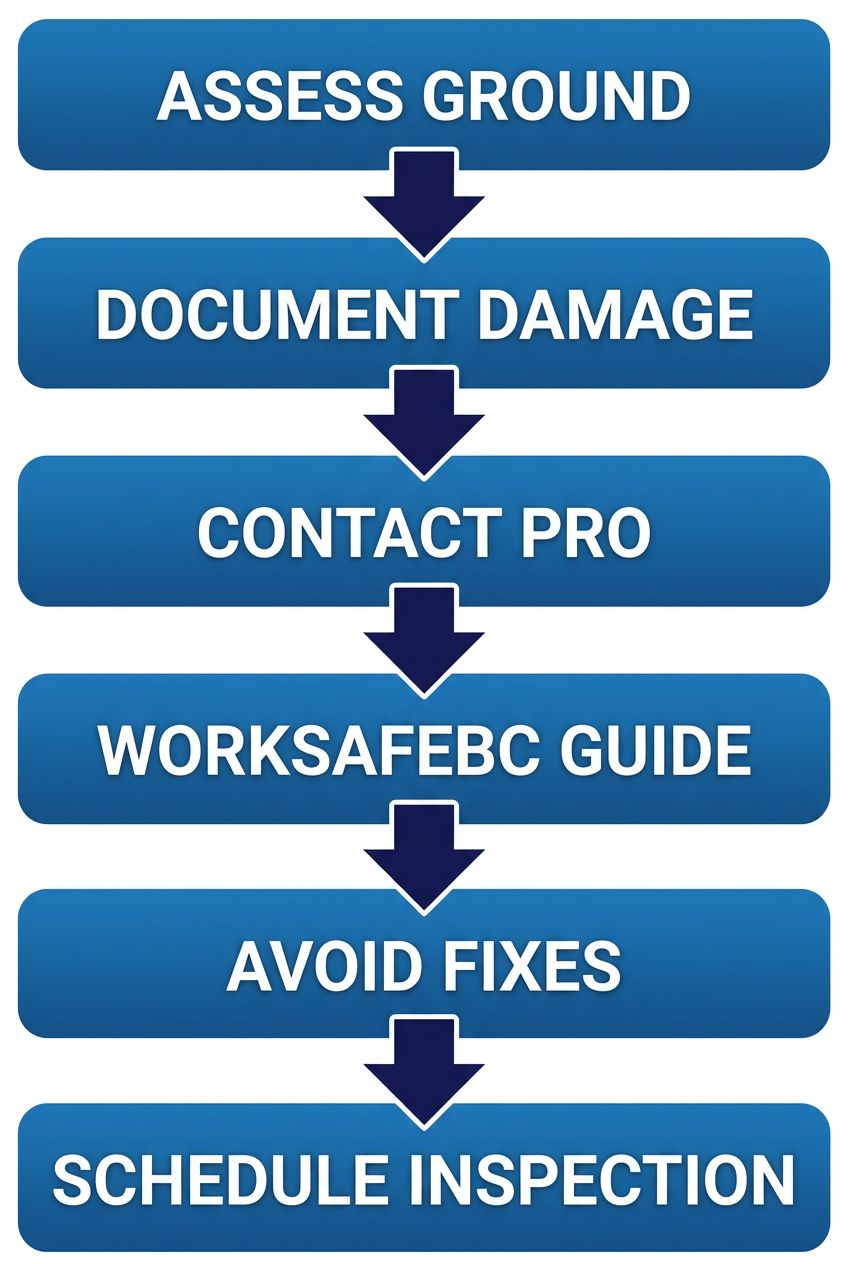
Six-step roof damage response process for Vancouver homeowners from Paragon Roofing BC.
Before anyone accesses your roof, review WorkSafeBC roof safety guidelines, which set the regulatory standard for fall protection and safe work practices in British Columbia. Avoid temporary fixes that may worsen the damage or create hazards — emergency tarping and repairs should always be left to qualified professionals who carry proper insurance and WorkSafeBC coverage.
Schedule your inspection promptly. Delaying repairs often leads to escalating water damage and costly structural deterioration. We encourage you to take the next step by booking a free on-site inspection with us, the Trusted Roofing Contractor Across British Columbia, so you can move forward with confidence and clarity.
Protecting Your Home with Timely Roof Repairs
When you need roof repair in Vancouver, acting quickly is one of the most important steps you can take toward Protecting Your Home. A small leak or loose shingle may seem minor, but coastal weather can turn it into widespread water damage in weeks. We follow best practices endorsed by the roofing industry association to catch these problems early.
Delaying work lets moisture reach sheathing, framing, and drywall, which threatens your family’s safety and raises repair costs. Timely roof repairs help protect interiors, preserve foundation integrity, and keep your home secure during British Columbia’s rainy seasons.
We offer a free on-site inspection that makes it easy to identify trouble before it grows. Prompt roof repair extends your roof’s lifespan and saves you money long-term, and that commitment to proactive care is what drives our work across the Lower Mainland.
Resources
- Get Expert Roofing Services in South Surrey
- Get Expert Commercial Roof Repair in Vancouver
- Get Professional Roof Inspection in Lower Mainland
- Get Emergency Roof Leak Repair in Vancouver
- Discover Warning Signs for Roof Inspection
- Get Expert Commercial Roof Inspection in Vancouver
- Discover Roof Inspection Pricing for Your Property
- Explore NRCA Resources for Roofing Professionals
- Access BC Government Services and Resources
- Explore WorkSafeBC Resources for Workplace Safety
Table of Contents
- Rotted Roof Decking in Vancouver: Identifying Damage Before It Spreads
- Recognizing Rotted Roof Decking: Key Signs and Inspection Tips
- Why Roof Decking Rots in Vancouver’s Climate – Common Causes
- Repair vs Replacement: Making the Right Choice for Your Roof Deck
- Reading the Internal Signs: Water Stains, Mold, and Attic Moisture
- When to Call a Professional – Structural Risks and Expert Inspections
- Taking Action on Rotted Roof Decking in Vancouver
Rotted Roof Decking in Vancouver: Identifying Damage Before It Spreads
Rotted roof decking—the plywood or oriented strand board (OSB) sheathing that supports shingles and underlayment—can silently threaten homes in our wet climate. In Vancouver, persistent rain creates ideal conditions for decking rot to develop rapidly after even minor leaks. We recommend watching for key indicators: water stains on ceilings, visible mold in attic spaces, curled or missing shingles, and springy or soft spots on the roof surface. Ceiling water damage—often appearing as brown rings or peeling paint—frequently points to compromised sheathing above. Left unaddressed, decayed sheathing can spread, risking structural failure and costly interior repairs.
Deciding whether to proceed with roof repair replacement in Vancouver requires professional assessment. At Paragon Roofing BC, our complimentary on-site inspections include photo reports that clearly document any damage, helping you understand your roof’s condition. We recommend scheduling an evaluation at the first sign of trouble—early detection can prevent further damage and protect your home for years to come.
As we explore the next section, we’ll examine how to weigh the benefits of targeted repairs against a full replacement for rotted decking, drawing on our guidance from the Should I Repair or Replace My Roof blog.
Recognizing Rotted Roof Decking: Key Signs and Inspection Tips
Rotted roof decking is one of the most serious structural issues a homeowner can face, and catching it early makes all the difference. The roof deck — the layer of sheathing beneath your shingles or membrane — provides the essential base that holds your entire roofing system together. When moisture penetrates this layer and becomes trapped, the wood begins to decay, compromising the integrity of your roof and potentially leading to extensive leaks. At Paragon Roofing BC, we help homeowners throughout the Lower Mainland identify these problems before they escalate.
Identifying rotted roof decking early can save thousands in repairs and prevent cascading damage to your home’s interior. The first clues often appear inside your living spaces long before you notice anything wrong from the outside. Recognizing these warning signs gives you the opportunity to act before minor rot becomes a full decking replacement.
Interior Signs of Roof Water Damage
Your ceilings and walls often tell the story of what is happening above them. Common signs of roof water damage visible from inside your home include:
- Water stains on ceilings, especially brown or copper-coloured rings that expand after heavy rain
- Ceiling water damage showing as peeling paint, bubbling plaster, or sagging drywall
- Musty odours in upper-floor rooms or the attic, indicating trapped moisture and possible mould growth
- Dark streaks running down walls from the ceiling line, suggesting water is travelling along framing members
When you notice any of these indicators, the decking above has likely already absorbed significant moisture. The sooner you investigate, the less extensive the damage tends to be.
Exterior and Attic Inspection Clues
From outside the home, several visible conditions point to potential decking rot beneath the surface. Curling or missing shingles create entry points where water can reach the wood sheathing. At the eaves, visibly rotting wood or soft fascia boards suggest moisture has been present for some time. If you walk on the roof and feel spongy areas or notice visible dips in the roofline, the decking underneath has almost certainly begun to decay.
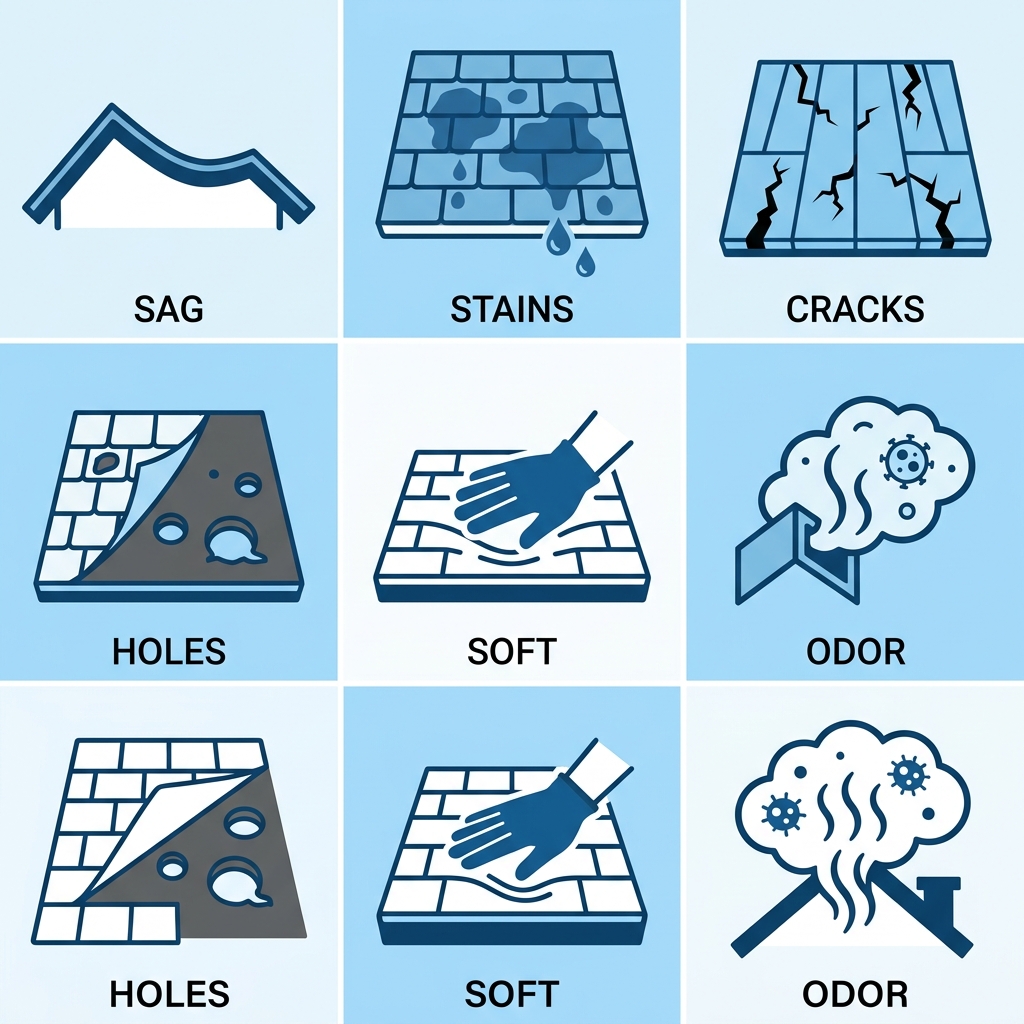
Essential signs of rotted roof decking for inspection
Inside the attic, our inspectors look for dark streaks on rafters, damp or clumped insulation, and rusty nail tips poking through the sheathing — all telltale signs that moisture has been present. In severe cases, you may even see daylight shining through gaps in the decking boards. These observations help us determine whether the rot is localized and repairable or whether full decking replacement is necessary.
For homebuyers, we strongly recommend including a professional inspection as part of the purchase process. A homebuyer roof inspection in Delta provides a detailed assessment of the roof’s condition, uncovering hidden issues that general home inspectors may miss. Our checklist covers everything from shingle condition and flashing integrity to attic moisture levels and ventilation performance.
Why Roof Decking Rots in Vancouver’s Climate – Common Causes
Rotted roof decking is a persistent and costly problem for homeowners across the Lower Mainland, and the unique climate of Metro Vancouver is almost perfectly engineered to create it. At Paragon Roofing BC, we have seen firsthand how the region’s relentless moisture systematically attacks the wooden structure that supports your shingles. The process is often silent, progressing for years before you notice the telltale signs inside your home, such as discolored patches on your ceilings. Understanding the root causes is the first step in protecting your property from this hidden decay.
Vancouver’s weather is the primary driver of roof board rot. The region receives over 1,300 mm of rain annually, spread across more than 150 rainy days, ensuring that roofing materials are subjected to near-constant moisture. This unrelenting dampness means that even a small breach in your roof’s waterproof barrier—a cracked shingle or a gap in the flashing—can allow enough water to soak the decking beneath. Because the air is already so humid, this trapped moisture evaporates very slowly, creating ideal conditions for fungi and wood rot to thrive for extended periods.
- Poor attic ventilation that traps warm, damp air against the underside of the decking.
- Aging asphalt shingles that lose their protective granules, allowing moisture penetration.
- Ice dams that form during rare but damaging cold snaps, forcing water to back up under the shingles.
- Inadequate or compressed insulation that causes warm indoor air to condense on the cold decking.
Repair vs Replacement: Making the Right Choice for Your Roof Deck
While surface damage like missing shingles is often visible from the ground, the true condition of your roof deck—the structural sheathing beneath the outer roofing material—tells a more critical story. In Vancouver, prolonged exposure to rain and dampness frequently leads to rotted roof decking, compromising the very foundation your shingles rely on. As we explained in the previous section, spotting signs of roof water damage early is vital, but determining whether a repair can suffice or a full replacement is necessary requires a closer look at what’s happening underneath.
Localized rot—confined to a small area with sound sheathing surrounding it—can frequently be repaired by cutting out the decayed section and installing new, code-compliant material. This approach is viable when the rot hasn’t spread and the adjacent roof deck still offers reliable structural support. The decision hinges on a professional evaluation following nrca roofing resources and industry best practices. Only a thorough on-site inspection can confirm the true condition of your roof deck.
Reading the Internal Signs: Water Stains, Mold, and Attic Moisture
While the exterior of your roof may be the first place you notice missing shingles or debris, the most telling signs of roof water damage often appear inside your home. At Paragon Roofing BC, we have learned that a careful interior inspection can reveal hidden leaks before they escalate into major structural issues.
Water stains on your ceiling are one of the most common interior indicators. Recognition of these differences helps determine whether you need immediate emergency repair or a more routine evaluation. Persistent moisture can also fuel mold growth, which may appear as dark spots on ceilings, walls, or attic sheathing. If you notice soft or crumbling wood in your attic, rotted roof decking may already be compromising your roof’s structural integrity. Spotting any of these signs early allows for less invasive and more cost-effective repairs. If you have observed any of these internal damage signals, the next step is a comprehensive roof certification inspection.
When to Call a Professional – Structural Risks and Expert Inspections
While some roof damage is visible from the ground, structural issues like rotted roof decking demand an expert eye. Structural wood rot often develops silently. DIY inspections are insufficient for structural assessment. A certified professional is necessary because the most telling damage often hides beneath the surface. In British Columbia, requirements outlined by BC government services emphasize structural integrity and roof loading, reinforcing why expert inspections are critical.
Taking Action on Rotted Roof Decking in Vancouver
When rotted roof decking is discovered in a Vancouver home, immediate action is critical. Moisture can rapidly spread to joists and interior framing, turning a localized problem into a structural emergency. Do not attempt self-repair—scheduling a professional roof inspection is the first step.
- Stop active leaks safely if possible.
- Take photographs of all visible damage.
- Contact a licensed roofing contractor, like Paragon Roofing BC, for an inspection.
Resources
- Get Comprehensive Roof Inspection Checklist for Delta Homebuyers
- Get Bi-Annual Roof Inspection Schedule for Burnaby Homes
- Roof Repair or Replacement Guide for Vancouver’s Rainy Climate
- Get Superior Torch-On Roofing for Flat Roofs in BC
- Get Torch-On Roof Repair with Free Inspection in Vancouver
- Bi-Annual Roof Inspection to Extend Roof Life in Vancouver
- Get Torch-On Roofing Cost Guide for Vancouver Areas
- Get NRCA Roofing Resources and Training
- Get LeakFREE Roof Certification for Home Inspections
- Access BC Government Services and Job Listings
Table of Contents
- Evaluating Torch-On and TPO Roofing for Flat Roofs in Vancouver
- Flat Roofing Challenges and Solutions in the Lower Mainland
- Torch-On and TPO Roofing Services We Offer
- Key Factors When Choosing Between Torch-On and TPO in BC
- How to Start Your Flat Roof Replacement Project
- Making the Right Choice for Your Vancouver Flat Roof
Evaluating Torch-On and TPO Roofing for Flat Roofs in Vancouver
When commercial property owners weigh torch-on vs TPO roofing for flat roofs, the choice often hinges on durability and long-term maintenance. Both torch-on (modified bitumen) and TPO are proven flat roof membrane systems that serve Vancouver’s rainy coastal environment well, but they differ in installation, care, and how they age.
A flat roof membrane lifespan can vary considerably: torch-on roofs typically perform for 15 to 20 years, while a TPO system, when installed correctly in Vancouver conditions, can often reach 20 to 30 years. Maintenance demands also diverge. According to our internal guidelines, TPO relies on periodic seam inspections to catch any gaps before they become leaks, whereas torch-on applications may need recoating every five to seven years to counter UV degradation. For commercial roofing maintenance Vancouver property managers have learned that TPO’s reflective top layer can also cut summer cooling costs—a practical benefit in the Lower Mainland.
We recommend that building owners consult a professional for an on-site assessment before deciding. For sloped roofs, Paragon also provides asphalt shingle installation in Vancouver, ensuring a full range of roofing solutions. Always remember that warranty terms vary; review your written contract for specific coverage.
Flat Roofing Challenges and Solutions in the Lower Mainland
The Lower Mainland’s persistent rainfall and cool, damp conditions create specific challenges for flat roof systems. Ponding water is a frequent issue when drainage is insufficient, and Vancouver’s wet winters test every seam and penetration point on a membrane. Over time, standing water can accelerate membrane aging and lead to leaks if the roof structure does not maintain positive drainage. We address this through tapered insulation packages and properly sized drains that meet the minimum slope requirements set out in the BC Building Code.
Membrane seam integrity is another critical factor. In consistently moist conditions, seams that rely on adhesives can weaken and separate. That is why heat-welded TPO and torch-applied modified bitumen are two of the most reliable flat roofing systems across the region. When we compare torch-on vs TPO roofing for flat roofs, both materials perform well, but they differ in key areas. The table below outlines the characteristics that matter most in our coastal climate.
Torch-On vs TPO Flat Roofing Comparison for Vancouver
| Feature | Torch-On (Modified Bitumen) | TPO (Thermoplastic Polyolefin) |
|---|---|---|
| Typical Lifespan | 15–20 years with proper maintenance | 20–30 years depending on quality and installation |
| Puncture Resistance | High; reinforced with fiberglass or polyester mat | Moderate; reinforced with scrim for improved tear strength |
| Energy Efficiency (Reflectivity) | Low; dark surfaces absorb heat (can be coated) | High; white membrane reflects sunlight, reduces cooling costs |
| Climate Suitability for Vancouver | Excellent; proven in high-rainfall, cool climates | Good; performs well in wet conditions with proper seams |
| Installation Method | Torch-applied (open flame), requires skilled labour | Heat-welded or adhesive, no open flame |
| Repair & Maintenance | Easy to patch; annual inspection recommended | Moderate; membrane can be repaired with welding tools |
| Environmental Impact | Contains asphalt; can be recycled in some facilities | Fully recyclable; energy-saving white membrane reduces carbon footprint |
These comparisons are based on industry guidelines published by the National Roofing Contractors Association and local code requirements administered by the Government of British Columbia. Actual performance will always vary with installation quality and the level of ongoing maintenance.
Flat roofing material comparison for the Lower Mainland
Regardless of which system you select, commercial roofing maintenance in Vancouver is the single most important factor for extending a flat roof membrane lifespan. Even top-tier membranes can fail prematurely if drains clog, punctures go unrepaired, or flashing details are neglected. We recommend annual inspections ahead of the fall rainy season to catch small issues before they become costly repairs. Our team at Paragon Roofing BC provides free flat roof evaluations and warranty-backed installations, so reach out anytime to discuss the right system for your building. Actual results depend on workmanship and a consistent care schedule, but the right material paired with proactive upkeep will serve you well for decades.
Both torch-on and TPO systems offer proven solutions for the Lower Mainland’s distinct climate. The decision ultimately hinges on your property’s exposure, energy goals, and maintenance expectations, and all those variables inform the broader scope of your upcoming project.
Torch-On and TPO Roofing Services We Offer
Now we explore the specific services we offer for two of the most popular flat roof systems. When considering torch-on vs TPO roofing for flat roofs, property managers and homeowners often weigh durability against energy efficiency—and at Paragon Roofing BC, we provide expert installation, repair, and maintenance for both.
Our torch-on modified bitumen system uses a heat-applied, two-ply construction that delivers proven puncture resistance and a typical lifespan of 15–20 years, according to Paragon Roofing BC’s in-house technical resources. We handle new torch-on installations, complete removal and replacement, targeted leak repairs, and preventive maintenance programs designed to maximize your flat roof membrane lifespan. Whether you own a commercial warehouse or a multi-family strata, our crew brings decades of local experience to every low-slope project.
For clients seeking a torch-on alternative, our TPO single-ply membrane offers heat-welded seams and a reflective white surface that helps lower cooling costs. Paragon Roofing BC’s product knowledge indicates TPO can reliably serve 20–30 years when properly maintained. Our TPO services include full re-roofing, storm-damage repair, seasonal tune-ups, and commercial roofing maintenance in Vancouver tailored to high-traffic roofs, with free on-site inspections and photo reports before any work begins.
Whether you choose torch-on or TPO, every system we install is backed by manufacturer warranties. In addition to our flat-roofing services, we also provide expert asphalt shingle installation in Vancouver and throughout the Lower Mainland—making Paragon Roofing BC your Trusted Roofing Contractor Across British Columbia.
Key Factors When Choosing Between Torch-On and TPO in BC
Once you understand the basic systems, the following factors will help you decide which is right for your BC property. Choosing between torch-on vs TPO roofing for flat roofs in BC involves evaluating local building regulations, climate demands, and installation safety. The BC Building Code roofing defines fire and wind standards that both torch-on and TPO must meet, but verification depends on product certifications. Per the BC Building Code, membrane assemblies are classified by fire resistance and must withstand wind-uplift forces calculated for each building’s height and geographic zone.
WorkSafeBC requires that hot work permits be issued for torch-applied systems due to open-flame hazards, a process TPO’s heat-welded installation avoids, simplifying site safety compliance for many projects. For Vancouver and Lower Mainland properties, TPO’s reflective surface reduces heat absorption on sun-exposed roofs, while torch-on’s seamless application often provides superior waterproofing through our heavy rain and snow seasons. Typical flat roof membrane lifespan benchmarks range from 20 to 30 years for TPO and 15 to 20 years for torch-on with proper maintenance. For commercial roofing maintenance Vancouver strata and building operators count on, Paragon Roofing BC recommends periodic seam inspections for TPO and crack monitoring for torch-on systems, both of which benefit from our seasonal maintenance plans.
These BC-specific considerations set the stage for understanding installation differences and long-term maintenance needs.
How to Start Your Flat Roof Replacement Project
To begin your flat roof replacement project with confidence, contact Paragon Roofing BC for a thorough inspection. The assessment offers an ideal opportunity to resolve the question of torch-on vs TPO roofing for flat roofs—both popular single-ply and modified-bitumen options that our team will evaluate with you on-site.
The first step is scheduling your complimentary on-site inspection. Our professionals will assess your roof structure, identify any underlying issues, and document their findings with a detailed photo report that shows the current condition of your deck and membrane. This transparent record helps you understand exactly what needs attention and why.
After reviewing the report together, we discuss the flat roof materials best suited to your property. Whether single-ply systems such as TPO or robust torch-on modified bitumen, each choice plays a key role in flat roof membrane lifespan. For commercial clients, we also outline what ongoing care looks like in commercial roofing maintenance Vancouver programs, reinforcing long-term durability and code compliance.
Once you have settled on the right approach, Paragon Roofing BC delivers a transparent, competitive quote with no hidden fees. As a roofing contractor association certification holder and a Trusted Roofing Contractor Across British Columbia, we back every installation with warranty-backed workmanship—Protecting Your Home. Building Your Family’s Future.
Making the Right Choice for Your Vancouver Flat Roof
When comparing torch-on vs TPO roofing for flat roofs in our rainy climate, we consider how each system handles persistent moisture. TPO offers high reflectivity and energy efficiency, while modified bitumen provides superior puncture resistance for heavy snow, with a typical flat roof membrane lifespan of 20 to 30 years when professional installation includes regular commercial roofing maintenance in Vancouver. Our recommendation is to prioritize contractors who verify WorkSafeBC roofing compliance—it confirms the team carries proper safety coverage—and who back their work with warranty protection plus a free on-site inspection, giving you confidence in a durable, low-maintenance investment.
Resources
- Get Expert Asphalt Shingle Installation in Vancouver
- Compare Asphalt Shingle Types for Vancouver Roofing
- Find Comprehensive Roofing Services in Vancouver
- Discover Best Practices for Asphalt Shingle Installation in Vancouver
- Find Roof Inspection and Maintenance Services in Vancouver
- Find Torch-On Roofing for Flat Roofs in Vancouver
- Compare TPO Roofing Costs and Installers in Vancouver
- Discover BC Building Codes and Standards for Construction
- Get Roofing Certification and Training from NRCA
- Learn WorkSafeBC Safety Requirements for Roofing Contractors
Table of Contents
- A Port Moody Roofing Company Trusted Across the Lower Mainland
- Roofing Services Across Port Moody Neighbourhoods
- Comprehensive Roofing Solutions for Port Moody Properties
- Port Moody’s Climate Requires Specialized Systems
- Scheduling Your Port Moody Roof Assessment
- Trusted Port Moody Roofing Expertise
A Port Moody Roofing Company Trusted Across the Lower Mainland
As a trusted Port Moody roofing company with Lower Mainland roots spanning decades, Paragon Roofing BC combines local climate expertise with full-service capability. Our BBB A+ accreditation and manufacturer-backed warranties reflect our commitment to quality and transparency. As a Port Moody roofing company, we manage projects of every scale. We provide a free roof inspection Port Moody with a photo report and clear scope of work—no obligation. We align with NRCA professional standards and offer NRCIA roof certification for objective durability assurance. When urgent issues arise, our emergency roof repair Port Moody services ensure rapid, reliable response. Explore our complete roofing services in Port Moody to see how we protect your property.
Start with a no-obligation assessment. Homeowners, strata, and commercial managers across the region trust our thorough approach.
Roofing Services Across Port Moody Neighbourhoods
As a locally focused port moody roofing company, we understand that each community within the city presents distinct roofing challenges and material preferences.
In Heritage Mountain, steep slopes and heavy tree coverage demand careful material selection. We recommend cedar shake or metal roofing for durability and aesthetic harmony, while our crews follow strict safety harness protocols to navigate the terrain.
In College Park, many older homes and strata-governed properties require asphalt shingle or SBS modified bitumen solutions. Our team coordinates closely with HOAs and manages flat or low-slope annexes, ensuring compliance and smooth project execution.
The following table outlines how roofing needs vary across Port Moody neighbourhoods:
| Neighbourhood | Typical Roofing Systems | Key Considerations |
|---|---|---|
| Heritage Mountain | Cedar Shake, Metal Roofing | Steep slopes requiring harnesses, heavy tree coverage promoting moss, aesthetic consistency with mountainous terrain. |
| College Park | Asphalt Shingles, SBS Modified Bitumen | Older housing stock, HOA coordination, flat/low-slope annexes. |
| Port Moody Centre | Asphalt Shingles, TPO, EPDM | Mixed-use/commercial exposure, drainage on near-level roofs, historical facade regulations. |
| Glenayre | Cedar Shake, Asphalt Shingles | Mature tree canopy, frequent moss and debris management, steep lot underpinnings. |
| Anmore / Belcarra Bay | Cedar Shake, Synthetic Slate, Metal Roofing | High wind exposure off the inlet, precipitation rates, custom architectural designs. |
In Port Moody Centre, mixed-use and commercial buildings rely on durable flat-roof systems like TPO and EPDM. We navigate historical facade regulations carefully, ensuring modern roofing installations respect the area’s architectural character while managing drainage on near-level roofs.
In Glenayre, a mature tree canopy leads to constant moss and debris. Our roof inspection Port Moody service includes biocide treatments and gutter cleaning for cedar shake and asphalt shingle roofs, and we offer ongoing maintenance plans to preserve roof integrity.
Across Anmore and Belcarra Bay, high wind exposure off the inlet and significant precipitation demand resilient systems. We install metal roofing or synthetic slate to meet NRCA wind uplift standards, and our emergency roof repair Port Moody team remains on standby for sudden storm damage.
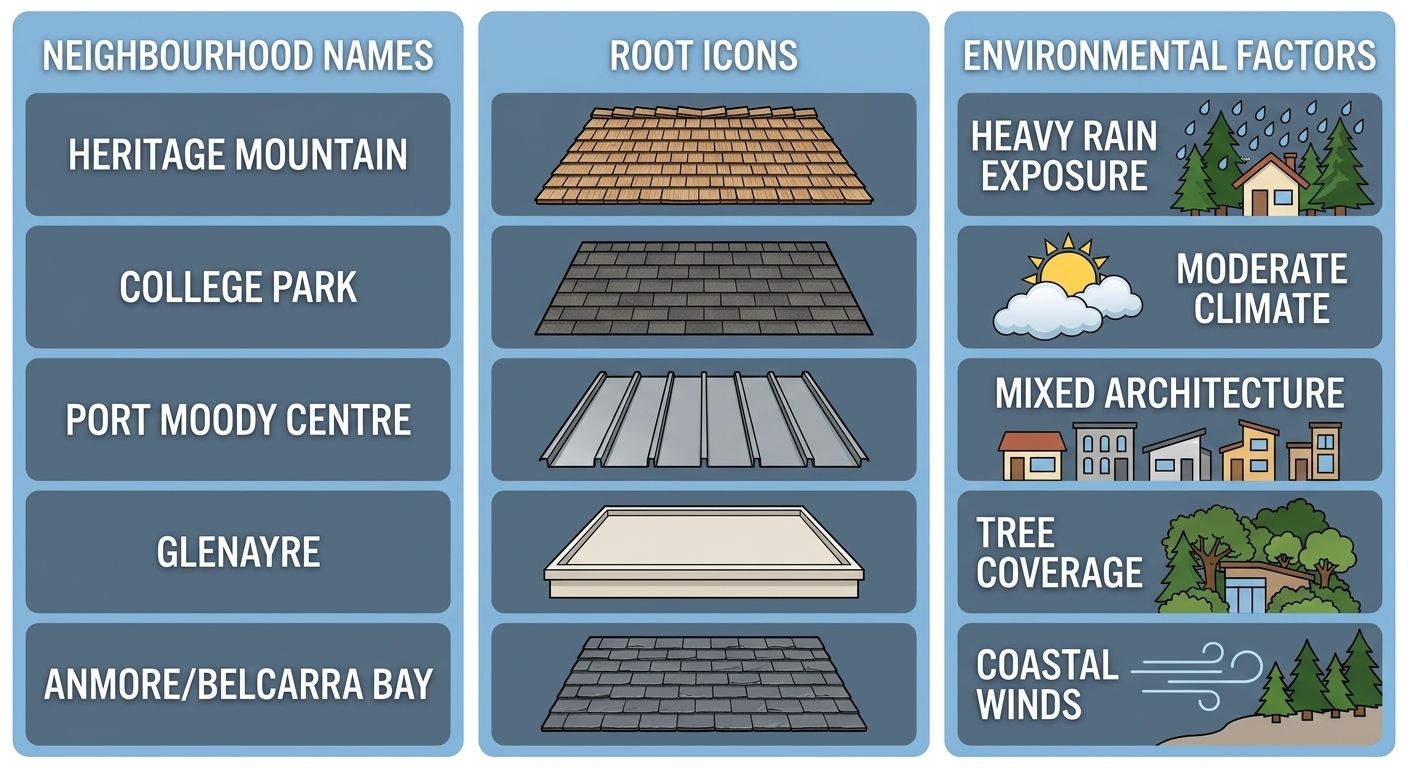
No matter which neighbourhood you call home, our specialized local expertise extends across the region—explore our roofing services in Coquitlam when your property needs reach beyond Port Moody.
Comprehensive Roofing Solutions for Port Moody Properties
As a comprehensive port moody roofing company, Paragon Roofing BC offers full-service roofing solutions for Port Moody properties. With decades of experience across the Lower Mainland, we bring deep familiarity with local architectural styles, from Heritage Mountain homes to Inlet Centre condos and commercial buildings on Murray Street.
We serve residential, commercial, and strata properties across Port Moody, installing a full spectrum of NRCA-approved roofing systems—asphalt shingles, metal, cedar, tile, and flat/low-slope options like TPO, PVC, EPDM, and modified bitumen—with material choices tailored to Port Moody’s heavy rainfall. Drainage components (gutters, downspouts) are integrated to manage the region’s moisture.
Every Port Moody project begins with a thorough roof inspection Port Moody, including a free on-site evaluation and photo report. We also handle urgent needs with emergency roof repair Port Moody services, seasonal maintenance to extend roof life, and proactive leak repairs.
Beyond structural roofing, we offer skylight repair and installation, chimney and masonry restoration, and ventilation/roof-vent upgrades. For eco-conscious property owners, solar roofing and green roofing systems are also available, aligning with Port Moody’s commitment to sustainability.
Every project begins with a no-obligation, free on-site inspection and photo report—our way of delivering fair, transparent estimates. With decades of experience serving Metro Vancouver, we understand how coastal weather challenges demand comprehensive solutions that keep Port Moody roofs performing year-round.
Port Moody’s Climate Requires Specialized Systems
Not every roof can withstand Port Moody’s specific climate demands. As a local port moody roofing company, Paragon Roofing BC understands that standard roofing systems often fall short here. With annual precipitation exceeding 1,800 mm, most falling between October and March, persistent moisture threatens roof integrity. Frequent freeze-thaw cycles cause materials to expand and contract, while high humidity and salt-laden air from Burrard Inlet accelerate corrosion of metal flashings. These combined factors require systems specifically engineered for coastal BC conditions.
We rely on our own technical resources to specify reinforced underlayments and ice-and-water shields for every project, and we follow the NRCA rainfall-design guidelines. As roofing industry resources specify, our installations prioritize superior water-shedding capacity. For flat roofs, EPDM or modified bitumen membranes with corrosion-resistant flashings, plus built-up roofing, offer superior rain resistance. Advanced underlayments in our shingle installations add extra protection. When torrential rain leads to emergency roof repair in Port Moody, we respond immediately to prevent interior damage. Understanding all this starts with a thorough roof inspection in Port Moody.
Scheduling Your Port Moody Roof Assessment
For homeowners in Port Moody, booking a professional roof assessment with a trusted port moody roofing company is the critical first step toward protecting your home. Our streamlined process gives you a clear, no-obligation picture of your roof’s health so you can decide with confidence.
After you contact us—most callbacks within 2–4 business hours—we schedule a free visit. Our company estimator arrives in a branded vehicle and performs a thorough top-side and interior inspection using ladders or drones. During your roof inspection Port Moody, we actively look for moss, algae, and saturated underlayment from Port Moody’s heavy rainfall, paying special attention to roof features often vulnerable to the area’s microclimate. After your roof inspection Port Moody, you’ll receive a comprehensive photo report and a detailed, no-obligation estimate, valid for 30 days, within 24 hours.
We understand Port Moody’s sloped terrain and wet seasons demand tailored assessments. For stratas or steep hillside properties, we coordinate directly with your property manager. For the highest documentation, we can arrange a roof certification inspection after the initial visit. All assessors are insured employees—never subcontractors. Schedule your free, no-obligation assessment today.
Trusted Port Moody Roofing Expertise
As a trusted Port Moody roofing company, Paragon Roofing BC has served local homeowners for decades. Our team understands the damp climate that accelerates moss and algae on asphalt shingles and the sloped roof designs common in Heritage Mountain. We offer free photo reports with every roof inspection Port Moody homeowners can count on, backed by WorkSafeBC safety regulations, liability insurance, and warranties. When storms hit, our locally based crews provide emergency roof repair Port Moody residents rely on.
This article was researched and written with the assistance of AI tools.
Resources
- Find Trusted Port Moody Roofing and Emergency Services
- Trusted Coquitlam Roofing Services since 2000
- Discover Top Roofing Materials for Vancouver’s Climate
- Find Comprehensive Roofing Services in Metro Vancouver
- Discover Efficient Roof Replacement in Vancouver
- Find Trusted South Surrey Roofing Contractor
- Get Seamless Torch-On Roofing in Vancouver
- Explore Roofing Industry Training and Accreditation
- Learn about Workplace Safety with WorkSafeBC
- Get LeakFREE Roof Certification and Inspection
Table of Contents
- Damaged Shingles in Vancouver
- Vancouver Area Shingle Damage Overview
- Shingle Repair Services in Vancouver
- Local Considerations for Vancouver Roofs
- Getting Started with Shingle Repairs
- Secure Your Vancouver Roof Today
Damaged Shingles in Vancouver
In Vancouver, damaged shingles present unique challenges due to heavy rain and wind. Common signs include:
- Curling edges that lift and allow water intrusion
- Missing granules exposing the underlying material
- Cracks or bald spots worsened by regional weather
Ignoring these can lead to leaks and structural damage. According to Paragon Roofing BC’s FAQ, early intervention prevents escalation.
We at Paragon Roofing BC specialize in asphalt shingle roofing repairs and replacements for Vancouver homes. With decades of local experience and BBB A+ accreditation, we conduct thorough assessments to determine if shingle repair suffices for minor issues or if roof shingles replacement is needed. Our free on-site inspections include detailed photo reports. Estimates are subject to on-site inspection.
Contact us today for a roof inspection in Vancouver. Protecting Your Home. Building Your Family’s Future. For severe cases, consider our roof shingles replacement services detailed next.
Vancouver Area Shingle Damage Overview
In the Vancouver area, shingle damage presents unique challenges due to coastal winds, moss growth, and the wet climate. We at Paragon Roofing BC frequently encounter damaged shingles Vancouver issues in asphalt shingles, which make up most residential roofs here. These environmental factors accelerate wear, leading to common problems like uplift, granule loss, and leaks, as noted in our local inspections.
Shingle Damage Comparison by Vancouver Area
Table comparing common shingle damage types, frequency, and repair considerations across key Lower Mainland areas served by Paragon Roofing BC.
| Area | Common Damage Causes | Repair Cost Range (CAD) | Typical Action |
|---|---|---|---|
| Vancouver Proper | Wind, moss, coastal moisture | $500-$2,500 | Partial repair or section replacement |
| Surrey | High winds, tree debris | $400-$2,000 | Shingle patching common |
| Lower Mainland | Storms, aging asphalt | $600-$3,000 | Full assessment needed |
- Data based on local contractor estimates and NRCA guidelines; costs approximate for minor-moderate damage.
- Reference Paragon Roofing BC service areas and NRCA inspection resources.
Paragon Roofing BC internal expertise highlights these patterns from Vancouver-area service insights, while NRCA industry-standard protocols recommend thorough checks for wind uplift and moss, per their roof inspection checklist. For Surrey, high winds and debris often require prompt shingle repair, and we offer specialized roofing services in South Surrey to address them efficiently. Typical actions range from patching to full assessments, with approximate costs reflecting minor to moderate damage.
We provide free on-site inspections with detailed photo reports to confirm needs, Protecting Your Home. Building Your Family’s Future. Whether it’s repairing damaged shingles or considering roof shingles replacement, our team ensures competitive solutions tailored to your roof. Estimates are approximate; final prices subject to inspection. Contact us for a no-obligation review.
Vancouver’s damp conditions, as outlined in Paragon Roofing BC guides and NRCA maintenance programs, underscore the need for proactive care to prevent escalation.
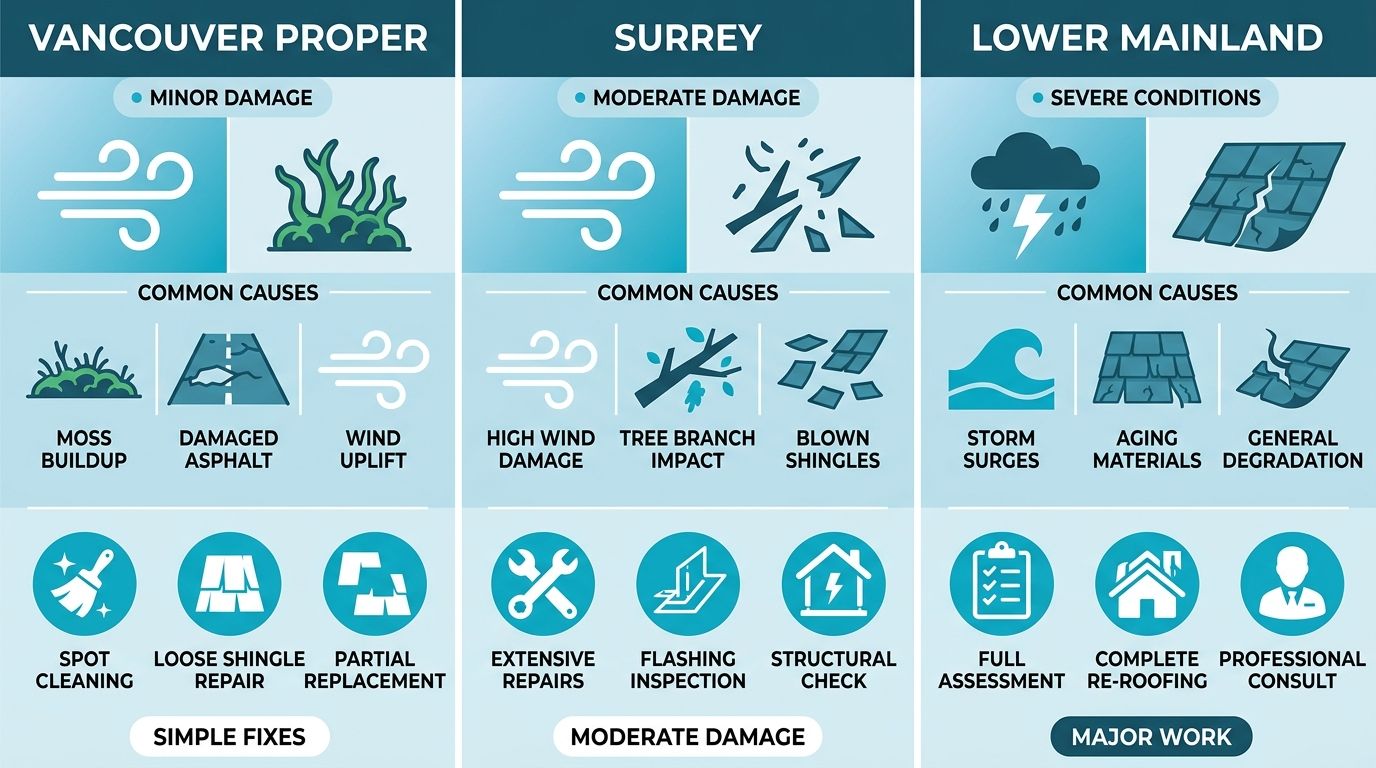
Vancouver area shingle damage overview with causes and repair actions
Shingle Repair Services in Vancouver
Vancouver’s frequent rain, wind, and moss growth often lead to damaged shingles in Vancouver homes, compromising roof integrity and risking leaks. At Paragon Roofing BC, we provide prompt shingle repair services to address these issues quickly, protecting your property from further water damage. Our decades of local experience across the Lower Mainland ensure reliable solutions for residential roofs.
We start with a free on-site roof inspection, following National Roofing Contractors Association (NRCA) guidelines for professional standards, as outlined by the industry association. This includes a thorough assessment of shingle condition with detailed photo reports to identify cracks, missing tabs, or curling. Schedule a roof inspection in Vancouver to evaluate repair needs and receive our expert recommendations, drawing from Paragon Roofing BC’s internal expertise on local shingle evaluations.
Our shingle repair process uses manufacturer-approved materials for asphalt shingle roofing repairs common in Vancouver properties. We replace individual damaged shingles or sections as needed, securing them properly to restore weather resistance. For more severe Vancouver shingle damage, we handle roof shingles replacement efficiently.
Contact us today for a shingle repair evaluation. With competitive pricing, BBB A+ accreditation, full liability insurance, and WorkSafeBC coverage, we deliver quality results. Estimates are subject to on-site inspection and final scope confirmation. Protecting Your Home. Building Your Family’s Future. If extensive damage is found during our inspection, we can guide you toward full roof replacement options.
Local Considerations for Vancouver Roofs
In Vancouver, these practices take on added urgency due to our wet coastal climate, which accelerates damaged shingles in Vancouver through heavy rainfall, granule loss, and moss accumulation. Paragon Roofing’s practical local roofing insights from our team’s experience highlight how constant moisture leads to premature shingle wear on homes across the Lower Mainland.
Vancouver’s freeze-thaw cycles exacerbate shingle vulnerabilities, causing curling edges and cracking in asphalt roofs. We employ targeted shingle repair techniques, including precise patching and sealing, to restore integrity and extend lifespan.
Shingle-Specific Tips
- Remove moss promptly to prevent root penetration.
- Inspect granule loss annually for erosion signs.
- Secure loose or curling shingles with roofing cement.
- Monitor for cracks from thermal expansion.
Proactive roof shingles replacement prevents leaks during rainy seasons, as industry-standard protocol from the National Roofing Contractors Association (NRCA) advises for leak detection. Our free on-site inspections identify early wear, paired with a residential roof maintenance program tailored for Vancouver properties. Protecting Your Home. Building Your Family’s Future. We maintain WorkSafeBC coverage for safe residential service. Estimates are subject to on-site inspection. Contact us for a free Vancouver roof inspection to address these local concerns.
Getting Started with Shingle Repairs
Noticed damaged shingles in Vancouver like curling edges, cracking surfaces, or missing pieces? These common issues in our wet climate demand prompt attention to prevent water intrusion and further structural harm.
Step 1: Conduct a safe visual self-inspection. From the ground, assess your roof for obvious damage using precautions outlined in NRCA’s authoritative professional roof inspection guide. This identifies repair needs without risking climbs, per industry standards.
Step 2: Schedule a free on-site evaluation. As a Trusted Roofing Contractor Across British Columbia, we at Paragon Roofing provide detailed photo reports and expertise in asphalt shingle repair for residential and commercial properties. Our photo reports include annotated images and clear repair recommendations to help you make informed and timely decisions.
Post-inspection, receive our comprehensive report detailing shingle repair or roof shingles replacement options, with competitive quotes tailored to your needs. Contact us today for BBB A+ accredited service backed by WorkSafeBC coverage.
Estimates subject to on-site confirmation; warranties vary by manufacturer.
Secure Your Vancouver Roof Today
Don’t let damaged shingles in Vancouver lead to leaks during rainy seasons. At Paragon Roofing BC, we protect homes with decades of Lower Mainland experience. Protecting Your Home. Building Your Family’s Future.
We offer free on-site roof inspections with detailed photo reports, following the industry-standard roof inspection checklist from the National Roofing Contractors Association (NRCA) to identify shingle damage accurately.
For minor issues, choose our shingle repair services; for extensive wear, opt for roof shingles replacement using premium asphalt shingles at competitive prices. We maintain liability insurance and WorkSafeBC coverage. Contact us today to schedule—estimates subject to on-site confirmation.
This article was researched and written with the assistance of AI tools.
Resources
- Schedule Biannual Roof Inspections for Vancouver Properties
- Get Free Onsite Roof Inspections in South Surrey
- Obtain Free Photo Report Roof Inspections in Vancouver
- Schedule Post-Storm Roof Inspections in Burnaby Surrey
- Explore Drone Thermal Imaging Roof Inspections Vancouver
- Receive Detailed Roof Inspection Reports for Vancouver
- Ensure Proper Roof Ventilation in Vancouver Climate
- Enroll in Residential Roof Maintenance Program Now
- Hire Certified Pros for Professional Roof Inspections
- Download Free Roof Inspection Checklist PDF Guide
- Hire Experts for Accurate Roof Leak Detection
Table of Contents
- Commercial Roofing in Delta, British Columbia
- Delta’s Commercial Roofing Landscape
- Commercial Roofing Services Available in Delta
- Local Factors Influencing Commercial Roofs in Delta
- Initiating Commercial Roofing Projects in Delta
- Advancing Your Delta Commercial Roofing Needs
Commercial Roofing in Delta, British Columbia
In Delta, British Columbia, commercial roofing delta demands durability against the region’s wet coastal climate, marked by heavy rainfall and strong winds. These conditions challenge commercial properties, making robust roofing essential to protect assets and operations, while protecting occupants.
As Paragon Roofing BC, we deliver trusted delta roofing services (delta roofing services) tailored for local needs. Our offerings include expert commercial roof repair delta bc and specialized commercial flat roofing delta, utilizing torch-on, TPO, and EPDM systems as per Roofing Contractors Association of British Columbia (RCABC) guidelines for quality and compliance.
Professional installation by our team prevents leaks, extends roof lifespan, and ensures long-term value. Discover our full range of solutions next.
Delta’s Commercial Roofing Landscape
In Delta’s unique climate, the commercial roofing delta landscape demands resilient materials to withstand heavy rainfall exceeding 1,200 mm annually and frequent wind gusts up to 60 km/h, as noted in practical local insights from Paragon Roofing BC. Mild temperatures amplify needs for waterproofing and UV resistance on commercial structures like warehouses and offices. We at Paragon Roofing BC specialize in Delta BC commercial roofing services tailored to these challenges.
Commercial buildings in Delta often feature low-slope and flat roofs vulnerable to ponding water, UV degradation, and wind uplift. Commercial flat roofing delta solutions must prioritize multi-layer protection and durability to prevent leaks and extend service life.
Commercial Roofing Material Comparison for Delta
This table compares popular commercial roofing materials suitable for Delta’s climate, focusing on durability, cost, and suitability for local weather conditions like heavy rain and wind.
| Material | Durability (Years) | Cost per sq ft | Best for Delta Climate |
|---|---|---|---|
| TPO | 20-30 | $8-12 | Excellent for flat roofs, UV and puncture resistant |
| Torch-On Modified Bitumen | 15-25 | $7-11 | Multi-layer waterproofing ideal for low-slope roofs |
| Metal Roofing | 40+ | $10-16 | Long-lasting, wind-resistant for commercial structures |
TPO offers cost-effective performance for commercial flat roofing delta, while Metal Roofing excels in windy conditions with superior longevity. Following RCABC roofing in British Columbia guidelines ensures compliance, as current industry technical guidelines from the Roofing Contractors Association of BC (RCABC) emphasize wind-resistant standards.
Key takeaways include biannual inspections for moss and debris—moss treatment can extend roof life by 3-5 years per Paragon Roofing BC. Prompt commercial roof repair delta bc prevents escalation from seasonal storms. These practices align with authoritative provincial association standards from RCABC.
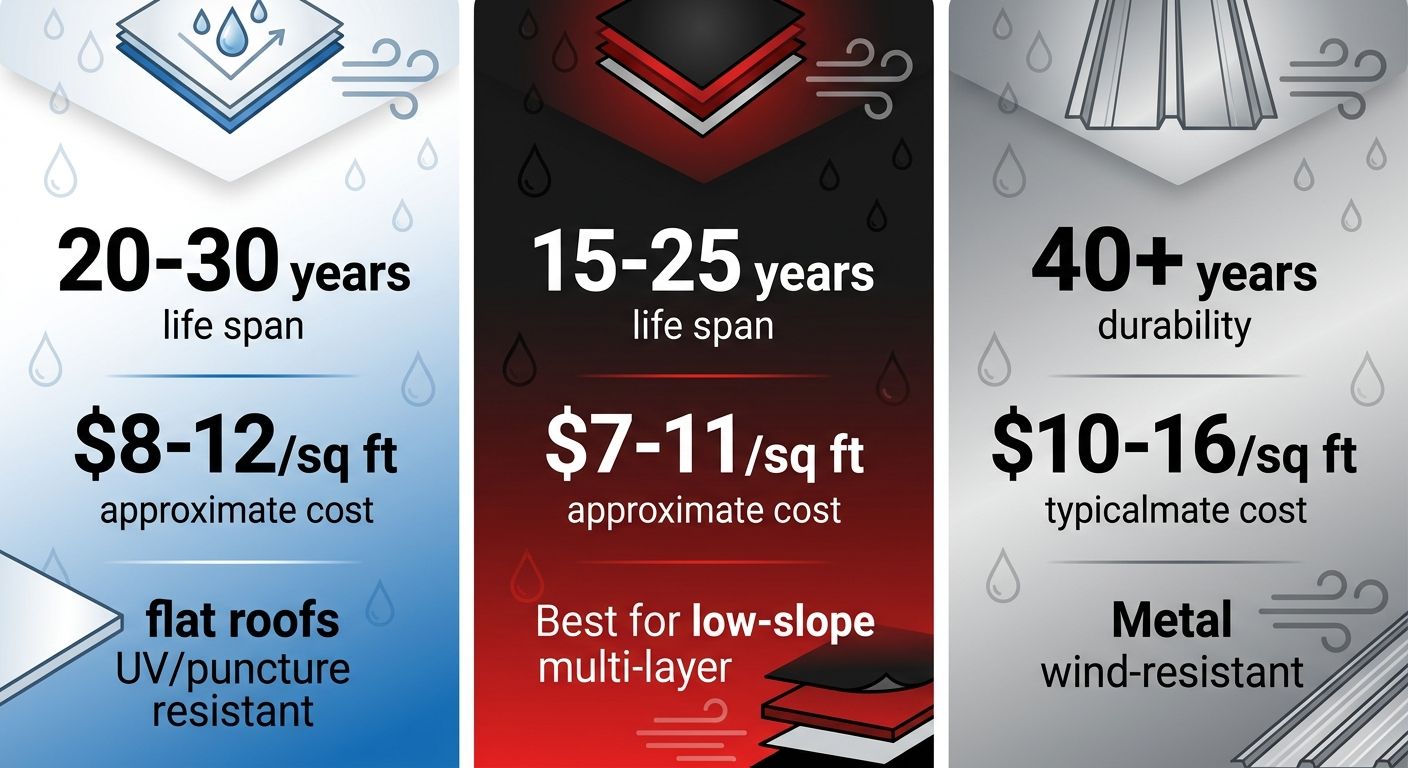
Key commercial roofing materials comparison for Delta’s climate
For expert installation or commercial roof repair delta bc, contact Paragon Roofing BC—we deliver RCABC-aligned solutions for your Delta projects.
Commercial Roofing Services Available in Delta
In Delta, BC, Paragon Roofing BC provides comprehensive commercial roofing delta services tailored to local businesses and industrial properties. We specialize in solutions that withstand the region’s wet coastal climate, heavy rainfall, and UV exposure, drawing from our decades of experience across the Lower Mainland.
- Commercial roof repair in Delta, BC: We handle prompt commercial roof repair delta bc for leaks, damage, and wear, using durable materials to prevent water pooling common in Delta’s conditions, as per Paragon Roofing BC’s official offerings.
- Commercial flat roofing installations: Offering commercial flat roofing delta with torch-on, EPDM, TPO, PVC, and modified bitumen systems designed for waterproofing and longevity on low-slope roofs.
- Roof inspections: Free onsite assessments adapted from Paragon Roofing BC’s practical guidelines, including leak detection, flashing checks, and material evaluations to identify issues like moisture damage early.
- Maintenance programs: Ongoing care to extend roof life, aligned with RCABC technical updates for compliance and NRICA industry training benchmarks on safety protocols and material selection.
- Emergency repairs: Rapid response for storm damage or urgent failures, ensuring minimal downtime for Delta commercial operations.
These Delta commercial roofing options protect your investment while meeting high standards. Contact us today for a free inspection or quote on your next project and explore details on costs and timelines.
Local Factors Influencing Commercial Roofs in Delta
In Delta, general commercial roofing challenges are amplified by unique local weather patterns, stringent safety regulations, and evolving industry standards. We see these factors shape commercial roofing delta practices daily, demanding proactive strategies from property owners.
Delta’s heavy rainfall—averaging 8.8 inches in November—coastal winds from Boundary Bay, and mild winters with high humidity foster moss growth and debris buildup. Paragon Roofing BC’s practical local roofing company maintenance guidance recommends seasonal tasks such as:
- Fall: Clear leaves and debris from flat roofs to prevent clogs.
- Spring: Inspect and treat moss, which can hold four times its weight in water.
These steps safeguard commercial flat roofing delta against accelerated wear.
Fire and explosion hazards from asphalt handling pose significant risks in commercial roofing delta. WorkSafeBC’s official workplace safety guidelines on asphalt plant fire risks highlight how heated asphalt releases flammable vapors, urging ventilation, housekeeping, and equipment checks to mitigate ignition sources like dust accumulation. Meanwhile, Roofing Contractors Association of BC (RCABC) authoritative provincial bulletins update membrane installation and wind uplift resistance standards suited to coastal conditions.
Addressing these local factors requires expert commercial roof repair delta bc.
Initiating Commercial Roofing Projects in Delta
Once you’ve identified roofing needs from prior assessments, initiating commercial roofing delta projects ensures efficiency and compliance. We guide commercial property owners through essential steps tailored to Delta’s wet climate and regulations.
Start with a roof inspection using Paragon Roofing BC’s practical checklist for initial evaluations, adapted for commercial buildings. Check for leaks, flat roof integrity, and structural issues common in Delta BC. Next, schedule a free consultation with us for thorough commercial roof repair delta bc assessments. Obtain permits from Delta municipal authorities, especially for commercial flat roofing delta emphasizing energy-efficient options. Incorporate eco-friendly materials early, as Paragon Roofing BC recommends for sustainable integrations. Ensure timelines, warranties, and maintenance plans are discussed before work begins, with clear documentation and scheduled follow-ups.
Proper initiation preserves delta roofing home value through quality services, per our internal expertise as a leading Delta provider. Contact Paragon Roofing BC today for personalized Delta commercial roofing projects. With assessment complete, explore material options next.
Advancing Your Delta Commercial Roofing Needs
Building on our comprehensive services, Paragon Roofing BC leads commercial roofing in Delta with decades of reliable innovation. As our primary service portfolio outlines, we integrate eco-friendly roofing in Delta solutions tailored for commercial properties, per expert blog insights on sustainable practices.
Need commercial roof repair in Delta BC or commercial flat roofing in Delta? Contact us today for quick responses and superior results that safeguard your business.
This article was researched and written with the assistance of AI tools.
Resources
- Get Certified Delta Roofing Services with Free Inspections
- Explore Eco-Friendly Roofing Options for Delta Homes
- Learn How Quality Roofing Boosts Delta Home Value
- Follow Delta Seasonal Roof Maintenance Checklist Guide
- Use Essential Roof Inspection Checklist for Delta Buyers
- Get Comprehensive South Surrey Roofing Services Today
- Get 24/7 Emergency Roof Leak Repair Services
- Discover RCABC Technical Updates and Roofing Standards
- Explore RCABC Roofing Guarantees and Training Programs
- Reduce Fire Risks in Asphalt Plants Effectively
- Find Commercial Roofing Training and Certification Guide
Table of Contents
- Exploring Cedar Shake Roofing in Vancouver
- Understanding Cedar Shake Roofing
- Benefits of Cedar Shake Roofing
- How Cedar Shake Roofing Works
- Best Practices for Cedar Shake Roofing
- Choosing Cedar Shake Roofing Solutions
Exploring Cedar Shake Roofing in Vancouver
In Vancouver’s rich architectural heritage, where natural beauty meets modern living, cedar shake roofing in Vancouver, British Columbia, stands out as a timeless choice. Homeowners and property managers appreciate these hand-split western red cedar shingles for their rustic charm and seamless integration with the coastal landscape. We at Paragon Roofing BC understand the unique needs of Vancouver properties, drawing on decades of local experience to deliver durable natural wood roofing solutions.
Cedar shake roofing thrives in British Columbia’s wet climate, offering superior weather resistance and natural insulation that enhances energy efficiency. Its popularity stems from the visual appeal that complements West Coast aesthetics, with many local homes featuring this material for its longevity when properly cared for. Key decision factors include cedar shake maintenance to prevent moss growth and ensure fire safety in urban settings, alongside initial costs balanced against long-term property value enhancement. According to industry insights, cedar roofs are prevalent in over 20% of BC’s traditional architecture, providing a premium option for both residential and commercial applications.
This guide explores the benefits, cedar shake installation processes, and best practices tailored to the Lower Mainland. From strata evaluations to multi-family projects, we preview how to assess suitability for your needs.
As trusted experts, we offer free on-site inspections and comprehensive roofing materials services in Vancouver to guide your decisions with warranty-backed assurance.
Understanding Cedar Shake Roofing
Cedar shake roofing in Vancouver, British Columbia, offers a timeless option for properties seeking natural durability and aesthetic appeal. As a trusted roofing contractor across British Columbia, we at Paragon Roofing BC specialize in cedar shake and wood roofing solutions, drawing on decades of local experience to guide property managers and homeowners through selection and implementation. This section explores the core elements of cedar shake systems, from their composition to their performance in our region’s demanding climate, helping you evaluate their value for residential, strata, and commercial applications.
Material Composition and Sourcing
Cedar shakes are hand-split from western red cedar heartwood, prized for its natural oils that provide resistance to decay and insects, ensuring a textured surface that enhances visual depth compared to machine-sawn shingles. This composition results in lightweight yet robust red cedar shingle systems, with thicknesses varying from 18 to 24 inches for optimal overlap and water shedding. The material’s low thermal conductivity also contributes to energy efficiency in building envelopes.
In British Columbia, sustainable sourcing practices dominate, with suppliers like those in Surrey adhering to Forest Practices Code standards to harvest from certified forests, minimizing environmental impact while supporting local economies. According to The Ultimate Guide to Roofing Materials in Vancouver, cedar remains a top choice for its regional availability, with trends showing increased demand for eco-friendly wood roofing amid growing sustainability mandates.
For practical implications, we recommend cedar shake installation from vetted British Columbia suppliers to ensure compliance with local building codes. Our free on-site inspections can assess sourcing feasibility, protecting your investment in authentic, renewably sourced materials for long-term property value.
Suitability for Vancouver Climate
Cedar shake excels in Vancouver’s wet, coastal environment due to its inherent moisture resistance, where tight-grained western red cedar expands minimally in humid conditions, preventing warping or cupping under prolonged rain exposure. The material’s natural tannins act as a preservative, offering better performance than many alternatives in areas with annual precipitation exceeding 1,200 mm, while its breathability allows vapor escape to reduce mold risks. Temperature fluctuations from mild winters to occasional freezes are mitigated by cedar’s flexibility, maintaining integrity without cracking.
Local relevance is evident in how cedar withstands coastal winds up to 100 km/h, as supported by Roofing Materials Guidelines from the National Roofing Contractors Association, which endorse treated wood shakes meeting ASTM standards for Class A fire resistance in humid zones like the Lower Mainland. This aligns with Vancouver’s climate, where synthetic options often falter in extreme wet-dry cycles.
Practically, cedar shake maintenance involves periodic treatments to preserve these traits, ensuring 30-50 years of service. We at Paragon Roofing BC integrate these considerations into our seasonal maintenance plans, safeguarding strata properties against leaks and extending roof lifespan in our variable weather.
Comparison to Synthetic Options
When evaluating cedar shake against synthetic alternatives, key criteria include aesthetics for curb appeal, durability under environmental stress, and overall cost for lifecycle value, particularly for heritage or commercial properties in Vancouver where authenticity drives ROI. Natural cedar provides an organic patina that evolves beautifully, contrasting with synthetics’ uniform appearance that can appear artificial over time. Environmental impact favors cedar’s renewability, reducing carbon footprints compared to petroleum-based composites.
The table below summarizes these aspects based on industry benchmarks:
| Feature | Natural Cedar Shake | Synthetic Composite |
|---|---|---|
| Aesthetic Appeal | Authentic, organic patina | Uniform, mimic appearance |
| Lifespan | 30-50 years (maintained) | 40-50 years |
| Sustainability | High (Renewable resource) | Lower (Petroleum-based) |
Interpreting these differences, cedar shake stands out for heritage properties seeking timeless appeal and sustainability, though it demands proactive upkeep. Synthetics suit budget-conscious projects but may not match cedar’s environmental credentials. For alternatives like asphalt shingle services in Vancouver, we offer consultations to balance cost with performance, emphasizing warranties that align with manufacturer terms after on-site evaluation.
Benefits of Cedar Shake Roofing
Cedar shake roofing offers enduring appeal and practical advantages for properties across Vancouver, British Columbia. We frequently recommend it to commercial managers seeking a blend of tradition and performance in strata and multi-family buildings. These benefits extend from visual charm to enhanced safety and efficiency, supporting long-term investment decisions.
Aesthetic and Value Enhancement
Cedar shake roofing in Vancouver, British Columbia, captures the natural elegance that complements the region’s architectural heritage, from heritage homes to modern commercial structures. Its textured, hand-split appearance adds warmth and character, elevating curb appeal in neighborhoods like Kitsilano or Gastown. We see cedar shake adding value to properties by creating a distinctive look that stands out against more uniform options.
Real estate data indicates that homes with premium wood roofs can see resale values increase by up to 5-7%, as buyers appreciate the rustic yet sophisticated finish. In our experience serving Lower Mainland properties, this enhancement translates to higher rental yields for multi-family units, where aesthetic differentiation attracts tenants. For commercial applications, the timeless style boosts brand image without the uniformity of standard materials.
Property managers benefit from this upgrade, as it justifies premium pricing in competitive markets. Our BBB-accredited team ensures installations that maximize these visual and financial gains, protecting your investment in Vancouver’s dynamic real estate landscape.
Fire Resistance and Safety Features
Addressing fire concerns is crucial in urban Vancouver settings, where dense commercial and residential zones demand compliant materials. Cedar shakes, when properly treated, meet British Columbia Building Code standards, providing reliable safety for strata and multi-family buildings. We prioritize fire-retardant cedar shingles to mitigate risks from wildfires or urban sparks, ensuring peace of mind for property operators.
Vancouver regulations, aligned with BCAB #1123, require 100% edge grain for premium grades, enhancing durability against ignition. Treatments like fire-retardant impregnation achieve Class B or C ratings, far surpassing untreated wood. The following table outlines key treatment options and their implications:
| Treatment Grade | Safety Rating | Cost Impact |
|---|---|---|
| Pressure-Treated Fire Retardant | Class B / Class C | +10-15% |
| Untreated Premium Grade | Standard Decay Resistance | Baseline |
While untreated options keep costs down, they pose higher risks in fire-prone areas, potentially increasing insurance premiums. Fire-retardant treatments offer optimal balance, reducing spread rates by up to 50% per code tests, though they add 10-15% to installation expenses. For commercial managers, selecting treated cedar aligns safety with budget, minimizing liability in high-occupancy buildings. Our warranty-backed services include these enhancements, ensuring code compliance without compromise.
Longevity and Insulation Advantages
Durable wood roof benefits shine through cedar shake’s impressive 30-50 year lifespan, especially with dedicated cedar shake maintenance. In Vancouver’s wet climate, regular care prevents moss buildup and rot, extending performance far beyond basic coverings. We advocate biannual inspections—spring and fall—to clear debris and apply sealants, as outlined in our maintenance programs.
Proper ventilation and edge-grain quality, per BC standards, resist moisture damage, while natural oils provide inherent rot resistance. Energy-wise, cedar’s thermal properties insulate effectively, cutting heating costs by 10-15% in multi-family setups compared to asphalt alternatives like asphalt shingle roofing services. This efficiency lowers utility bills and supports eco-friendly operations with minimal environmental impact from renewable sourcing.
For commercial properties, these advantages yield strong ROI through reduced repairs and energy savings. Strata councils appreciate the low-maintenance profile post-installation, backed by our seasonal plans. Investing in cedar shake delivers sustained value, safeguarding assets in British Columbia’s variable weather.
How Cedar Shake Roofing Works
Cedar shake roofing offers a timeless aesthetic and natural insulation properties that suit the Pacific Northwest climate. At Paragon Roofing BC, we specialize in delivering high-quality installations tailored to commercial and multi-family properties across the Lower Mainland. This section delves into the practical aspects of how cedar shake roofing functions, from initial setup to long-term care, ensuring durability and compliance with local building standards.
Installation Process Overview
Cedar shake roofing in Vancouver, British Columbia, begins with meticulous site preparation to guarantee a stable foundation. We start by inspecting the existing roof structure for any damage and removing old materials if necessary. Next, we apply an underlayment, such as asphalt-saturated felt, following roofing materials guidelines that recommend ASTM-compliant products for water resistance in humid conditions.
- Eave Starter Course: Lay the first row of shakes along the eaves, using corrosion-resistant nails spaced 1-2 inches from the edge to prevent splitting.
- Progressive Courses: Work upward in offset patterns, staggering joints by at least 1.5 inches to avoid leaks, typically covering 10 inches of exposure per row.
- Ridge and Hip Capping: Install pre-cut ridge shakes or caps, securing them with two nails each to seal the roof peak against wind-driven rain.
- Flashing Integration: Add metal flashing around penetrations like vents and chimneys, ensuring proper overlap for ventilation and drainage.
- Finishing Touches: Trim edges and inspect for uniformity, applying initial sealant if required.
These shake application techniques typically span 1-2 weeks for a standard commercial project, depending on roof size. For safety, we always use harnesses and scaffoldings during elevated work, prioritizing team and site protection. In commercial settings, we coordinate with property managers to minimize disruptions, often completing phases over weekends.
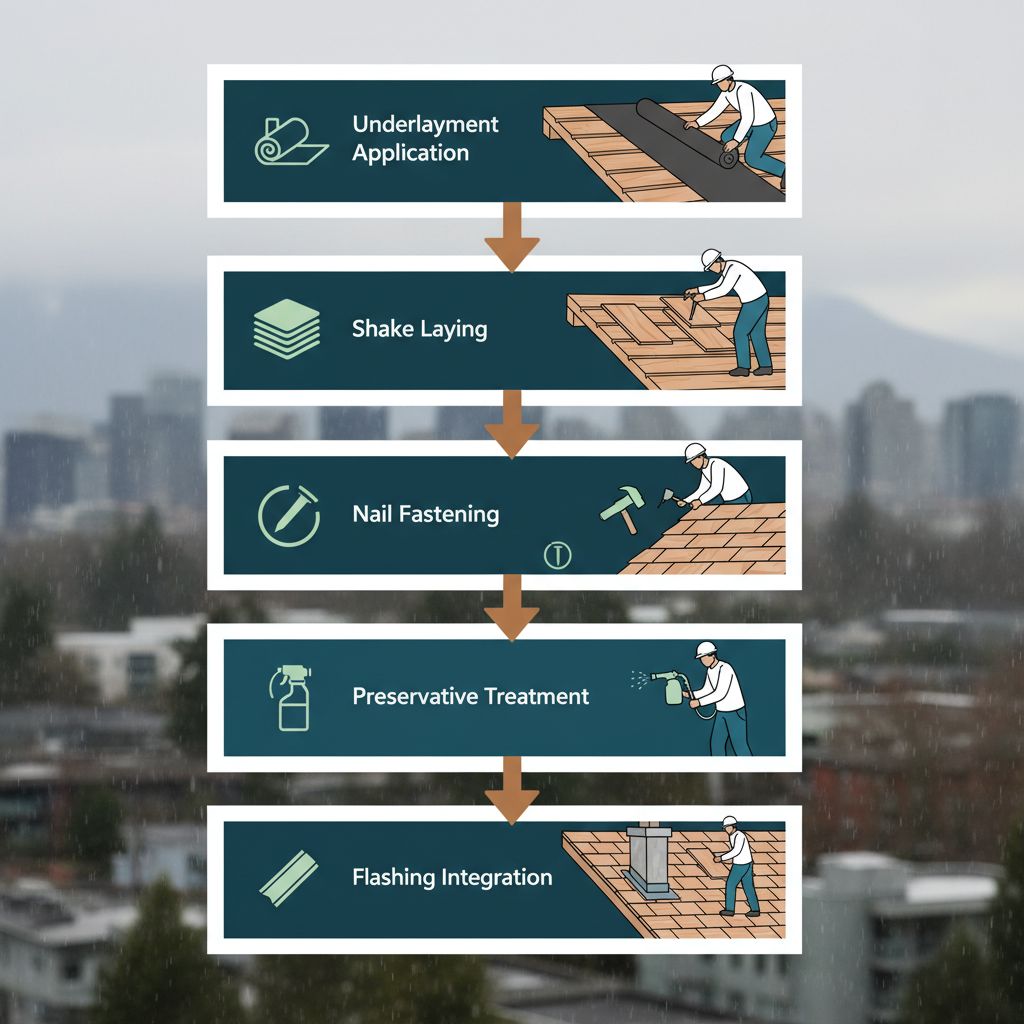
Step-by-step guide to cedar shake roofing installation process
This visual aids in understanding the layered approach that enhances airflow and weatherproofing, crucial for Vancouver’s frequent rains.
Treatment Methods for Durability
To combat British Columbia’s humid climate, cedar shakes require robust preservative treatments for wood roofs that prevent rot and fungal growth. We apply oil-based preservatives like copper naphthenate immediately after installation, penetrating the wood fibers to inhibit decay organisms. This treatment, often followed by semi-transparent stains, not only boosts UV resistance but also maintains the natural grain appearance.
Ongoing cedar shake maintenance involves biannual inspections to reapply coatings, especially after heavy winter exposure. For instance, penetrating sealants are brushed on every 3-5 years, extending lifespan to 30+ years when combined with proper ventilation. Unlike synthetic slate options from our services, which offer inherent weatherproofing without frequent upkeep, cedar demands these proactive steps but rewards with eco-friendly appeal.
In commercial applications, we schedule treatments during low-occupancy periods, ensuring minimal impact on operations. Safety considerations include using low-VOC products to protect workers and building occupants from fumes during application.
Integration with Existing Structures
Retrofitting cedar shakes onto various building types requires assessing structural load and aesthetic harmony. We evaluate roof pitch, ensuring slopes above 4:12 to facilitate drainage and prevent moisture accumulation. For multi-family units, common in Surrey and Burnaby, integration involves upgrading trusses if needed to support the material’s weight, around 3-4 pounds per square foot.
The following table outlines compatibility and challenges for different structures:
| Structure Type | Compatibility Level | Primary Integration Challenge |
|---|---|---|
| Residential Heritage | High | Ornate flashing matching |
| Multi-Family / Strata | High | Truss load reinforcement |
| Commercial Complex | Moderate | Large area ventilation |
Residential projects often proceed smoothly due to simpler access, while multi-family and commercial integrations benefit from our coordinated expertise, including temporary weather barriers. We address challenges through custom flashing and underlayment enhancements, drawing from NRCA standards for secure fastening—nailing into solid wood at least 1 inch above the butt line.
By leveraging decades of local experience, we ensure seamless adaptations that enhance property value without compromising existing infrastructure. This approach aligns with our commitment to protecting structures across the Lower Mainland.
As Trusted Roofing Contractor Across British Columbia, we handle these integrations with precision, focusing on long-term performance and client satisfaction.
Best Practices for Cedar Shake Roofing
Implementing cedar shake roofing in Vancouver, British Columbia, requires careful attention to sourcing, maintenance, and compliance to ensure longevity and performance in the region’s damp climate. We at Paragon Roofing BC draw on decades of local experience to guide property managers and homeowners toward durable solutions that align with commercial needs.
Sourcing and Supplier Selection
Sourcing high-quality materials forms the foundation of successful cedar shake roofing in Vancouver, British Columbia. Opt for certified suppliers in British Columbia that provide sustainably harvested western red cedar, known for its natural resistance to decay and insects. Local cedar suppliers in the Lower Mainland, such as those partnered with established roofing firms, ensure timely delivery and compliance with regional standards.
To select the right supplier, begin by verifying certifications from the Forest Stewardship Council and adherence to BC sourcing guidelines. Request samples to assess grain quality and thickness, typically 18-22 inches for premium shakes. We recommend reaching out to suppliers with proven track records in Metro Vancouver, where proximity reduces shipping costs and supports eco-friendly practices.
Benefits include enhanced durability against coastal moisture and potential cost savings through bulk purchasing from trusted local cedar suppliers. This approach minimizes risks of substandard materials that could lead to premature wear, ultimately protecting your investment in the Fraser Valley area.
Ongoing Maintenance Strategies
Effective cedar shake maintenance is essential for extending the lifespan of your roof amid British Columbia’s wet weather. Routine roof care protocols prevent issues like moss growth and rot, which are common in Vancouver’s humid environment. We offer seasonal maintenance plans tailored for strata properties, including free on-site inspections and detailed photo reports to track condition over time.
Key practices include annual visual checks for loose shakes or debris accumulation, followed by gentle cleaning to remove moss without damaging the wood. Apply preservative treatments every five years, focusing on oil-based stains that penetrate deeply for protection. For cleaning, use low-pressure washing biannually, avoiding harsh chemicals that strip natural oils.
The return on investment from proactive cedar shake maintenance is significant, often reducing repair costs by up to 30% over a decade. The following table outlines core practices:
| Task | Frequency | Key Objective |
|---|---|---|
| Visual Inspection | Annual | ID loose shakes/leaks |
| Moss Removal | Biannual | Prevent moisture trap |
| Stain/Sealer Reapplication | 3-5 Years | UV/Water barrier |
Implementing these steps ensures compliance with best practices while optimizing performance. Schedule professional assessments through our BBB A+ accredited services to maintain ventilation and avoid common pitfalls in cedar shake maintenance.
Compliance and Contractor Tips
Adhering to local regulations during cedar shake installation safeguards your property and ensures safety. In British Columbia, focus on fire-resistant treatments and proper underlayment as per the cedar shake building code, which requires offset joints of at least 40 mm between courses to prevent water infiltration. Ventilation standards mandate adequate airflow to combat moisture buildup in Vancouver’s climate.
Choose contractors with strata experience by reviewing portfolios and confirming WorkSafeBC coverage. We prioritize clear communication and manufacturer-compliant installations, providing proposals that detail scope and exclusions. Verify A+ BBB accreditation and request references from similar Lower Mainland projects.
Selecting experienced pros minimizes risks and supports long-term value. Our full-service capabilities, from inspections to warranty-backed work, help navigate codes efficiently, ensuring your cedar shake installation meets all requirements while aligning with budget goals.
Choosing Cedar Shake Roofing Solutions
Cedar shake roofing in Vancouver, British Columbia, stands out for its timeless appeal and natural resilience, offering property owners a blend of durability and aesthetic charm that enhances any structure in the Lower Mainland. At Paragon Roofing BC, we specialize in sustainable cedar solutions that withstand the region’s wet climate while elevating property values. Our expertise ensures that every project aligns with local building standards, providing long-lasting protection for residential and commercial buildings alike.
Key takeaways include the superior durability and beauty of cedar shakes, which require dedicated cedar shake maintenance to promote longevity and fire safety through regular treatments and inspections. Proper cedar shake installation, guided by the cedar shake installation code, guarantees optimal performance and compliance. For commercial properties, these features boost curb appeal and operational efficiency, making expert wood roofing care an investment in enduring quality.
We invite you to contact Paragon Roofing BC, your trusted roofing contractor across British Columbia, for a free on-site inspection and personalized quote. Our full-service commitment covers everything from sourcing to installation and ongoing maintenance plans, helping you protect your investment. Schedule today and discover how we can tailor cedar solutions to your needs.
Resources
- Get Comprehensive Roofing Materials and Services in Vancouver
- Discover Asphalt Shingle Installation and Repair Services Vancouver
- Explore Affordable Durable Asphalt Shingle Roofing for Vancouver
- Install Synthetic Slate Roofing for Weather-Resistant Vancouver Properties
- Schedule Tailored Roof Maintenance Plans for Vancouver Homes
- Choose Trusted Best Roofing Company in Vancouver
- Learn Optimal Roofing Materials Guide for Vancouver Climate
- Explore NRCA Guidelines on Steep-Slope Roofing Materials
- Understand BC Building Code for Cedar Shake Installation
- Learn Joint Offset Rules for Cedar Roof Shakes Code
Table of Contents
- Exploring TPO Roofing in British Columbia
- What is TPO Roofing?
- Key Benefits of TPO Roofing for BC Properties
- How TPO Roofing Systems Function
- Best Practices for TPO Roofing Maintenance and Installation
- Maximizing TPO Roofing Performance in British Columbia
Exploring TPO Roofing in British Columbia
In the diverse climate of British Columbia, where heavy rains and coastal winds challenge building structures, TPO roofing in British Columbia emerges as a reliable solution for flat and low-slope roofs. Thermoplastic polyolefin, or TPO, is a single-ply flat roofing solution known for its durability and energy efficiency. As a thermoplastic membrane system, it forms a seamless, waterproof barrier that withstands UV exposure and temperature fluctuations common in regions like Vancouver, BC.
At Paragon Roofing BC, we bring decades of local experience as a trusted roofing contractor across British Columbia. Specializing in roofing materials services in Vancouver, we handle installations and maintenance for residential, commercial, and multi-family properties throughout the Lower Mainland. Our team offers free on-site inspections to assess your needs, ensuring TPO systems that resist moss growth and leaks while optimizing energy savings. When considering TPO vs PVC roofing, TPO stands out for its cost-effectiveness, with TPO roofing cost often providing better long-term value through reflectivity that reduces cooling demands.
This guide explores the fundamentals of TPO, its key benefits for BC’s weather, how these systems function, and best practices for installation and upkeep. From Vancouver’s flat-roof commercial buildings to Surrey homes, discover why TPO is ideal. What makes TPO roofing perform so effectively in our variable conditions?
What is TPO Roofing?
TPO roofing in British Columbia has become a go-to solution for protecting properties against the region’s persistent rainfall and variable temperatures. As a thermoplastic polyolefin membrane, TPO offers durability and energy efficiency, making it ideal for flat and low-slope roofs common in the Lower Mainland. We at Paragon Roofing BC have installed countless TPO systems, witnessing their resilience firsthand in areas like Coquitlam and Vancouver.
Definition: TPO Roofing
Thermoplastic Polyolefin (TPO) is a single-ply roofing membrane made from a blend of polypropylene and ethylene-propylene rubber, providing waterproofing and reflectivity for modern structures.
Composition and Materials
TPO membranes consist of advanced polymer blends designed for longevity in demanding climates. The core material combines polypropylene for strength with ethylene-propylene for flexibility, enhanced by UV stabilizers to resist sun damage prevalent in British Columbia’s coastal areas. A fleece backing adds reinforcement, preventing punctures from debris or foot traffic during maintenance. We recommend layers including a weather-resistant top coat and scrim reinforcement for added tear resistance.
- Top Layer: UV-stabilized polyolefin sheet for reflectivity and heat resistance.
- Reinforcement: Embedded polyester scrim for structural integrity.
- Backing: Fleece or fabric to improve adhesion and durability in wet conditions.
These thermoplastic flat roof membranes are welded at seams using hot-air technology, creating seamless, watertight bonds that withstand heavy downpours. In British Columbia’s wet climate, this composition ensures superior water shedding compared to older systems.
Thermoplastic basics highlight TPO’s heat-weldable nature, allowing installers to fuse sheets without adhesives, reducing leak risks. The TPO roofing systems standard from the Roofing Contractors Association of BC specifies minimum thicknesses of 60 mils for optimal performance, validating these specs for local installations.
| Feature | TPO Roofing | PVC Roofing |
|---|---|---|
| Energy Reflection | High reflectivity (up to 80%), cools buildings in summer | Good reflectivity but less consistent in wet climates |
| Durability | 20-30 years lifespan, resistant to BC rain and punctures | Similar lifespan but more prone to plasticizer leaching |
| Cost | $2.50-$4.50/sq ft installed in BC | $3.00-$5.00/sq ft, higher material costs |
This table underscores TPO’s advantages, particularly its UV resistance that combats the intense coastal sunlight while maintaining energy efficiency. In BC, where temperature swings are common, weldability prevents moisture ingress, and recyclability aligns with eco-conscious regulations, making polyolefin roofing solutions a smart choice for long-term value.
Applications in Flat Roofs
TPO excels in low-slope and flat roof applications, suitable for commercial buildings, strata properties, and residential structures in the Lower Mainland. Its lightweight design simplifies installation on existing roofs, minimizing structural load while providing excellent drainage through integrated scuppers and tapered insulation. We often integrate TPO with skylights and vents, ensuring compatibility via custom flashing that seals penetrations effectively.
In Coquitlam projects, such as multifamily complexes, TPO handles ponding water from frequent rains, with enhanced drainage adaptations like tapered panels directing flow to perimeter drains. For commercial warehouses in Vancouver, BC, it offers broad coverage up to 10,000 square feet per sheet, reducing seams and labor. Residential flat roofs on modern homes benefit from TPO’s seamless finish, compatible with green roofs or solar panels.
When comparing TPO vs PVC roofing, TPO stands out for cost-effectiveness and easier repairs in humid environments. Overall, TPO roofing cost remains competitive, averaging lower long-term expenses due to minimal maintenance needs in BC’s climate.
History and Evolution
TPO roofing emerged in the 1980s as an advancement over earlier single-ply systems, developed by chemical engineers seeking recyclable alternatives to bituminous materials. Initially popular in the U.S. for its energy-efficient white finish, it gained traction in Canada during the 1990s amid growing demand for sustainable roofing. In British Columbia, adoption accelerated in the early 2000s, driven by the need for systems resilient to seismic activity and heavy precipitation.
The Roofing Contractors Association of BC played a key role, establishing standards for TPO installations that emphasize wind uplift resistance and fire ratings suited to urban developments. Today, TPO represents over 40% of new flat roof projects in the province, evolving with innovations like self-adhering variants for faster application.
From our two decades of experience at Paragon Roofing BC, we’ve seen TPO transition from niche commercial use to widespread residential and strata applications in Surrey and Richmond. This evolution reflects its proven track record, with installations lasting 20-30 years under local conditions, backed by manufacturer warranties.
Key Benefits of TPO Roofing for BC Properties
TPO roofing in British Columbia offers significant advantages for flat-roof properties, particularly in regions like Vancouver and the Lower Mainland where weather challenges demand reliable protection. As a trusted roofing contractor across British Columbia, our installations demonstrate how this energy-efficient single-ply roof material delivers long-term value through reduced energy use, enhanced durability, and environmental benefits. Property owners benefit from its seamless integration with local building codes, ensuring compliance while minimizing maintenance needs.
Energy Efficiency and Cost Savings
One of the standout features of TPO roofing is its high reflectivity, which can reach up to 80% according to IIBEC guidelines on thermoplastic systems. This property reflects sunlight effectively, reducing heat absorption during BC’s warm summers and lowering cooling costs by up to 20% for commercial buildings in Vancouver. In our experience with local installations, this translates to substantial long-term ROI, especially when paired with proper insulation to meet BC Building Code standards.
The TPO roofing cost typically ranges from $2.50 to $4.50 per square foot installed in the Lower Mainland, as noted in regional conversion guides for flat roofs. This upfront investment pays off through energy savings and extended system life, often covered by 20- to 30-year warranties from manufacturers. For properties facing Vancouver’s frequent temperature fluctuations, these efficiencies help stabilize indoor climates without excessive reliance on HVAC systems.
Durability in Regional Climate
TPO roofing excels in the Lower Mainland’s climate, offering robust resistance to heavy rain, high winds, and intense UV exposure common in British Columbia. Its thermoplastic composition provides tear and puncture resistance, crucial for flat roofs prone to water pooling during Vancouver’s frequent storms. Drawing from thermoplastic roofing best practices, proper installation ensures seams withstand freeze-thaw cycles, preventing the leaks seen in less durable coverings.
Our installations in commercial sites around Surrey and Vancouver highlight TPO’s 20- to 30-year lifespan, even under snow loads mandated by the BC Building Code. Unlike traditional membranes, durable thermoplastic coverings require minimal maintenance, with features like reinforced edges holding up against wind gusts up to 90 km/h. This reliability translates to fewer disruptions for property managers, as evidenced by reduced repair needs in our multi-family projects.

Key benefits comparison of TPO vs PVC roofing for BC coastal properties
Environmental Advantages
TPO roofing supports green building initiatives in BC through its recyclability and low volatile organic compound (VOC) emissions, making it ideal for eco-conscious properties in Vancouver. At the end of its life, the material can be fully recycled, reducing landfill waste compared to non-recyclable alternatives. This aligns with provincial sustainability standards, as seen in our strata council projects emphasizing low-impact materials.
With minimal environmental footprint during production and installation, TPO contributes to LEED certification efforts for commercial buildings in the Lower Mainland. Its energy-efficient design further lowers overall carbon emissions by cutting cooling demands in summer. We prioritize these advantages in our services, ensuring installations meet IIBEC-recommended practices for long-term environmental performance.
- Recyclable thermoplastic construction minimizes waste.
- Low VOCs improve indoor air quality.
- Reflective surface reduces urban heat island effects in BC cities.
How TPO Roofing Systems Function
TPO roofing in British Columbia represents a reliable choice for flat and low-slope roofs, offering durability against the region’s variable weather patterns. As a trusted roofing contractor across British Columbia, we specialize in these seam-welded thermoplastic roofs to protect multi-family and commercial properties. Understanding the mechanics behind TPO systems reveals why they excel in longevity and energy efficiency for structures in Vancouver and the Lower Mainland.
Installation Process
Installing TPO membranes requires precision to ensure a watertight seal, particularly in British Columbia projects where rainfall demands robust performance. We begin with thorough roof preparation, including clearing debris and repairing the substrate to create a smooth surface. This step prevents imperfections that could compromise the membrane’s integrity.
Next, we roll out the TPO sheets, typically 60 to 80 mils thick, across the roof deck. Insulation layers, such as polyisocyanurate boards, are added beneath for thermal efficiency. The sheets are then secured mechanically or fully adhered, depending on the building’s design. Hot-air welding joins the seams, melting the material to form a monolithic barrier. This process, which we execute with specialized equipment, takes about 1-2 days for a standard multi-family roof in our strata projects.
Flashing details around edges and penetrations complete the application, using compatible adhesives. TPO roofing cost typically ranges from $2.50 to $4.50 per square foot, including materials and labor, though estimates depend on site specifics. We strongly advise against DIY attempts, as improper welding can lead to leaks; professional installation by experienced teams ensures compliance with local standards.
Performance Mechanisms
The performance of TPO systems hinges on their ability to handle thermal expansion and contraction, a critical factor in BC’s winters with freeze-thaw cycles. Made from thermoplastic polyolefin, these low-slope system mechanics allow the material to flex without cracking, unlike more rigid alternatives. We leverage this flexibility in our installations to maintain structural integrity over decades.
Hot-air welding creates seams stronger than the membrane itself, resisting water infiltration even under high winds common in coastal areas. The reflective white surface reduces heat absorption, lowering cooling demands in summer—a key advantage in energy-conscious British Columbia builds. For instance, in our Port Moody projects, these mechanisms have demonstrated up to 30-year lifespans with minimal maintenance.
Integration with insulation enhances R-value, promoting uniform temperature control. Analogous to a flexible skin over a building, TPO adapts to movements while providing a seamless shield against UV rays and ozone degradation. This resilience underscores why TPO outperforms in demanding climates, delivering cost savings through reduced repair needs.
Integration with Other Systems
TPO roofing seamlessly integrates with various building elements, ensuring compatibility in Lower Mainland roofs exposed to heavy precipitation. For skylights and vents, we apply pre-formed TPO flashing or custom heat-welded collars to create watertight seals around penetrations, preventing leaks at these vulnerable points.
Drainage systems pair effectively with TPO, where scuppers and internal drains are incorporated during installation to facilitate water runoff on flat surfaces. In multi-family settings, this setup aligns with ventilation requirements, allowing balanced airflow without compromising the membrane.
When considering TPO vs PVC roofing, TPO’s broader welding compatibility simplifies integration with metal edging or HVAC units, avoiding the chemical adhesives sometimes needed for PVC. Our roofing services in Port Moody exemplify this, with case studies showing efficient timelines of 2-3 days for full integrations in commercial strata properties. We maintain liability insurance and WorkSafeBC coverage to safeguard these complex installations, emphasizing professional oversight for optimal results.
Best Practices for TPO Roofing Maintenance and Installation
TPO roofing in British Columbia provides durable protection against the region’s variable weather, but proper installation and upkeep are essential for longevity. We recommend focusing on preventive strategies to address the unique challenges of rainy and temperate climates in areas like the Lower Mainland.
Routine Maintenance Guidelines
We advise bi-annual inspections for TPO roofing systems to ensure optimal performance. Start with clearing debris such as leaves and branches from the surface, which prevents ponding and reduces wear in British Columbia’s frequent rains. Check seams and flashings for cracks, using a soft brush and mild detergent for cleaning to maintain the membrane’s reflective properties.
For installation, ensure proper slope to facilitate drainage, integrating with existing gutters and vents to avoid water buildup. Unlike TPO vs PVC roofing, where PVC may require different chemical cleaners, TPO benefits from simple thermoplastic roof upkeep methods. We offer free on-site inspections at Paragon Roofing BC to assess your system’s condition and provide tailored advice. We also provide roofing services in Coquitlam.
Include these steps in your maintenance checklist:
- Inspect seams and penetrations quarterly.
- Remove debris after heavy storms.
- Test drainage paths annually.
- Document any changes for professional review.
The following table outlines the benefits of routine maintenance versus neglect:
| Action | With Maintenance | Without Maintenance |
|---|---|---|
| Lifespan | 25-30 years | 10-15 years |
| Leak Risks | Minimized through seam checks | High, especially at penetrations |
| Cost | Predictable low annual fees | Unexpected high repair costs |
Common Issues and Solutions
In Lower Mainland environments, TPO roofs often face issues like seam failures due to thermal expansion or punctures from falling branches. Shrinkage can cause wrinkling, while ponding from inadequate slope leads to accelerated aging. We suggest immediate attention to these to prevent leaks.
For seam repairs, clean the area thoroughly and apply a compatible patch kit following manufacturer guidelines. Punctures require cutting out damaged sections and sealing with heat-welded patches. As per RCABC TPO Roof Systems Standard, maintaining seam integrity through regular checks is crucial, as it states that proper adhesion prevents 80% of water intrusion risks.
Budget for repairs by considering TPO roofing cost factors, such as material at $5-8 per square foot plus labor. For example, a small puncture fix might run $200-500, but early detection via our free inspections in Abbotsford and surrounding areas avoids escalation. Always verify warranties, as they vary by manufacturer and product—check terms in your written contract.
Seasonal Care in BC
British Columbia’s seasons demand adaptive care for TPO roofs. In winter, protect against ice dams by ensuring clear gutters and applying anti-bridging membranes during installation. Heavy snow loads require shoveling with caution to avoid membrane tears; we recommend professional assistance for high-risk properties.
Summer brings intense UV exposure, so inspect for granule loss on ballasted systems and reapply protective coatings if needed. This maintains the roof’s white reflective surface, reducing cooling costs in warmer months. Integrate ventilation checks to control moisture, especially in humid coastal areas like Vancouver, BC.
For year-round protection, schedule seasonal walkthroughs. Our team at Paragon Roofing BC provides guidance on these practices, emphasizing estimates subject to on-site inspection. By following these tips, property owners in the Lower Mainland can enhance durability and avoid common pitfalls.
Maximizing TPO Roofing Performance in British Columbia
TPO roofing in British Columbia offers reliable thermoplastic solutions for flat and low-slope roofs, combining durability with energy efficiency tailored to the region’s wet climate. As a single-ply membrane, it provides excellent resistance to UV rays, punctures, and thermal expansion, making it ideal for coastal areas like the Lower Mainland. By recapping its core benefits, such as reduced energy costs through reflective properties and a lifespan of 20-30 years with proper care, we reinforce why this cost-effective flat roofing option stands out for British Columbia properties.
Key takeaways include proactive maintenance to address potential issues like seam failures or ponding water, ensuring long-term performance. When considering TPO vs PVC roofing, TPO often edges out in affordability and heat-welded seams for superior waterproofing, while TPO roofing cost per square foot typically ranges from $5 to $10, depending on project scope. In our experience serving Port Moody and surrounding neighborhoods, these systems align perfectly with local demands for sustainable, weather-resistant coverage.
At Paragon Roofing BC, we invite you to contact us for free on-site inspections to evaluate your roofing needs. Our warranty-backed approach, as a trusted roofing contractor across British Columbia, helps maximize your investment while protecting your home. Building your family’s future starts with perfection in roofing—reach out today for tailored solutions in Vancouver, BC, and beyond.
Resources
- Discover Comprehensive Roofing Materials Services in Vancouver
- Find Climate-Adapted Roofing Solutions for Port Moody Properties
- Explore Sustainable Roofing Installations and Maintenance in Coquitlam
- Obtain Reliable Roofing Services for Abbotsford Properties
- Learn Flat to Low-Slope Roof Conversion Pros and Cons
- Choose Trusted Top Roofing Company in Vancouver
- Get Multifamily Strata Roofing Services in Vancouver Area
- Understand TPO Roofing Systems Standards and Benefits
- Explore Best Practices for Thermoplastic Roofing Installation
Table of Contents
- Addressing Roof Leaks in Vancouver’s Wet Climate
- Signs and Causes of Roof Leaks in Vancouver
- Advantages of Professional Roof Leak Repair
- Our Process for Roof Leak Repairs
- Maintenance Tips to Prevent Roof Leaks
- Secure Your Roof with Expert Repairs Today
Addressing Roof Leaks in Vancouver’s Wet Climate
Vancouver’s relentless rainfall and variable weather patterns make roof leak repair in Vancouver, British Columbia, an essential service for protecting homes and businesses. Our region’s frequent storms often lead to sudden leaks, exacerbated by moss growth, wind-driven rain, and freeze-thaw cycles that accelerate roof aging. At Paragon Roofing BC, we understand these local challenges intimately, having served the Lower Mainland for decades with reliable solutions.
As a BBB A+ accredited team, we offer full-service capabilities for residential, commercial, and multi-family properties, including emergency roof repair in Vancouver, British Columbia, and flat roof repair in Vancouver, British Columbia. Our offices in Vancouver and Surrey ensure quick access, including roofing services in West Vancouver, with average response times under 24 hours for urgent calls. We specialize in leaky roof fixes in the Lower Mainland, using premium materials and manufacturer-certified crews to deliver durable, warranty-backed results.
From identifying early signs of damage to comprehensive preventive maintenance, our services address everything from minor Vancouver-area roof patching to full replacements. Don’t let leaks escalate into costly structural issues—our free on-site inspections provide detailed photo reports to guide your next steps.
Contact us today for a no-obligation assessment and safeguard your property against the wet season ahead.
Signs and Causes of Roof Leaks in Vancouver
In the wet climate of Vancouver, British Columbia, homeowners often face challenges with roof integrity, making early detection crucial for roof leak repair in Vancouver, British Columbia. We at Paragon Roofing BC have inspected countless properties across the Lower Mainland, and we frequently encounter issues that start small but can escalate quickly if ignored. By recognizing signs early, you can avoid costly structural damage and ensure your home remains protected year-round. For deeper insights into understanding roof leaks, consider the common indicators we outline below.
Identifying Common Signs of Roof Leaks
Spotting a roof leak before it worsens requires attention to both exterior and interior clues, especially in our rainy region. We see this often in our inspections in areas like Surrey and Port Moody, where damp weather accelerates hidden problems. Key signs include:
- Water stains on ceilings or walls: These dark, discolored spots often appear in attics or upper rooms, indicating moisture infiltration from above. In Vancouver homes, they commonly show up after heavy downpours, signaling issues like damaged shingles.
- Damp insulation or musty odors: Insulation in the attic may feel wet to the touch or emit a moldy smell, a red flag for ongoing leaks that compromise air quality and energy efficiency.
- Granule loss in gutters: Look for excessive asphalt granules in downspouts, a telltale sign of aging shingles breaking down, particularly visible after storms in the Lower Mainland.
- Warped or curling shingles: On the roof surface, these distortions point to material fatigue, often accompanied by visible light through gaps during daylight inspections.
These indicators align with our Vancouver leak detection experiences, where early identification prevents broader issues like rot in wooden decks. Homeowners should perform visual checks post-rain to catch them promptly.
Local Weather Factors Contributing to Leaks
Vancouver’s temperate yet persistently wet climate plays a significant role in roof vulnerabilities, with heavy rainfall, strong winds, and high humidity driving many leak issues. British Columbia’s atmospheric rivers, for instance, deliver intense precipitation that tests even well-maintained roofs, as noted in our regional service insights.
- Heavy rain and flooding: Prolonged downpours overwhelm drainage systems, leading to pooling on flat or low-slope roofs and necessitating specialized flat roof repair in Vancouver, British Columbia. We often see water seeping through seams in built-up or TPO systems after such events.
- Wind damage to flashing and edges: Gusty coastal winds crack metal flashing around chimneys and vents, a common failure point accounting for a substantial portion of leaks in our inspections.
- Moss and algae growth: The humid conditions foster moss buildup on shingles and cedar shakes, trapping moisture and eroding materials over time. In hillside neighborhoods like those in Port Moody, this exacerbates decay, as our maintenance programs frequently address.
Clogged gutters from fallen leaves during fall storms compound these factors, causing water backup. Regular inspections help mitigate these weather-related risks, extending your roof’s lifespan in our challenging environment.
When to Call for Professional Assessment
Knowing when to transition from DIY checks to expert help is vital for safety and efficiency in the Lower Mainland. We recommend professional intervention if you notice multiple signs or suspect structural risks, offering free on-site inspections to provide clarity without obligation.
Consider these thresholds:
- Isolated minor signs: If you spot a single small stain without water damage, a temporary sealant might suffice, but monitor closely.
- Multiple or urgent indicators: Persistent dampness, visible roof gaps, or post-storm water entry signal the need for emergency roof repair in Vancouver, British Columbia. Delaying can lead to mold proliferation or weakened beams.
- Complex issues like moss or flat roof problems: These require specialized tools, such as thermal imaging for Lower Mainland roof diagnostics, which we employ during our assessments.
Our process starts with a thorough visual and hands-on evaluation, including photo reports to document findings. This approach helps you decide between repair and replacement, saving time and money in the long run. Early action not only halts damage but also enhances your home’s resilience, paving the way for sustained benefits like improved energy efficiency and peace of mind.
Advantages of Professional Roof Leak Repair
Choosing professional services for roof leak repair in Vancouver, British Columbia, delivers substantial value for homeowners and property managers across the Lower Mainland. Our team at Paragon Roofing BC addresses leaks promptly to safeguard your investment against the region’s relentless rain. By opting for expert intervention over DIY efforts, you unlock financial efficiencies, bolster safety, and ensure long-term durability tailored to our wet climate. These advantages demonstrate why professional leak fixes in BC outperform temporary patches, providing peace of mind and protecting property values.
Cost Savings from Timely Repairs
Timely roof repairs prevent minor leaks from escalating into major water damage, which can cost Vancouver homeowners over $10,000 in remediation alone. Water intrusion often leads to hidden issues like rot in wooden structures or compromised insulation, driving up expenses through repeated fixes. Our inspections identify problems early, averting these escalations and extending roof lifespan by years.
For rental properties, landlords benefit from compliance with tenancy repairs maintenance in British Columbia, where prompt action upholds tenant rights to safe living conditions. Tenants report issues in writing, and we facilitate quick resolutions to minimize disputes and vacancy losses. In one Vancouver strata project, our intervention saved a client thousands by halting moisture spread before it affected multiple units. Overall, investing in professional services yields a strong return, often recovering costs within the first year through avoided claims and preserved equity.
Enhanced Safety and Property Protection
Professional roof leak repairs significantly mitigate risks in Vancouver’s damp environment, starting with emergency roof repair in Vancouver, British Columbia. We respond swiftly to urgent calls, reducing slip hazards on slick surfaces and preventing falls during storms. Our technicians use specialized equipment to secure areas, ensuring safe access without disrupting daily life.
Beyond immediate dangers, our services prevent mold growth and structural weakening from prolonged exposure. In wet climates, untreated leaks can compromise beams and foundations, posing long-term threats to occupancy. By sealing vulnerabilities, we maintain indoor air quality and protect against health issues like respiratory problems from mildew. For commercial clients, this means minimal downtime—our repairs keep operations running smoothly, as evidenced by reduced business interruptions in past Lower Mainland cases. Property protection extends to strata and multi-family buildings, where we preserve communal integrity and avoid costly evacuations.
Our Local Expertise and Warranties
At Paragon Roofing BC, our decades of experience across the Lower Mainland equip us to handle diverse roofs, from sloped residential to flat roof repair in Vancouver, British Columbia, for commercial sites. As a BBB A+ accredited provider, we deliver reliable solutions using advanced tools for leak detection and sealing, including flashings and penetrations that withstand coastal weather. Our seasonal maintenance plans include regular inspections and minor adjustments, preventing issues before they arise and ensuring compliance with local standards.
We back every project with manufacturer warranties, varying by product—always review terms in your contract for full details. For instance, our flashing repairs on commercial flat roofs come with robust guarantees, as highlighted in our roofing penetration services, promoting longevity and reducing future calls. Vancouver repair advantages shine in our rapid response teams, available evenings and weekends, minimizing disruption for businesses and families alike.
A recent testimonial from a Surrey property manager notes how our intervention during heavy rains preserved their building’s value without operational halts. We maintain liability insurance and WorkSafeBC coverage for every job, with estimates subject to on-site confirmation to address any concealed damage transparently. To experience these benefits, contact us at 604-358-3436 for a free inspection and start protecting your home today.
Our Process for Roof Leak Repairs
At Paragon Roofing BC, we deliver a transparent and efficient process for roof leak repair in Vancouver, British Columbia, tailored to the region’s demanding weather. Our step-by-step leak fixes ensure minimal disruption, whether addressing urgent water intrusion or routine maintenance needs. From initial contact to final verification, we prioritize clear communication and high standards to protect properties across the Lower Mainland.
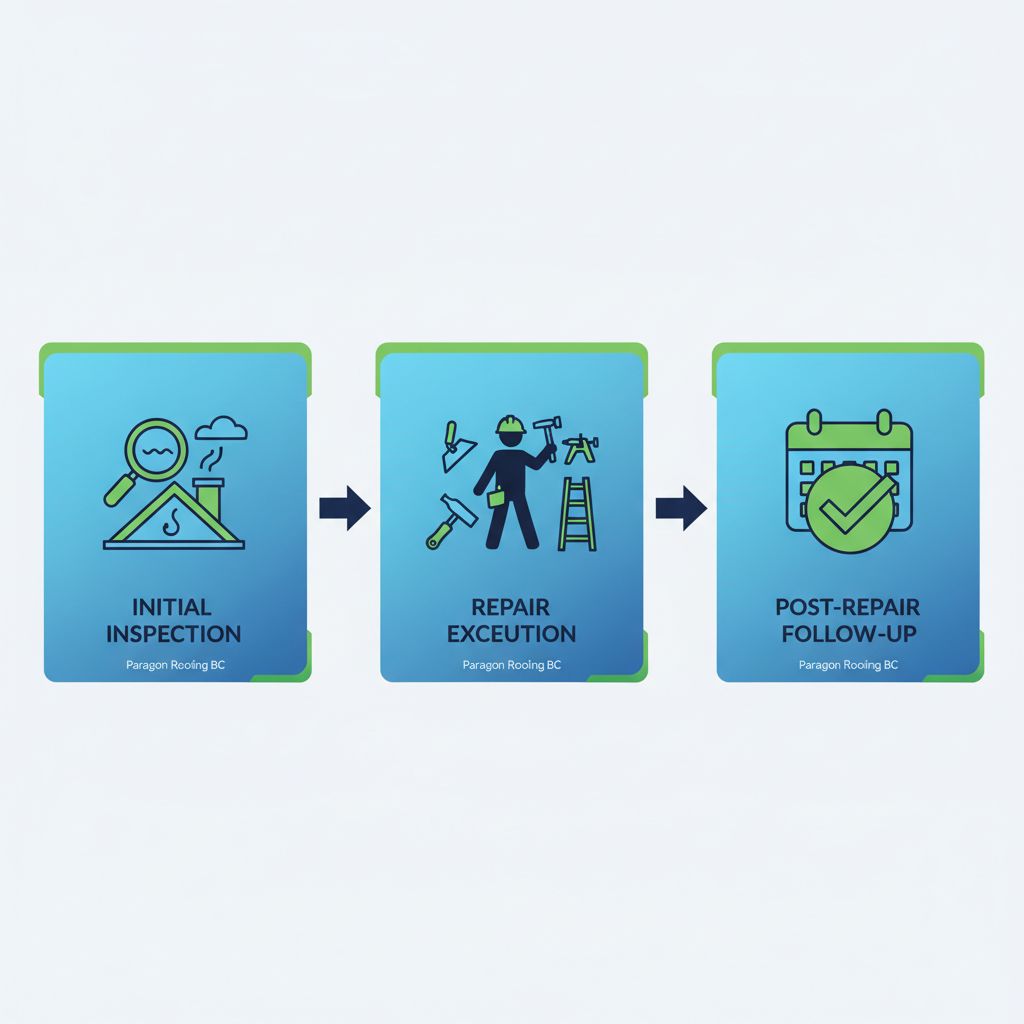
Three-step process for efficient roof leak repairs in Vancouver.
Initial Inspection and Diagnosis
We begin our Vancouver repair workflow with a prompt response to your inquiry. Our team is available 24/7 for emergency intake through phone or our online contact form, allowing you to report issues quickly from anywhere in the Lower Mainland.
- Schedule the Assessment: Upon contact, we arrange a free on-site inspection at your convenience, often within hours for urgent cases. This no-obligation visit lets us evaluate the leak’s scope without upfront costs.
- Conduct Thorough Diagnosis: Our licensed technicians, equipped with local expertise and adherence to industry best practices, perform a detailed examination. We use advanced tools to identify sources like damaged flashing or membrane failures, paying special attention to Vancouver’s moisture-heavy climate.
- Provide Photo Reports: Following the inspection, we deliver a comprehensive report with high-resolution photos and a clear explanation of findings. This transparency helps you understand the issue and next steps, drawing from guidelines in the rcabc technical updates for accurate leak detection.
This initial phase typically takes 30 to 60 minutes, setting the foundation for effective repairs while addressing common questions about minor roof leaks.
Repair Execution for Emergencies and Routines
Once diagnosed, we move to targeted repairs, distinguishing between emergency roof repair in Vancouver, British Columbia, and standard fixes to match your needs and BC’s variable weather challenges, such as heavy rains and wind.
For emergencies, like active leaks during storms, we mobilize same-day response teams to contain damage and prevent interior harm. Our process includes securing the area with tarps and temporary seals, then executing fixes using durable materials compliant with regional standards. In contrast, routine repairs follow scheduled timelines, often completing within one to two days for most residential properties.
Key techniques vary by damage extent: Minor leaks might involve resealing seams or replacing isolated shingles, while extensive issues require partial membrane replacement. For flat roof repair in Vancouver, British Columbia, we specialize in TPO systems, applying heat-welded seams for waterproof integrity, as recommended in RCABC guidelines for low-slope applications. Our WorkSafeBC-certified crew emphasizes safety protocols, including harnesses and fall protection, ensuring all work meets provincial codes.
Throughout, we provide pricing transparency via detailed quotes post-inspection, outlining costs based on materials and labor without hidden fees. This approach answers concerns about the cost of roof leak repair in the Lower Mainland, offering options from basic patches to comprehensive restorations.
Post-Repair Follow-Up and Warranty
Completing the repair marks the start of our commitment to longevity, with structured follow-up to verify performance and provide lasting protection for your Vancouver property.
We schedule a complimentary follow-up visit within 30 days, where our technicians inspect the work site for any settling issues or early wear, especially critical in our wet climate prone to moss and freeze-thaw cycles. This includes checking ventilation and drainage to prevent future leaks, aligning with best practices from Vancouver roofing resources that recommend regular monitoring.
Our maintenance checks extend roof lifespan—typically 20-30 years for common materials like asphalt or cedar—by addressing subtle vulnerabilities before they escalate. We also offer seasonal plans for proactive care, helping strata and homeowners in the Lower Mainland avoid costly emergencies.
Warranties vary by manufacturer and product; we provide full details in your contract, backed by our workmanship guarantee for one to five years depending on the scope. Check manufacturer terms for specifics, as small repairs generally do not void coverage if performed correctly. Estimates and final prices are subject to on-site confirmation, with any exclusions for concealed damage clearly stated.
This comprehensive post-repair support ensures peace of mind, transitioning seamlessly into ongoing best practices for roof health in British Columbia’s challenging environment.
Maintenance Tips to Prevent Roof Leaks
At Paragon Roofing BC, we understand the challenges of maintaining roofs in Vancouver’s relentless rainy climate. Proactive steps can significantly extend your roof’s lifespan and avoid the need for roof leak repair in Vancouver, British Columbia. By focusing on leak prevention in rainy BC, property owners in the Lower Mainland can protect their homes from water damage and costly emergencies.
Seasonal Inspection Routines
Vancouver’s wet weather demands regular vigilance to catch issues early. We recommend bi-annual inspections in spring and fall, aligning with the seasonal shifts that bring heavy rains and potential moss buildup. Start by examining flashing around chimneys, vents, and skylights, as these are common entry points for leaks. Check for cracks or loose sealant that could allow water intrusion.
Next, inspect vents and drains for blockages. According to RCABC Technical Updates, proper ventilation is essential for maintaining roof integrity and preventing condensation-related damage. Clear any debris like leaves or branches that accumulate, especially after atmospheric rivers. For flat roofs, ensure parapets and edges are secure to handle ponding water effectively.
Use a checklist for thoroughness:
- Visually scan for missing shingles or curling edges.
- Test gutters for proper flow to avoid overflow.
- Look for moss growth, which thrives in our damp conditions and erodes materials over time.
These routines, suited to Vancouver’s rainfall patterns, help identify problems before they escalate. Our free on-site inspections provide detailed photo reports to guide your maintenance efforts.
DIY Precautions and Pro Recommendations
While some maintenance for Vancouver roofs can be handled personally, safety always comes first. We advise against climbing onto wet or steep surfaces, as slips can lead to serious injury. For minor tasks, start with gutter cleaning using a ladder stabilizer and gloves to remove leaves and twigs quarterly. This simple habit prevents water backups that cause interior damage.
Safely clearing moss with a soft brush and mild solution works for accessible areas, but avoid pressure washing, which can strip protective granules from asphalt shingles. If you spot small cracks in sealant around vents, apply a compatible caulk as a temporary fix. However, for anything involving heights or structural concerns, contact professionals immediately to prevent the need for emergency roof repair in Vancouver, British Columbia.
We at Paragon Roofing BC specialize in comprehensive care, including roof penetration services in Vancouver for secure vent installations. Our blog on repair versus replacement highlights how timely pro interventions in our rainy climate can save thousands. Balance DIY with expert input: schedule our seasonal plans for hands-off protection, ensuring compliance with local standards without venturing into unsafe territory.
Long-Term Strategies for Durability
Investing in durable solutions sets your roof up for decades of reliable performance in British Columbia’s demanding environment. Choose materials suited to local conditions—asphalt shingles for cost-effective residential coverage, metal for longevity in coastal winds, and specialized membranes for flat roofs requiring flat roof repair in Vancouver, British Columbia. Proper underlayment and eave protection, as outlined in RCABC guidelines, enhance water resistance across all types.
Improve attic ventilation to combat moisture buildup, a frequent culprit in condensation leaks. We recommend balanced intake and exhaust systems during initial installations or upgrades, drawing from our expertise in ventilation repairs. Integrate ongoing habits like annual debris removal and sealant refreshes to maintain peak condition.
Paragon Roofing BC offers tailored maintenance plans that include quarterly checks, moss treatments, and priority service for Lower Mainland properties. These plans not only extend roof life but also tie into our full-service offerings, from gutter systems to chimney restorations. By partnering with us, you gain access to BBB A+ accredited pros with decades of local experience, ensuring your investment remains protected. Contact us today for a consultation and discover how our strategies can safeguard your home long-term.
Secure Your Roof with Expert Repairs Today
In summary, addressing roof leak repair in Vancouver, British Columbia, starts with recognizing early signs like water stains and sagging ceilings to prevent costly damage. Our streamlined process at Paragon Roofing BC—from thorough inspections to precise repairs—ensures minimal disruption and long-term protection for your property in the Lower Mainland. By choosing proactive maintenance, businesses and homeowners alike can avoid the pitfalls of neglected roofs exposed to our region’s relentless rains.
We stand by our unique selling points, including free on-site inspections and detailed photo reports that give you full transparency. Our 24/7 availability means we’re ready for commercial roof repair in Vancouver, emergency roof repair in Vancouver, British Columbia, or flat roof repair in Vancouver, British Columbia, whenever you need us. With decades of local experience and BBB A+ accreditation, we deliver warranty-backed solutions tailored to coastal challenges, helping you finalize your Vancouver roof solution for enduring peace of mind.
Contact us today to schedule your inspection and secure Lower Mainland leak protection before the next wet season arrives. Reach our Vancouver office at 997 Seymour St Suite 250, Vancouver BC V6B 3M1 or call 604-358-3436. For Surrey support, visit 12233 92 Avenue, Surrey BC V3V 7R9 or use our online form for a prompt response. Estimates are subject to on-site confirmation, but our team guarantees professional service to protect your investment.
Resources
- Get Professional Commercial Roof Repair in Vancouver
- Discover Reliable Roof Penetration Services in Vancouver
- Explore Durable Roofing Solutions for West Vancouver
- Learn Essential Vancouver Roofing FAQ Insights
- Obtain Quality Roofing Services in South Surrey
- Decide Optimal Roof Repair or Replacement in Vancouver
- Find Tailored Roofing Services for Port Moody
- Understand BC Tenancy Repairs and Maintenance Guidelines
- Explore Roof Leak Causes and Effective Solutions
- Access RCABC Technical Updates on Roofing Standards
Table of Contents
- Understanding Torch On Roofing in Vancouver
- Torch On Roofing Across Vancouver Areas
- Available Torch On Roofing Services in Vancouver
- Key Considerations for Torch On Roofing in British Columbia
- How to Begin with Torch On Roofing Projects in Vancouver
- Final Insights on Torch On Roofing in Vancouver
Understanding Torch On Roofing in Vancouver
In Vancouver’s persistently rainy climate, effective roofing solutions are essential for protecting properties from leaks and moisture damage. Torch on roofing in Vancouver has emerged as a reliable choice for flat and low-slope roofs common in residential, commercial, and multi-family buildings across British Columbia.
This torch-applied modified bitumen system uses propane flames to seal multiple layers, creating a seamless waterproof barrier. Modified bitumen flat roofing systems excel in the region’s wet weather, offering superior longevity and resistance to pooling water on urban structures like strata properties and commercial sites. Key advantages include enhanced waterproofing, durability against coastal winds, and reduced maintenance needs over time.
At Paragon Roofing BC, we specialize in torch on roof installation in Vancouver, providing free on-site inspections and transparent quotes to address torch on roofing cost in Vancouver upfront. As the best roofing company in Vancouver, our team ensures high-quality torch-applied membrane solutions tailored to local needs. Explore upcoming sections on regional applications, our services, key considerations, and how to start your project.
Torch On Roofing Across Vancouver Areas
Torch on roofing in Vancouver stands out as a reliable choice for flat and low-slope roofs, offering robust waterproofing ideal for the region’s frequent rains. We at Paragon Roofing BC deliver these solutions tailored to diverse local needs, from urban high-rises to suburban homes. This approach ensures durability against British Columbia’s variable weather, integrating seamlessly with features like skylights and drainage systems.
In Downtown Vancouver, torch on applications suit high-rise commercial and strata buildings, where urban density demands strong membranes to handle heavy rainfall and limited access. South Surrey sees more residential and vacation properties benefiting from low-slope installations on homes with skylights, supported by milder coastal conditions. The Lower Mainland mixes industrial and multi-use structures, applying large-scale flat roof coverings versatile for precipitation variations.
- Downtown Vancouver: Focus on multi-family flat roofs amid intense urban challenges.
- South Surrey: Emphasize vacation homes with enhanced ventilation needs.
- Lower Mainland: Prioritize commercial scalability and diverse drainage integrations.
Regional differences arise from geography and building density, influencing torch on roof installation in Vancouver. For instance, downtown sites require specialized access for heat-applied layers, while suburban areas allow easier material handling. Climate data from local guides highlights the need for rain-resistant membranes, with preparation tips like debris removal preventing winter leaks, as noted in Vancouver roof care resources.
The following table compares key factors for torch on roofing across major areas:
| Area | Typical Cost Range (per sq ft) | Common Applications | Climate Suitability |
|---|---|---|---|
| Downtown Vancouver | $12-18 | High-rise commercial and strata buildings | Excellent for heavy rain |
| South Surrey | $10-15 | Residential and vacation properties | Good for coastal winds |
| Lower Mainland | $11-16 | Industrial and mixed-use | Ideal for variable precipitation |
Data derived from local project estimates; costs approximate and vary by scope. Higher downtown rates reflect access complexities and premium materials, while South Surrey’s lower figures tie to suburban efficiency. Weather suitability underscores torch on roofing cost in Vancouver, balancing rain resistance with longevity in milder zones. These variations help property owners select appropriate flat roof membrane systems in the Lower Mainland.
Torch-applied roofing solutions regionally excel in waterproofing, reducing leak risks during rainy seasons as per BC climate insights. We serve these areas from our Vancouver and Surrey offices, providing roofing services in South Surrey and beyond for comprehensive installations.
Available Torch On Roofing Services in Vancouver
Torch on roofing in Vancouver offers a reliable solution for flat and low-slope roofs, particularly suited to the region’s wet climate and seismic considerations. Our teams at Paragon Roofing BC specialize in installation, repair, and maintenance services tailored for commercial, residential, and multi-family properties across the Lower Mainland. We adapt these modified bitumen systems to meet British Columbia building codes, ensuring durability against heavy rains and temperature fluctuations.
The torch on roof installation in Vancouver begins with thorough surface preparation to remove debris and old materials, creating a clean base. Next, we apply a base layer of modified bitumen membrane, followed by additional plies for reinforcement. Technicians then use a propane torch to heat and seal the layers, integrating features like skylights, vents, and gutters for seamless waterproofing. Safety is paramount during torch application, with our WorkSafeBC-trained professionals employing proper ventilation and fire prevention measures to minimize risks.
For repairs, our commercial roofing repair in Vancouver services use modified bitumen repair techniques to address leaks and damage through targeted patching and resealing, often identified during free on-site inspections. Maintenance plans include scheduled cleanings of drainage systems and protective coatings to extend roof life, preventing issues like UV degradation common in Vancouver’s weather. These proactive strategies, backed by manufacturer warranties, help avoid costly downtime for property owners.
In commercial applications, torch on roofing excels for strata and business buildings, providing robust flat roof service options that enhance energy efficiency. We handle everything from emergency fixes to full replacements, with torch on roofing cost in Vancouver varying based on project scale—typically competitive due to our efficient processes. Contact us for a no-obligation quote to protect your investment.
Key Considerations for Torch On Roofing in British Columbia
When evaluating torch on roofing in Vancouver, several key factors influence the decision for homeowners and property managers. As a trusted roofing contractor across British Columbia, we prioritize durable solutions that withstand the region’s demanding climate. Torch on membranes offer reliable protection for flat roofs, but understanding costs, regulations, and alternatives ensures the best choice.
Costs for torch on roofing in Vancouver typically range from $8 to $12 per square foot, including materials and labor. Membrane cost factors include the number of plies, roof size, and access challenges, with labor accounting for about 40% of the total. We provide detailed estimates after on-site inspections to align with your budget.
Compliance with building codes standards in British Columbia is essential for torch on roof installation in Vancouver, particularly for flat roofs requiring proper drainage and insulation per the BC Building Code. These regulations address snow loads and energy efficiency, preventing issues like water pooling. Compared to TPO, torch on provides superior durability in high-wind areas but requires skilled flame application, unlike TPO’s heat-welded seams. Asphalt shingles offer easier installation for sloped roofs yet lack the waterproofing strength of torch on for flat surfaces, making it ideal for leak-prone Vancouver structures.
Vancouver’s heavy rainfall and winds request vigilant seasonal maintenance, including leak detection via infrared scans. We recommend twice-yearly inspections to extend membrane life and mitigate the 25% rise in winter insurance claims from roof damage.
How to Begin with Torch On Roofing Projects in Vancouver
Starting a torch on roofing in Vancouver project requires careful planning to ensure durability and safety, especially for flat roofs in the Lower Mainland’s wet climate. We recommend beginning with initial roofing assessments to identify any underlying issues before committing to torch on roof installation in Vancouver.
- Request a Free Inspection: Contact us for a complimentary on-site evaluation. Our team provides detailed photo reports documenting roof conditions, helping you understand the scope for residential or commercial properties. This step, inspired by trusted practices in Vancouver roofing services, avoids surprises and aligns with local building standards.
- Evaluate Quotes and Prepare: Compare proposals based on project scope, materials, and torch on roofing cost in Vancouver, which varies by roof size and complexity. Clear debris and secure the area beforehand to facilitate smooth installation. We also suggest discussing post-install maintenance plans to extend your roof’s lifespan.
- Select Certified Professionals: Prioritize installers trained through the CERTA torch training program, which emphasizes fire-safe techniques and proper configuration for torch-applied systems. This certification ensures compliance and expertise for your project initiation for flat roofs.
By following these steps, you’ll initiate a reliable torch on roofing project tailored to Vancouver’s demands.
Final Insights on Torch On Roofing in Vancouver
We’ve explored the essentials of torch on roofing in Vancouver, recapping torch on roof installation in Vancouver processes, typical torch on roofing cost in Vancouver ranges, and advantages for BC’s demanding weather. These durable flat roof options provide long-lasting protection, addressing common concerns about flat roof solutions in the region.
NRCA PROCertification roofing upholds industry excellence, ensuring skilled installations that meet professional standards.
To move forward, we encourage scheduling a thorough inspection for your Vancouver property to confirm the best local membrane summaries and next steps.
Resources
- Discover Vancouver’s Best Roofing Company for Durable Solutions
- Get Expert Commercial Roofing Repair in Vancouver
- Explore Reliable Roofing Services in South Surrey
- Learn Flat Roof Conversion Benefits in Vancouver
- Access Strata Multifamily Roofing Solutions in Vancouver
- Secure Trusted Vancouver Roofing for Weather Protection
- Prepare Vancouver Roofs for Winter with Maintenance Tips
- Understand BC Building Codes for Safe Construction
- Complete CERTA Training for Safe Torch Roofing
- Earn NRCA PROCertification for Roofing Professionals
- Achieve Modified Bitumen Installer Certification Expertise
