
TPO Roofing Explained: Vs PVC and Cost Guide for 2026
Table of Contents
- Exploring TPO Roofing in British Columbia
- What is TPO Roofing?
- Key Benefits of TPO Roofing for BC Properties
- How TPO Roofing Systems Function
- Best Practices for TPO Roofing Maintenance and Installation
- Maximizing TPO Roofing Performance in British Columbia
Exploring TPO Roofing in British Columbia
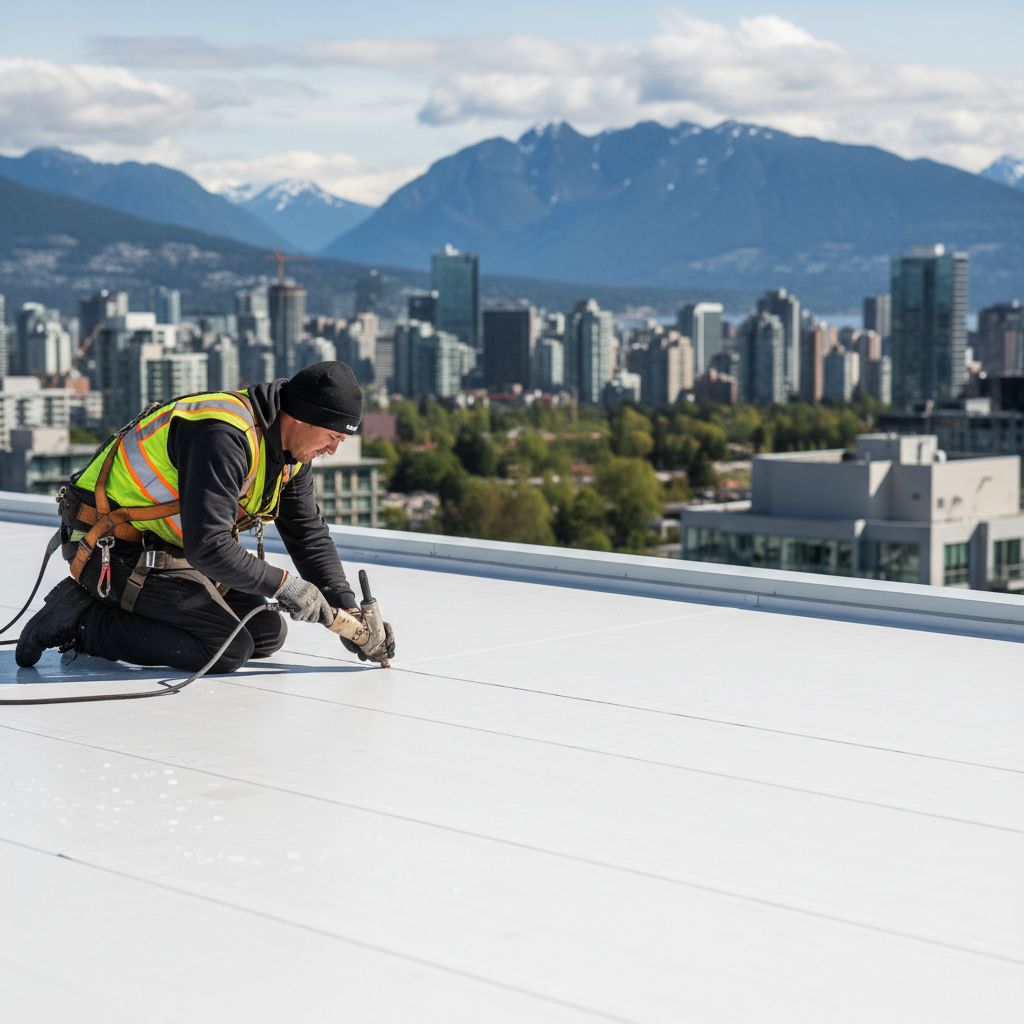
In the diverse climate of British Columbia, where heavy rains and coastal winds challenge building structures, TPO roofing in British Columbia emerges as a reliable solution for flat and low-slope roofs. Thermoplastic polyolefin, or TPO, is a single-ply flat roofing solution known for its durability and energy efficiency. As a thermoplastic membrane system, it forms a seamless, waterproof barrier that withstands UV exposure and temperature fluctuations common in regions like Vancouver, BC.
At Paragon Roofing BC, we bring decades of local experience as a trusted roofing contractor across British Columbia. Specializing in roofing materials services in Vancouver, we handle installations and maintenance for residential, commercial, and multi-family properties throughout the Lower Mainland. Our team offers free on-site inspections to assess your needs, ensuring TPO systems that resist moss growth and leaks while optimizing energy savings. When considering TPO vs PVC roofing, TPO stands out for its cost-effectiveness, with TPO roofing cost often providing better long-term value through reflectivity that reduces cooling demands.
This guide explores the fundamentals of TPO, its key benefits for BC’s weather, how these systems function, and best practices for installation and upkeep. From Vancouver’s flat-roof commercial buildings to Surrey homes, discover why TPO is ideal. What makes TPO roofing perform so effectively in our variable conditions?
What is TPO Roofing?
TPO roofing in British Columbia has become a go-to solution for protecting properties against the region’s persistent rainfall and variable temperatures. As a thermoplastic polyolefin membrane, TPO offers durability and energy efficiency, making it ideal for flat and low-slope roofs common in the Lower Mainland. We at Paragon Roofing BC have installed countless TPO systems, witnessing their resilience firsthand in areas like Coquitlam and Vancouver.
Definition: TPO Roofing
Thermoplastic Polyolefin (TPO) is a single-ply roofing membrane made from a blend of polypropylene and ethylene-propylene rubber, providing waterproofing and reflectivity for modern structures.
Composition and Materials
TPO membranes consist of advanced polymer blends designed for longevity in demanding climates. The core material combines polypropylene for strength with ethylene-propylene for flexibility, enhanced by UV stabilizers to resist sun damage prevalent in British Columbia’s coastal areas. A fleece backing adds reinforcement, preventing punctures from debris or foot traffic during maintenance. We recommend layers including a weather-resistant top coat and scrim reinforcement for added tear resistance.
- Top Layer: UV-stabilized polyolefin sheet for reflectivity and heat resistance.
- Reinforcement: Embedded polyester scrim for structural integrity.
- Backing: Fleece or fabric to improve adhesion and durability in wet conditions.
These thermoplastic flat roof membranes are welded at seams using hot-air technology, creating seamless, watertight bonds that withstand heavy downpours. In British Columbia’s wet climate, this composition ensures superior water shedding compared to older systems.
Thermoplastic basics highlight TPO’s heat-weldable nature, allowing installers to fuse sheets without adhesives, reducing leak risks. The TPO roofing systems standard from the Roofing Contractors Association of BC specifies minimum thicknesses of 60 mils for optimal performance, validating these specs for local installations.
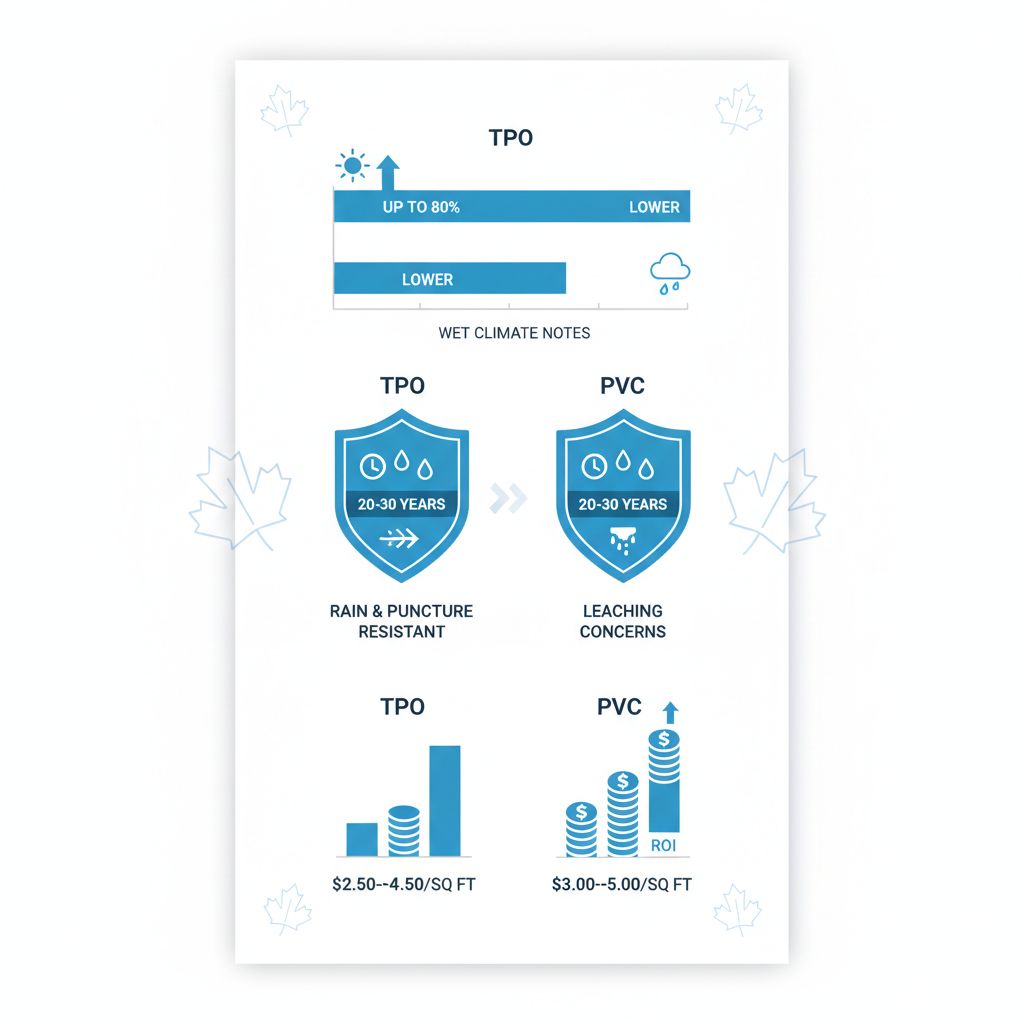
| Feature | TPO Roofing | PVC Roofing |
|---|---|---|
| Energy Reflection | High reflectivity (up to 80%), cools buildings in summer | Good reflectivity but less consistent in wet climates |
| Durability | 20-30 years lifespan, resistant to BC rain and punctures | Similar lifespan but more prone to plasticizer leaching |
| Cost | $2.50-$4.50/sq ft installed in BC | $3.00-$5.00/sq ft, higher material costs |
This table underscores TPO’s advantages, particularly its UV resistance that combats the intense coastal sunlight while maintaining energy efficiency. In BC, where temperature swings are common, weldability prevents moisture ingress, and recyclability aligns with eco-conscious regulations, making polyolefin roofing solutions a smart choice for long-term value.
Applications in Flat Roofs
TPO excels in low-slope and flat roof applications, suitable for commercial buildings, strata properties, and residential structures in the Lower Mainland. Its lightweight design simplifies installation on existing roofs, minimizing structural load while providing excellent drainage through integrated scuppers and tapered insulation. We often integrate TPO with skylights and vents, ensuring compatibility via custom flashing that seals penetrations effectively.
In Coquitlam projects, such as multifamily complexes, TPO handles ponding water from frequent rains, with enhanced drainage adaptations like tapered panels directing flow to perimeter drains. For commercial warehouses in Vancouver, BC, it offers broad coverage up to 10,000 square feet per sheet, reducing seams and labor. Residential flat roofs on modern homes benefit from TPO’s seamless finish, compatible with green roofs or solar panels.
When comparing TPO vs PVC roofing, TPO stands out for cost-effectiveness and easier repairs in humid environments. Overall, TPO roofing cost remains competitive, averaging lower long-term expenses due to minimal maintenance needs in BC’s climate.
History and Evolution
TPO roofing emerged in the 1980s as an advancement over earlier single-ply systems, developed by chemical engineers seeking recyclable alternatives to bituminous materials. Initially popular in the U.S. for its energy-efficient white finish, it gained traction in Canada during the 1990s amid growing demand for sustainable roofing. In British Columbia, adoption accelerated in the early 2000s, driven by the need for systems resilient to seismic activity and heavy precipitation.
The Roofing Contractors Association of BC played a key role, establishing standards for TPO installations that emphasize wind uplift resistance and fire ratings suited to urban developments. Today, TPO represents over 40% of new flat roof projects in the province, evolving with innovations like self-adhering variants for faster application.
From our two decades of experience at Paragon Roofing BC, we’ve seen TPO transition from niche commercial use to widespread residential and strata applications in Surrey and Richmond. This evolution reflects its proven track record, with installations lasting 20-30 years under local conditions, backed by manufacturer warranties.
Key Benefits of TPO Roofing for BC Properties
TPO roofing in British Columbia offers significant advantages for flat-roof properties, particularly in regions like Vancouver and the Lower Mainland where weather challenges demand reliable protection. As a trusted roofing contractor across British Columbia, our installations demonstrate how this energy-efficient single-ply roof material delivers long-term value through reduced energy use, enhanced durability, and environmental benefits. Property owners benefit from its seamless integration with local building codes, ensuring compliance while minimizing maintenance needs.
Energy Efficiency and Cost Savings
One of the standout features of TPO roofing is its high reflectivity, which can reach up to 80% according to IIBEC guidelines on thermoplastic systems. This property reflects sunlight effectively, reducing heat absorption during BC’s warm summers and lowering cooling costs by up to 20% for commercial buildings in Vancouver. In our experience with local installations, this translates to substantial long-term ROI, especially when paired with proper insulation to meet BC Building Code standards.
The TPO roofing cost typically ranges from $2.50 to $4.50 per square foot installed in the Lower Mainland, as noted in regional conversion guides for flat roofs. This upfront investment pays off through energy savings and extended system life, often covered by 20- to 30-year warranties from manufacturers. For properties facing Vancouver’s frequent temperature fluctuations, these efficiencies help stabilize indoor climates without excessive reliance on HVAC systems.
Durability in Regional Climate
TPO roofing excels in the Lower Mainland’s climate, offering robust resistance to heavy rain, high winds, and intense UV exposure common in British Columbia. Its thermoplastic composition provides tear and puncture resistance, crucial for flat roofs prone to water pooling during Vancouver’s frequent storms. Drawing from thermoplastic roofing best practices, proper installation ensures seams withstand freeze-thaw cycles, preventing the leaks seen in less durable coverings.
Our installations in commercial sites around Surrey and Vancouver highlight TPO’s 20- to 30-year lifespan, even under snow loads mandated by the BC Building Code. Unlike traditional membranes, durable thermoplastic coverings require minimal maintenance, with features like reinforced edges holding up against wind gusts up to 90 km/h. This reliability translates to fewer disruptions for property managers, as evidenced by reduced repair needs in our multi-family projects.
Key benefits comparison of TPO vs PVC roofing for BC coastal properties
Environmental Advantages
TPO roofing supports green building initiatives in BC through its recyclability and low volatile organic compound (VOC) emissions, making it ideal for eco-conscious properties in Vancouver. At the end of its life, the material can be fully recycled, reducing landfill waste compared to non-recyclable alternatives. This aligns with provincial sustainability standards, as seen in our strata council projects emphasizing low-impact materials.
With minimal environmental footprint during production and installation, TPO contributes to LEED certification efforts for commercial buildings in the Lower Mainland. Its energy-efficient design further lowers overall carbon emissions by cutting cooling demands in summer. We prioritize these advantages in our services, ensuring installations meet IIBEC-recommended practices for long-term environmental performance.
- Recyclable thermoplastic construction minimizes waste.
- Low VOCs improve indoor air quality.
- Reflective surface reduces urban heat island effects in BC cities.
How TPO Roofing Systems Function
TPO roofing in British Columbia represents a reliable choice for flat and low-slope roofs, offering durability against the region’s variable weather patterns. As a trusted roofing contractor across British Columbia, we specialize in these seam-welded thermoplastic roofs to protect multi-family and commercial properties. Understanding the mechanics behind TPO systems reveals why they excel in longevity and energy efficiency for structures in Vancouver and the Lower Mainland.
Installation Process
Installing TPO membranes requires precision to ensure a watertight seal, particularly in British Columbia projects where rainfall demands robust performance. We begin with thorough roof preparation, including clearing debris and repairing the substrate to create a smooth surface. This step prevents imperfections that could compromise the membrane’s integrity.
Next, we roll out the TPO sheets, typically 60 to 80 mils thick, across the roof deck. Insulation layers, such as polyisocyanurate boards, are added beneath for thermal efficiency. The sheets are then secured mechanically or fully adhered, depending on the building’s design. Hot-air welding joins the seams, melting the material to form a monolithic barrier. This process, which we execute with specialized equipment, takes about 1-2 days for a standard multi-family roof in our strata projects.
Flashing details around edges and penetrations complete the application, using compatible adhesives. TPO roofing cost typically ranges from $2.50 to $4.50 per square foot, including materials and labor, though estimates depend on site specifics. We strongly advise against DIY attempts, as improper welding can lead to leaks; professional installation by experienced teams ensures compliance with local standards.
Performance Mechanisms
The performance of TPO systems hinges on their ability to handle thermal expansion and contraction, a critical factor in BC’s winters with freeze-thaw cycles. Made from thermoplastic polyolefin, these low-slope system mechanics allow the material to flex without cracking, unlike more rigid alternatives. We leverage this flexibility in our installations to maintain structural integrity over decades.
Hot-air welding creates seams stronger than the membrane itself, resisting water infiltration even under high winds common in coastal areas. The reflective white surface reduces heat absorption, lowering cooling demands in summer—a key advantage in energy-conscious British Columbia builds. For instance, in our Port Moody projects, these mechanisms have demonstrated up to 30-year lifespans with minimal maintenance.
Integration with insulation enhances R-value, promoting uniform temperature control. Analogous to a flexible skin over a building, TPO adapts to movements while providing a seamless shield against UV rays and ozone degradation. This resilience underscores why TPO outperforms in demanding climates, delivering cost savings through reduced repair needs.
Integration with Other Systems
TPO roofing seamlessly integrates with various building elements, ensuring compatibility in Lower Mainland roofs exposed to heavy precipitation. For skylights and vents, we apply pre-formed TPO flashing or custom heat-welded collars to create watertight seals around penetrations, preventing leaks at these vulnerable points.
Drainage systems pair effectively with TPO, where scuppers and internal drains are incorporated during installation to facilitate water runoff on flat surfaces. In multi-family settings, this setup aligns with ventilation requirements, allowing balanced airflow without compromising the membrane.
When considering TPO vs PVC roofing, TPO’s broader welding compatibility simplifies integration with metal edging or HVAC units, avoiding the chemical adhesives sometimes needed for PVC. Our roofing services in Port Moody exemplify this, with case studies showing efficient timelines of 2-3 days for full integrations in commercial strata properties. We maintain liability insurance and WorkSafeBC coverage to safeguard these complex installations, emphasizing professional oversight for optimal results.
Best Practices for TPO Roofing Maintenance and Installation
TPO roofing in British Columbia provides durable protection against the region’s variable weather, but proper installation and upkeep are essential for longevity. We recommend focusing on preventive strategies to address the unique challenges of rainy and temperate climates in areas like the Lower Mainland.
Routine Maintenance Guidelines
We advise bi-annual inspections for TPO roofing systems to ensure optimal performance. Start with clearing debris such as leaves and branches from the surface, which prevents ponding and reduces wear in British Columbia’s frequent rains. Check seams and flashings for cracks, using a soft brush and mild detergent for cleaning to maintain the membrane’s reflective properties.
For installation, ensure proper slope to facilitate drainage, integrating with existing gutters and vents to avoid water buildup. Unlike TPO vs PVC roofing, where PVC may require different chemical cleaners, TPO benefits from simple thermoplastic roof upkeep methods. We offer free on-site inspections at Paragon Roofing BC to assess your system’s condition and provide tailored advice. We also provide roofing services in Coquitlam.
Include these steps in your maintenance checklist:
- Inspect seams and penetrations quarterly.
- Remove debris after heavy storms.
- Test drainage paths annually.
- Document any changes for professional review.
The following table outlines the benefits of routine maintenance versus neglect:
| Action | With Maintenance | Without Maintenance |
|---|---|---|
| Lifespan | 25-30 years | 10-15 years |
| Leak Risks | Minimized through seam checks | High, especially at penetrations |
| Cost | Predictable low annual fees | Unexpected high repair costs |
Common Issues and Solutions
In Lower Mainland environments, TPO roofs often face issues like seam failures due to thermal expansion or punctures from falling branches. Shrinkage can cause wrinkling, while ponding from inadequate slope leads to accelerated aging. We suggest immediate attention to these to prevent leaks.
For seam repairs, clean the area thoroughly and apply a compatible patch kit following manufacturer guidelines. Punctures require cutting out damaged sections and sealing with heat-welded patches. As per RCABC TPO Roof Systems Standard, maintaining seam integrity through regular checks is crucial, as it states that proper adhesion prevents 80% of water intrusion risks.
Budget for repairs by considering TPO roofing cost factors, such as material at $5-8 per square foot plus labor. For example, a small puncture fix might run $200-500, but early detection via our free inspections in Abbotsford and surrounding areas avoids escalation. Always verify warranties, as they vary by manufacturer and product—check terms in your written contract.
Seasonal Care in BC
British Columbia’s seasons demand adaptive care for TPO roofs. In winter, protect against ice dams by ensuring clear gutters and applying anti-bridging membranes during installation. Heavy snow loads require shoveling with caution to avoid membrane tears; we recommend professional assistance for high-risk properties.
Summer brings intense UV exposure, so inspect for granule loss on ballasted systems and reapply protective coatings if needed. This maintains the roof’s white reflective surface, reducing cooling costs in warmer months. Integrate ventilation checks to control moisture, especially in humid coastal areas like Vancouver, BC.
For year-round protection, schedule seasonal walkthroughs. Our team at Paragon Roofing BC provides guidance on these practices, emphasizing estimates subject to on-site inspection. By following these tips, property owners in the Lower Mainland can enhance durability and avoid common pitfalls.
Maximizing TPO Roofing Performance in British Columbia
TPO roofing in British Columbia offers reliable thermoplastic solutions for flat and low-slope roofs, combining durability with energy efficiency tailored to the region’s wet climate. As a single-ply membrane, it provides excellent resistance to UV rays, punctures, and thermal expansion, making it ideal for coastal areas like the Lower Mainland. By recapping its core benefits, such as reduced energy costs through reflective properties and a lifespan of 20-30 years with proper care, we reinforce why this cost-effective flat roofing option stands out for British Columbia properties.
Key takeaways include proactive maintenance to address potential issues like seam failures or ponding water, ensuring long-term performance. When considering TPO vs PVC roofing, TPO often edges out in affordability and heat-welded seams for superior waterproofing, while TPO roofing cost per square foot typically ranges from $5 to $10, depending on project scope. In our experience serving Port Moody and surrounding neighborhoods, these systems align perfectly with local demands for sustainable, weather-resistant coverage.
At Paragon Roofing BC, we invite you to contact us for free on-site inspections to evaluate your roofing needs. Our warranty-backed approach, as a trusted roofing contractor across British Columbia, helps maximize your investment while protecting your home. Building your family’s future starts with perfection in roofing—reach out today for tailored solutions in Vancouver, BC, and beyond.
Resources
- Discover Comprehensive Roofing Materials Services in Vancouver
- Find Climate-Adapted Roofing Solutions for Port Moody Properties
- Explore Sustainable Roofing Installations and Maintenance in Coquitlam
- Obtain Reliable Roofing Services for Abbotsford Properties
- Learn Flat to Low-Slope Roof Conversion Pros and Cons
- Choose Trusted Top Roofing Company in Vancouver
- Get Multifamily Strata Roofing Services in Vancouver Area
- Understand TPO Roofing Systems Standards and Benefits
- Explore Best Practices for Thermoplastic Roofing Installation
